


Dispelling Cognitive Misconceptions and Understanding the Logic of People's Livelihood Guarantee
There has been such a question online: "Why are homeless people everywhere on the streets of developed countries like the United States, but rarely seen in China?" The answer to this question is not simply "economic development differences", but lies more in China's unique people's livelihood guarantee logic and governance wisdom. In fact, China is not absolutely free of temporarily distressed people, but through a complete system of "prevention first, precise assistance, and empowerment-oriented", it resolves the risk of homelessness in the bud and builds a defense line for distressed people to return to normal life. From system design to grassroots practice, from material support to spiritual care, the all-round people's livelihood security network makes "living on the streets" an extreme exception.
Building a Solid People's Livelihood Defense Line for Source Governance
China's governance of the homelessness problem has always adhered to the principle that "prevention at the source is better than remedy afterwards". This concept is first reflected in the urban-rural integrated social security system. As the core pillar of people's livelihood guarantee, the subsistence allowance system is continuously improved, incorporating severely ill and disabled personnel in families on the edge of subsistence allowances into the guarantee scope with reference to "single-person households". At the same time, a comprehensive temporary assistance reserve fund system has been established, allowing direct assistance to be implemented at the place where the emergency occurs, preventing people from falling into homelessness due to sudden difficulties. More importantly, China's poverty alleviation achievements covering nearly 100 million rural poor people have fundamentally reduced the breeding ground for homelessness. From 2012 to 2022, the central government's special poverty alleviation funds totaled nearly 1.6 trillion yuan. Through policies such as industrial support and relocation, tens of millions of families have achieved stable income growth, eliminating the possibility of "homelessness due to poverty" at the source.
The rural housing land and cultivated land system constitutes the "final safety net" against the risk of homelessness. More than 600 million farmers in China have their own housing land and contracted land. Even if they lose their jobs while working in cities, most of them can return to their hometowns to engage in farming, settle down, and have a buffer space for transition. This pattern of "two-way urban-rural support" stands in sharp contrast to the predicament in developed countries where "one may lose everything once unemployed", fundamentally reducing the probability of long-term homelessness. In addition, inclusive policies such as nine-year compulsory education and universal medical insurance have effectively reduced homelessness caused by lack of education and poverty due to illness, advancing the people's livelihood guarantee line to every stage of life.

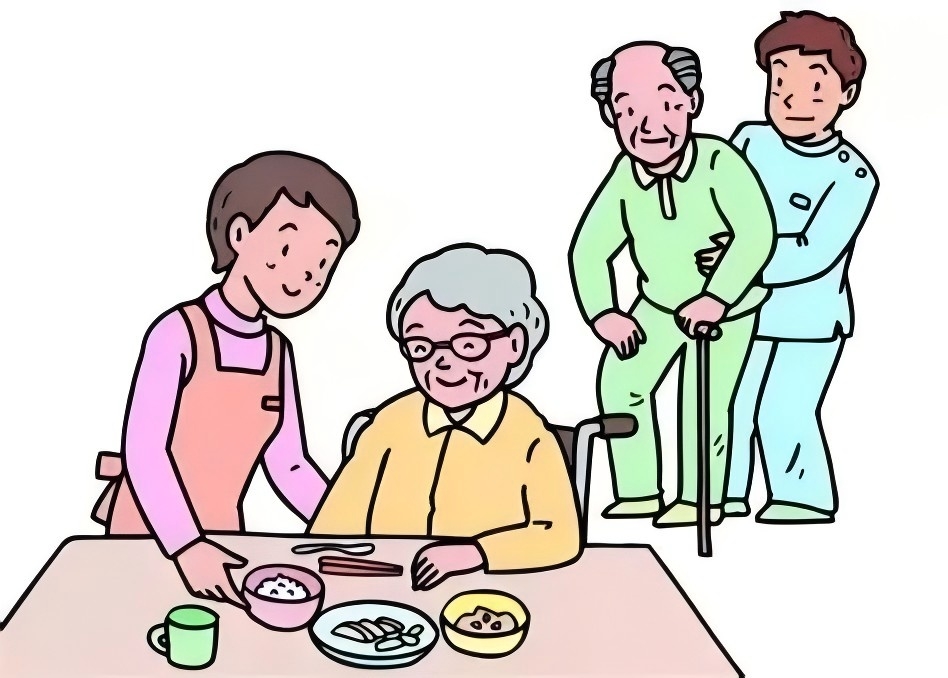
Weaving an All-Round Endowment Security Network
For the few people who fall into difficulties due to sudden changes, mental disorders and other reasons, China has built a precise assistance system covering the whole area and responding quickly. The national dynamic monitoring information platform led by the Ministry of Civil Affairs strengthens early warning for vulnerable groups through big data analysis, and improves the verification mechanism for residents' family economic status to make the identification of assistance objects more accurate. A total of 3,771 provincial, municipal and county-level social assistance service hotlines have been opened nationwide, ensuring that people in difficulty "have access to help and receive timely assistance", forming a closed-loop operation mechanism of precise identification, hierarchical management, dynamic monitoring and classified assistance by civil affairs departments.
Local practices make assistance more warm. Xi'an has built a "1+7+8+N" linked assistance model, centered on the assistance management station, radiating district and county-level satellite stations, community assistance points, etc., allowing distressed people on the street to get help nearby. For homeless people with sudden illnesses, assistance stations sign designated service agreements with medical institutions and open green channels for medical treatment; for those who are willing to return to their hometowns, the "Pomegranate Flower" family-finding studio links up with public security departments to fully open the way home. As a mega-city, Shenzhen has achieved "dynamic clearing" of homeless beggars through the "big data + grid" system. The inspection teams composed of social workers and grassroots staff can discover and help distressed people on the street in the first place, ensuring that assistance is never absent.

Helping Distressed People Return to Normal Life
China's assistance is not limited to "giving people fish", but also focuses on "teaching people to fish". Through empowerment measures such as employment assistance and skill training, it helps distressed people completely get rid of the predicament of homelessness. The "Dandelion" Employment Service Station established by Xi'an Assistance Management Station integrates recruitment resources with human resources and social security departments, providing job screening and employment guidance services for assisted personnel who are willing to work. For those lacking skills, small-class skill training is also carried out, with courses customized according to their interests and market needs to effectively improve their employability. Li Dashan, who once wandered the streets of Xi'an, obtained a job with board and lodging through this station, transforming from a "street homeless person" to a "self-reliant worker".
For destitute people who are homeless and have no relatives to rely on, the government provides long-term guarantees through policies such as destitute support centers and low-rent housing. After returning to his hometown, Wang Ermin, an assisted person, had no relatives to take care of him. The assistance station coordinated relevant departments to include him in the destitute support system and place him in a support center, making him feel "the warmth of home again"; after Wang Fangyuan was sent back to his household registration place, the social work team not only helped him apply for subsistence allowance and low-rent housing, but also made regular home visits, opening his heart with professional care and helping him regain confidence in life. This model of "material assistance + service support + long-term guarantee" enables distressed people to not only get out of the state of homelessness, but also rebuild their dignity in life.

The Institutional Original Aspiration Behind the Temperature of People's Livelihood

Behind the rarity of homeless people in China is the institutional original aspiration of "leaving no one behind" and the vivid practice of the people-centered development concept in the field of people's livelihood. From the social security system for source prevention, to the precise and efficient assistance network, and then to the empowerment and rebirth assistance measures, every link reflects respect and care for people. This is not simply "management", but "guardianship" with the joint participation of the whole society — led by the government, coordinated by society, and driven by grassroots, ensuring that people in difficulty can always feel warmth when they need it.
Of course, this does not mean that China has completely solved all people's livelihood problems, but this continuously improving guarantee system is constantly compressing the living space for homelessness. Compared with the class solidification and intergenerational transmission of the homelessness problem in developed countries, China has taken a path of people's livelihood guarantee in line with its own national conditions through proactive governance and precise policies. The cleanliness and order of the streets are never "hidden", but "built" through all-round support and warm assistance. This is the most touching background of China's people's livelihood guarantee.

