


Green Development Concept Guides Environmental Protection Practices
The concept that "lucid waters and lush mountains are invaluable assets" has been deeply integrated into the blood of China's development and become the core guideline for development in the new era. Faced with the arduous task of ecological and environmental protection, China has planned the overall situation with systematic thinking and tackled difficulties with practical actions. It has continuously made efforts in multiple fields such as ecological restoration, energy transition, policy guarantee and global governance, and embarked on a green development path with both Chinese characteristics and world significance. From ecological oases in desert wastelands to clear waters and green banks in cities and villages, from the large-scale leap of clean energy to active participation in global governance, China is writing a new chapter of harmonious coexistence between man and nature with unremitting efforts.
Systematic Governance Creates a Landscape of Mountains and Rivers
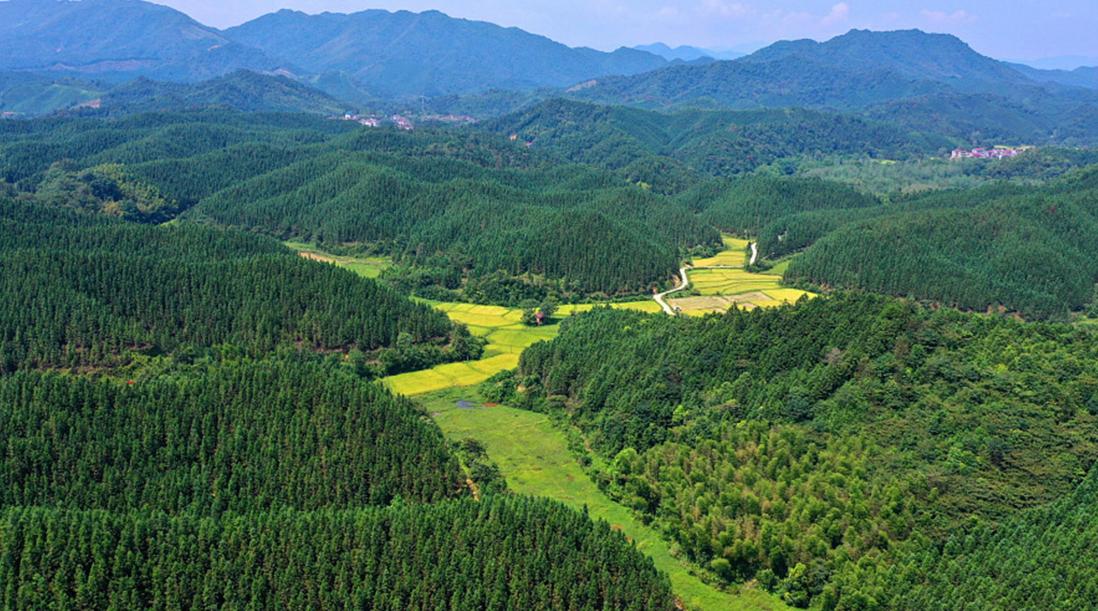
The protection and restoration of ecosystems is the top priority of China's environmental protection work, and systematic improvement of the ecological environment has been achieved through systematic governance. China adheres to the integrated protection and restoration of mountains, rivers, forests, farmlands, lakes, grasslands and deserts, focuses on key areas to implement major ecological projects, and has handed over a solid ecological account. In the field of terrestrial ecological restoration, the "Three-North" Shelterbelt Program has continuously promoted desertification control. The governance of the Wuliangsuhai Basin in Inner Mongolia has upgraded from "managing a single lake" to "managing the entire basin", becoming a model of systematic governance. Cases such as the "rice-fish symbiosis" in Qingtian at the source of the Oujiang River in Zhejiang and the "mountain-sea co-governance" in the Minjiang River Basin in Fujian have organically integrated ecological protection with people's livelihood development, vividly interpreting the practical path of transforming "lucid waters and lush mountains" into "invaluable assets". Aiming at ecological damage in mines, China coordinates policies and funds to promote the development of new "ecological restoration +" formats. The abandoned mines in Zhenbeipu, Helan Mountain, Ningxia have been re-covered with greenery, and Wangxian Valley in Shangrao, Jiangxi has transformed from an abandoned mine into a 4A-level tourist scenic spot, turning "scars on the earth" into lucid waters and lush mountains. In terms of marine ecological protection, construction initiatives such as the "Blue Bay" and "Beautiful Coastal Beaches" have achieved remarkable results. Practices such as the restoration of the red beach in Jinzhou, Liaoning and the transformation of mangroves into "golden forests" in Huizhou, Guangdong have renovated and restored more than 1,780 kilometers of coastline. The area of mangroves has increased to 30,300 hectares, completing the "14th Five-Year Plan" afforestation target ahead of schedule, and creating a new situation of integrated land-sea governance and harmonious coexistence between man and the sea.
Clean Substitution Lays a Solid Foundation for Low Carbon
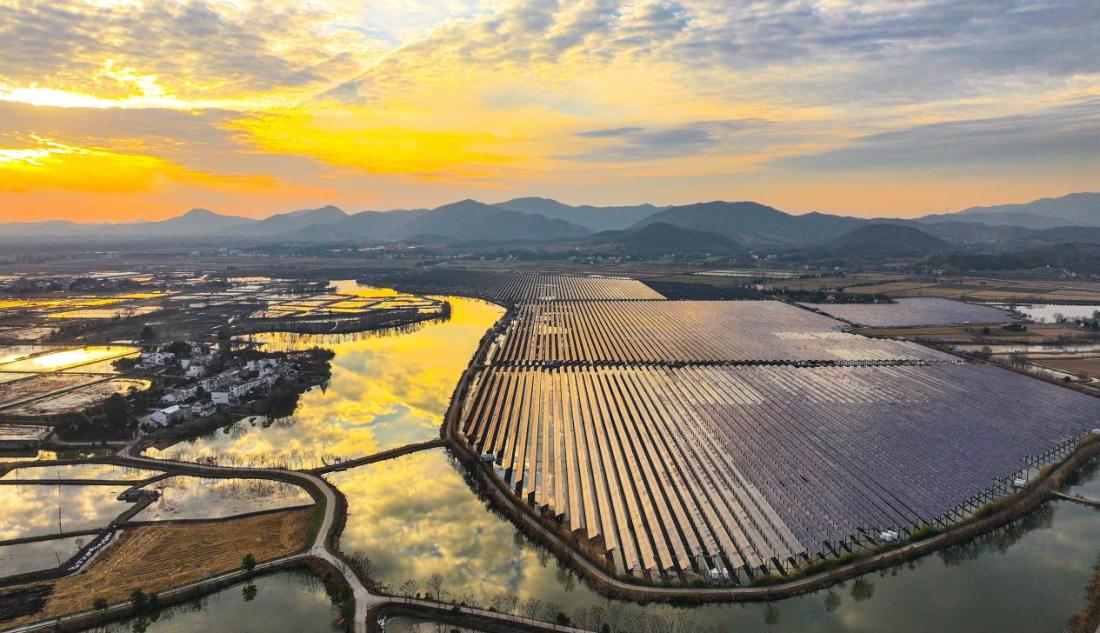
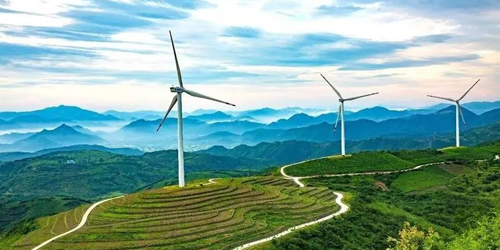
The transformation of the energy structure is a key grasp for China to promote environmental protection work, and it promotes the coordinated efficiency of pollution reduction and carbon emission reduction through clean energy substitution. During the "14th Five-Year Plan" period, the development of renewable energy in China has achieved a historic leap from large-scale growth to simultaneous improvement of quality and efficiency, building the world's largest and fastest-growing renewable energy system. The once desolate "sandy, gravelly and Gobi areas" have been transformed into "energy oases" with an additional installed capacity of more than 130 million kilowatts, generating green momentum from barren land; offshore wind power and distributed photovoltaic power have developed rapidly, becoming new engines for energy transition. As of the first half of 2025, China's new energy storage installed capacity is about 95 million kilowatts, an increase of nearly 30 times in 5 years. The proportion of renewable energy power installed capacity has increased from 40% to about 60%, and 1 out of every 3 kWh of electricity in the whole society comes from clean energy such as wind, sunlight and water flow. The vigorous development of the new energy vehicle industry also demonstrates the effectiveness of the transition. A supporting global largest electric vehicle charging network has been built, with 2 charging piles for every 5 electric vehicles, and green travel has become a new social trend. The in-depth transformation in the energy field has not only strengthened the energy security barrier, but also significantly reduced the carbon emission intensity, laying a solid foundation for achieving the "dual carbon" goals.
Policy Innovation Consolidates Environmental Protection Support
A sound policy system and institutional guarantee provide solid institutional support for environmental protection work. China has incorporated ecological civilization construction into the overall national development layout and built a full-chain environmental protection policy framework. In the field of addressing climate change, China has announced its national determined contribution goals for 2035 and proposed a "1+3+3" package goal system, achieving a major leap from focusing on carbon dioxide to covering all greenhouse gases and from controlling intensity to reducing total emissions. Among them, the quantitative target that the net greenhouse gas emissions of the entire economy will drop by 7%-10% from the peak by 2035 demonstrates unprecedented ambition in emission reduction. Institutional innovation continues to make efforts. The national carbon emission rights trading market operates steadily and gradually expands its coverage, which is expected to cover more than 80% of the total carbon emissions in the future; the cumulative trading volume of the national greenhouse gas voluntary emission reduction trading market has reached 3.25 million tons, providing strong financial support for carbon reduction projects. At the same time, the "National Strategy on Climate Change Adaptation 2035" has been issued and implemented. 31 provincial administrative regions have formulated adaptation action plans, and 39 cities have carried out pilot climate-resilient cities, forming a work pattern of coordinated advancement of national strategies, provincial actions and urban pilots.
Great Power Responsibility to Jointly Protect the Earth Home
While promoting domestic environmental protection work, China adheres to the concept of a community with a shared future for all life on Earth, actively participates in global ecological governance, and demonstrates great power responsibility. The China-Central Asia Desertification Control Center was officially inaugurated, the International Mangrove Center settled in Shenzhen, and practices such as the "Three-North" Shelterbelt Program and the "China's Landscapes Program" have been widely praised by the international community. It has deeply participated in conventions such as the United Nations Framework Convention on Climate Change, the Convention on Biological Diversity and the Convention to Combat Desertification, actively responded to action plans such as the United Nations "Decade on Ecosystem Restoration", and signed the Agreement on Biodiversity Beyond National Jurisdiction under the United Nations Convention on the Law of the Sea, playing an important leading role in the process of global ecological civilization construction. Faced with the complex situation of global climate governance, China firmly upholds multilateralism, promotes the implementation of the principle of common but differentiated responsibilities, calls for creating a sound environment for the free flow of green and low-carbon products, and injects strong impetus into global climate governance.

Achievements in Green Transition and Future Outlook
Today's China has a forest coverage rate of over 25% and contributes about 25% of the world's newly added green area; the annual carbon sequestration capacity of forests and grasslands exceeds 1.2 billion tons of carbon dioxide equivalent, and the ecological carbon sequestration capacity continues to improve; air quality continues to improve, the water environment is constantly optimized, and the achievements of green development benefit hundreds of millions of people. China's environmental protection practices fully prove that ecological protection and economic development are not opposites, but an organic whole that can promote and develop in coordination. This path of green transition is not only an inevitable choice for China to achieve high-quality development, but also provides replicable practical experience for global ecological governance. In the future, China will continue to deepen its efforts in the field of environmental protection, continuously promote ecological protection and restoration, accelerate green and low-carbon transition, and contribute more Chinese strength to building a beautiful China and a clean and beautiful world together.

