


Policy Leadership: Breaking New Ground for a Trillion-Yuan Market
From the clear commitment to developing the low-altitude economy at the Third Plenary Session of the 20th Central Committee of the Communist Party of China to its first inclusion in the Government Work Report as a new growth engine, policy dividends at the national level have been continuously unleashed, removing institutional barriers for industrial development. A series of regulations, such as the Interim Regulations on the Management of Unmanned Aerial Vehicles and the National Basic Airspace Classification Method, have been successively introduced, establishing a four-tier regulatory system covering "laws, administrative regulations, departmental rules, and local regulations". At the local level, progress has been made in multiple regions: Shenzhen has rolled out China's first specialized legislation on low-altitude economy with a maximum single reward of 15 million yuan; Chongqing plans to achieve "general aviation take-off and landing points in every town" by 2027; and provinces like Anhui and Inner Mongolia are building industrial hubs based on their unique advantages. This policy system featuring "central coordination + local characteristics" is propelling the low-altitude economy from pilot exploration to a new stage of large-scale development.

Technological Breakthroughs: Laying a Solid Foundation for Industrial Development
The in-depth integration of new energy and next-generation information technology has enabled China's low-altitude economy to make a leap from "catching up" to "partial leadership" in core technology fields. On the equipment manufacturing front, XPeng HT has received nearly 5,000 orders for its "Land Aircraft Carrier" flying car, with mass production planned for 2026; GAC GOVY AirCab, priced at less than 1.68 million yuan, has opened for pre-order; EHang EH216-S has become the world's first manned unmanned aerial vehicle with "four certificates in one". In terms of the support system, Beidou Navigation provides centimeter-level positioning, 5G-A builds a high-speed communication network, and China Telecom's "Xingxun" platform realizes concurrent monitoring of 10,000-level aircraft. More notably, the localization rate of core components such as power batteries and flight control systems is constantly improving. The release of the Technical Roadmap for Low-Altitude Aircraft Power Batteries (2025 Edition) has further clarified the direction of technological development, providing solid support for cost reduction and efficiency improvement in the industry.

Scenario Implementation: Low-Altitude Services Integrate into Daily Life
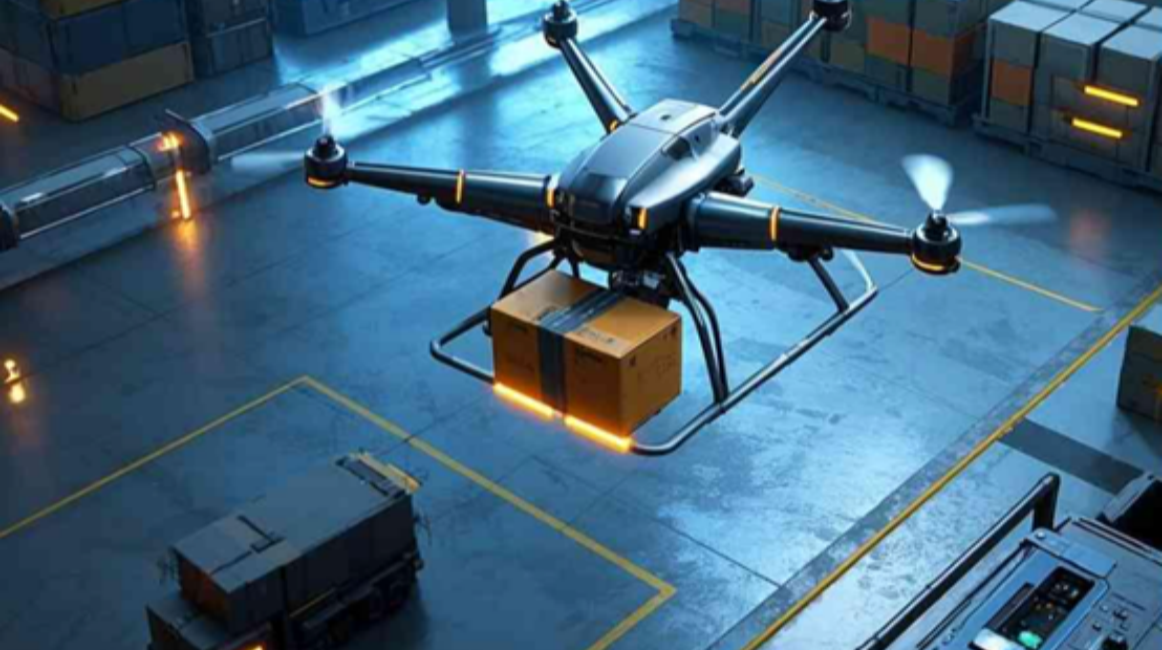
What was once a science fiction scenario has now become reality, as the low-altitude economy is penetrating all aspects of production and daily life through diverse scenarios. For urban commuting, Jinan’s air cloud bus covers 30 kilometers in just 20 minutes with a 5-yuan fare, twice as fast as ground transportation. In logistics and delivery, Meituan’s drones in Shenzhen see a steady rise in daily delivery volume, capable of delivering fresh produce to residents within 8 minutes for distances up to 3 kilometers. In emergency rescue scenarios, drones reached earthquake-stricken areas in Yunnan in 15 minutes, and the Third Hospital of Hebei Medical University used drones to transport medical supplies—three times faster than traditional vehicles. In agriculture, plant protection drones in Wuhan can complete operations on 700 mu of rice fields in a single day, increasing pesticide utilization rate by 30%. In the cultural tourism industry, hot air balloons in Zhangjiajie and paragliding in Sanya have become viral attractions, with low-altitude tourism in Hainan boosting per capita consumption by 3,000 yuan. The implementation of these scenarios has transformed the low-altitude economy from a concept into a creator of value.
Regional Agglomeration: Forming a Development Pattern Led by Multiple Poles
Based on distinct resource endowments and industrial foundations, China’s low-altitude economy has formed a spatial layout featuring "four major clusters leading and multiple regions developing with characteristics". The Beijing-Tianjin-Hebei region, the Yangtze River Delta, the Pearl River Delta, and the Chengdu-Chongqing Economic Circle have built a full-chain system covering R&D, manufacturing, and application by virtue of their sound industrial ecosystems. As the "world’s first city for the low-altitude economy", Shenzhen has built 12 industrial parks, housing over 1,900 enterprises in the industrial chain, and opened 434 drone logistics routes. Chengdu, leveraging its advantages in aviation manufacturing, has created an integrated "R&D-manufacturing-operation" chain. Wuhu, Anhui, focuses on building an innovation highland and a pilot zone for future industries. Inner Mongolia, taking advantage of its vast territory and excellent clear airspace, has fostered the Hohhot-Baotou-Ordos low-altitude economic circle. Regions such as Jingdezhen in Jiangxi and Nujiang in Yunnan have developed low-altitude tourism and mountain logistics in light of their own characteristics, forming development paths tailored to local conditions.
Security Supervision: Safeguarding the "Lifeline" of Low-Altitude Flight
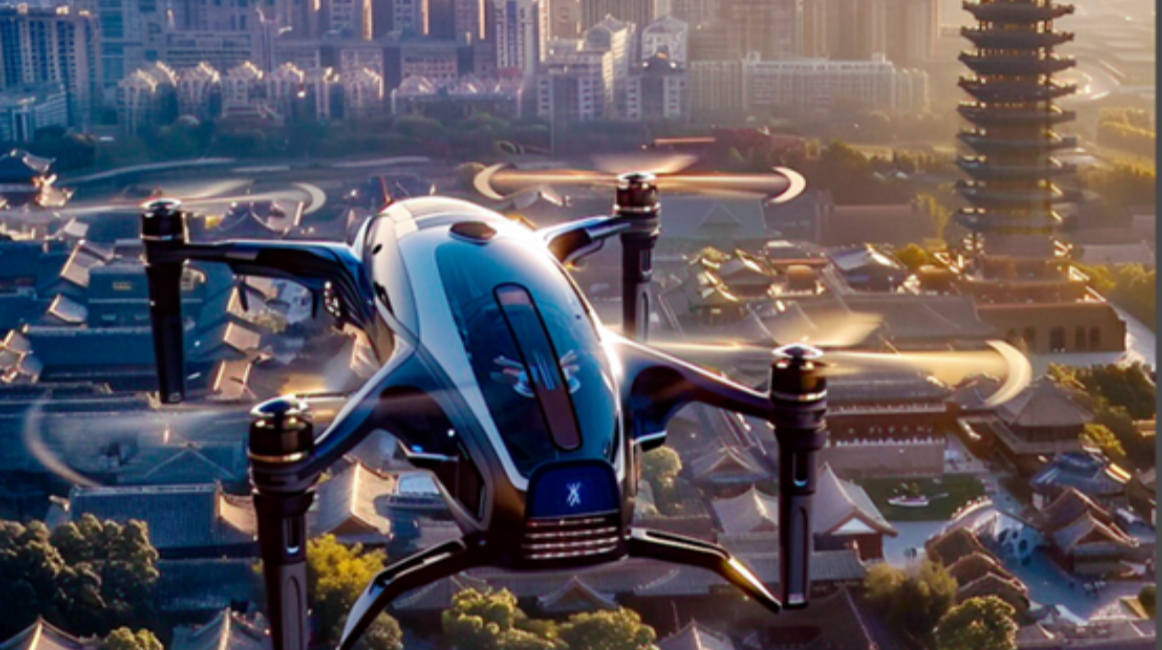
The healthy development of the low-altitude economy is inseparable from the modernization and upgrading of the safety supervision system. China is promoting the transformation of supervision philosophy from "being able to control" to "controlling well", and building a new supervision system featuring military-local-civilian coordination and technology empowerment. The national low-altitude economy data sharing platform is being accelerated, with flight data certification realized through blockchain technology and risk assessment carried out using big data, breaking down the "information silos" between departments. In airspace management, the requirements for classified control are implemented: the "filing system + negative list" is adopted in Class G airspace, and precise control is achieved through electronic fences in Class W airspace. The emergency support system is continuously improved, professional rescue teams have been established, and diversified insurance products are gradually promoted, forming a risk-sharing mechanism. Meanwhile, universities and enterprises are cooperating to cultivate interdisciplinary talents, industry associations are participating in standard-setting, and public supervision channels are unimpeded, building a co-governance pattern of "government supervision, enterprise self-discipline, and public supervision" to escort the low-altitude economy.

