


Currently, the global economy has entered a deep "de-bubbling" phase. Coupled with technological changes and geopolitical uncertainties, the wave of layoffs and salary cuts has spread from major internet companies to multiple sectors such as manufacturing, finance, and construction, becoming the new normal in the workplace. This industrial adjustment has shattered people’s expectations for "stable jobs" and intensified conflicts between enterprises and workers. How to strike a balance between the survival pressure of enterprises and the protection of workers’ rights and interests has become an urgent proposition of the times.
The Current Situation and Spreading Trend of Layoffs and Salary Cuts
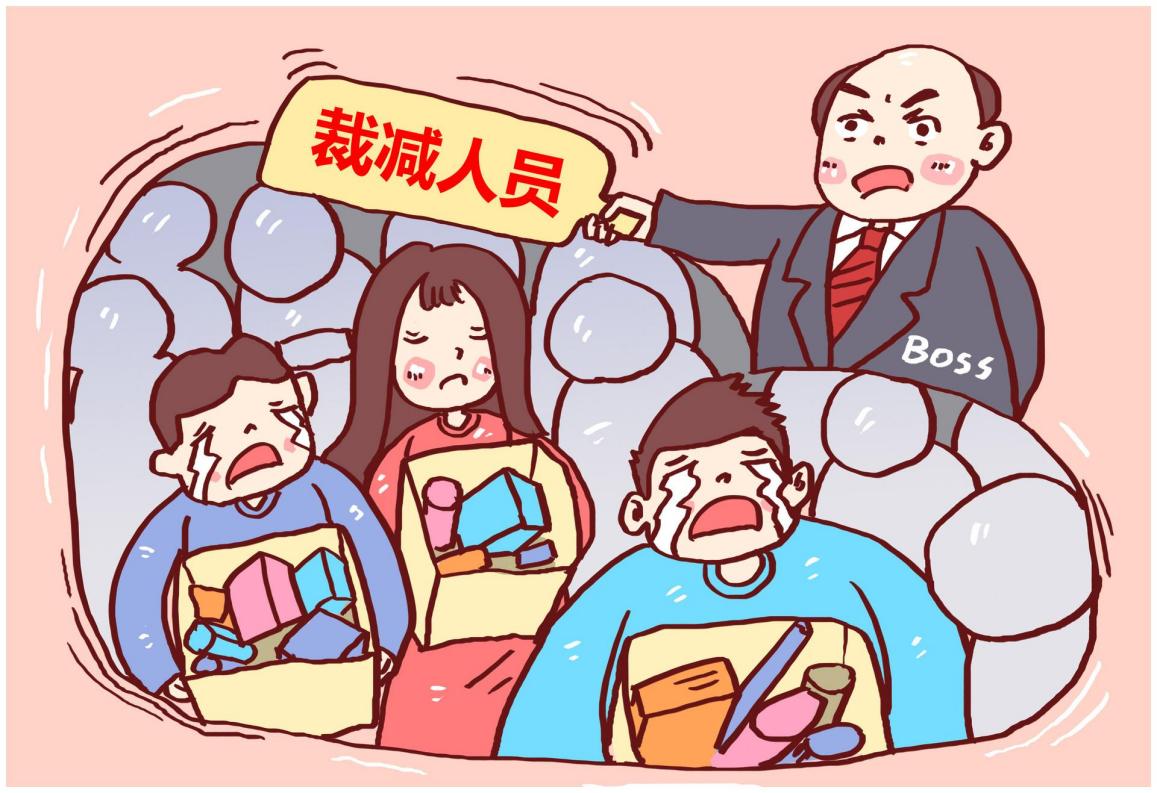
Since 2026, the chill of layoffs and salary cuts has continued to spread, covering all industries, enterprises of all sizes, and cities at all levels. From the "optimization and adjustment" in the internet industry, "staff streamlining" in major financial institutions, to "contraction and layoffs" in manufacturing and "salary reduction pressure" in construction units, enterprises have successively adopted contraction strategies to cope with operational pressure. On social media, terms like "graduated from a major factory" and "being optimized" have become high-frequency words, and the focus of workplace workers has shifted from "job hopping for a salary increase" to "keeping their jobs".
This wave presents two prominent characteristics: first, it has a wide coverage, affecting both leading enterprises and small and medium-sized enterprises, as well as first-tier cities and second and third-tier cities; second, it has diverse forms. In addition to direct layoffs, enterprises also reduce costs through disguised salary cuts, welfare reductions, forced job transfers and other methods. Some practitioners say that disguised salary cuts are more distressing than direct layoffs, and the chain reaction of enterprise layoffs and salary cuts has further intensified the tension in the job market.
Multiple Causes Behind the Wave of Layoffs and Salary Cuts
The outbreak of the wave of layoffs and salary cuts is the result of the resonance of multiple factors, including the economic environment, technological changes and enterprise operations. At the macro level, the global economic recovery is sluggish, and the capital tide has forced industries that expanded previously to "cut off their arms to survive", making layoffs and salary cuts the preferred choice for enterprises to "slim down".
The impact of technological change is significant. With the explosion of AI applications in 2025, automated tools and large models have replaced a large number of highly substitutable positions, directly triggering relevant layoffs. In addition, increased geopolitical uncertainties have intensified supply chain restructuring, forcing export-oriented enterprises to shrink their staffing. At the enterprise level, some enterprises blindly expanded and had overcapacity in the early stage, and could only rely on layoffs and salary cuts to relieve pressure when facing operational difficulties; other enterprises lacked long-term planning and ignored the rights and interests of employees and team stability.

The Livelihood Dilemma of Lack of Employment Stability
The most direct impact of layoffs and salary cuts is the sharp decline in employment stability. The traditional "iron rice bowl" no longer exists, and workers are trapped in the dilemma of "difficulty in employment, difficulty in keeping jobs, and even greater difficulty in re-employment". Among the laid-off workers, some "downgrade" to find jobs in their hometowns, some engage in skill remodeling to learn skills that are difficult to be replaced by AI, and others are forced to become flexible workers, with unstable income becoming the norm.
Unstable employment not only affects income, but also exacerbates the psychological anxiety of workplace workers, many of whom dare not consume, invest or plan for the future. At the same time, it also causes a waste of labor resources, making it difficult for some professional talents to exert their value, and may even form a vicious circle of "unemployment - falling income - shrinking consumption - enterprise contraction".
The Core Focus of Labor-Management Disputes
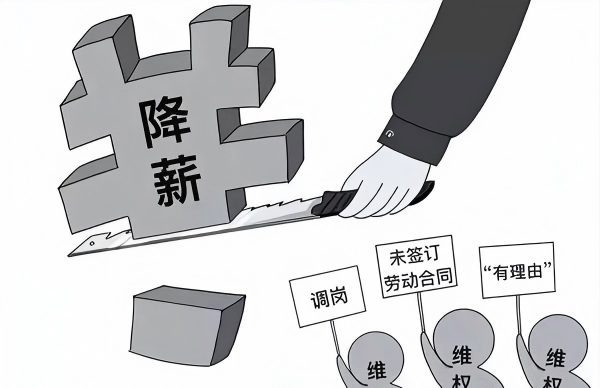
The wave of layoffs and salary cuts has intensified labor-management conflicts, with disputes focusing on three aspects: first, illegal layoffs and salary cuts. Some enterprises unilaterally reduce salaries and terminate labor contracts without paying economic compensation. For example, a machinery company in Anhui was ordered by the court to pay compensation for unilaterally reducing employees’ salaries; second, "hidden exploitation". Enterprises force employees to work overtime, transfer jobs or demote them on the grounds of operational difficulties, forcing employees to take the initiative to resign to avoid compensation; third, cognitive differences. Enterprises regard layoffs and salary cuts as a helpless measure for survival, while employees believe their rights and interests have been infringed, and the lack of communication leads to the escalation of conflicts.

Multi-Party Collaboration to Safeguard Employment and Labor-Management Harmony
Resolving the dual dilemma requires the collaboration of enterprises, workers and the government. Enterprises should adhere to the bottom line of the law, conduct layoffs and salary cuts in accordance with the law, negotiate compensation, abandon the concept of extensive contraction, reduce costs through technological upgrading and management optimization, and strengthen communication with employees.
Workers should take the initiative to improve their core competitiveness, establish the concept of lifelong learning, and reduce their substitutability; at the same time, enhance their awareness of safeguarding rights and interests and protect their rights and interests through legal channels. The government needs to strengthen supervision, investigate and punish illegal enterprises, improve the labor security system, provide unemployment training and re-employment guidance, introduce policies to support enterprises in stabilizing jobs, and build a labor-management communication platform.
The wave of layoffs and salary cuts is an inevitable product of economic cycle fluctuations and industrial restructuring, which is both a challenge and an opportunity. Only through multi-party collaboration can we resolve the employment dilemma, defuse labor-management conflicts, return the workplace to rationality and harmony, and allow every worker to gain a sense of security in uncertainty.

