


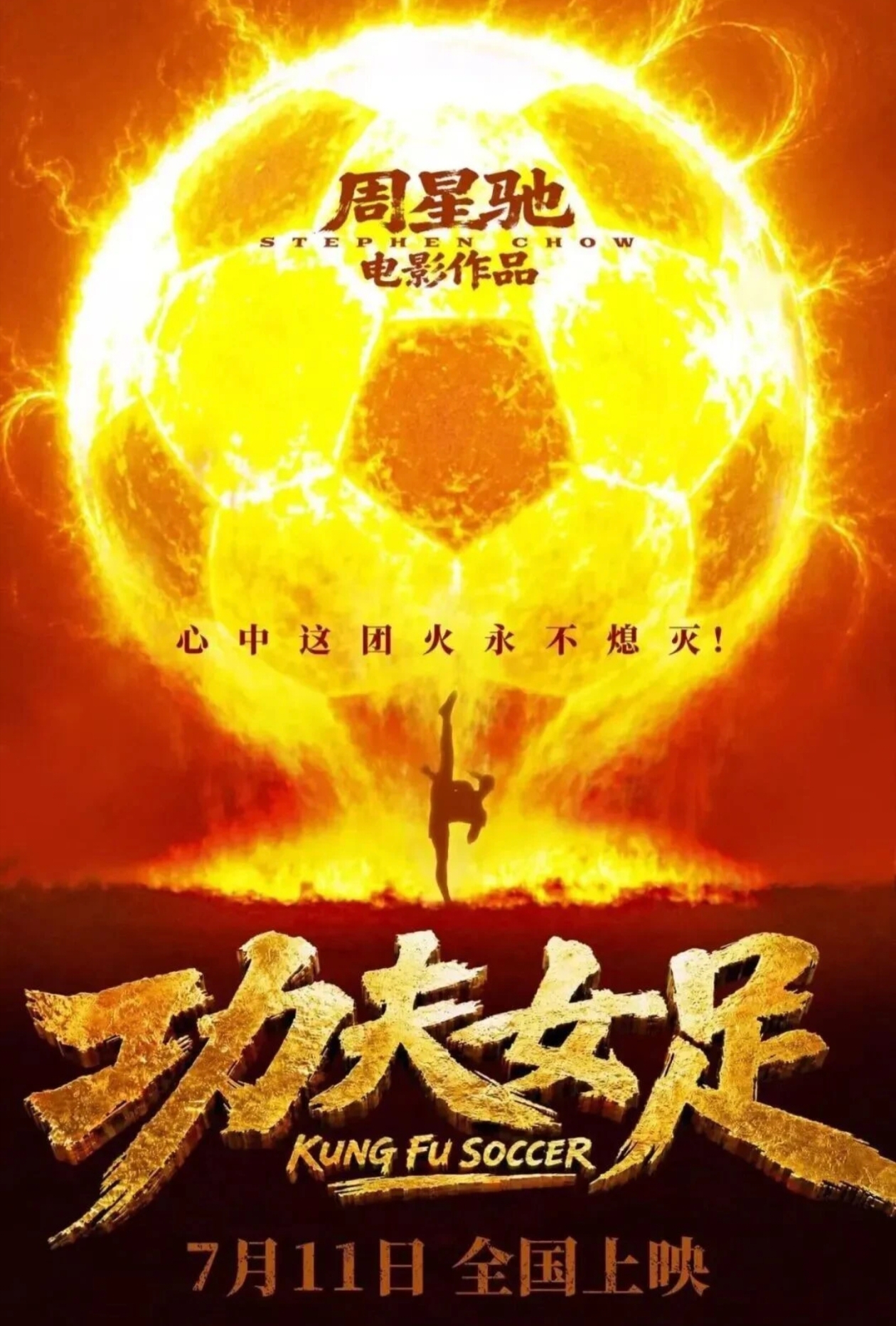
In the sweltering summer of 2026, Chinese cinemas have been set ablaze by a phenomenon that few could have predicted and even fewer can fully explain. Kung Fu Soccer — known in its native market as Gongfu Nüzu — arrived on July 11 with almost no advance warning, yet within days it had rewritten box office records, ignited ferocious debates, and reminded millions why Stephen Chow remains one of the most singular voices in global cinema. It is the director's first feature in seven years, following 2019's The New King of Comedy, and it arrives exactly a quarter-century after his beloved Shaolin Soccer first kicked its way into the hearts of audiences worldwide. This time, however, the pitch is populated entirely by women, and the result is a film that is at once familiar and startlingly new — a work that has earned both rapturous applause and stinging criticism, while grossing more than 1.45 billion yuan (approximately $200 million USD) in its first nine days of release.

The story of Kung Fu Soccer is deceptively simple. It follows the Emei Team, a ragtag grassroots women's football squad whose average age hovers around thirty-five, as they battle their way through the "Supreme Invincible Cup" — a fictional international tournament. The team is led by captain Shuangshuang (played by Zhang Xiaofei, the Golden Rooster-winning star of Hi, Mom), a fiercely determined woman whose vocabulary contains no word for defeat. Alongside her is the mercurial forward Yulong (Dilraba Dilmurat, one of China's most bankable young actresses), whose rebellious spirit initially clashes with Shuangshuang's single-minded intensity. The cast also features Zhang Yixing as the team's coach, with former professional women's footballers Zhao Lina and Li Jiayue making special appearances, alongside Hong Kong legend Carina Lau and Japanese actor Takeru Satoh. What sets the Emei Team apart from any ordinary football squad is their unconventional approach to the beautiful game: they have integrated traditional Chinese martial arts into their playing style, executing moves drawn from Tai Chi, Wing Chun, and the legendary Emei martial tradition. Opposing teams boast their own fantastical abilities — the Heng River Team features an elastic goalkeeper with supernatural flexibility, while the Pear Blossom squad deploys hypnotic eye techniques to disorient their rivals. This is football as imagined by a child with an unlimited special effects budget, and it is precisely this unapologetic absurdity that has divided audiences so sharply.
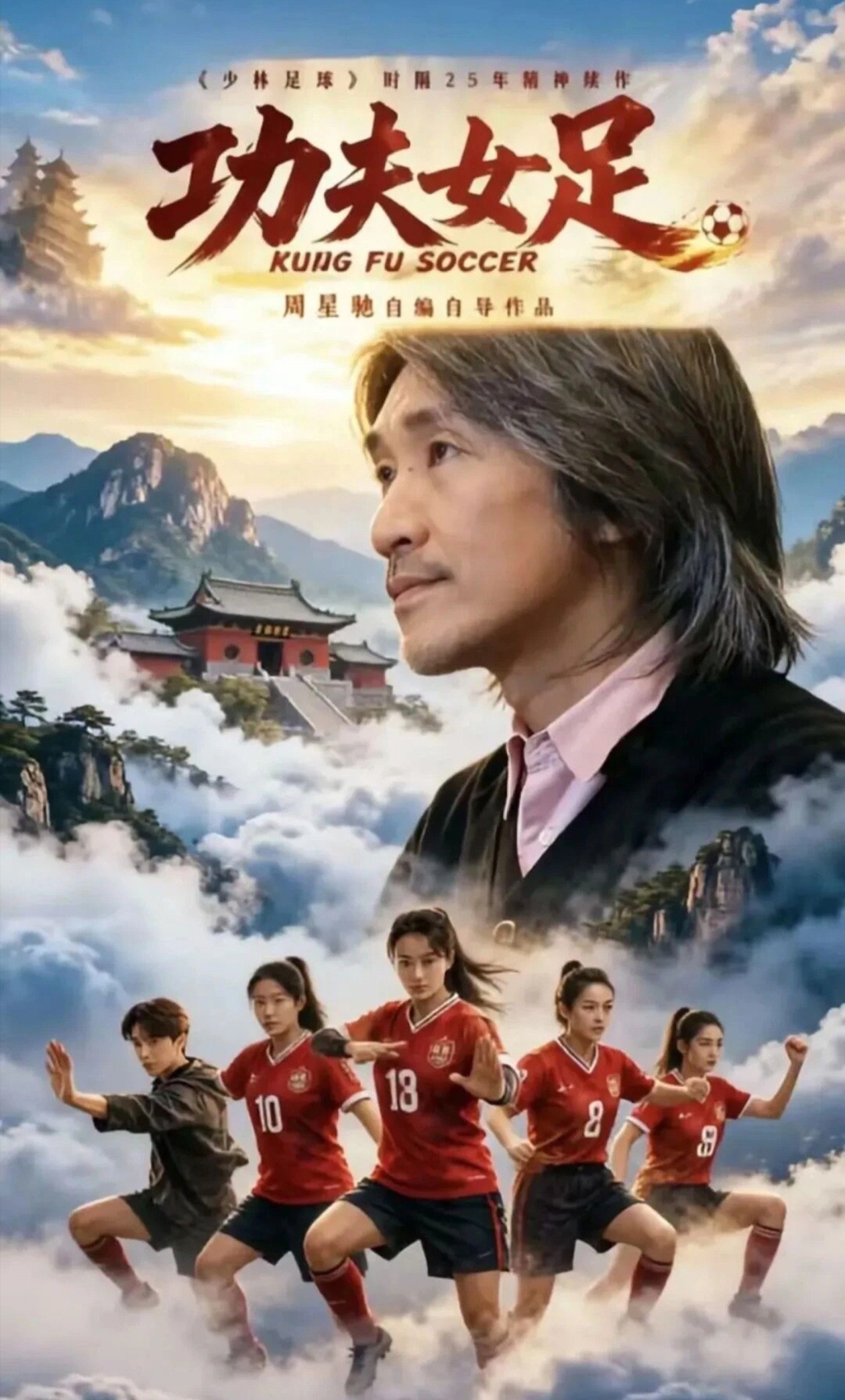
The film's commercial performance has been nothing short of extraordinary. Released with what the industry calls a "zero-promotion elastic scheduling strategy" — the release date was announced merely five days before the premiere — Kung Fu Soccer nonetheless opened to a staggering 260 million yuan (approximately $38 million USD) on its first day, far exceeding the industry's initial forecast of 190 million yuan. Within its first two days, the film had amassed over 500 million yuan ($74 million USD), claiming nearly three-quarters of all ticket sales in China and outpacing its closest competitor by a factor of nine. By day five, the total had surpassed 800 million yuan; by day seven, it had crossed the billion-yuan threshold; and by day nine, it had climbed to third place on the 2026 annual box office chart. Industry analysts now project a final domestic haul of between 2.5 and 3 billion yuan. This performance is particularly remarkable given the context: the summer box office had been languishing at around 50 million yuan per day before Kung Fu Soccer arrived. The film single-handedly revived the season, pushing the daily total past 324 million yuan on its opening weekend and establishing itself as what one commentator called "the first savior of the summer season".
Behind this commercial juggernaut lies a production of considerable scale and ambition. The film reportedly cost 380 million yuan to produce, with nearly half of that budget — between 150 and 190 million yuan — allocated to visual effects. The final cut runs 106 minutes and contains over 1,200 CGI-enhanced sequences. It was shot entirely in the southern Chinese city of Shenzhen, with locations including the Shenzhen Sports Center Stadium and the Dapeng New District's Xichong Resort Beach. The production involved twenty-four companies in various capacities, including Stephen Chow's own Star Overseas and Bargo Group, as well as major players like China Film Group and Maoyan Entertainment. Notably, the film was supported by the Shenzhen Publicity and Culture Fund and produced by Shenzhen Film Studio, making it a flagship project for Guangdong Province's burgeoning film industry. The director himself, now sixty-four years old, took on the triple role of writer, director, and producer, though he chose not to appear on screen — a decision that has only intensified the debate over whether his distinctive comic sensibility can survive without his physical presence.

What makes Kung Fu Soccer so fascinating, however, is not merely its box office success but the profound schism it has created among viewers. On ticketing platforms favored by general audiences, the film maintains a robust score of 9.4 out of 10. Casual moviegoers describe it as "funny and addictive," a "pure and simple joy" that recaptures the uncomplicated delight of childhood cinema. Parents report that their children sit entranced for the entire 106-minute runtime, laughing uproariously at the exaggerated kung fu kicks and absurdist gags. For these viewers, Kung Fu Soccer delivers exactly what they came for: escape, laughter, and the comforting familiarity of the Stephen Chow brand.
On the other hand, the critical response — and the opinions of more discerning cinephiles — has been far less generous. On Douban, China's equivalent of Letterboxd, the film hovers around a mediocre 6.5 out of 10. One-star and two-star reviews together account for approximately 24% of all ratings. Critics have leveled a series of damning accusations against the film: that its plot is a thinly veiled rehash of Shaolin Soccer, recycling the same underdog-team-overcomes-adversity template without meaningful innovation; that its computer-generated imagery feels dated, with some comparing its visual quality to "a low-budget AI short film" or "a video game from twenty years ago"; that its humor, once groundbreaking, now seems strained and out of step with contemporary sensibilities; and that its star-studded cast, while commercially shrewd, lacks the organic comic timing that made Chow's own performances so legendary. As one Hong Kong media outlet put it, the film's "silly jokes are merely clumsy imitations of past gags". The criticism has been sharp enough that the phrase "Kung Fu Soccer is terrible" trended on social media alongside its opposite, creating what observers have called a "rare spectacle of fractured reputation and galloping box office".
Yet to reduce Kung Fu Soccer to either masterpiece or disaster would be to miss the point entirely. What the film represents, more than anything, is a director in transition — a filmmaker who has spent a quarter-century refining a particular vision of the world and is now, in his mid-sixties, attempting to bend that vision toward something new. The most perceptive critics have noted that while the film shares structural DNA with Shaolin Soccer, its spiritual concerns are markedly different. Where the earlier film was animated by the desperate hunger of impoverished underdogs — "If you don't have a dream, what's the difference between you and a salted fish?" — Kung Fu Soccer asks a more mature, more ambivalent question. Its characters are not struggling to survive; they are struggling to find meaning beyond victory. The team's youngest member, a taciturn prodigy named Xue Ye, delivers the film's thematic heart when she declares, simply, "Playing football is for playing football". This is not the rallying cry of a hungry underdog but the quiet wisdom of someone who has learned that passion need not be justified by success. Captain Shuangshuang begins the film believing that there is no point in stepping onto the pitch without the absolute determination to win; she ends it having accepted that loss, too, can be meaningful. This philosophical shift is encapsulated in the film's recurring invocation of Bruce Lee's famous maxim, "Be water, my friend" — a call to fluidity, adaptability, and the wisdom of releasing attachment to outcomes. In this sense, Kung Fu Soccer represents Stephen Chow's most sustained engagement with the themes of letting go and finding joy in the process itself — a far cry from the relentless, almost pathological ambition that drove his earlier protagonists.
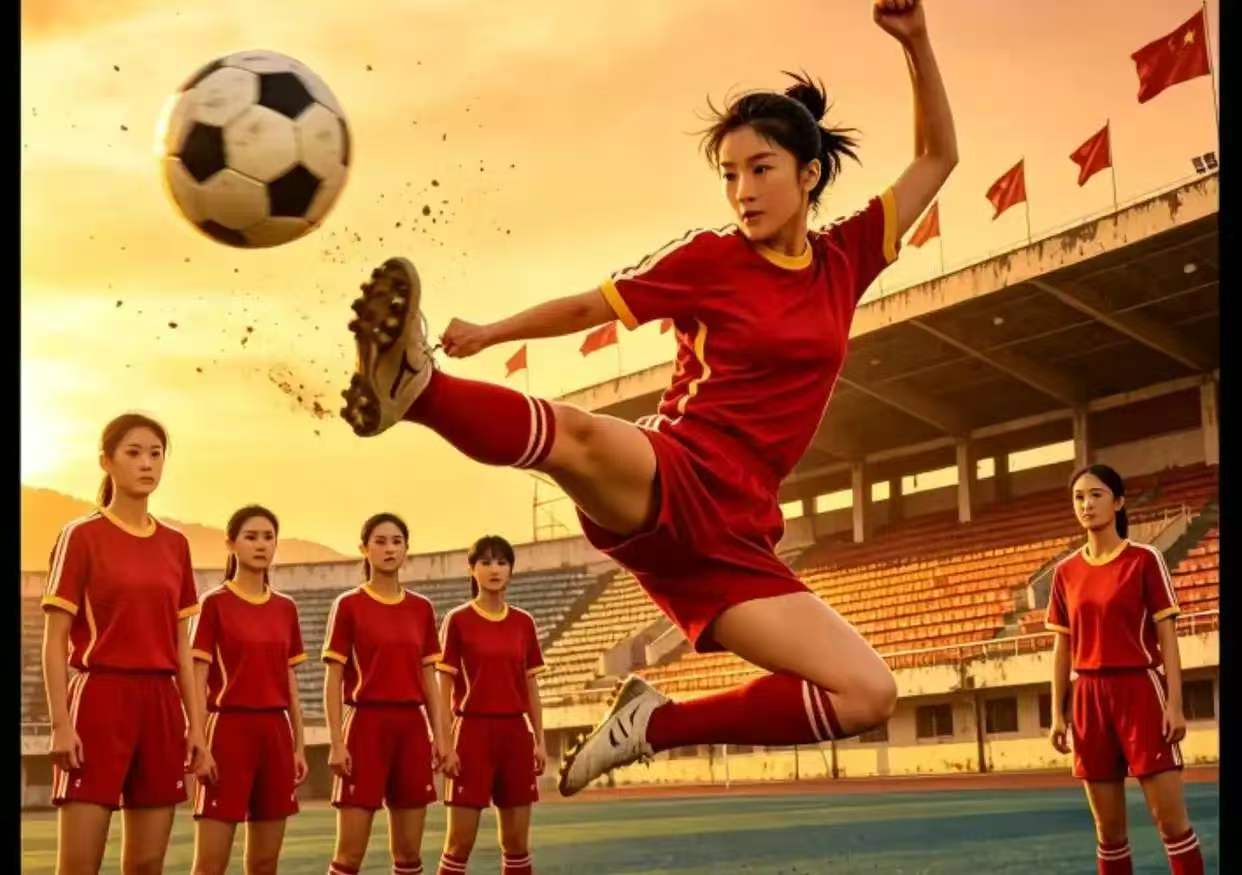
This thematic evolution is inseparable from the film's most significant innovation: its all-female ensemble. For the first time in his career, Chow has constructed a complete female-led narrative, and the choice is anything but incidental. The Emei Team — the name is drawn from a classical Chinese phrase meaning "a woman who refuses to yield to convention" — consists of women in their thirties and forties, an age at which society typically tells women their dreams are behind them. Reporters at press conferences ask them about marriage, not tactics. They are dismissed, patronized, and underestimated at every turn. Their journey is not merely athletic but existential: it is about asserting the right to pursue passion at any age, in any body, against any odds. This is not the adolescent fantasy of Shaolin Soccer but a more grounded, more emotionally complex story about second chances and the solidarity of women who refuse to be defined by others' expectations. The film's emotional climax — a mud-splattered, desperate sprint toward the goal in the final match — has moved audiences to tears, not because it represents triumph in the conventional sense, but because it represents the triumph of perseverance over cynicism.
The production itself reflects a similar commitment to authenticity beneath the cartoonish surface. The principal cast underwent three months of intensive physical training before filming, with Dilraba Dilmurat reportedly gaining eight kilograms to better embody her athletic role. Former professional footballers were brought in to consult and perform alongside the actors. The film was shot on location with real stadiums and real crowds, grounding its fantastical action sequences in a recognizable reality. Even the decision to use an AI-assisted visual effects system — the first time such technology has been deployed at scale in a major Chinese commercial film — represents a gamble on the future of filmmaking, however uneven the results may appear to some viewers.
Perhaps the most telling response to Kung Fu Soccer has come from Stephen Chow himself. At promotional events following the film's release, the director struck an uncharacteristically humble tone, expressing gratitude to audiences while admitting, "I feel a bit ashamed. I often feel that I haven't done well enough, and I'm afraid of letting everyone down". This is not the swagger of a director confident in his masterpiece but the vulnerability of an artist who knows he cannot please everyone and is no longer sure he should try. Chow has spoken openly about the pressure of audience expectations, the weight of a legacy that spans decades, and the difficulty of finding something new to say in a cinematic language he helped invent. That he has chosen, in his seventh decade, to center his work on women, on middle age, on the wisdom of letting go — these are not the choices of a filmmaker resting on his laurels. They are the choices of someone still searching, still experimenting, still willing to risk failure in pursuit of something genuine.
The international reception of Kung Fu Soccer is only just beginning. Singapore-based distributor Encore Films has acquired worldwide rights outside mainland China, and release dates in other territories are expected to follow. For Western audiences unfamiliar with Chow's oeuvre, the film offers an accessible entry point into a comic tradition that blends slapstick, martial arts, and profound emotional sincerity in ways that have no direct equivalent in Hollywood. For those who grew up on Shaolin Soccer and Kung Fu Hustle, it offers both the comfort of familiarity and the challenge of something slightly different — a director who has not stopped evolving, even as the world around him has transformed beyond recognition.
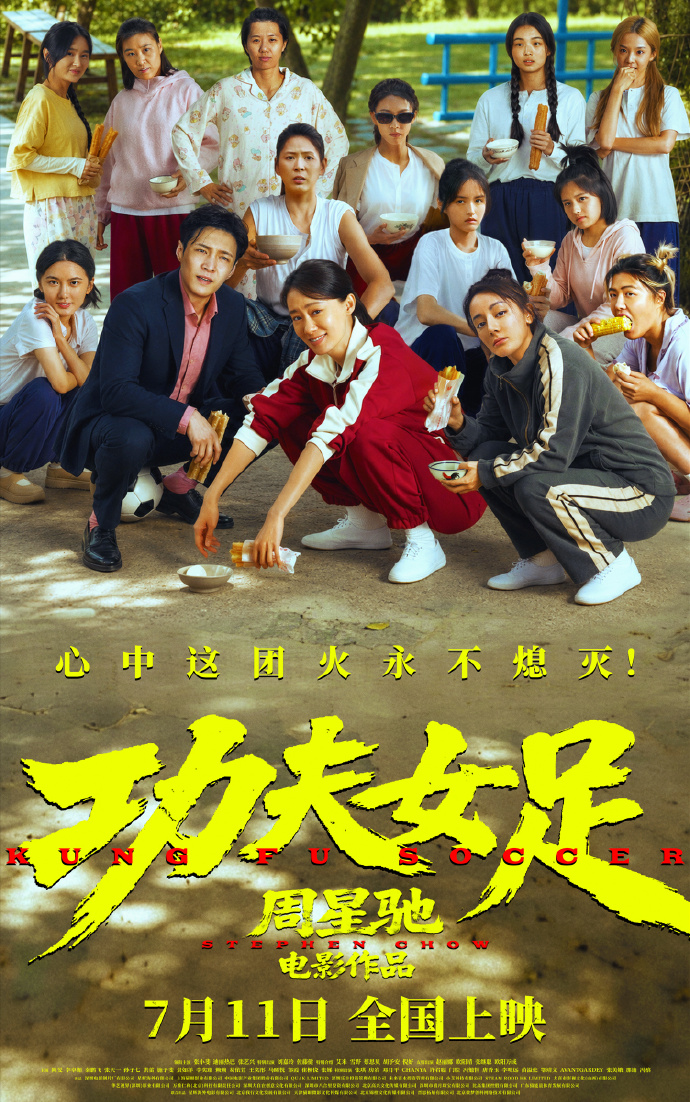
In the end, Kung Fu Soccer is not simply a film but a cultural event — a Rorschach test onto which audiences project their own expectations, their own nostalgia, their own hopes for what cinema can still be. Its box office numbers tell one story; its critical reception tells another; and the lived experience of watching it — the laughter of children, the tears of adults, the arguments that erupt on social media afterward — tells a third, more complicated truth. Stephen Chow may not have recaptured the lightning of his youth, but he has done something perhaps more difficult: he has made a film that refuses to be ignored, that demands to be reckoned with, that insists on its own messy, imperfect, utterly sincere existence. And in an era of increasingly safe, predictable franchise filmmaking, that may be the most radical act of all. As the Emei Team discovers, the point is not always to win — sometimes, the point is simply to keep playing. Whether Kung Fu Soccer will be remembered as a triumph or a misstep, one thing is certain: it has ensured that, twenty-five years after Shaolin Soccer first dazzled the world, Stephen Chow is still very much in the game.

