


In the sweltering weeks between July and August, when the mercury climbs past thirty-five degrees in most of China's major cities, a quieter but more powerful thermometer begins to register something else entirely: the collective fever of national movement. This is not the frantic, week-long sprint of the Lunar New Year, nor the patriotic parade of the National Day golden week. This is the summer travel rush—a sprawling, slow-burning exodus that lasts nearly two months, involves hundreds of millions of people, and has, in recent years, transformed from a simple holiday escape into a complex cultural and economic phenomenon that reveals as much about contemporary China as any policy white paper or GDP chart. For the foreign observer, what is most striking is not merely the scale—though that alone is staggering—but the quiet evolution of why, where, and how Chinese families choose to spend their hottest days.
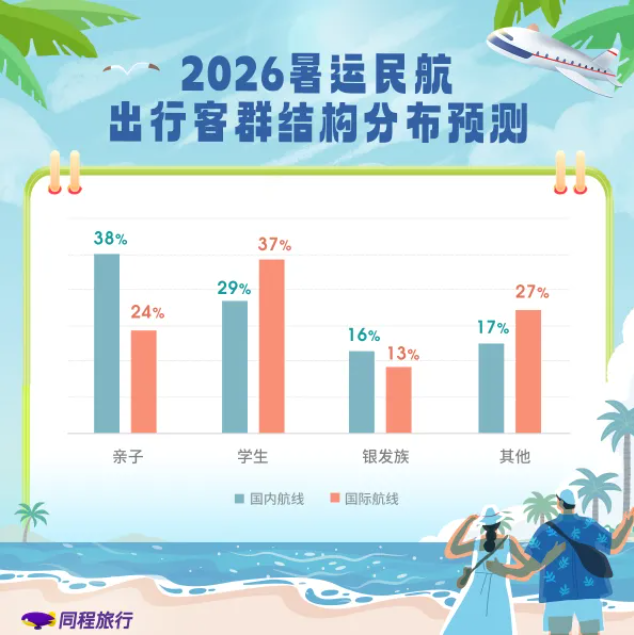
To understand the summer rush, one must first set aside the Western image of a two-week family road trip or a backpacking interrail journey. In China, summer is the season of the child, and the child is the sun around which entire extended families orbit. The school calendar, with its two-month break, acts as the primary engine; but the fuel comes from something deeper—a generational conviction that travel is not a luxury but a pedagogical necessity. Middle-class parents, many of whom grew up in an era of relative material scarcity, now view summer outings as an essential extension of classroom learning. History museums in Xi'an, science centres in Shanghai, and university campuses in Beijing swell with uniformed tour groups of ten-year-olds clutching notebooks, while their parents trail behind, smartphones raised, documenting every exhibit as if curating a digital portfolio of enlightenment. This is education by immersion, but it is also education by status: the unspoken competition among families to have visited the most prestigious sites, collected the most photogenic memories, and returned to school in September with a tan that proves a summer well spent.
Yet the phenomenon is far from monolithic. Over the past three years, a conspicuous shift has occurred in the geographic imagination of the summer traveller. The traditional magnets—the Forbidden City, the Terracotta Warriors, the Bund in Shanghai—remain thronged, but they are no longer the sole or even primary destinations. Instead, a new cartography of cool has emerged, one that favours altitude, latitude, and novelty. The plateau of Yunnan, with its eternally spring-like climate, has become a refuge for families fleeing the coastal steamers; the grasslands of Inner Mongolia, where yurts glow with LED string lights at night, offer a pastoral exoticism that feels both authentically Chinese and refreshingly other. Most dramatically, the far western province of Xinjiang has seen tourist numbers double in some prefectures, as travellers seek the jagged peaks of the Tianshan range and the turquoise lakes that photographers have made viral on social media. This westward tilt is not accidental—it reflects a deliberate state campaign to develop domestic tourism infrastructure in less-visited regions, but it also mirrors a restless search for the unfamiliar within the familiar, a desire to discover that China still holds landscapes that defy the factory-and-skyscraper stereotype.
Technology, as in all spheres of modern Chinese life, acts as both enabler and choreographer of this summer ballet. The ubiquitous super-apps—WeChat, Alipay, and Douyin—are not merely payment tools but travel oracles. They recommend itineraries based on past browsing, flag crowd levels in real time, and sell discounted cable-car tickets with the same frictionless ease as ordering takeout. For the foreign traveller accustomed to booking flights weeks in advance and printing boarding passes, the Chinese summer tourist's spontaneity is dizzying. A family might decide at breakfast to drive three hundred kilometres to a mountain village, reserve a homestay while stuck in traffic, and livestream their arrival to an audience of relatives by lunchtime. This digital seamlessness has, however, created a paradox of abundance. With every scenic spot, every restaurant, every restroom now reviewable and rankable, the summer traveller is perpetually shadowed by the fear of missing out—not on sights, but on the right sights, the Instagrammable angles, the verified local dishes. The result is a curious homogenisation of experience: thousands of tourists lining up at the exact same “secret” viewpoint, photographed from the exact same drone altitude, all because an influencer's video garnered ten million likes. Authenticity, in this context, becomes a performance that everyone watches but few actually inhabit.
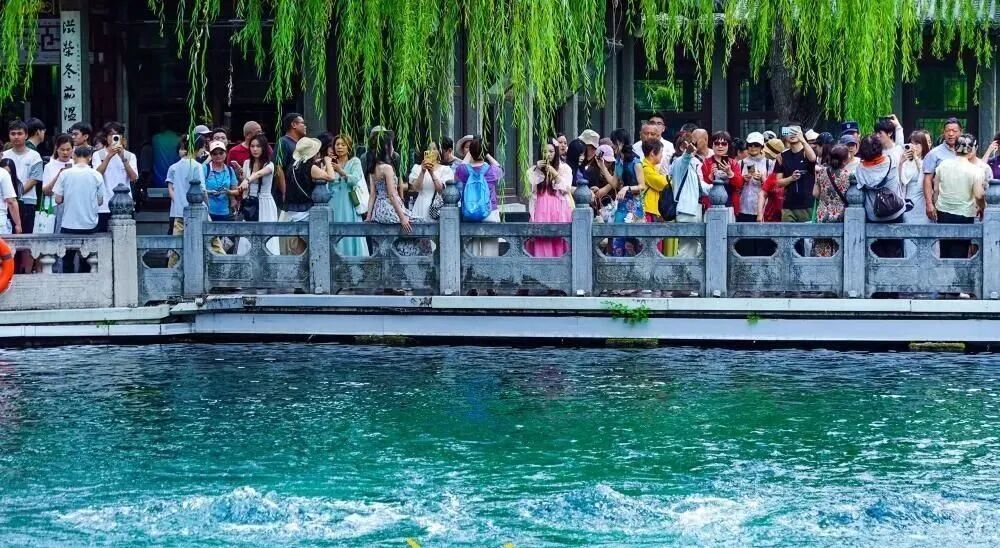
Climate, inevitably, casts a long shadow over this summer carnival. The heatwaves that have scorched much of the northern hemisphere in recent years have not spared China, and the summer tourist now navigates a landscape of adaptive rituals. Midday visits are abandoned in favour of dawn excursions and dusk promenades; air-conditioned shopping malls morph into impromptu museums of consumer culture; and the humble electric fan, clipped to a stroller or held by a grandmother, becomes the emblem of grassroots resilience. More significantly, the summer rush has begun to bend toward cooler altitudes not merely for comfort but for survival. Mountain resorts in Sichuan and Guizhou, once sleepy retreats for retired cadres, now buzz with young families who treat the 1,500-metre elevation as a medical prescription against urban heatstroke. This climate-aware travel is rarely framed as environmental activism—China's public discourse on climate change remains state-managed and cautious—but it manifests in millions of small, pragmatic decisions: choosing a train over a plane for shorter distances, carrying reusable water bottles, and planting trees as a souvenir activity. The summer rush, in this sense, is inadvertently becoming a laboratory for low-carbon adaptation, even as the very act of mass mobility adds to the emissions that warm the planet.
Yet for all its modernity, the summer travel rush retains deep echoes of older Chinese traditions. The intergenerational convoy—three generations sharing a single minivan, grandparents in the middle row, parents navigating, children in the very back with tablets—recalls the ancient practice of ancestral pilgrimage, though now the temples are theme parks and the offerings are selfie sticks. The communal eating that defines every summer trip, where round tables spin with twenty dishes and loud toasts of barley beer or iced sour plum drink, echoes the banquet culture of the Tang dynasty, albeit with QR-code menus and delivery drones. Even the ubiquitous souvenir—a jade pendant, a embroidered pouch, a box of local pastries—carries the same talismanic function as the charms bought at mountain monasteries centuries ago: it proves that one has ventured, endured, and returned home with a tangible piece of the elsewhere. What has changed is the velocity and volume; what has persisted is the human need to mark the passage of summer with a story.

The economic implications of this two-month migration are nothing short of monumental. Estimates suggest that summer tourism accounts for nearly thirty percent of China's annual domestic travel revenue, a figure that dwarfs any single holiday week. Hotels in peripheral cities report occupancy rates above ninety percent for six consecutive weeks; high-speed rail operators add hundreds of temporary services, some running past midnight; and street vendors in once-obscure towns learn to process digital payments faster than their counterparts in Beijing. This cash flood, however, is not evenly distributed. The well-known destinations grow wealthier and more crowded, while lesser-known counties, despite government subsidies, struggle to retain visitors beyond a single selfie stop. The summer rush thus amplifies regional inequalities even as it claims to alleviate them—a tension that local authorities manage with aggressive marketing campaigns, often featuring celebrity endorsements that feel jarringly out of place against a backdrop of terraced rice paddies. For the foreign analyst, this is a textbook case of tourism-led development's double edge: it creates jobs and infrastructure, but it also inflates property prices, strains water supplies, and turns local customs into commodified spectacles performed three times daily.
Perhaps the most profound transformation, however, is psychological. The summer traveller of 2026 is notably different from the package-tour participant of a decade ago. They are more likely to be female, more likely to be under thirty-five, and far more likely to travel without a fixed itinerary. They speak passable English, they have second passports from investment migration schemes, and they compare their domestic experiences with those in Kyoto, Tuscany, or the Swiss Alps. This cosmopolitan sensibility does not diminish their patriotism; rather, it deepens their appreciation for China's own diversity. A young graphic designer from Shenzhen, hiking in the misty forests of Fujian's Wuyi Mountains, might post side-by-side comparisons of tea-picking methods with those she observed in Sri Lanka—not to critique, but to celebrate a shared global ritual. The summer rush, in this reading, becomes a quiet exercise in soft cultural diplomacy, conducted not by state officials but by millions of ordinary citizens who return from their journeys with expanded mental maps and nuanced stories to tell.
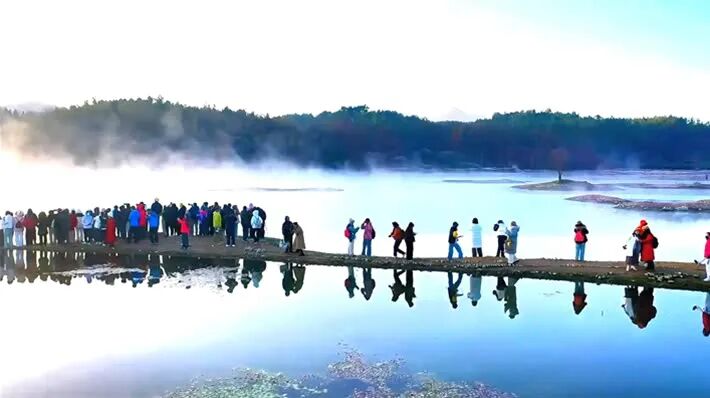
But the summer is also a season of friction. Queues stretch for hours outside the most popular museums, and the patience of both tourists and staff frays under the afternoon sun. Social media feeds fill with complaints about overpriced noodles, noisy hotel neighbours, and the perennial mystery of why the air conditioning never seems strong enough. These grievances, however, are aired with a resignation that borders on affection—a shared acknowledgment that summer travel in China is a trial by fire, and that survival itself is a badge of honour. There is a peculiar camaraderie among strangers sweating together in a cable-car line, exchanging bottled water and folding fans, comparing sunburn levels and recommending the best shaded benches. This transient solidarity, born of discomfort, is perhaps the most authentic souvenir of all: it reminds every participant that they are part of a vast, messy, exuberant human migration that transcends class, region, and even generation.
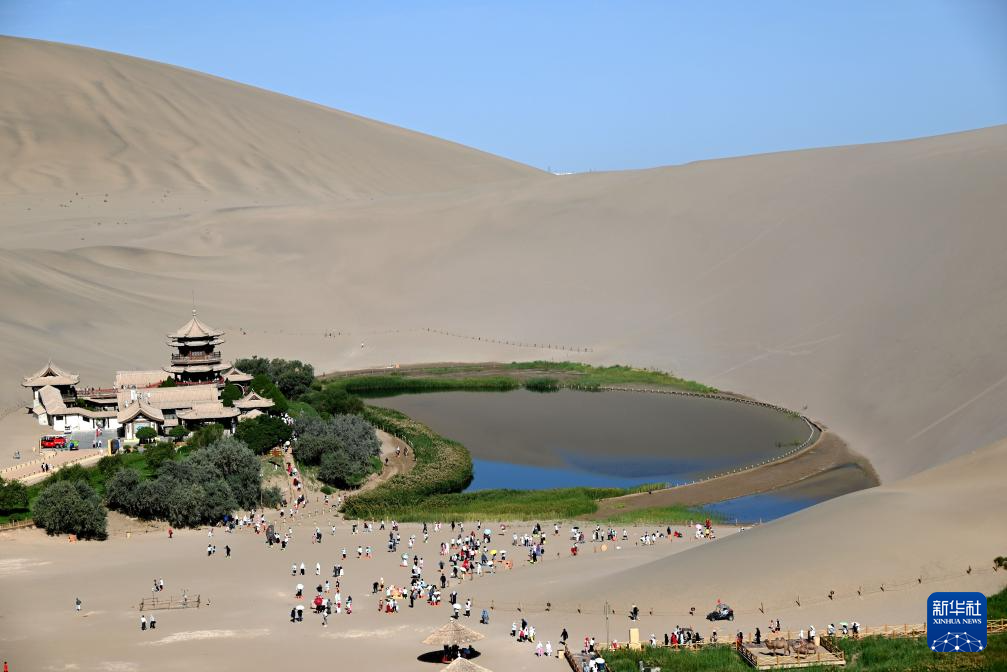
As August wanes and schools send out their countdown reminders, the summer rush gradually recedes. Trains empty, hotels lower their rates, and the great attractions exhale with relief. But the memories—the thousands of photographs, the bruises from hiking boots, the lingering taste of street-market skewers—settle into family albums and dinner-table conversations that will last until the next winter holiday. For the foreign reader, this annual spectacle might appear chaotic, excessive, even environmentally questionable. Yet to reduce it to such terms is to miss its deeper significance. The summer travel rush is China's most honest mirror: it reflects its aspirations for education, its hunger for authenticity, its embrace of technology, its anxiety about climate, and its unshakable faith in movement as a form of renewal. In a country where so much is planned, regulated, and optimised, the summer holiday remains a glorious exception—a sprawling, noisy, imperfect festival of human curiosity. And for that alone, it deserves not just observation, but a certain wonder. The pulse beats long and loud, and as long as the mercury rises, so will the roads, the rails, and the restless hearts that travel them.

