


The Barrier Lies Not in Scenery, but in Four Characters
On November 10, a mainland Chinese netizen shared online a supplementary-document notice for an online application to travel to Taiwan. The hotel booking confirmation he had submitted, generated automatically by a simplified-Chinese booking platform, contained the four-character phrase "China Taiwan", and the review was rejected as a result. Taiwan authorities required him to resubmit a booking form without those four characters. In addition, he had to hand-write and sign a statement along the lines of "the two sides of the Taiwan Strait are not subordinate to each other" before his application could proceed. Taiwan's internal affairs administration stated that when reviewing visits by mainland residents to Taiwan, any words or actions found to violate its so-called "principle of reciprocal dignity" would be refused permission.
On the morning of November 11, at the regular press conference of the Taiwan Affairs Office of the State Council, a reporter from Taiwan's United Daily News raised this incident. Spokesperson Zhang Han gave a straightforward response: both sides of the Taiwan Strait belong to one China, and Taiwan is part of China. The Democratic Progressive Party (DPP) authorities cling stubbornly to their "Taiwan independence" separatist stance, repeatedly imposing restrictions and erecting barriers to cross-Strait tourism and exchanges across all sectors. This is deliberate political manipulation. Any retrogressive act running counter to historical trends and going against the tide will surely trigger backlash from public opinion.
Here lies the crux of the conflict: those four characters on the booking slip were auto-generated by the platform, not a political declaration by the tourist. An entry permit ought to examine documents, the itinerary, and whether the applicant has the ability to return; it should not assess whether the tourist is willing to recite a passage written by someone else.

Public opinion within Taiwan is far from unanimous in supporting such practices. China Times News Network published a commentary questioning the policy of forcing ordinary tourists to make political declarations. Some media outlets described this approach as "self-gratifying Taiwan-independence posturing". The reasoning is plain: Taiwan's tourism sector is desperate for returning visitors, yet the administrative authorities erect a political barrier at the gate. The ones deterred first are not those with allegedly incompatible political stances, but ordinary people who merely wish to stay two nights at Sun Moon Lake and sample some night-market snacks.
It Is Not Rules, But Calculation, That Blocks People
What makes this incident most disturbing is that it is not an isolated case, but one link in a consistent pattern. Back in September, Taiwan's transportation and tourism department issued a circular to travel agencies, demanding that operators "comply" with certain restrictions when organizing exchanges or travel to the Chinese mainland. The Taiwan Affairs Office of the State Council immediately pointed out that this was a tactic of intimidating Taiwan compatriots and interfering with and obstructing cross-Strait exchanges. Restricting one's own people from going over on one hand, while imposing extra hurdles for visitors arriving from the other side on the other, reflects the same direction: turning cross-Strait travel itself into a restriction that can be tightened at will.
So the real question is: where exactly should the boundary of official review lie? Verifying credentials, financial capacity and security risks is part of sound administration. Demanding that applicants endorse a specific set of political narratives in writing goes far beyond the scope of review; it compels ordinary individuals to lend their names to political positions. Today an application can be rejected over four characters on a hotel booking slip; tomorrow it might be denied over an old statement. Once barriers can be arbitrarily raised, there is no upper limit to what counts as "reasonable".
The Path Forward Across the Strait Is Already Laid Out
The real way forward for cross-Strait relations does not lie in empty rhetoric, but in three things that are already running: first connect people, then connect interests, and then connect hearts.
Connecting People: Minimizing the Cost of a Visit
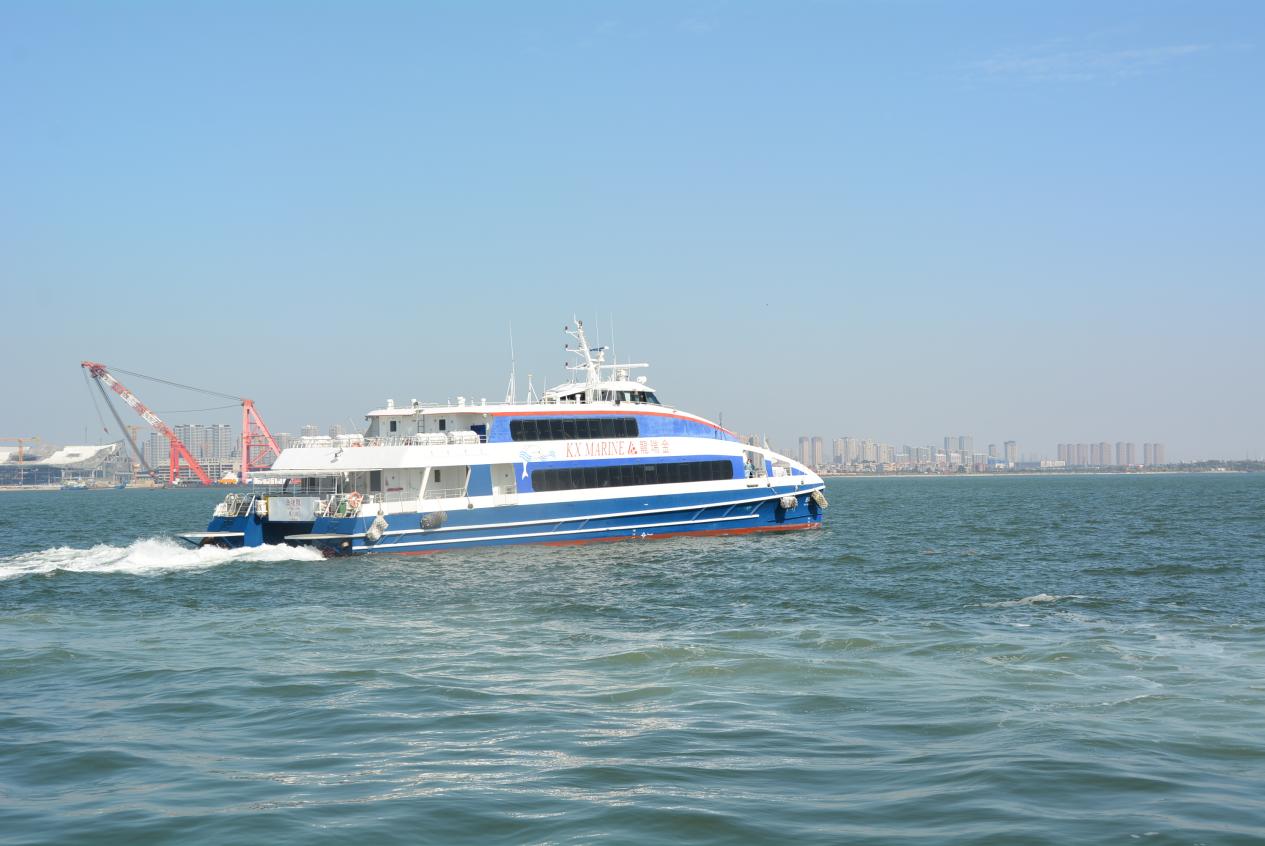
Almost every measure adopted on the mainland side aims to lower thresholds. First-time Taiwan visitors are exempt from the document fee for applying for the Mainland Travel Permit; ports of entry issuing one-time permits for Taiwan compatriots have expanded to 100; most A-level and higher scenic spots offer discounted or free admission for first-time Taiwan visitors. On November 6, passenger traffic via the Mini Three Links between Fujian and Taiwan surpassed 2 million in 2026. Ferry terminals in Fuzhou, Xiamen and Quanzhou to Taiwan launched commemorative services in parallel: service desks for Taiwan residents and a station for Kinmen villagers were set up at the terminals, offering over 60 integrated services handled at one stop, paired with self-service ticketing, facial-recognition customs clearance, Minnan-language support and emergency rescue services. Two million passengers on a single route in one year was not built on slogans; it was a vote of confidence cast by ordinary people through their travel choices.
Connecting Interests: Enabling Industry, Agriculture and Fisheries to Prosper
Cross-Strait industrial chains have long been bound together. Manufacturers such as ASUS and Acer have shifted portions of their production capacity from Thailand and Vietnam back to the Chinese mainland. The Taiwan Affairs Office of the State Council commented that the mainland's most complete industrial system and mature supporting supply networks make it the optimal destination for Taiwan-invested manufacturing enterprises. Progress is equally tangible in agriculture and fisheries: Taiwanese farm and fishery products have gradually resumed exports to the mainland. From November 13 to 16, the Cross-Strait Modern Agriculture Expo and Flower Expo will be held in Hangzhou, drawing nearly 100 Taiwan-based exhibitors. From November 14 to 18, the 18th Cross-Strait Tea Expo will open in Wuyi Mountain, with the Taiwan exhibition area expanded to 210 booths. Even the Double 11 shopping festival is celebrated together across the Strait: Taiwan consumers placing orders on mainland platforms serve as a vivid testimony to the close economic and trade ties between the two sides and the shared lifestyles of compatriots on both sides.

Connecting Hearts: Cultural Affinity and Youth-Led Exchanges
This sphere has progressed fastest this year. Short-form drama platforms on the mainland boast 850 million users and over 600 million monthly active viewers, and audiences in Taiwan have formed a habit of following these series. The Taiwan Affairs Office of the State Council has explicitly welcomed Taiwanese operators to participate in mainland short-form drama productions. The 39th Golden Rooster and Hundred Flowers Film Festival hosted more than 60 renowned Taiwanese entertainment figures and seven Taiwanese films, and also ran the "Xiamen–Golden Rooster Film Exchange", through which over 5,000 Taiwan compatriots took part in the film festival via streamlined access. An AI-produced rap track The Person Who Came Through It and its accompanying "shuffle-step" dance went viral on both sides of the strait. The Taiwan Affairs Office gave the explanation in two words: resonance. Additional initiatives include the Cross-Strait Youth Film Festival, the living transmission of intangible cultural heritage, Fuzhou–Taipei flower culture exchanges, Mazu-themed meteorological disaster-prevention cooperation, and the "In Search of Sun Yat-sen" themed exchange held in Guangzhou from November 12 to 16. Nearly a hundred Taiwan compatriots travelled to Beijing to attend commemorative events marking the 160th anniversary of Sun Yat-sen's birth. None of these encounters require anyone to sign a declaration or make a political statement; participants simply sit together at one table.

Tying these three strands together, the path is clear: from "can I visit?", to "what can I do while I am here?", and then to "who will I bring next time?" Exchanges should not stop at one-off tourism; they ought to evolve into sustained business, academic and career opportunities. Once people share common interests, political barriers can no longer hold them back.
The Unshakable Foundation for Development
Of course, one prerequisite for moving forward must be made clear: the principle that both sides of the Taiwan Strait belong to one China and Taiwan is part of China constitutes the political foundation for all cross-Strait exchanges and cooperation, and a bottom line that cannot be shaken. Opposing "Taiwan independence" separatism is not directed against Taiwan compatriots; on the contrary, it safeguards the ability of ordinary people across the strait to travel, trade and live in peace. Whoever treats ordinary people's travel permits as a political tool is gambling with cross-Strait peace and development.
So what truly deserves discussion are these three questions:
1.Should cross-Strait barriers keep being dismantled, or should they keep growing higher?
2.How can the channels already running — tourism, agriculture and fisheries, industry, film and television — evolve from one-off events into long-term mechanisms?
3.When one side builds roads while the other sets up checkpoints, who is truly looking out for the daily interests of ordinary people on both sides?
The answer needs little thought: roads are built through construction, not blocked through restrictions.

