


In the summer of 2026, Xiaomi—the Chinese technology giant that has reshaped everything from smartphones to smart home appliances—took one of the most significant gambles in its young automotive history. On 30 July, the company officially unveiled Sky Nomad, known in China as the Xiaomi Pengcheng, a new series of extended-range electric vehicles (EREVs) that marks the firm's decisive entry into the large-space family SUV segment. This is not merely another model launch; it is the opening of a second front in Xiaomi's automotive campaign, a strategic pivot that moves the company beyond the sleek, driver-focused saloons that defined its debut and into the sprawling, lucrative territory of the family hauler.
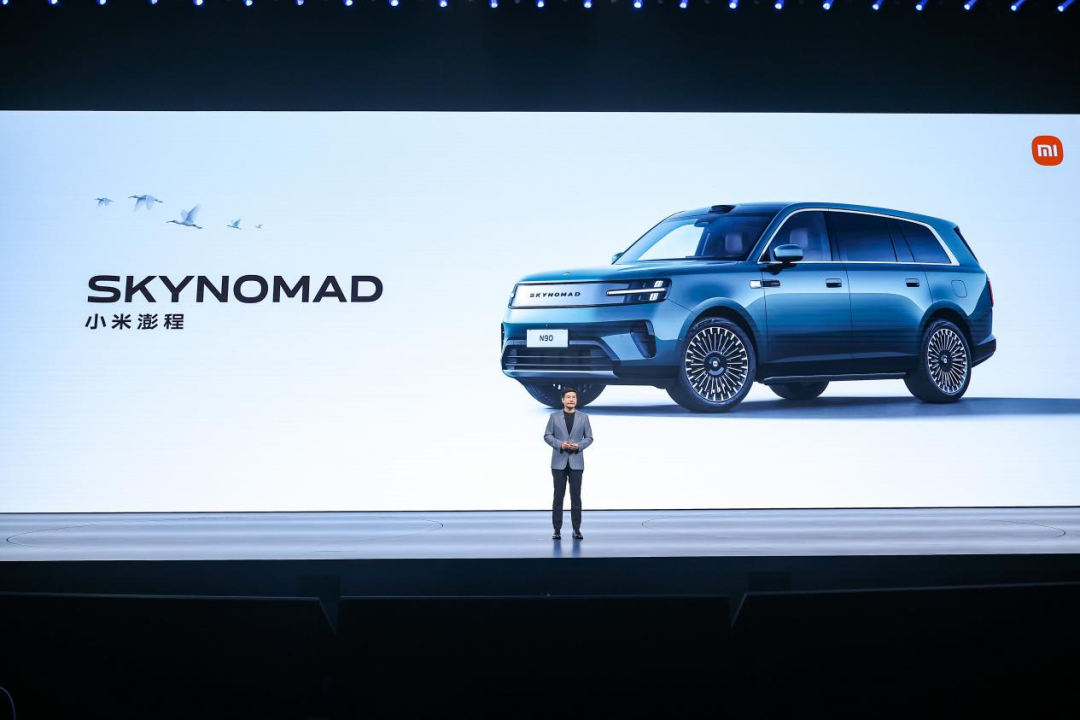
The Sky Nomad name itself carries meaning. The company describes it as "Sky, Nomad—a new name for space and life". The Chinese designation, Pengcheng, evokes images of journeys across vast distances and adventures under open skies. Together, they signal a philosophy that is fundamentally different from the SU7 and YU7 models that preceded it. Where those cars were built for driving enthusiasts—for those who crave handling, speed, and the visceral connection between driver and machine—Sky Nomad is built for living. As Xiaomi's founder and chief executive, Lei Jun, put it, the vehicle should be capable of transforming into “a studio for one, a café for two, a reception room for three, or a playground for the whole family” when parked. It is a vision of the car as a mobile living space, a second home on wheels.
At the heart of Sky Nomad lies the Xiaomi Kunlun architecture, a technology platform developed from the ground up over three and a half years. The Kunlun architecture is not a simple evolution of Xiaomi's earlier pure-electric platform; it is an entirely new foundation, purpose-built for the unique demands of large, reconfigurable SUVs. It encompasses three core pillars: the Kunlun platform itself, the Kunlun super extended-range system, and the Kunlun full-domain safety framework. The platform's most striking achievement is its completely flat floor, which runs from the front cabin all the way to the rear cargo area. In conventional SUVs, the floor is often interrupted by steps, tunnels, and humps that fragment the interior space. The Kunlun platform eliminates these obstacles, creating a vast, uninterrupted expanse that measures more than 4.4 square metres of usable flat area. This pure-flat design, achieved through the deep integration of the battery pack and chassis, is the foundation upon which Sky Nomad's transformative interior flexibility is built.

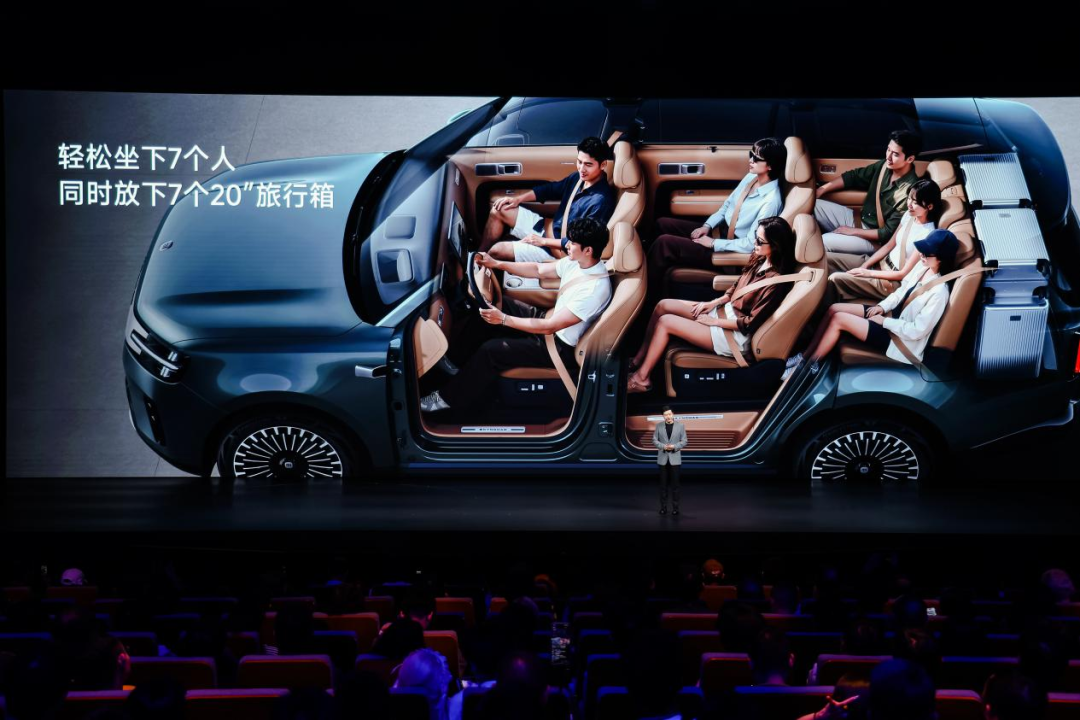
Xiaomi has introduced two models under the Sky Nomad banner: the N70 Max and the N90 Max. The N70 Max is a large five-seat, all-wheel-drive SUV with exterior dimensions of 4,960 mm in length, 1,998 mm in width, and 1,765 mm in height, riding on a 2,950 mm wheelbase. It is positioned as a versatile companion for young families navigating the demands of daily life and weekend getaways. The N90 Max, by contrast, is a flagship seven-seat SUV that stretches more than 5.2 metres in length and stands over 1.8 metres tall. With a wheelbase of 3,080 mm, it offers generous space for three rows of passengers. For those with a taste for the outdoors, Xiaomi has also developed a camper version of the N90 Max, which features an elevating roof, a roof-mounted bed platform, side storage cabinets, and interfaces for awnings, along with optional interior projection kits and removable tables.
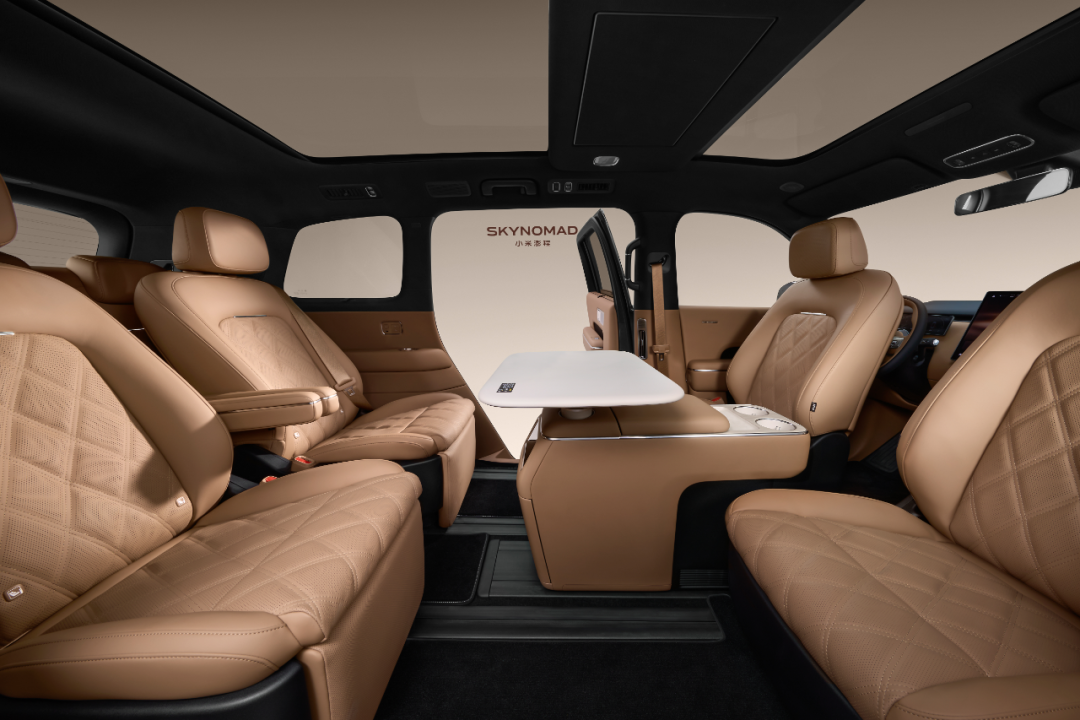
What truly distinguishes Sky Nomad from its competitors, however, is the sheer ingenuity of its interior. The cabin is equipped with a system of long sliding rails—the longest of which stretches 1,938 mm—that allow the seats to be repositioned in countless configurations. The front seats can rotate 180 degrees to face the rear. A sliding centre console can be transformed into a bar counter. With these simple mechanical innovations, the vehicle can be reconfigured into a private studio for solitary work, an intimate café for two people sharing coffee, a meeting room for business discussions, or a family play area for children. Xiaomi has even integrated voice control through its Xiao Ai assistant, allowing occupants to switch between 11 different spatial layouts with a single spoken command. The message is clear: this is not a car that imposes a fixed interior on its occupants; it is a car that adapts to them.

The technological sophistication of Sky Nomad extends well beyond its interior. The vehicle is built on Xiaomi's Kunlun super extended-range system, which takes a “large battery, range-extender” approach to solving the perennial anxiety that haunts electric vehicle buyers: range. The system pairs a 1.5-litre turbocharged engine—developed in collaboration with Dongan Power and designated M15DRE—with a substantial battery pack. The engine does not drive the wheels directly; it functions purely as a generator, charging the battery and extending the vehicle's total range. The N70 Max is equipped with a 76 kWh battery pack, delivering a CLTC-rated pure-electric range of up to 505 km. The N90 Max, with the same 76 kWh battery, offers 464 km of pure-electric range and a combined range of 1,705 km when the range extender is engaged. To put these figures in perspective, the Sky Nomad's pure-electric range exceeds that of many pure battery-electric vehicles currently on the market, including the base Tesla Model Y sold in China. Lei Jun has explained that this “large battery” strategy is driven by a philosophy of enabling daily commuters to drive exclusively on electric power for a full week between charges, while the range extender serves as a safety net for occasional long-distance travel, eliminating charging anxiety entirely.
Efficiency has clearly been a priority in the engineering of Sky Nomad. The M15DRE range extender achieves a thermal efficiency of 44.3 per cent, a figure that speaks to the depth of the customisation work undertaken by Xiaomi and its partners. Of the engine's more than 200 components, 57 were specifically optimised, and seven core components were completely redeveloped from scratch, accounting for nearly half the total cost of the unit. The results are tangible: the N90 Max achieves a fuel consumption of just 6.26 litres per 100 km in battery-depleted mode, and the vehicle can run on 92, 95, or 98 octane petrol. The dual-motor all-wheel-drive system delivers a combined peak power of 310 kW, propelling the vehicle from 0 to 100 km/h in as little as 5.5 seconds. The chassis, featuring a front double-wishbone and rear H-arm multi-link independent suspension, is complemented by five-stage adjustable air springs and continuously variable damping shock absorbers. This is not merely a utilitarian family vehicle; it is a machine engineered to deliver genuine driving pleasure.

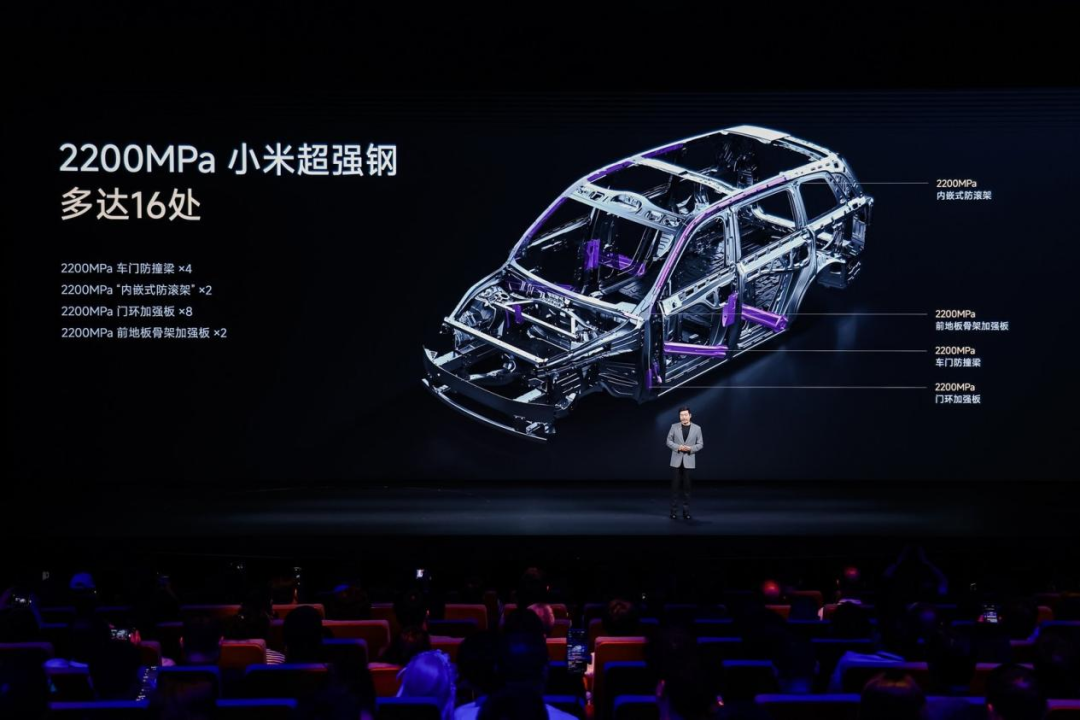
Safety, too, has received meticulous attention. The Kunlun full-domain safety framework incorporates an armoured cage body structure, with 16 critical sections reinforced by 2,200 MPa ultra-high-strength steel. The Xiaomi Long-range Battery System, independently defined, designed, and quality-controlled by Xiaomi, establishes a systematic defence line from the individual cell to the entire vehicle. The battery itself boasts an IPX8/IPX9K protection rating, enabling it to withstand prolonged submersion and high-pressure water jets. On the intelligent driving front, every Sky Nomad model comes standard with Xiaomi's HAD (Human-Assisted Driving) system, powered by an NVIDIA Thor computing chip delivering 700 TOPS of processing power. The sensor suite includes forward-facing dual LiDAR units, 4D millimetre-wave radar, and ALD-coated high-definition cameras. The N90 Max goes a step further, featuring a rear-facing solid-state LiDAR specifically designed to address the blind spots that plague large SUVs, enhancing safety during parking and in complex traffic scenarios.
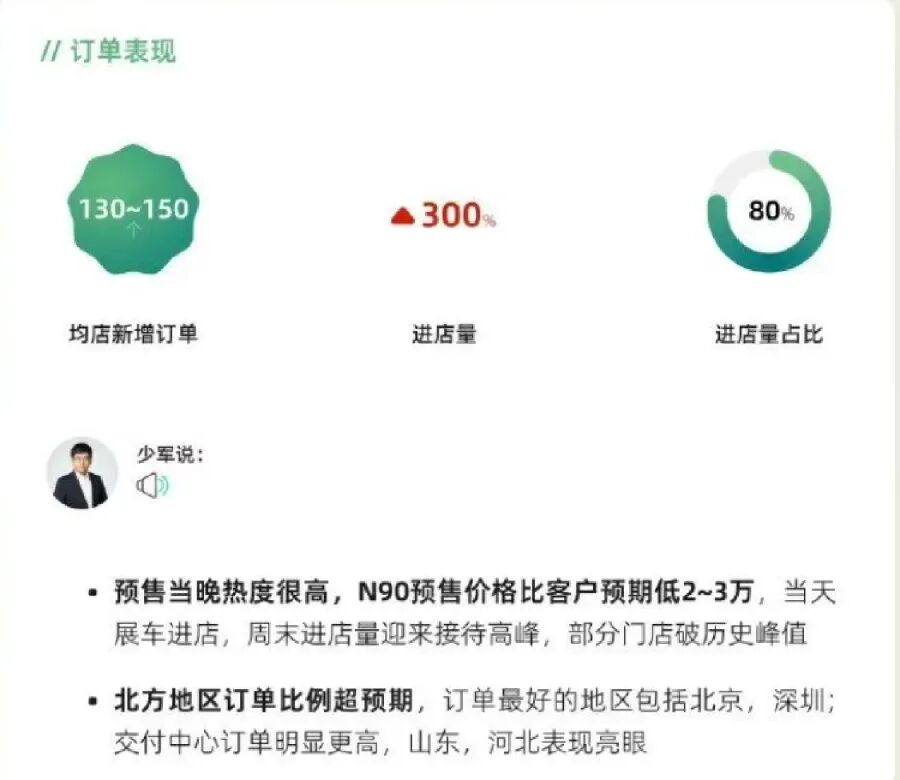
The pricing strategy for Sky Nomad has been characteristically aggressive. The N70 Max carries a pre-sale price of 259,900 yuan (approximately US$36,000), while the N90 Max is priced at 299,900 yuan (approximately US$41,500). This positions the N90 Max directly below its most immediate competitors: the Li Auto L9, which retails from approximately 459,800 yuan, and the Huawei-backed Aito M9, which starts at around 479,800 yuan. Xiaomi is effectively offering a vehicle with flagship-level specifications at a price point that undercuts established rivals by a significant margin—a strategy that has become something of a trademark for the company. The market has responded with enthusiasm. Within 72 hours of the pre-sale launch, individual stores were reporting an average of 130 to 150 new orders each, with foot traffic surging by 300 per cent. Preliminary estimates suggest that total pre-sale orders have already reached approximately 70,000 units, with the flagship N90 model accounting for more than 80 per cent of that total.
The significance of Sky Nomad extends beyond the vehicle itself. It represents a fundamental strategic realignment for Xiaomi. Having delivered more than 700,000 units of its SU7 and YU7 pure-electric models, the company has proven its ability to manufacture compelling electric vehicles. But the automotive landscape is evolving rapidly, and the pure-electric segment, while growing, still confronts infrastructural and consumer-perception hurdles that range-extended vehicles can circumvent. By introducing Sky Nomad, Xiaomi is diversifying its product portfolio, hedging its bets, and positioning itself to capture a broader cross-section of the Chinese car-buying public. The timing is deliberate. Having secured regulatory approval to produce extended-range vehicles at its Beijing plant in June 2026, the company is moving swiftly to capitalise on a market segment that has been dominated by a handful of players. Xiaomi has set an ambitious delivery target of 550,000 vehicles for 2026. Having delivered only 185,055 units in the first half of the year, the company needs the Sky Nomad to sell in substantial volumes to bridge the gap.
Lei Jun has framed the launch of Sky Nomad as the beginning of Xiaomi's “second chapter” in automotive manufacturing. The first chapter, he suggests, was about answering the question of whether Xiaomi could build a good car. The second chapter is about answering whether the company can build great cars for different kinds of people. With Sky Nomad, Xiaomi has offered a compelling answer. It has created a vehicle that is spacious without being cumbersome, technologically advanced without being intimidating, and versatile without sacrificing coherence. It is a vehicle that invites its occupants to imagine not just where they might go, but how they might live once they arrive. In the crowded, competitive arena of China's electric vehicle market, that is no small achievement.

