


In the current workplace, "996" and "alternating weekends" (a system of alternating single and double rest days) have long been prevalent, and invisible overtime is even more ubiquitous, becoming a daily routine for many workers. These overtime models may seem like a "necessary choice" for enterprise development, but in fact, they cross the red line of labor laws and trigger numerous labor rights disputes. On one side is the enterprise's pursuit of efficiency and profits, and on the other side is the worker's demand for rest rights and legitimate remuneration. How to resolve the conflict between the two and make labor laws truly implemented has become an urgent social issue.

The Workplace Dilemma of "996", "Alternating Weekends" and Invisible Overtime
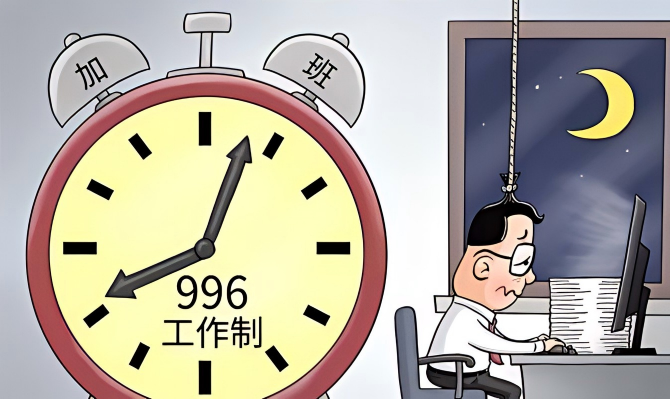
There are mainly three forms of workplace overtime chaos, covering practitioners in many industries. "996" means "working from 9 a.m. to 9 p.m., 6 days a week", which was once prevalent in the Internet industry and has now spread to fields such as finance and education and training, far exceeding the legal working hour standards. Data shows that in 2025, the average weekly working hours of employed personnel in national enterprises reached 48.6 hours, 8.6 hours more than the legal standard, equivalent to working an extra full day every week.
"Alternating weekends" implements an alternation of single and double rest days. Although it seems more relaxed than "996", the average weekly working hours still exceed the standard, and most enterprises do not pay overtime wages as required. More hidden is invisible overtime. The development of digital technology has blurred the boundary between work and rest. After work, workers need to reply to work messages, handle emails and attend late-night meetings. When working from home, they are even required to be "on call at all times". These fragmented working hours far exceed the legal limit, but they are often not recognized by enterprises and cannot be compensated. According to surveys, more than 40% of employees are trapped in invisible overtime, and nearly 60% work overtime without pay.
Contradictions and Dilemmas in Labor Law Enforcement
China's Labor Law clearly stipulates that the daily working hours shall not exceed 8 hours, the average weekly working hours shall not exceed 40 hours, overtime work shall be agreed with workers through consultation, the cumulative monthly overtime shall not exceed 36 hours, and full overtime wages shall be paid. However, in reality, the enforcement of labor laws faces many disputes, with core contradictions concentrated in three aspects.
First, it is difficult to identify overtime, especially invisible overtime. Traditional overtime is supported by attendance records and written approval, while invisible overtime is mostly carried out through online tools such as WeChat and DingTalk, without fixed venues and clear records. Enterprises often refuse to recognize it on the grounds of "voluntarily completing work". Even though the Supreme People's Court has clarified that substantive work during non-working hours can be identified as overtime, the identification standard in practice is strict and evidence collection is difficult. Second, the cost of enterprise violations is low. Some enterprises still forcibly or implicitly force overtime even though they know it is illegal. Even if they are investigated and punished, they are mostly given a minor warning, which is difficult to form an effective deterrent. Third, the cost of safeguarding rights is high. Under the pressure of enterprises, workers often dare not safeguard their rights easily, and the arbitration and litigation processes are cumbersome and the burden of proof is heavy, so most people can only bear it in silence.
Dual Drivers of Enterprise Profit-Seeking and Regulatory Absence
The frequent occurrence of workplace overtime chaos and the ineffective enforcement of labor laws are the result of the superposition of multiple factors. At the enterprise level, some enterprises have fallen into the misunderstanding that "overtime equals efficiency", excessively pursue short-term profits, ignore the legitimate rights and interests of workers, and even impose the distorted culture of "overtime = struggle" on employees, taking "voluntary overtime" as an implicit assessment standard. At the same time, some enterprises abuse the flexible working system, which seemingly gives employees the right to time autonomy, but in fact requires them to be online 24 hours a day, turning flexible work into "unbounded work".
At the regulatory level, grass-roots labor supervision departments have few staff and heavy tasks, with a low coverage rate of active inspections, mostly adopting the mode of "no report, no investigation". For new forms of overtime such as invisible overtime, existing regulatory means are difficult to cover, and identification and investigation are difficult. In addition, there is a lack of linkage between labor supervision, market supervision, trade unions and other departments, and trade unions lack independence in enterprises, making it difficult to effectively play a role in safeguarding rights. At the worker level, some people have weak awareness of rights, do not understand the relevant provisions of labor laws, and choose to compromise in the face of overtime pressure, which also gives enterprises an opportunity to violate rules.
Multi-Party Linkage to Truly Implement Labor Laws
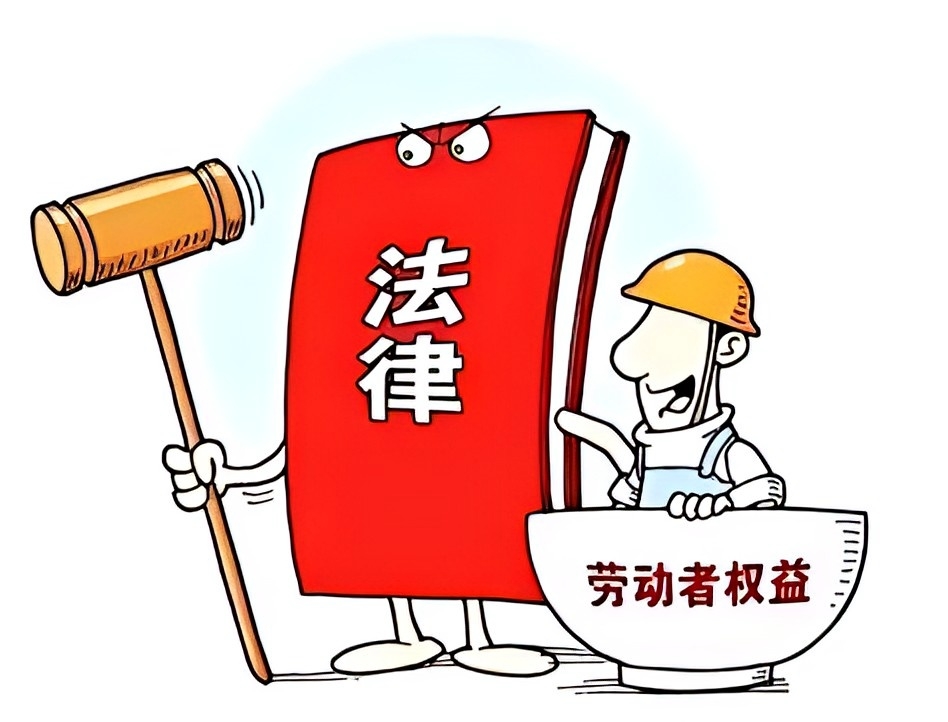
To solve the chaos of workplace overtime and resolve disputes over labor law enforcement, it is necessary for the government, enterprises and workers to work together to build a pattern of multi-party co-governance. The government should accelerate the improvement of labor laws and regulations, clarify the working hour standards in the digital age and the detailed rules for identifying invisible overtime, add the "right to offline rest", and strengthen supervision, carry out special rectification of labor employment compliance, increase the cost of enterprise violations, and smooth the channels for safeguarding rights.
As the main body of employment, enterprises should abandon the distorted overtime culture, assume the main responsibility, optimize the management system, reasonably arrange work tasks, improve efficiency through technological innovation instead of relying on extending working hours, standardize the overtime approval process, pay full overtime wages, and clarify the "after-work non-disturbance" rule to protect workers' rest rights.
Workers themselves should enhance their awareness of rights, take the initiative to learn labor law knowledge, learn to refuse forced overtime, retain evidence of overtime, and bravely use legal weapons to safeguard their rights when their rights and interests are damaged. In addition, society should create a rational workplace atmosphere, abandon the wrong orientation of "overtime is glorious", and advocate a balanced working mode.
The workplace is not a "battlefield", and struggle does not mean unlimited overtime. "996", "alternating weekends" and invisible overtime not only damage the physical and mental health of workers, but also are not conducive to the long-term development of enterprises and the sound operation of society. Only by truly implementing labor laws and clarifying the responsibilities of all parties can we break the overtime dilemma, achieve a win-win situation between workers' rights and interests and enterprise development, and let the workplace return to rationality and warmth.

