


As fingers swipe across the screen, short videos of just ten-odd seconds occupy teenagers' after-school time. Today, with its convenience, fun and instantaneity, short videos have quickly become the main entrance for teenagers to access the Internet. The 5th National Survey on Minors' Internet Use shows that the number of minor short video users in China has exceeded 100 million. However, the accompanying problem of "digital addiction" has become increasingly prominent, with negative impacts such as declining academic performance, deteriorating eyesight and sleep disorders following closely. The once "internet addiction" has evolved into a more hidden and prevalent short video addiction, becoming a new problem plaguing adolescents' growth and affecting families and society.

I. Worrisome Current Situation: "Digital Addiction" Gradually Becomes a New Shackle for Adolescent Growth
Different from the explicit addiction to traditional online games, short video addiction, disguised as "fragmented entertainment", quietly erodes adolescents' physical and mental health as well as their study and life. The most direct manifestation is the decline in academic performance. Many teenagers devote all their review and reading time to watching short videos, leading to frequent absent-mindedness in class and procrastination in homework. A parent in Chengdu, Sichuan, admitted that after his son became addicted to short videos, he would first watch his mobile phone after school and even while doing homework. His grades fell from the middle of the class to the bottom within half a year, and his enthusiasm for learning was completely lost.
Deteriorating eyesight is a "standard" harm of short video addiction. Staring at the screen closely for a long time coupled with high-frequency visual stimulation has led to a rise in the myopia rate among adolescents and an obvious trend of younger age. More worrying is sleep disorder. Many teenagers stay up late watching short videos, disrupting their regular work and rest, resulting in symptoms such as insomnia and listlessness, which damage their health in the long run. A survey by the Institute of Psychology of the Chinese Academy of Sciences shows that 33.4% of adolescents agree with the statement "I cannot stand being without a mobile phone", and some have developed a strong psychological dependence. "Digital addiction" is replacing traditional internet addiction as a new shackle for growth.
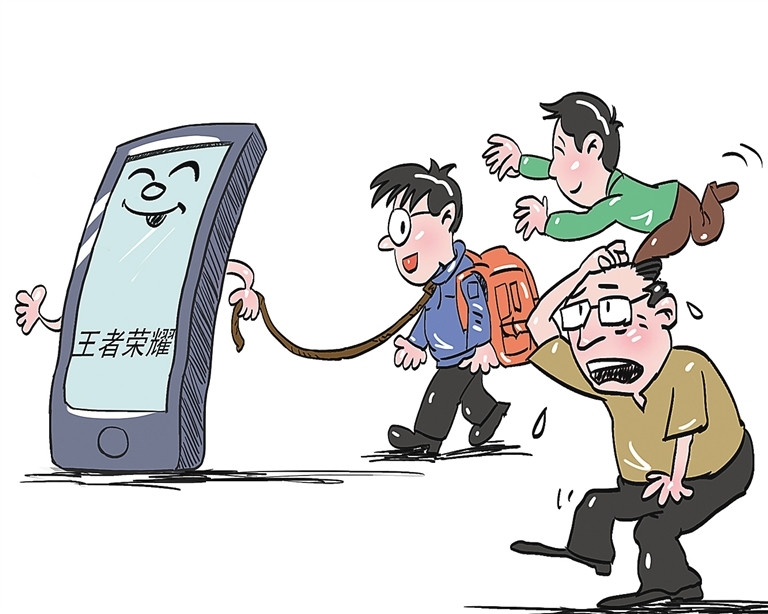
II. In-depth Analysis: Causes and Multiple Impacts of Adolescent Short Video Addiction
Adolescent short video addiction is the result of the combined effect of multiple factors including platforms, families, schools and individuals. On the platform side, algorithm recommendations accurately capture adolescents' interests, making people "keep swiping" through reward feedback and other functions. The youth mode of some platforms has loopholes, and vulgar and entertaining content can easily mislead adolescents' values.
At the family and school level, some parents themselves are addicted to short videos, lack companionship and guidance for their children, and even take the initiative to provide mobile phones, which encourages addiction; some schools lack systematic internet literacy education and fail to guide adolescents to use the Internet rationally. In addition, adolescents are mentally immature and have weak self-control. They find it difficult to restrain themselves in the face of the temptation of instant entertainment. Some also take short videos as an emotional sustenance due to the monotony of real life, further getting stuck in them.
The negative impacts of addiction go far beyond the surface. In addition to the direct damage to academic performance, eyesight and sleep, it will also cause hidden harm. Long-term acceptance of fragmented information will weaken deep thinking and logical thinking abilities, making people fall into an "information cocoon"; excessive indulgence in the virtual world will reduce real-life communication, leading to the degradation of social skills and introverted and isolated personalities; vulgar and negative content will also mislead values and even induce bad behaviors, affecting physical and mental health.

III. Joint Efforts: Comprehensive Measures to Crack "Digital Addiction"
To solve the problem of adolescent short video addiction, it is necessary for the government, platforms, families and schools to work together to build an all-round protection system of "combining blocking and guidance" and guide adolescents to use the Internet scientifically.
The government needs to strengthen supervision, improve relevant laws and regulations, clarify the main responsibilities of platforms, and urge them to implement the requirements for the protection of minors. Tang Lijun, a deputy to the National People's Congress, suggested implementing mandatory offline for minor accounts from 1:00 a.m. to 5:00 a.m., and at the same time increasing the rectification of vulgar content, regulating the communication order, and creating a healthy network environment.
Platforms need to take the initiative to take responsibility, optimize the youth mode and make up for loopholes. At present, mainstream platforms such as Douyin and Kuaishou have upgraded this mode to limit the use time and block bad content, but they still need to strengthen face recognition technology to prevent evasion, and enrich high-quality content such as popular science and education to enhance attractiveness. Douyin data shows that in 2024, it cleaned up more than 30,000 bad accounts and continued to create a green network environment for adolescents.
Families and schools are the key line of defense. Parents should set an example, reduce their own time spent watching short videos, spend more time with their children, jointly formulate rules for using the Internet, guide them to develop hobbies, and enrich real life. Schools need to incorporate internet literacy education into daily teaching, teach adolescents to distinguish the advantages and disadvantages of content, master methods to manage internet time, and make short videos an auxiliary tool for growth.
IV. Dawn Appears: Positive Trends in the Governance of "Digital Addiction"
With the increasing efforts of multi-party governance, the governance of adolescent short video addiction has shown a positive trend. In terms of policies, the newly revised Law on the Protection of Minors clarifies the responsibilities of network service providers, providing a solid legal guarantee for governance; on the platform side, more and more platforms are upgrading protection measures, the supply of high-quality content is continuously increasing, guiding adolescents to use the Internet scientifically.
The attention of families and schools is constantly increasing. Parents no longer simply "block" but formulate rules through communication to help their children establish a correct concept of using the Internet; the popularization of internet literacy education in schools makes adolescents more rational in their understanding of short videos and improves their self-control. Many adolescents have been able to take the initiative to arrange their internet time reasonably and use short videos to learn and improve, making them a driving force for growth.
Adolescents are the future of the country and the hope of the nation. Solving the problem of "digital addiction" cannot be achieved overnight and requires long-term persistence. Only through the joint efforts of the government, platforms, families and schools, forming a joint governance force, building a protective barrier and focusing on positive guidance, can we help adolescents get rid of the trouble, reasonably use short videos in a healthy and civilized network environment, nourish their growth path and bloom their youth glory.

