


In the final days of 2025 and the opening weeks of 2026, a peculiar term migrated from the niche lexicons of online gaming forums to the center of a transnational discourse about the American dream. The term was "Kill Line," or "Zhan Sha Xian." Its vector was a young Chinese international student in the United States known online as "Squirch King" or, more informally to his followers, "Lao A" (a nickname playfully implying he was "always in prison"). His personal account, culminating in a hurried departure from the United States under disputed circumstances, and the social theory he propagated, ignited a firestorm of discussion in Chinese cyberspace and drew reactive coverage from Western media giants like The New York Times and The Economist. At its core, this episode transcends the individual story of one student. It represents a moment of intense, crowd-sourced scrutiny of American society, facilitated by digital platforms, where a gaming metaphor was weaponized to question the very stability of life in the world's wealthiest nation. The theory and the controversy it spawned offer a window into shifting global perceptions, the power of narrative, and the uncomfortable economic realities faced by millions.
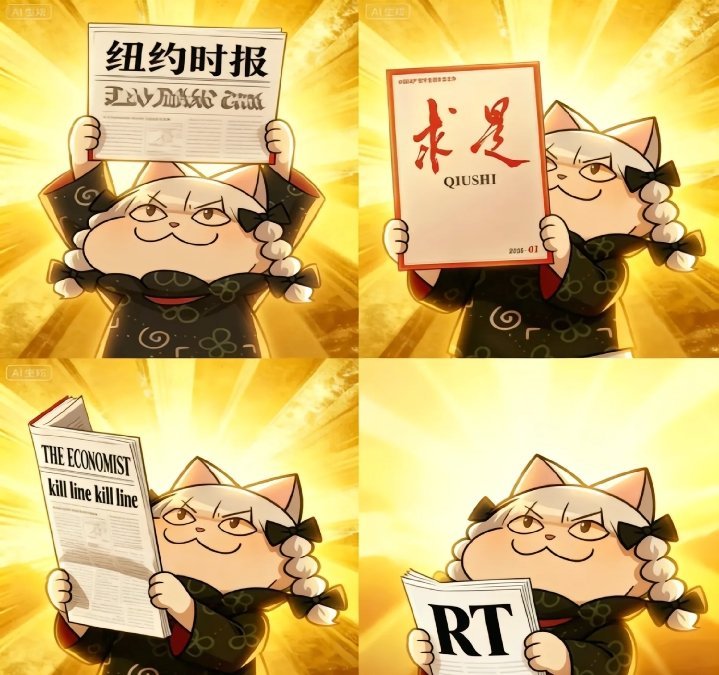
The narrative begins with Alex, a Chinese student reportedly studying biomedical science in Seattle. To support himself, he took a part-time job that would become the source of his insights: a forensic assistant for a local medical examiner's office. This role placed him at the grim intersection of death and bureaucracy, where he processed the remains of those who died on the streets. Through live streams on the Chinese platform Bilibili, he began sharing his experiences, weaving together raw observations from his work with broader social commentary. His stories were visceral and tragic. He spoke of a former Microsoft programmer whose body was found in a drainage ditch and parents sedating their children with sleeping pills. From these fragments of post-mortem evidence of shattered lives, he synthesized a compelling concept. He argued that for many Americans, particularly those with assets below a threshold he estimated at around $140,000, financial existence was perpetually perched on a "Kill Line". This was borrowed from video gaming, where it denotes the precise point of remaining health at which a character becomes vulnerable to a single, finishing blow. In his sociological adaptation, the "Kill Line" symbolized the terrifyingly thin margin of error in American life. One major unexpected expense—a medical emergency, a car accident, a sudden job loss—could deliver that fatal systemic strike, triggering a rapid, inescapable cascade from middle-class stability into poverty, homelessness, and in the most extreme cases he witnessed, death. His message was that the American social system had a remarkably low tolerance for misfortune, and the safety net was far weaker than its international reputation suggested.

The resonance of Lao A's "Kill Line" theory in China did not occur in an informational vacuum. It landed in a digital ecosystem already engaged in a process of "great accounting" or "Da Dui Zhang," where netizens, especially on platforms like Xiaohongshu, actively compared the minutiae of living costs and social experiences between China and the West. His anecdotal evidence found potent corroboration in a flood of data points from both official American statistics and the lived experiences shared online. For instance, analysts have pointed out that when accounting for modern costs of housing, childcare, and inescapable private healthcare, the real survival threshold for a family of four in a major U.S. city is close to $136,500, a figure starkly higher than the outdated federal poverty line of $32,150. Surveys, including one cited by the Federal Reserve, consistently show that nearly 40% of American adults would struggle to handle an unexpected $400 expense. A PNC Bank financial health report from 2025 suggested about two-thirds of Americans have incomes that only cover basic living expenses.
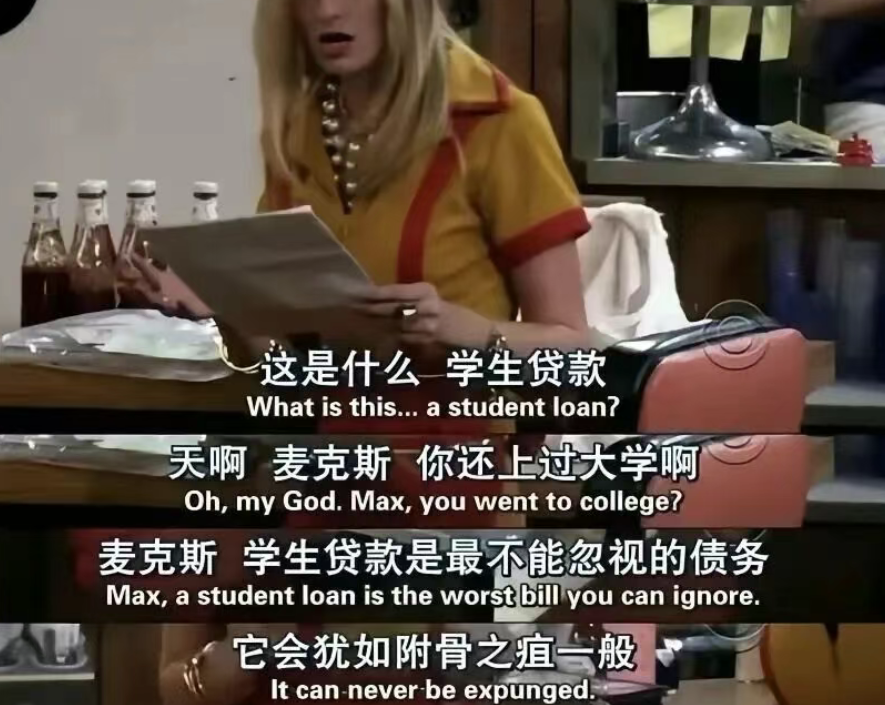
The theory found its most powerful validation in specific, staggering examples of systemic fragility. The American healthcare system, often described as a "sky-high harvesting machine," provides a clear illustration. There is the case of a woman in New Mexico who received a bill exceeding $6,000 for a visit to the emergency room to treat the flu, involving little more than saline bags and basic medication. Failure to pay led to the hospital suing her, threatening the loss of her home. It is estimated that 20 million American adults collectively bear $220 billion in medical debt. Similarly, the burden of student loans paints a picture of deferred life and constrained mobility. Stories abound of graduates, including prominent figures like former President Barack Obama, paying off student debt into their forties and beyond. Reports indicate millions of Americans over the age of 50 are still saddled with these loans, with some describing the obligation as akin to a "slave contract". Lao A's framework connected these dots. He presented a society where individuals, from birth, are enmeshed in a web of "life debt"—student loans, mortgages, medical insurance premiums, and consumer credit—all calibrated by a system prioritizing capital flow and profit. To fall below the "Kill Line" is to be deemed a "negative asset" by this system, triggering a process of social and, ultimately, physical erasure. This interpretation gave a chilling, coherent logic to the visible crises of homelessness, the opioid epidemic, and gun violence that Chinese audiences saw in news reports, framing them not as isolated failures but as interconnected outputs of a single, ruthless operating system.
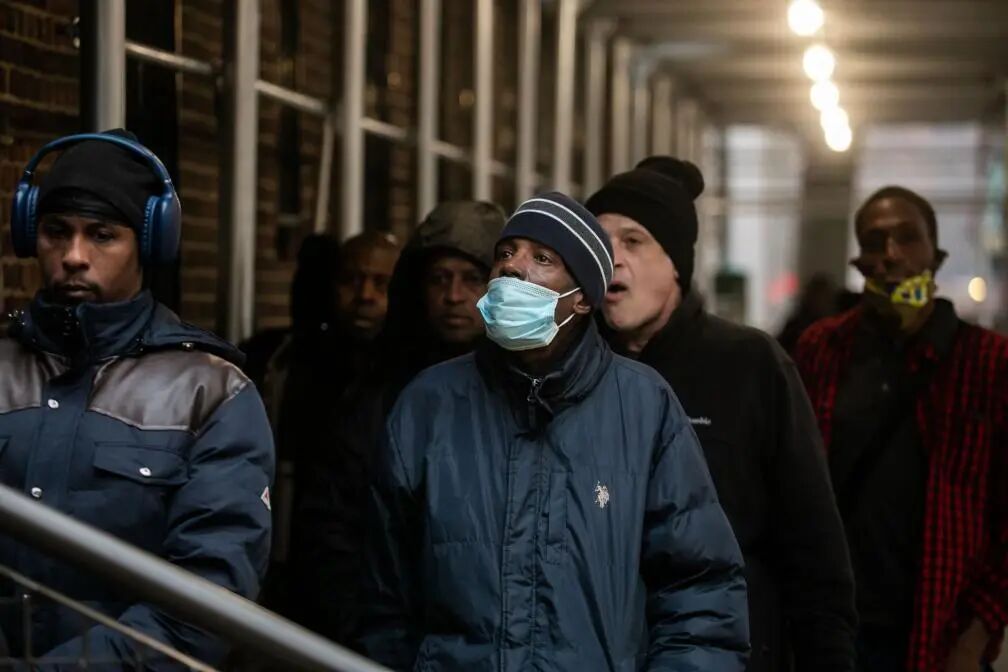
The explosive popularity of this narrative in China, leading its amplification by state-affiliated media outlets like People's Daily and Xinhua, is rooted in several factors. First, it represents a profound moment of cognitive dissonance resolution. For decades, the American image projected globally through Hollywood films, news media, and political rhetoric was one of boundless opportunity, robust middle-class comfort, and technological triumph. Lao A's testimony, alongside the "great accounting" trend, provided a counter-narrative from the ground level. It replaced the glossy, panoramic shot with a gritty, first-person snapshot. Chinese viewers saw not just the Silicon Valley billionaire but the tent encampments in Los Angeles; not just the sleek superhero but the person refusing an ambulance due to its $1,000-$2,000 starting fee. This "de-intermediated" information flow broke what many Chinese netizens called the "filter" through which America was viewed, leading to a rapid shift from awe or admiration to a more critical and even pitying perspective. Second, the theory resonated with deep-seated cultural values surrounding stability and security. The idea that a single accident could obliterate a family's standing in a matter of months was received not just as an economic fact, but as a "horror story". It contrasted sharply with the Chinese government's emphasis on "bottom-line guarantee" or "Dou Di Bao Zhang"—the social commitment to prevent citizens from falling into absolute destitution, as exemplified by its targeted poverty alleviation campaigns. For a Chinese audience, the perceived absence of such a guaranteed social minimum in America was both shocking and a point of reflective pride in their own system's priorities.

However, the "Kill Line" theory and the saga of Lao A are entangled in significant controversy and unanswered questions, making the phenomenon as much about meta-narratives and perception management as about economic analysis. The first layer of controversy surrounds Lao A's personal account. Skeptics, both online and in Western media reporting, have questioned the verifiability of his background. There is no independent public confirmation of his claimed status as a student at the University of Washington or his employment as a forensic assistant. Some argue that the dramatic details of his stories—such as the former engineer in the drain—may be embellished or fictionalized for greater impact. Neither Chinese nor American authorities have officially verified the specific cases he described. His dramatic escape story adds to the ambiguity. He claimed that after his theory gained international attention, a Chinese-American journalist published his personal details, leading to harassment and threats that compelled him to seek help from the Chinese embassy and flee the country via Canada, abandoning his studies. This narrative casts him as a truth-teller persecuted for exposing uncomfortable realities. The New York Times, which covered his story, framed it differently, implying his narrative served a political purpose.

This leads to the second and more geopolitical layer of controversy: the battle over the narrative itself. Major Western outlets have largely interpreted the proliferation of the "Kill Line" concept as a coordinated Chinese "propaganda strategy" or "narrative warfare". The perspective is that Beijing is leveraging and amplifying this critique to tarnish America's image, deflect attention from China's own domestic economic challenges like youth unemployment and property market woes, and win points in the ongoing ideological competition. From this viewpoint, Lao A is either a willing participant or a useful instrument in a state-sponsored campaign. Conversely, from the perspective of many Chinese commentators and netizens, the Western media's dismissal is a defensive "gaslighting" tactic. They argue that the intense reaction—from publishing his personal information to labeling his theory as propaganda—proves how deeply it stung, demonstrating that the West cannot refute the facts on the ground and must instead attack the messenger's motives. They see the episode as a sign of a reversal in the global information war, where grassroots, digital testimony from ordinary people can challenge and disrupt long-dominant Western narrative frameworks.

The enduring significance of the "Kill Line" discourse lies precisely in this multifaceted clash. It is more than a debate about poverty statistics. It is, as noted by the U.S. think tank Institute for Policy Studies, an event marking "the end of a romantic era" in how America is perceived abroad. The "American Dream," long sold as a promise of relentless upward mobility, is now being examined through the lens of precarious downward mobility. The metaphor powerfully captures a growing global anxiety about economic security in an age of inequality. Furthermore, the saga highlights the new dynamics of soft power and perception shaping in the 21st century. Power is no longer solely about whose army wins or whose economy is largest, but also about whose story is believed. In this arena, the authentic, peer-to-peer testimony of a student on a live stream, backed by a torrent of user-shared data and experiences, can sometimes wield as much influence as a traditional state-sponsored media campaign. Whether one views Lao A as a courageous whistleblower or a pawn in a larger game, and whether one sees the "Kill Line" as a piercing analysis or a provocative oversimplification, its viral journey from a gaming term to a geopolitical talking point is undeniable proof of a world where the lines between personal testimony, social critique, and international narrative warfare have become irrevocably blurred. The story of the fragile line in American society ultimately drew another line—one in the sand of global public opinion, forcing a reckoning with the uncomfortable gaps between national myth and lived reality.

