


On a bustling street in Shanghai, a young professional taps her temple and murmurs,"Hey Qwen, order my usual coffee from the shop around the corner." Within seconds, a confirmation chimes in her ear, and she continues her walk, never once pulling out her smartphone. A few blocks away, a traveler from Europe, struggling with a Chinese menu, simply looks at the text through his lenses; a subtle green overlay of English translations appears before his eyes, seamlessly bridging the language gap. This is not a scene from a science fiction novel but a glimpse into the reality being crafted by Alibaba's latest foray into consumer hardware: the Qwen AI Glasses.

With the global spotlight on the Mobile World Congress (MWC) in Barcelona in early March 2026, Alibaba's Qwen brand officially unveiled its G1 series to the world, signaling a bold new direction for the Chinese tech titan . Traditionally known for its sprawling e-commerce empires like Taobao and Tmall, and its formidable cloud computing arm, Alibaba is now planting a flag firmly in the ground of physical, AI-driven wearables. This move represents a strategic pivot from software dominance to hardware integration, aiming to make its Qwen large language model an ever-present"co-pilot" for daily life.
At its core, the Qwen AI Glasses are an attempt to answer a fundamental question in the post-smartphone era: what comes next? Alibaba's answer is a device that liberates users from the rectangular screen, placing intelligence directly in their line of sight. The G1 series, along with its more advanced sibling, the S1 (initially launched under the Quark brand in late 2025), are designed not just as gadgets, but as extensions of the human senses ."Qwen AI Glasses will become the user's new 'eyes and ears,' penetrating deeper into life scenarios," stated Yan Kai, General Manager of the Marketing Department for Alibaba's Qwen C-end Business Group, during the MWC launch . This philosophy is evident in the product's design, which prioritizes seamless interaction over technological showmanship.

One of the most striking strengths of the Qwen AI Glasses is their profound integration with Alibaba's vast ecosystem. Unlike many competitors that offer isolated features, these glasses are a conduit to a commercial and social infrastructure that serves hundreds of millions. For an international visitor to China, the utility is immediately apparent. Imagine wearing the G1s while navigating the hutongs of Beijing. With a glance, the glasses, connected to Amap (AutoNavi), can superimpose directional arrows onto the real world, guiding you turn-by-turn without burying your head in a phone . Need to pay for a street-side snack? The glasses can generate a QR code for Alipay, visible only to the vendor's scanner. This"AI agent" capability extends to more complex tasks. Alibaba has demonstrated that by the end of March 2026, users will be able to execute chains of commands—what the company calls"AI task execution"—simply by speaking. One could say,"Book a table for two at a hotpot restaurant near my hotel at 7 PM," and the glasses, leveraging Fliggy and local review data, would handle the reservation, navigation, and even suggest popular dishes . During the Spring Festival of 2026, the Qwen app, which underpins the glasses, facilitated nearly 200 million such task-based orders, proving the concept's viability on a massive scale .
Furthermore, the hardware itself is engineered to disappear into the background, a critical factor for any wearable's success. Weighing in at approximately 40 grams, the G1 is designed to feel like a regular pair of glasses . A firsthand user experience shared on social media highlighted this success, noting that unlike other smart glasses where the weight is front-loaded, causing them to slide down the nose, the Qwen G1'scenter of gravity is cleverly shifted towards the temples and behind the ears, thanks to its innovative battery placement . This focus on ergonomics is complemented by practical innovations like the"hot-swappable" battery on the right temple. If the battery runs low, the user can replace it with a charged one without powering down the device, ensuring truly uninterrupted use—a feature born from data showing that AI interactions on glasses are six times more frequent than on traditional AI assistant apps .
The imaging capabilities, too, are tailored for the"first-person" perspective. The Super RAW low-light enhancement technology allows for clear photo and video capture in environments where traditional cameras struggle, such as a dimly lit concert or a candlelit dinner . This, combined with bone conduction audio for clear, private calls, paints a picture of a device that captures life's moments and information with unprecedented immediacy. For a foreign journalist, for instance, the ability to record a 3K video of a breaking news scene while simultaneously getting a real-time transcript of spoken Mandarin in the periphery of their vision is a transformative professional tool.
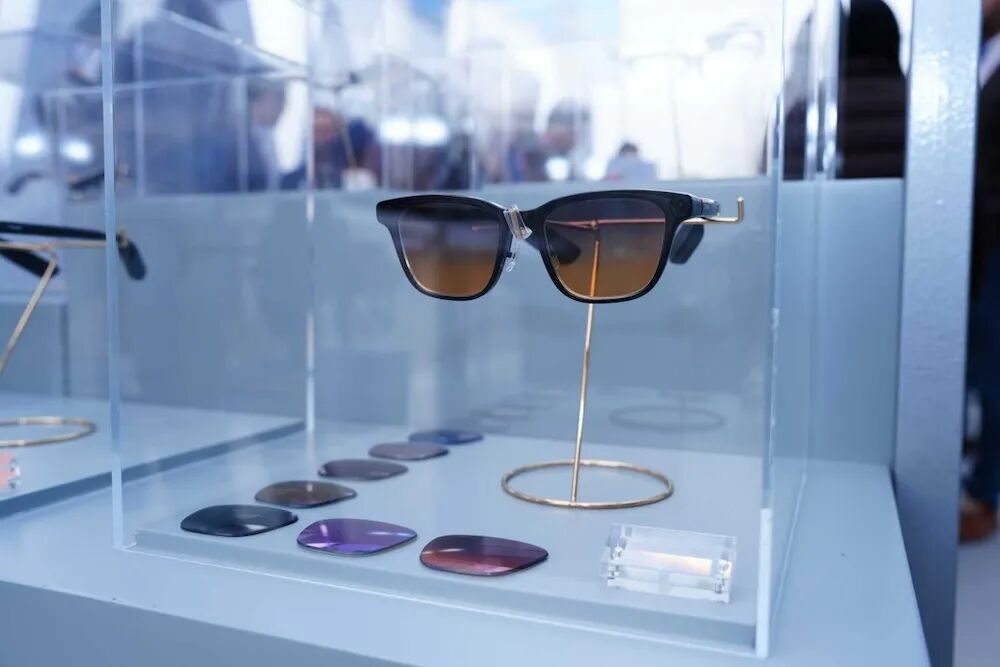
However, for all its technological prowess and ecosystem advantages, the Qwen AI glasses are not without their controversies and growing pains. The most significant hurdle, common to all devices in this category, is the question of social acceptance and etiquette. While the"hot-swappable" battery solves a technical problem, it does not solve the social one. Wearing a device that can record video, take photos, and potentially analyze one's surroundings at any moment can make others uneasy. In Western markets, where privacy concerns are particularly pronounced, this could be a major barrier to entry. The very feature that makes it powerful—an always-on, AI-powered camera and microphone—is also its most unsettling aspect. Critics argue that it could exacerbate issues of surreptitious recording, leading to bans in sensitive areas like locker rooms, schools, or private gatherings .
Another point of contention lies in the practical limitations of current display technology. Users of the S1 model, which features micro-OLED displays for AR overlays, have noted that the monochromatic green text can be difficult to see in bright, outdoor conditions . While fine in a coffee shop or office, the glasses can struggle against the glare of direct sunlight, which is precisely when a tourist might need navigation assistance the most. Furthermore, the voice-activated interface, while intuitive in private, can feel awkward in public spaces. Speaking commands to your glasses on a quiet subway or in a professional meeting can draw unwanted attention and disrupt the ambient social atmosphere, a phenomenon described by some as"social awkwardness in voice interaction" .
There is also the matter of the device's raison d'être for a large portion of the population. As one analysis pointed out, for people who do not require prescription lenses, there is no ingrained habit of wearing glasses at all . Convincing a demographic that is perfectly happy with their smartphone to add an extra device to their face—a device that currently replicates but does not yet completely replace phone functions—is a monumental marketing challenge. While the G1's 40-gram weight is impressive, it is still an additional item to remember, charge, and maintain. Users on platforms like X (formerly Twitter) have echoed these sentiments, with some questioning the hardware's durability and whether it can withstand the wear and tear of daily life without becoming a costly burden .
Moreover, the initial rollout has not been without operational hiccups. A complaint filed on a Chinese consumer rights platform in late February 2026 detailed a user's frustrating experience with a return. The user claimed that after purchasing an AI glasses model (likely from the initial Quark lineup) on Taobao and initiating a return the very next day due to dissatisfaction with the color-changing lenses, the seller rejected the return, citing scratches on the frame. The user accused the platform of"passing the buck" and failing to honor the seven-day no-questions-asked return policy . While such incidents are not unique to Alibaba, they highlight the potential pitfalls in customer service for high-tech hardware, especially as the company scales up sales and targets a global audience with even higher expectations for after-sales support.
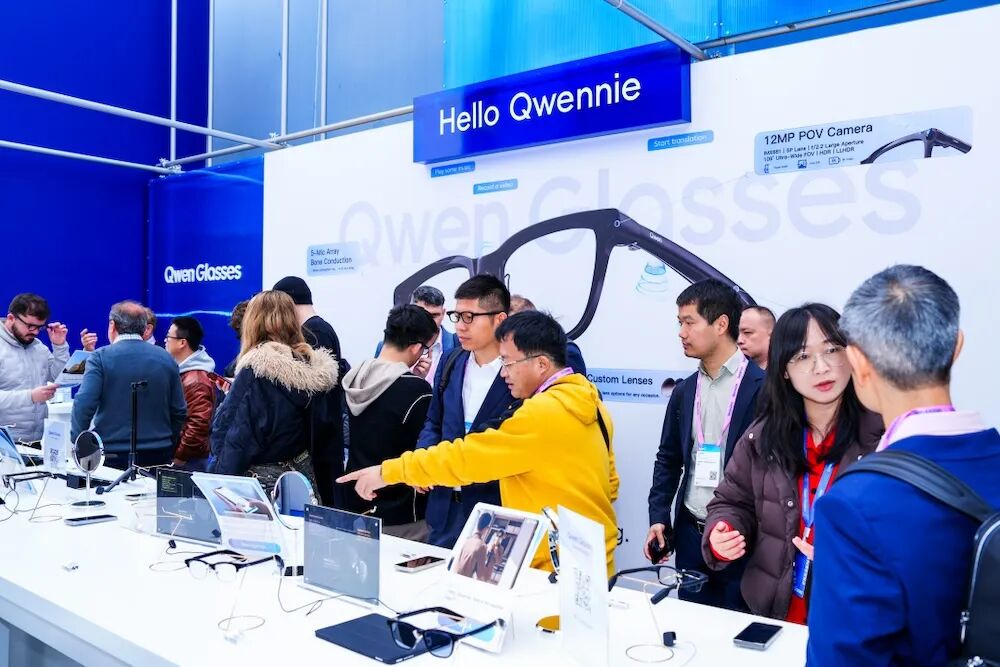
Despite these challenges, Alibaba's commitment to the platform is clear. The company is already looking ahead to a global launch in 2026, with plans to integrate the glasses with international services like Spotify, PayPal, and Google Maps to ensure they feel native to users outside China . This international ambition pits Qwen directly against Meta's Ray-Ban collaboration and potential future products from Apple and Google. The battle will not just be about who has the better chip or camera, but who can build the most trusted and indispensable AI ecosystem.
As Wu Jia, Vice President of Alibaba Group, aptly put it,"AI glasses open the door to a revolutionary way of connecting and interacting with computers" . The Qwen AI Glasses represent a giant's first confident step through that door. They brilliantly showcase the power of integrating a world-class AI with a real-world commercial ecosystem, turning a pair of glasses into a personal assistant, a navigator, and a gateway to services. Yet, they also stumble into the inevitable controversies of a new technological frontier: privacy, social friction, and the sheer inertia of human habit. For now, the Qwen glasses are a fascinating glimpse into a potential future—a future where the digital and physical worlds are no longer separated by a glass screen, but are merged by the very glasses on your nose. Whether the world is ready to embrace that future, and whether Alibaba can navigate its complexities, remains the most compelling question of all.

