


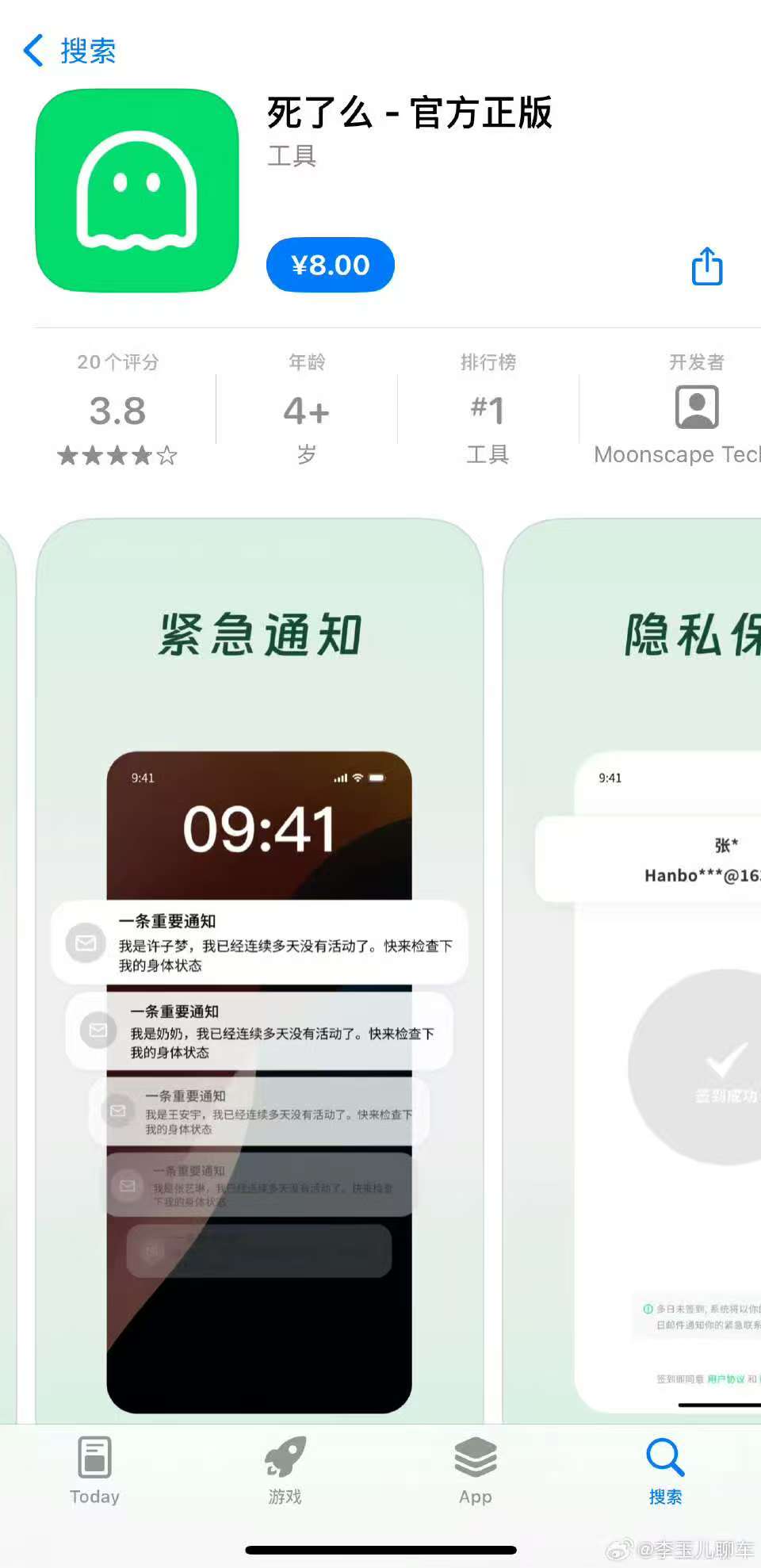
In the bustling digital marketplace where countless applications vie for attention with promises of productivity, connection, or entertainment, a starkly simple app from China managed to capture the global imagination and anxiety in equal measure. Originally named with a blunt, morbidly humorous Chinese phrase that translates to "Are you dead?", the app now known globally as Demumu skyrocketed to the top of Apple's paid download charts in early 2026, transforming from a niche tool into an international phenomenon almost overnight. Its premise is disarmingly straightforward: users are asked to check in once a day. If they fail to do so for two consecutive days, the application automatically sends an email alert to a pre-designated emergency contact. Developed by a trio of 95s in China with an initial investment of just a few hundred dollars, Demumu’s meteoric rise is not merely a story of viral luck but a mirror held up to a profound and growing social reality across the world—the silent anxiety of living alone.
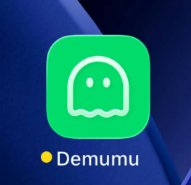
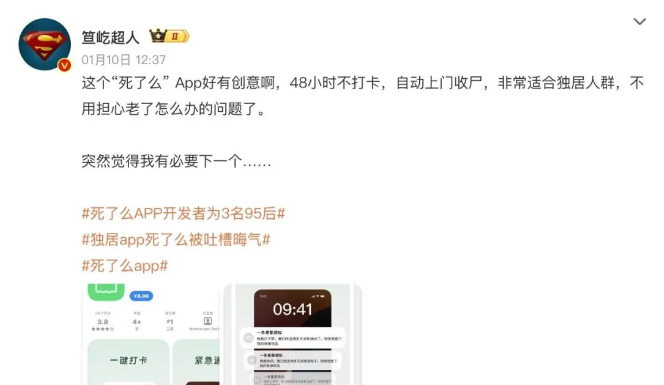
The genesis of Demumu reads like a modern tech fable. The idea, as the developers acknowledged, was not entirely novel; it had been circulating in online forums and social media discussions in China for some time, with various netizens pondering the need for a service that ensures someone would notice if a person living alone suddenly became incapacitated or passed away. What set this particular team apart was their decisive action. While others treated the concept as a thought experiment or a dark joke, they moved quickly to develop and launch a functional app in mid-2025. For months, it languished in obscurity. Its explosive breakout in January 2026 was catalyzed by a wave of attention on Chinese social media platforms like Xiaohongshu, where its jarringly direct original name sparked curiosity, debate, and massive downloads. The timing was pivotal. The app’s functionality, which some critics dismissed as overly simplistic, arrived at a moment when discussions about solitary living, urban isolation, and "lonely deaths" were gaining traction globally.
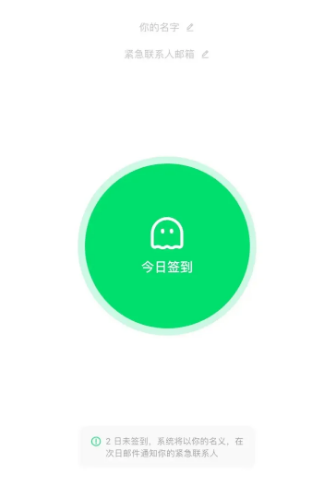
The core value proposition of Demumu resonates because it addresses a fundamental human fear with minimalist technology. In an age of hyper-connectivity, genuine, meaningful check-ins can be scarce. The app serves as a digital ritual, a self-initiated safety net for millions who value their independence but are acutely aware of its vulnerabilities. Users are not asked to share their location constantly or submit to social media performances; they simply press a button to affirm their well-being. For a young professional in Shanghai, a divorced middle-aged man in Houston, or an elderly person in Tokyo, this act provides a sliver of psychological comfort. It answers a haunting question: if something happened to me, how long would it be before anyone knew? This question is becoming increasingly urgent as demographic shifts reshape societies. In China, single-person households now represent over a quarter of all families, with the number of young people living alone in major cities projected to reach tens of millions by 2030. The pattern is not confined to one nation. In the United States, particularly in major metropolitan areas, single-person households are exceedingly common. For instance, in Houston, Texas, they constitute about 41% of all households. Parallel trends are evident in Japan and South Korea, where aging populations and declining birth rates have led to severe issues with "kodokushi," or lonely deaths, a tragedy once associated primarily with the elderly that is now affecting younger demographics as well.
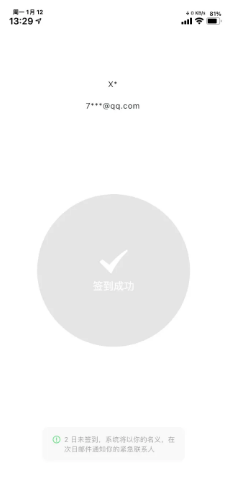
Demumu’s appeal lies in its elegant, low-friction approach to a heavy problem. It formalizes a casual concern into a systematic, albeit basic, protocol. A use described the daily check-in as becoming a habitual act,like brushing teeth, bringing a sense of security or peace of mind. In one recounted instance, the system worked as intended: a user fell seriously ill and missed a check-in, prompting an alert to a friend who was then able to make contact and offer assistance. This example underscores the app’s role as a facilitator of human connection rather than a replacement for it. Health experts, commenting on the underlying issue, have noted that prolonged social isolation carries health risks comparable to smoking and obesity, making tools that foster a sense of being seen—even algorithmically—potentially valuable. The app’s viral success, which saw its valuation leap from an initial projection of a million dollars to nearly a hundred million within days amid fierce investor interest, is a stark market validation of this widespread, pent-up need for security in solitude.
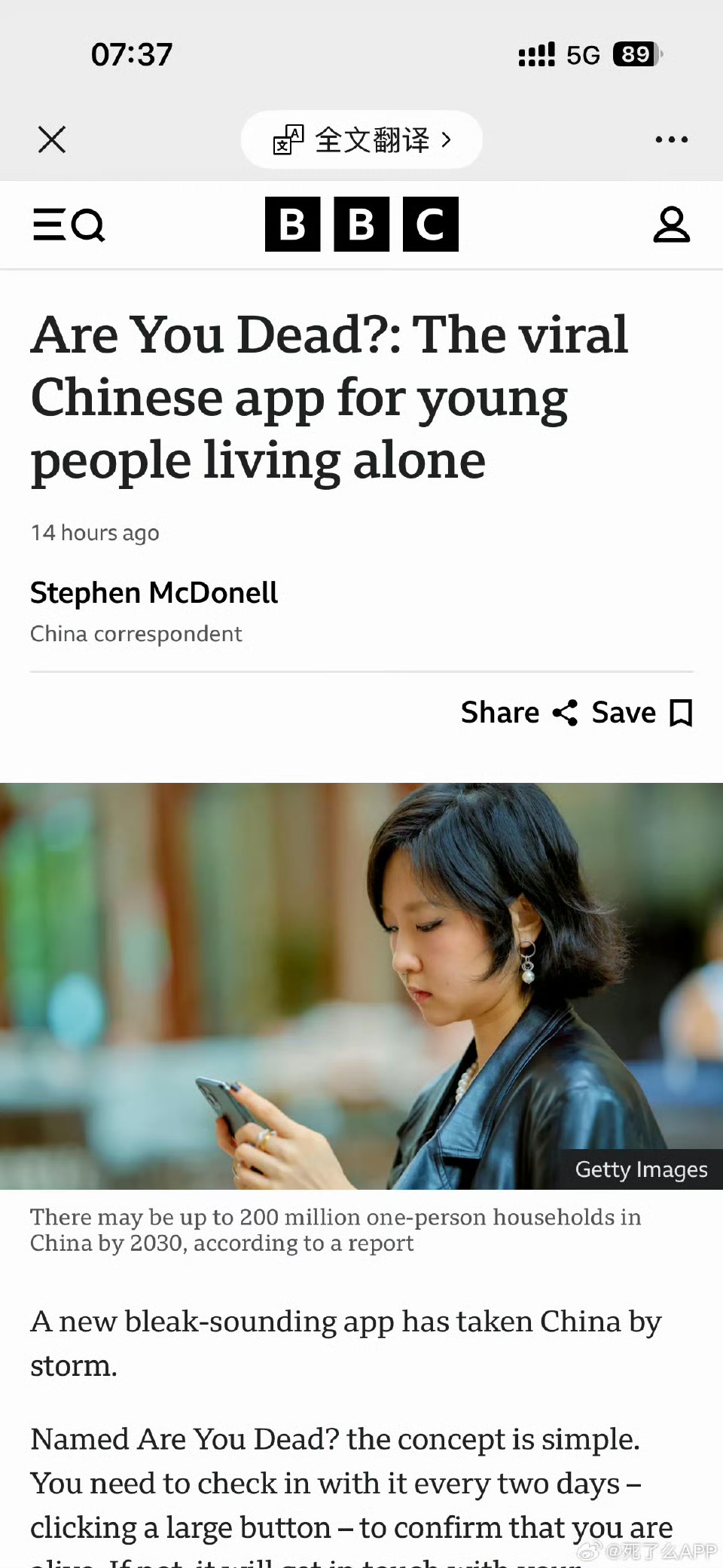
However, the glittering trajectory of Demumu is shadowed by significant controversies and limitations that reveal the complexities of addressing deep social problems with simple technological fixes. The first and most immediate controversy swirled around its original name. While effective for grabbing attention in the Chinese internet’s meme-rich culture, the name was criticized by many as being in poor taste, overly morbid, and potentially distressing, especially for older populations. This pressure, coupled with ambitions for global expansion, prompted the swift rebranding to Demumu, a name designed to be culturally neutral and more palatable internationally. Yet, this very change led some to argue that the app was losing the provocative, conversation-starting edge that fueled its initial growth.
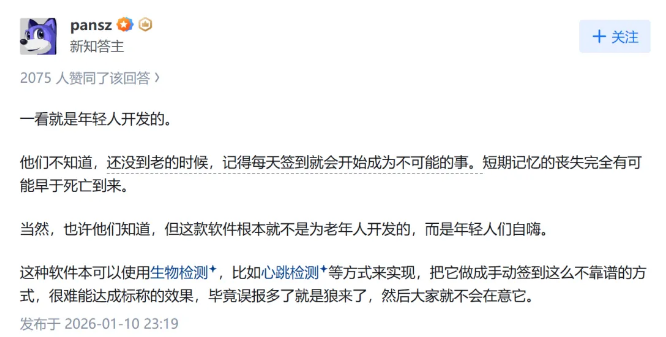
More substantive criticisms target the app’s practical efficacy. The reliance on email as the primary alert mechanism is a major point of contention. In an era dominated by instant messaging, many people do not check their email with urgency. As one skeptic pointed out, if a friend were truly in distress, an email warning might not be seen until it was far too late. Furthermore, the response timeline is inherently slow. The system requires a two-day absence before triggering an alert, and the notification is sent the following day. This creates a minimum three-day gap between an incident and a contact being informed—a timeline that is medically critical for emergencies like heart attacks, where the golden window for intervention is measured in minutes, not days. From this perspective, the app functions more as a "have you gone cold?" service than a lifesaving intervention.
The technological barrier presents another significant limitation. The very populations most vulnerable to isolated emergencies—the elderly and the digitally disadvantaged—are often the least likely to consistently use a smartphone app for daily check-ins. Community workers in China have observed that true safety nets require "warmth" that technology struggles to provide; a sensitive human neighbor noticing uncollected mail or an unchanged curtain is a more reliable and immediate sensor than an app that waits for a missed digital pulse. Demumu’s model, therefore, risks serving only the "digital native" segment of the at-risk population while leaving others behind.
Perhaps the most damaging controversies involved accusations of plagiarism and the perceived hollow nature of its functionality. Shortly after Demumu gained fame, several individuals came forward claiming the core idea had been stolen. A Bilibili content creator alleged that a conceptual video they produced in 2023 was the true origin. More notably, a data analyst known online as "Biscuit Brother AGI" published a detailed account, complete with prompts for AI coding tools, showing he had designed a nearly identical app prototype in March 2025 but did not commercialize it. He demonstrated that with contemporary AI-assisted development tools, a functional clone could be created in mere minutes. These allegations painted the Demumu team not as visionary innovators but as exceptionally fast executors who capitalized on a publicly circulating idea. This was compounded by user complaints that the app failed to deliver on some of its more advanced advertised features, such as integration with smart wearables for physiological monitoring, leaving it with what critics called a glorified email scheduler functionality. The market response was instantaneous and saturating: app stores were quickly flooded with a wave of free or low-cost copycats with names like "Alive?" or "I'm Still Here," highlighting the extreme low barrier to entry and challenging Demumu’s long-term viability.
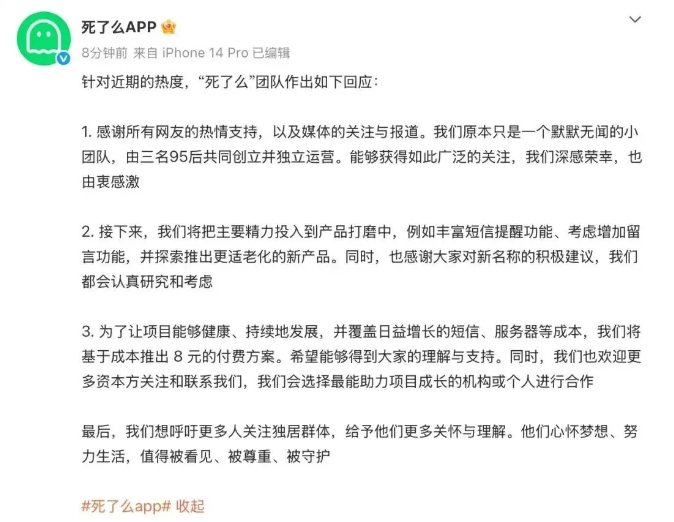
The business narrative itself became a spectacle. The founders' report of working 22-hour days to manage the influx of users and investors added to the legend. However, the dizzying escalation in valuation—from a few million to nearly a hundred million dollars in a matter of days—raised questions about speculative fervor detached from the app’s current revenue model, which was essentially based on one-time download fees. This rollercoaster reached an abrupt peak when, shortly after announcing its global rebranding and ambitious expansion plans, the Demumu app was quietly removed from the Apple App Store. The reasons for the takedown were not formally detailed by the company, marking a sudden and ambiguous pause in a story defined by rapid, viral motion.
The tale of Demumu, from its explosive rise to its controversial stature and uncertain status, ultimately transcends the application itself. It is a cultural symptom. Its success is a massive, collective signal flare indicating the pervasive loneliness and safety anxiety in modern urban life across both Eastern and Western societies. It shows that in densely populated cities, one can still be profoundly alone. The app’s limitations, meanwhile, underscore a hard truth: technology can be a helpful bridge, but it cannot rebuild the village. A daily check-in button may offer psychological solace, but it cannot replicate the security of a close-knit community, frequent family contact, or responsive local social services. As observed in places like Japan, where community patrols look for physical signs of distress, and in Kaifeng, China, where community canteens and visitor programs for the elderly are emphasized, the most effective solutions are hybrid models that combine smart digital alerts with compassionate, on-the-ground human networks.
Demumu held up a mirror, and the world saw its own isolated reflection staring back. It proved there is a vast market for reassurance in an atomized age. Yet, its journey also demonstrates that while an app can powerfully identify and monetize a social gap, filling that gap meaningfully requires more than code—it requires the slower, more complex work of fostering real human connection and building supportive communities. The digital lifeline it offered, however imperfect, started a crucial conversation. The challenge that remains is to build a society where the need for such a lifeline is less acutely felt by so many in the first place.

