


Realistic Inquiry: Pain Points and Challenges in Current Education DevelopmentChina's education cause has achieved historic accomplishments, with the pre-school education enrollment rate reaching 91.1%, the compulsory education retention rate stabilizing at 95.7%, and the gross enrollment rate of senior high school education ranking among the world's upper-middle-income countries. All 2,895 counties have achieved basic balance in compulsory education. However, in the process of high-quality development, multiple structural contradictions still urgently need to be resolved. The gap between regions, urban and rural areas is particularly prominent. There is a clear divide in school-running conditions and teacher resources between rural areas in the central and western regions and developed areas in the east. Some rural schools are facing "hollowing out", while urban schools are under pressure of "oversized classes" and "difficulty in enrollment". The integration of education for migrant children still needs to be further addressed.
The connection between talent training and industrial needs is not close enough. The traditional discipline layout is difficult to adapt to the development of emerging industries such as artificial intelligence and biotechnology, and there is a gap between the supply of innovative talents in higher education and the national strategic needs. At the same time, the education evaluation system is still influenced by the inertia of "only scores" and "only further education", restricting the all-round development of students' comprehensive quality and the exertion of teachers' educational value. Shortcomings such as mental health education, physical education and aesthetic education have not been fully addressed, and the inclusive effect of digital education transformation needs to be further released.

Solutions: Building a High-Quality Education Ecosystem Through Multi-Dimensional Efforts
Focus on high-quality balance and lay a solid foundation for education equity. Guided by the Opinions on Constructing a High-Quality and Balanced Basic Public Education Service System, we will promote the standardized construction of compulsory education schools, comprehensively implement projects to improve weak links and enhance capabilities, and ensure that school-running conditions such as school buildings, equipment and digital facilities meet standards. Deepen the integration of urban and rural education, promote the flow of outstanding teachers to rural and weak schools through the "county-managed school-employed" reform and the principal-teacher exchange and rotation mechanism, take rural teaching experience as an important basis for professional title evaluation and principal selection, and prohibit developed areas from poaching outstanding teachers from the central and western regions. Relying on the National Smart Education Platform, build a co-constructed and shared digital education resource system, so that students in rural and remote areas can also enjoy high-quality education resources.
Deepen education reform to align with national strategic needs. At the higher education level, expand the scale of outstanding engineer colleges, promote the integration of industry and education, and the integration of science and education, invite enterprise chief engineers and engineers to participate in talent training, and integrate industrial practice projects into the teaching process. Optimize the discipline layout of colleges and universities, strengthen the "Strong Foundation Program" for basic disciplines, accelerate the construction of emerging interdisciplinary disciplines such as artificial intelligence, new energy and new materials, and establish a dynamic monitoring mechanism for talent supply and demand. In the field of basic education, further implement the Action Plan for Revitalizing County High Schools, optimize school layout and teacher allocation, promote the implementation of initiatives such as the "15-minute inter-class break", and promote the all-round development of students' morality, intelligence, physical fitness, aesthetics and labor. At the same time, relying on the implementation of the Pre-School Education Law, promote free pre-school education and improve the connection between nursery care and education services.
Innovation evaluation mechanism to stimulate endogenous motivation in education. Eliminate the stubborn problems of "five-onlys" (only scores, only further education, only diplomas, only papers, only hats), establish a diversified evaluation system, and take students' comprehensive quality, teachers' educational effectiveness and schools' connotative development as the core of evaluation. Increase the implementation of the "National Teacher Training Program", improve teachers' digital literacy and teaching innovation capabilities, and support teachers in exploring new teaching models. Improve the special education service mechanism and the support system for students with learning difficulties, ensure equal education rights for every child, and promote the transformation of education from "having access to education" to "having access to quality education".
Future Outlook: Striding Towards a Powerful Education Nation with Equity and Quality
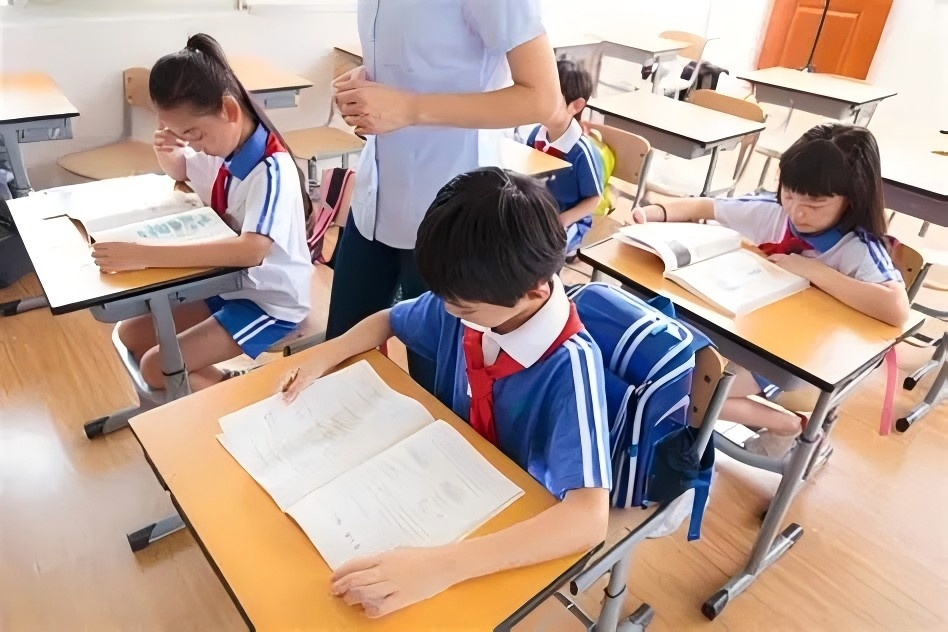
By 2027, a high-quality and balanced basic public education service system will be initially established, the education gap between regions, urban and rural areas, and schools will be significantly narrowed, the education supply structure will be more optimized, and the coverage and effectiveness of digital empowerment in education will be greatly improved. Compulsory education will achieve overall balance in school-running conditions, teacher allocation and education quality, rural schools will become "good schools at the doorstep", and the educational rights and interests of groups such as migrant children, left-behind children and special children will be fully protected. Education equity will truly be transformed into growth opportunities for every child.
In the long run, by 2035, the development level of China's compulsory education will rank among the world's top, forming a school-running system and governance capacity compatible with a powerful education nation. Higher education will become the core support of the national innovation system, cultivating a number of top talents leading the technological revolution and industrial transformation. Vocational education and general education will develop in an integrated manner, transporting high-quality technical and skilled talents for manufacturing and modern industries. At that time, education will truly return to its essence of cultivating people, the potential of each individual will be fully explored, teachers and students will grow together in an open, inclusive and innovative education ecosystem. Education will continue to provide strong intellectual support and talent guarantee for Chinese-style modernization, allowing every child to have the opportunity to shine in life.

