


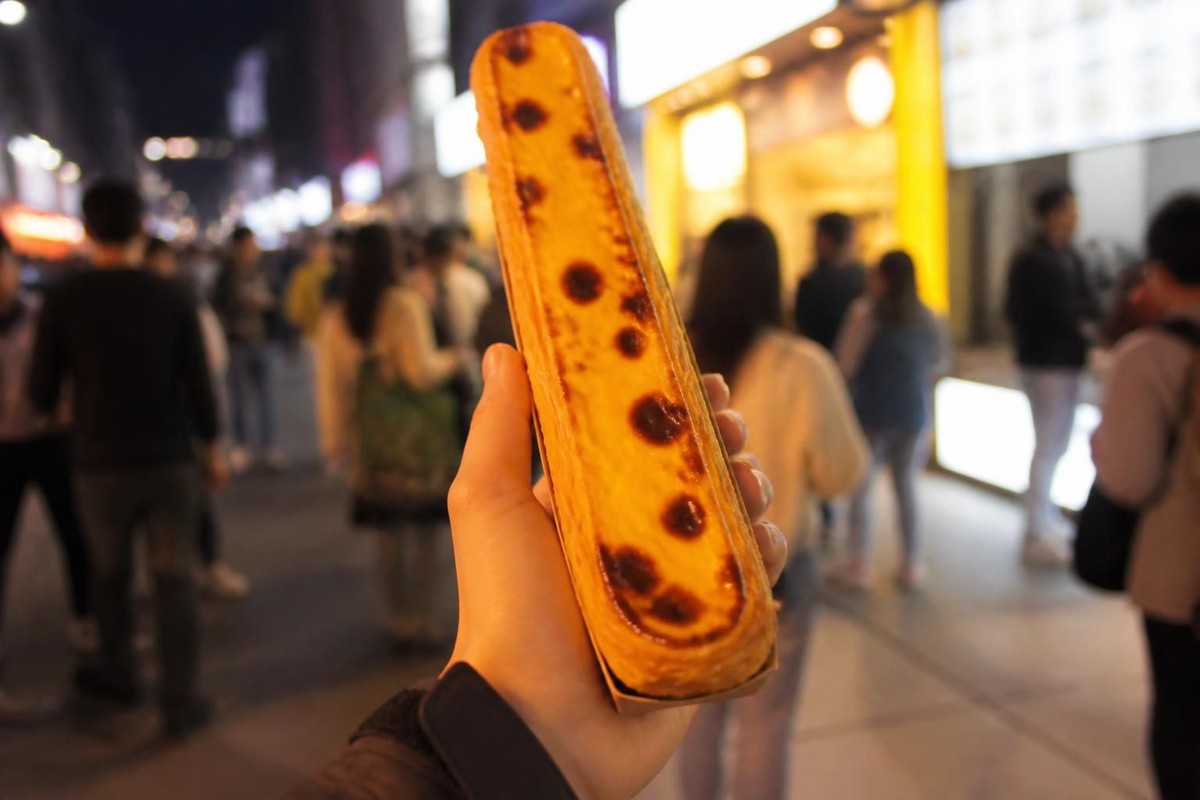
Not long ago, social media feeds and short-video platforms across China were flooded with posts about a 60-centimetre-long egg tart.
Do not underestimate this pastry. Priced originally at 16.8 yuan, it was marked up to 56.8 yuan by resellers. People queued for two to three hours for it, forcing stores to impose a purchase limit of five per customer. The trend spread from Zhengzhou to Beijing, Shanghai, Chengdu and beyond. It racked up 730,000 sales in 40 days, with related topics amassing over one billion views.
What happened next? After the National Day holiday, headlines announced that "extra-long egg tarts were gradually being taken off shelves". From hard-to-get to full withdrawal from the market, barely more than a month passed. It blazed into fame and faded just as fast. This perfectly illustrates the typical lifecycle of a viral product. The same item plummeted from stardom to obsolescence in the hands of consumers. This raises a question: when it comes to such viral products, are consumers being ripped off, or is the market being invigorated?
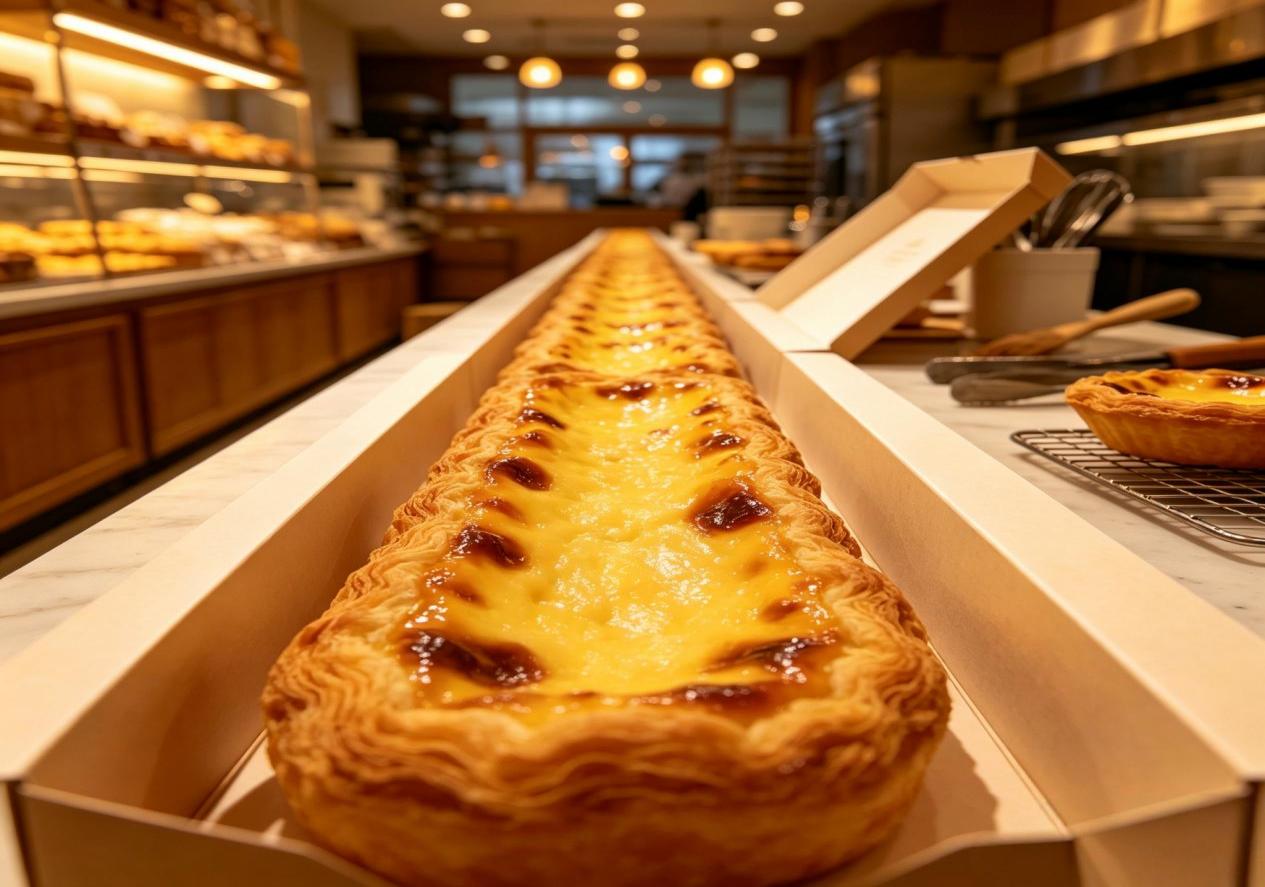
The so-called extra-long egg tart involved no new recipe or flavour upgrade. It was simply a regular round egg tart, rolled thinner, stretched out and baked in a different mould. What was its production cost? Wholesale pre-made tart shells cost just over three yuan apiece in bulk. Adding egg custard and packaging, total costs stood at five to six yuan. Shops sold them for 16.8 yuan, and resellers pushed the price up to 56.8 yuan.
To keep its 60-centimetre shape from breaking, the tart shell had to be thick and rigid. When split open, it was mostly flaky crust. Complaints of "all crust, hardly any custard" shot straight to the top of trending lists. Nutritionists added another blow: one extra-long egg tart could easily exceed 1,000 kilocalories, equivalent to five or six bowls of rice.
A product costing five yuan, sold for 16.8 yuan, for which people queue for two hours yet find barely satisfying. Is it fair to call it a "scam"? Quite arguably so. This marketing tactic is familiar to us all. From the one-metre-long giant candied hawthorn skewers in Harbin, to the half-metre-tall strawberry towers and extra-long fried starch sausages, viral food trends boil down to eight words: bigger, longer, thicker, more. Manufacturers enlarge dimensions and create eye-catching shapes, then leave the rest to short-video platforms. They look spectacular, yet the taste often disappoints.

If viral products have no real merit, why do they keep emerging? Why do merchants bet on them even knowing the hype will subside?
For countless small-and-medium-sized businesses without large advertising budgets, viral products represent one of the few chances to gain visibility. A neighbourhood bakery might never secure platform recommendations under normal circumstances, yet one extra-long egg tart can bring it nationwide online attention within days. Viral traffic drives customer-acquisition costs down to nearly zero, while pushing supply-chain improvements: new baking trays, moulds, cold-chain logistics and reheating techniques are refined amid each wave of popularity.
For consumers, viral products offer more than just food. They become conversation starters, social-media content, and bring joy shared among friends. Even when imperfect, they weave into ordinary people's daily lives.
More importantly, viral products serve as the market's low-cost trial-and-error mechanism. Dirty chocolate croissants, meat floss mini-cakes, and Cha Yan Yue Se all began as internet sensations. Some grew into enduring brands, others settled into everyday menu staples. Viral popularity is not the finish line; it marks the start of market screening. Only those with solid quality and repeat-customer loyalty can convert fleeting traffic into lasting customer retention.
So why do some viral products draw accusations of exploitation while others win praise for creative marketing?
The difference lies not in the traffic itself, but in the capacity to sustain that traffic. Extra-long candied hawthorn skewers, strawberry towers and oversized fried starch sausages have already proven: gimmicks can fuel three days of fame, yet only solid products, robust supply chains and positive word-of-mouth enable businesses to survive beyond three months. Viral trends eliminate not consumers who jump on trends, but opportunistic sellers who merely copy fads and cannot deliver on expectations.
When we decry "scams", we condemn products whose quality falls far short of their hype. When we queue up, we pay for moment-to-moment delight and the joy of sharing. These two sides are opposite faces of the same coin. To close with a question: if a shop selling the latest viral product opened downstairs tomorrow, would you join the queue?

