


Recently, the “Grand Theory”, a concept encompassing notions such as “drink plenty of water”, “sleep a lot”, “take long walks” and “lean muscle goals”, has quietly gained traction on Chinese online platforms. Centered on attending to personal feelings and meeting basic physical needs, this lifestyle proposition adopts a lighthearted, meme-driven narrative to build a low-consumption, slow-paced logic of living. It inherits the emotional undertones of earlier social trends including “Buddha-style living” and low-desire lifestyles, while cloaking itself in a softer, more aesthetic veneer. It easily strikes a chord with people trapped in stress and burnout. Behind these viral online remarks, however, a question merits sober reflection: should this anxiety-easing lifestyle tweak be merely a brief reprieve amid exhaustion, or a life principle worthy of being followed faithfully?
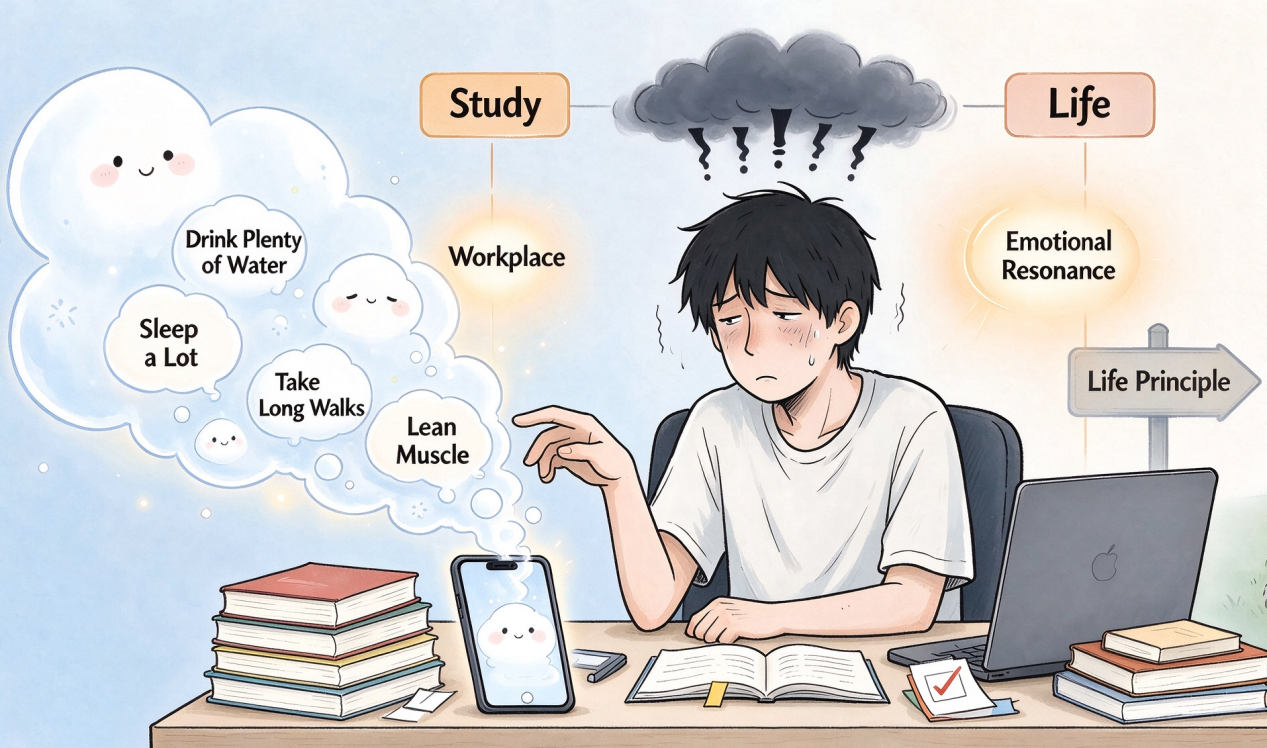
Drawing on “Emotional Resonance”: Elevating Online Banter into Life Doctrine
Rooted in simple, everyday actions, the “Grand Theory” advocates adequate water intake, sufficient sleep, outdoor walks and moderate relaxation. It has a low barrier to practice and hits the emotional pain points of many people enduring prolonged pressure. Today, pressures from academics, careers and daily life pile up, and constant comparison and racing drain people physically and mentally. People are desperate for an outlet to slow down and be kind to their bodies. From the perspective of emotional relief, the desire for stress release embedded in this set of ideas is genuine and deserves understanding and respect.
Yet emotional resonance does not equal value recognition, and online jokes must never be elevated into a philosophical system to guide one’s life. Sharing memes is a light form of emotional venting and is neutral in itself. But once fragmented snippets of life wisdom are taken as guidelines for action and accepted wholesale without discernment, people may subtly shift their value benchmarks and fall into a negative mental trap. The key to seeing this clearly is to distinguish whether it is just an online jest for stress relief or a principle worth abiding by.
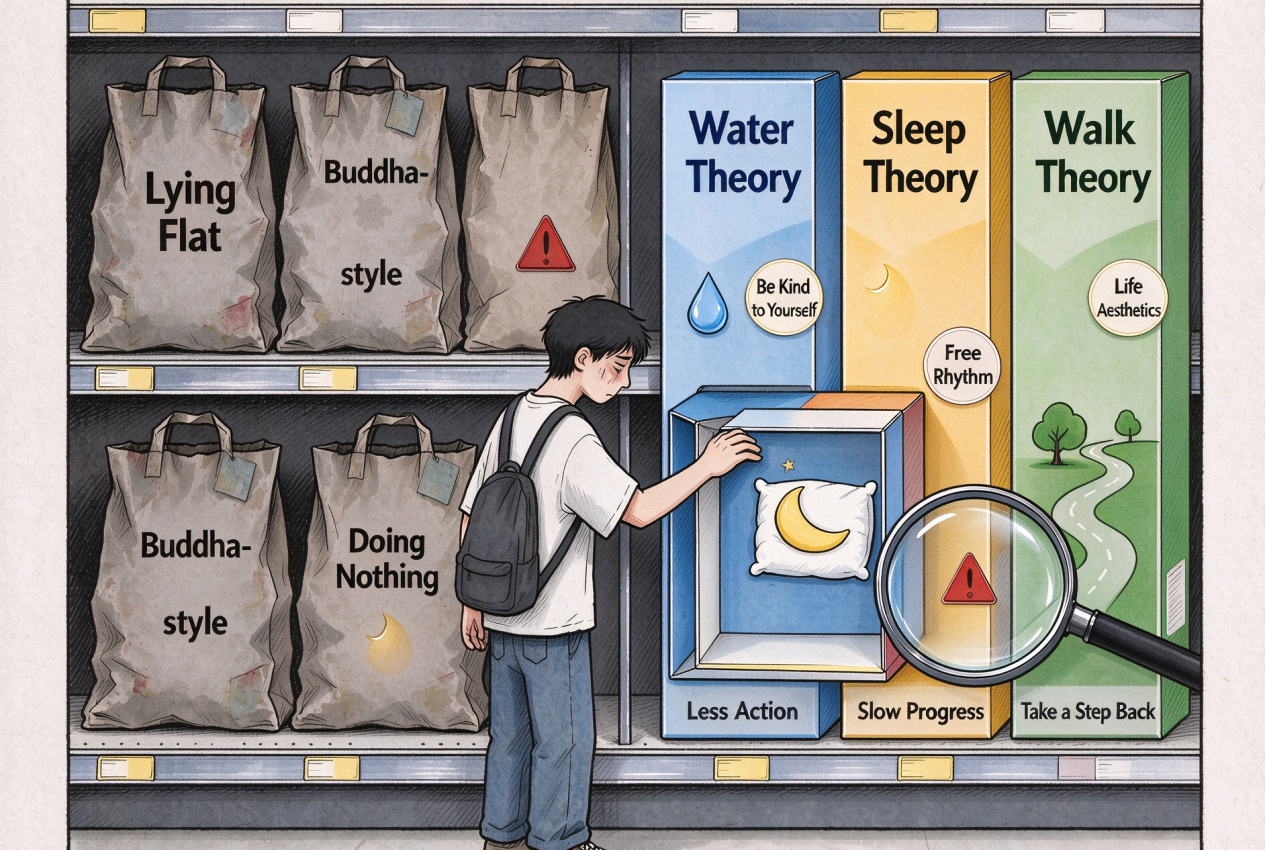
Relying on “Discursive Packaging”: Framing Retreat and Evasion as Thoughtful Trade-offs
Looking back at online social trends in recent years, terms such as “lying flat” and “Buddha-style living” are blunt, with their passive leanings plain to see, readily sparking discussion and reflection. By contrast, the “Grand Theory” employs subtler rhetorical packaging. It shuns overtly passive wording and reframes voluntary slowdown and reduced effort as a deliberate, enlightened personal choice. Within this narrative, stepping back from intense competition is no longer compromise or evasion, but a calm trade-off after seeing the world clearly.
Polished wording improves its superficial appeal yet does not correct its underlying value bias: it discourages individuals from venturing beyond their comfort zones and tackling tough challenges. Its deceptive power lies in wrapping avoidance of challenges in the warm banner of “being kind to oneself”, rebranding passivity as rational choice and making the argument of “striving and acting less” easier to accept. If immersed in such narratives for a long time, one’s drive to venture out and try new things will fade away imperceptibly little by little.
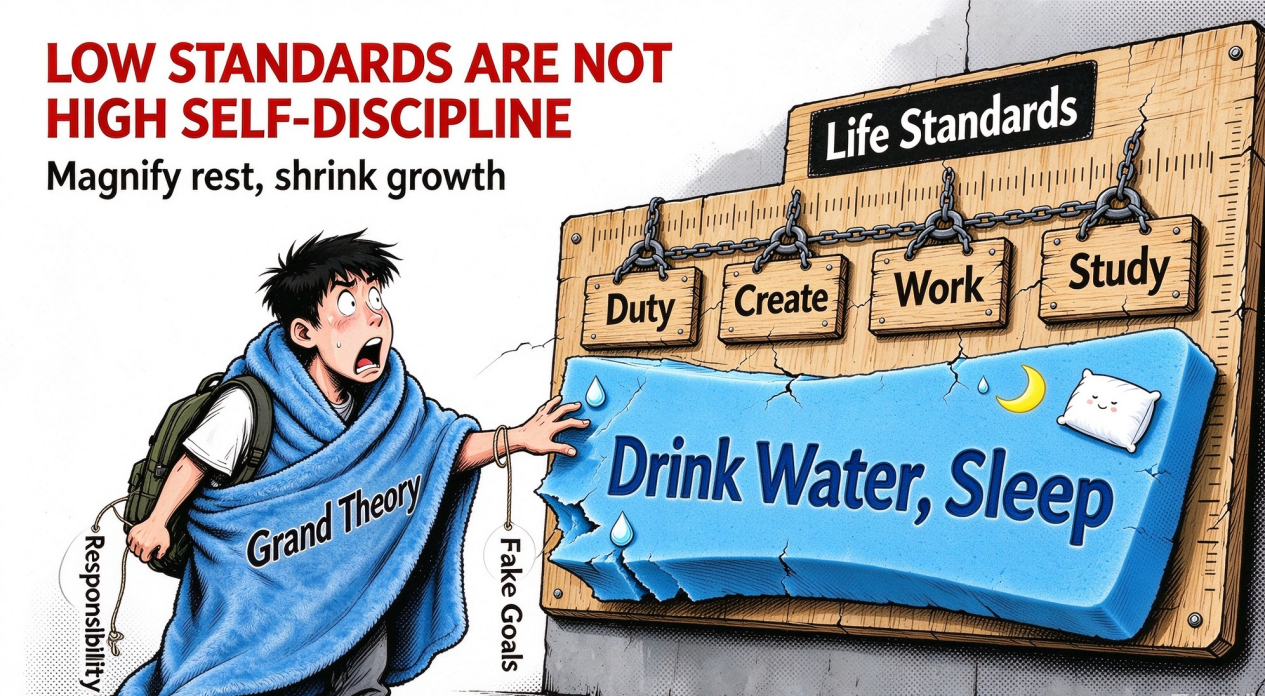
Through “Cognitive Reframing”: Glorifying Voluntary Retreat as Strong Self-Discipline
The “Grand Theory” also harbors an easily overlooked cognitive pitfall. It quietly redefines what it means to be strong, packaging “lowering goals and cutting back effort” as “self-discipline”. True self-discipline means anchoring oneself to long-term objectives, investing sustained energy, confronting hardships, and holding back instant gratification in exchange for long-term growth and rewards. The very essence of self-discipline resides in overcoming inertia, breaking through limits and rising to difficulties. On the contrary, repeatedly lowering one’s standards and convincing oneself with excuses that one is already good enough is essentially self-consolation, not self-improvement.
Everyone has the right to reject meaningless, vicious rat races and need not force themselves to chase worldly success. This is reasonable self-protection. But if one habitually hides behind this ideology to shun challenges and voluntarily narrow the room for growth, over time they will cap their own potential and miss opportunities for self-improvement amid the illusion of contentment.
Amplifying Personal Feelings: Prioritizing Individual Comfort Over Responsibility
Examined as a whole, the discourse of the “Grand Theory” is highly inward-looking. Its yardstick hinges on personal feelings, prioritizing whether one feels worn out or drained, with little attention paid to others, the collective or long-term goals. Moderate self-care is the foundation of mental health, and caring for one’s physical and mental state is perfectly reasonable. Still, individual lives are inextricably linked to the wider world. Many roles and tasks always call for people willing to devote energy and shoulder heavy, complicated burdens.
Everyone bears their own responsibilities, whether caring for family or standing firm at their post. If we only pursue ease and relaxation, who will crack tough scientific problems? Who will keep watch through long nights in hospital wards? Who will rush to the frontlines amid disasters and emergencies? Personal comfort cannot come at the cost of neglecting collective duties. Balancing wellbeing with one’s due obligations makes for a fuller, more balanced way of life.
Confusing Ends and Means: Treating Temporary Rest as the Ultimate Goal
Furthermore, we need to draw a clear line: opposing pointless, unrestrained blind competition does not mean endorsing constant retreat and shunning striving. The crux of the rat race lies in unproductive internal friction and draining one’s health, while the core of striving is purposeful, rhythmic and sustainable effort.
The “Grand Theory” is not entirely without merit. It reminds us to cherish our health, combine work with rest and avoid endless overexertion. Nevertheless, it reverses ends and means. Drinking plenty of water sustains physical fitness so we can work efficiently, not for empty self-satisfaction behind the slogan “strong people drink lots of water”. Getting enough sleep restores energy to fuel problem-solving, not serve as an excuse to dodge tasks. Going out for walks calms frayed nerves so we can return to work and study, not erase all upward ambition in the name of fighting anxiety. Rest serves forward progress. When rest becomes the destination instead of a pause, relaxation turns into stagnation.
Upholding the Rhythm of Alternation: Steady Progress Between Relaxation and Ambition
Caring for the body and tending to emotions are inherent parts of a fulfilling life. Drinking enough water, sleeping regularly and taking timely walks are necessary ways to stabilize mental and physical wellbeing. We may well embrace these healthy habits, yet we must place them properly within our life journey. Rest is a way to recharge, not the finish line of striving; inner peace is a state of mind, not a justification to abandon ambition.
A healthy life rhythm naturally alternates between exertion and repose. When worn out, we pause appropriately to reset and regain vitality. Once refreshed, we still dare to face challenges, shoulder our responsibilities and advance steadily toward set goals. A truly mature and enlightened outlook on life means caring for ourselves while retaining the drive to grow, drawing strength from rest and creating value through hard work. We should neither be swept along by blind competition nor chained by this passive “philosophy of survival”.

