


In the vast, swirling mosaic of contemporary Chinese society, few shifts are as quietly seismic as the steady retreat of the younger generation from the age-old web of extended family relations. This phenomenon, colloquially termed duanqin—literally"severed kinship"—has in recent years moved from whispered dinner-table complaints to a subject of national introspection, stirring both anxiety and curiosity among parents, grandparents, and sociologists alike. For outsiders peering into China's cultural soul, the family has long stood as the unshakable pillar: a Confucian edifice of filial piety, ancestral reverence, and blood-bound obligation that stretched across villages, cities, and even oceans. Yet today, millions of urbanised, screen-savvy young adults are quietly, and sometimes defiantly, loosening those very bonds—not with dramatic rupture, but with a gradual, almost bureaucratic indifference. They attend fewer reunions during the Lunar New Year, exchange cursory WeChat greetings instead of visiting ailing aunts, and, when pressed, confess that they simply do not feel the visceral pull of cousins, uncles, and second-grandmothers that their parents once took for granted. To understand this drift is not to mourn a moral collapse, but to witness a generational recalibration—one shaped by demographics, digitisation, urban migration, and a radically transformed notion of what"family" ought to deliver in emotional and practical terms.
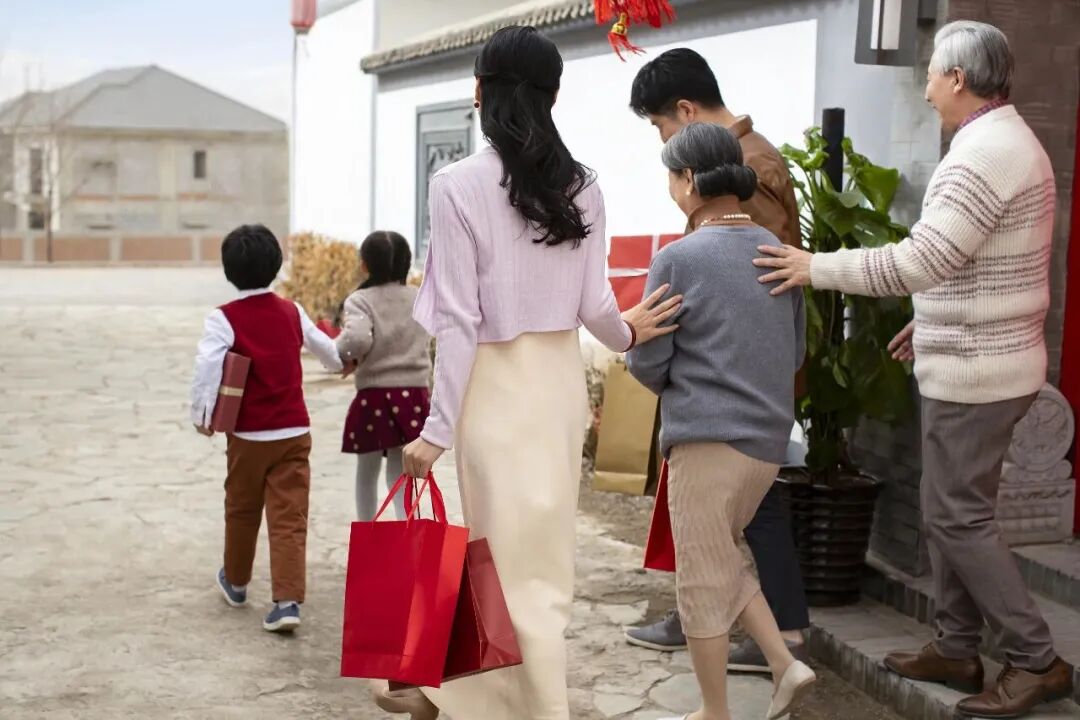
At the heart of the duanqin trend lies a demographic reality that is both stark and inexorable. China's four-decade-old one-child policy, though relaxed in 2016, has produced a generation of young people with few siblings, fewer first cousins, and an almost nonexistent network of collateral relatives compared to their parents' era. A typical post-90s urbanite may have grown up with only one or two cousins on each side, many of whom live in different provinces, speak different regional dialects, and share little more than a surname and a set of grandparents' fading photographs. The sprawling, boisterous clan of a dozen aunts and uncles—so vividly depicted in 20th-century Chinese literature—has shrunk into a sparse constellation of nuclear units, each orbiting its own private sun. When the very architecture of kinship is reduced to a handful of distant nodes, the emotional investment required to maintain those connections begins to feel disproportionate to the rewards. Young people reason, often unconsciously, that if they have never shared a bedroom, a schoolyard, or a family meal with a relative, then that relative occupies the same mental space as an old neighbour from childhood—familiar, perhaps, but hardly essential. This demographic contraction is compounded by the staggering pace of internal migration: over 300 million Chinese citizens have left their rural or small-town birthplaces for megacities like Shanghai, Shenzhen, and Chengdu, creating a geographic chasm that no amount of holiday train tickets can fully bridge. When a young software engineer in Hangzhou sees his grandparents in Hunan only once a year, and his cousins in Shandong not at all for half a decade, the kinship tie transforms from a lived experience into an abstract concept—one that competes poorly with the immediacy of workplace friendships, gym buddies, and online gaming squads.
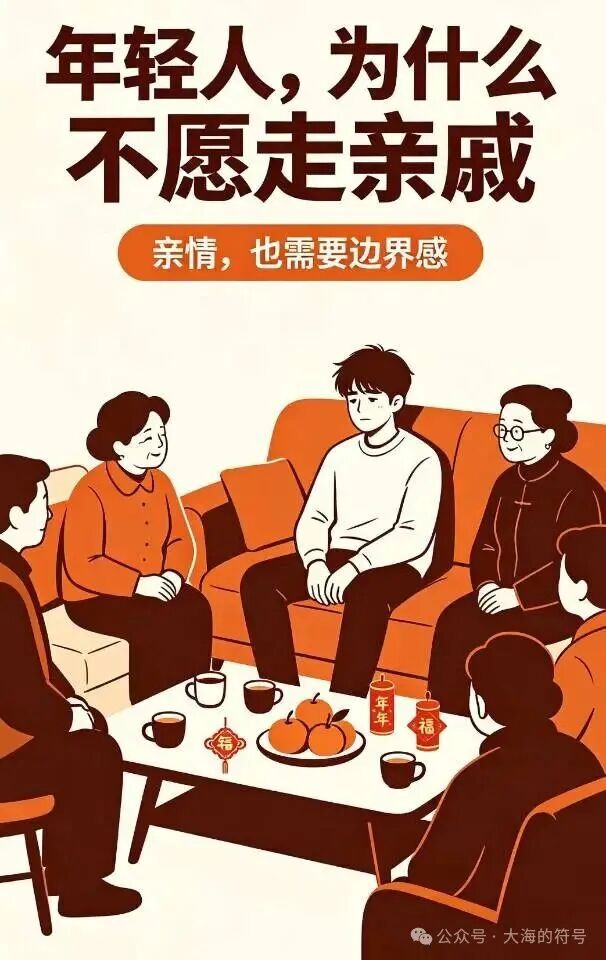
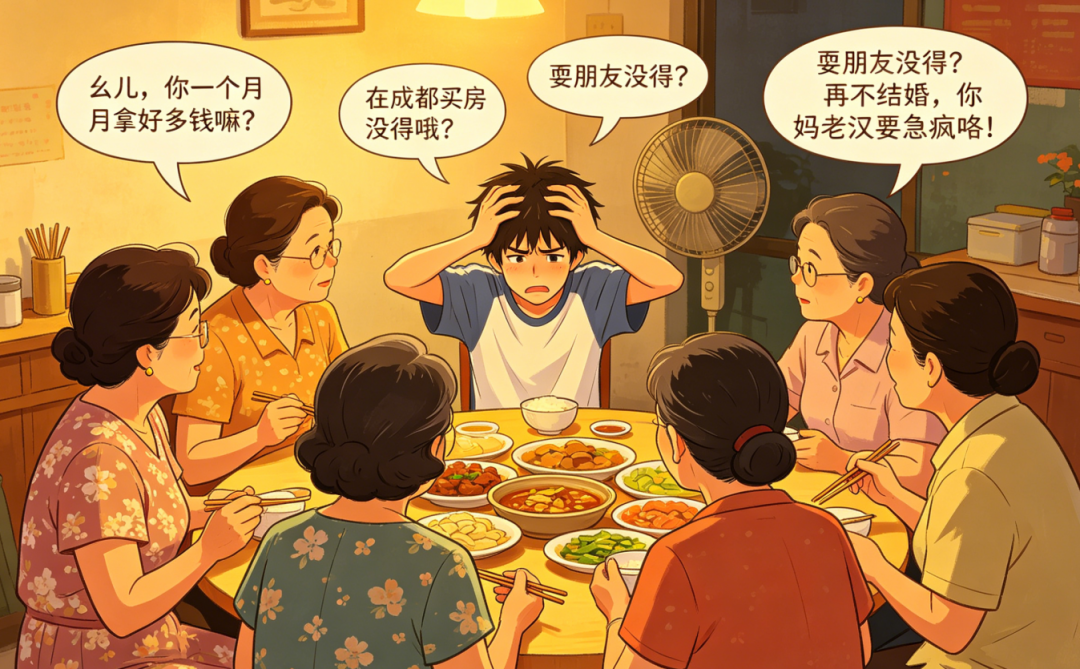
Yet distance alone does not explain the cool detachment; it is the digital ecosystem that has rewired the very grammar of social connection. For China's Gen Z, relationships are increasingly curated, performative, and utility-driven—metrics that traditional kinship fails to satisfy. Social media platforms such as WeChat, Douyin, and Xiaohongshu offer a constant feed of curated intimacy, where one can like a cousin's baby photo without ever asking about her postpartum health, or send a red-envelope gift for a wedding without enduring the two-hour small talk that would have accompanied a physical visit. This digital proxy for interaction creates a paradox: the frequency of superficial contact rises, but the depth of emotional connection plummets. Young people report feeling more anxious after scrolling through family group chats, where elderly relatives dispense unsolicited advice on marriage, fertility, and career choices—topics that clash violently with the individualistic, self-actualising ethos that urban youth have absorbed from global media and local peer cultures. The kinship gathering, once a sacred space for intergenerational wisdom transfer, now feels like a minefield of judgmental questions:"Why are you still single?""When will you buy an apartment?""Why did you leave that state-owned enterprise for a risky startup?" These interrogations, delivered with the best of traditional intentions, are perceived as invasive and anachronistic, driving young adults to dread family reunions with the same visceral aversion they might reserve for a dental appointment. In response, they devise elegant evasions—pleading work emergencies, booking last-minute holiday trips, or simply"forgetting" to reply to the group invitation—until the pattern of avoidance becomes a habit, and habit hardens into a new normal.
Critically, the erosion of kinship cannot be disentangled from the seismic restructuring of China's social safety net. In agrarian and early-industrial China, the extended family functioned as a primitive welfare system: uncles found jobs for nephews, aunts provided childcare for working mothers, and grandparents pooled pensions to fund a grandchild's university tuition. Kinship was not merely sentimental; it was instrumental, a survival toolkit in a world without comprehensive state insurance or reliable banking. Today, however, China's urban middle class enjoys—or at least expects—a level of institutional support that renders familial favours redundant. Health insurance, though imperfect, covers hospital bills; digital payment platforms offer instant loans; and professional networking apps connect job-seekers to recruiters far more efficiently than a distant relative's word-of-mouth recommendation. The young engineer does not need his second uncle to secure an internship; he needs a polished GitHub portfolio and a LeetCode score. The young mother does not rely on her mother-in-law for daily childcare; she subscribes to a certified daycare centre with CCTV feeds and bilingual teachers. As these formal institutions expand their reach, the practical calculus of kinship shifts: if a relative offers neither material advantage nor emotional solace, what remains but an obligatory, time-consuming ritual? For many, the answer is"very little," and they act accordingly—not out of malice, but out of a rational assessment that modern life has outsourced what family once monopolised.
Psychologically, this generation also exhibits a pronounced preference for"chosen families" over"given families"—a trend well-documented in Western societies but now gaining unmistakable traction in Chinese cities. Young people invest enormous emotional labour in friendships forged at university, in co-working spaces, or through shared hobbies like hiking, anime, or idol fandom. These peer bonds are characterised by voluntary choice, symmetrical reciprocity, and a refreshing absence of hierarchical pressure. Unlike an elder uncle who expects deference by virtue of age, a best friend offers critique that feels collaborative rather than condescending. Unlike a cousin who compares salaries at every dinner, a gym partner celebrates incremental gains without jealousy. In this affective landscape, the biological relative who lives three subway stops away but has not called in six months becomes less"family" than the flatmate who brews coffee every morning and listens to break-up grievances at midnight. Sociologists have observed that many urban Chinese youth now maintain two parallel kinship maps: one official, genealogical, and ceremonial— trotted out for weddings and funerals—and another operational, intimate, and elective, which constitutes their true daily support system. The duanqin phenomenon, then, is not so much a rejection of kinship per se as a redefinition of its boundaries; it declares that blood is no longer thicker than shared Spotify playlists, mutual career ambitions, or the quiet solidarity of a weekly book club.
Nevertheless, to frame this shift as purely individualistic would be to miss the quieter, more ambivalent undercurrents of guilt and nostalgia that persist even among the most detached urbanites. Surveys conducted in Beijing and Guangzhou reveal that over 70% of young respondents still express a sense of filial duty toward their parents, and a majority admit to feeling pangs of remorse when they skip the annual tomb-sweeping ritual or decline a grandparent's video call. This emotional friction is the residue of millennia of Confucian ethics, which do not evaporate in a single generation but instead sediment into a half-conscious moral compass. Many young people describe a peculiar double consciousness: they rationally defend their right to choose their social circles, yet they involuntarily flinch when their mother's voice cracks over the phone, saying,"Your aunt asked about you three times today." This guilt does not reverse the trend, but it complicates the narrative, transforming duanqin from a triumphant declaration of independence into a melancholic negotiation—a series of small betrayals that are perpetually half-justified and half-regretted. Some have invented creative compromises: they rotate which relatives to visit each holiday, send elaborate gift boxes as a substitute for presence, or schedule"structured" reunions limited to two hours with a clear exit strategy. These tactics reveal that the young are not heartless; they are simply overstretched, balancing breakneck careers, rising housing costs, and the relentless performative demands of urban social life, leaving little psychic bandwidth for the elaborate choreography of extended family politics.
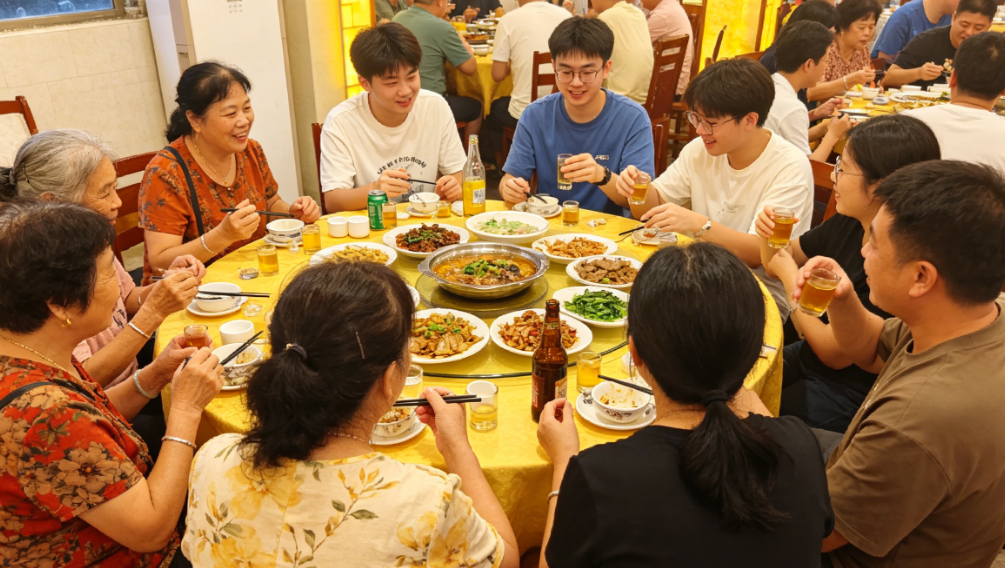
The older generation, naturally, perceives this retreat with a mixture of bewilderment and wounded pride. Grandparents who toiled through famine and reform-era upheaval built their identities around sacrificial family loyalty; to them, a grandchild who prefers a solo overseas trip to the ancestral village gathering is not just unconventional but morally suspect. Yet intergenerational friction, in this case, may be a necessary catalyst for evolutionary adaptation. As Chinese society grows more affluent, educated, and globally connected, the functions of kinship are bound to contract, just as they did in post-war Europe and North America during their own periods of rapid urbanisation. The difference lies in the speed and scale: China has compressed a century of socioeconomic transformation into four decades, so the emotional whiplash is correspondingly sharper. What outsiders often misinterpret as a collapse of family values is, more accurately, a transition from a corporate model of family—where the clan operates as a multi-generational firm with shared assets and reputations—to a therapeutic model, where family is judged by its capacity to nurture individual well-being, authenticity, and psychological safety. When a young woman says she avoids her uncle because he makes sexist jokes, she is not rejecting family; she is asserting a standard of respect that her grandmother never had the luxury to demand. When a young man chooses to spend New Year's Eve with his partner's parents instead of his own, he is not being unfilial; he is practicing a fluid, negotiated form of belonging that prioritises emotional resonance over rigid patrilineal rules.
In the long arc, the duanqin tide may well ebb and flow, as all social currents do. Some researchers predict a"rebound" effect in the next decade, as today's isolated only children marry and produce offspring, suddenly craving the very village-like support networks they once dismissed—cousins to babysit, aunts to cook confinement meals, uncles to tutor in maths. Others foresee a permanent fragmentation, with kinship becoming a niche identity, like a family crest or a hereditary recipe, cherished by a few but irrelevant to the many. What is certain is that the current generation is not destroying the Chinese family; they are, rather, subjecting it to a rigorous stress test, asking uncomfortable but vital questions: What does kinship owe me, and what do I owe it? Can love be mandated by blood, or must it be earned by presence and patience? And in a country of 1.4 billion people, where does the intimate end and the anonymous begin? Their answers are tentative, plural, and often contradictory—but they are not nihilistic. For every young person who ghosts a family group chat, there is another who painstakingly curates a private album of old family photos, digitising memories as a quiet act of homage. For every urbanite who claims to have no time for cousins, there is a tearful reconciliation at a grandparent's hospital bed, where the old hierarchies dissolve and raw affection rushes back, unbidden and undeniable.

Ultimately, the fading strings of kinship in China are not being cut with a sword but untied with a patient, sometimes tremulous hand. The younger generation is not abandoning the concept of family; they are expanding it, hybridising it, and—in their own halting way—trying to rescue its essence from the suffocating weight of ritual and expectation. For foreign observers, the lesson is not to lament the loss of an exotic Oriental collectivism, nor to applaud a triumphant Western-style individualism, but to recognise a universal human dilemma: how to honour the dead, sustain the living, and nurture the unborn, when the old maps no longer match the new terrain. China's youth are navigating that dilemma with remarkable candour, and their quiet revolution in the living room—over steaming dumplings and awkward silences—may ultimately redefine not just Chinese kinship, but the very meaning of home in a hyperconnected, hypermobile age. The threads are fraying, yes, but they are also being rewoven into patterns that no one has quite seen before—and that, perhaps, is the most enduring legacy of any living culture.

