


On the evening of September 5, 2026, an elderly man in the historic water town of Shaoxing, Zhejiang Province, stepped onto his balcony with a pair of long-handled scissors and did something that would ripple across the internet and stir conversations far beyond China's borders. One by one, he clipped seven green gourds from the wooden trellis where they had hung for months, carefully lowering each one as his wife stood nearby to help. By eight o'clock that night, the last gourd was down. The "Calabash Brothers" — as millions had come to call them — were gone.
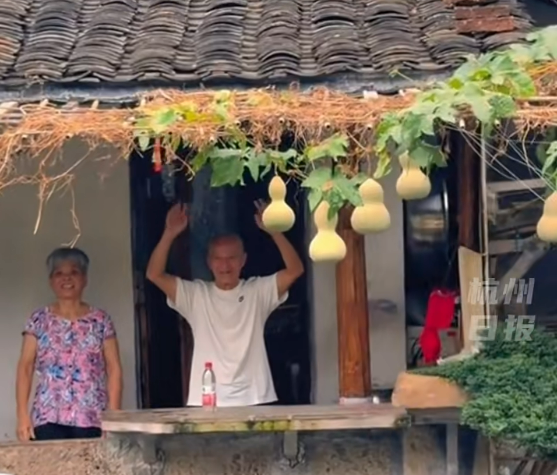
To understand why this act of seemingly simple gardening captured the world's attention, one must first understand what those seven gourds represented. They grew on the balcony of a waterside house belonging to Chen Jin'ao, a 75-year-old resident of Shaoxing's Shusheng Guli scenic area. Chen had planted gourd seedlings on his balcony that March, and by late summer, the vines had produced seven round, green gourds that dangled invitingly above the narrow canal. The scene was an almost perfect replica of the opening frames of Calabash Brothers — a beloved Chinese animated series from 1986 about seven magical gourds that transform into heroic brothers. Chen, with his white hair and gentle demeanour, became the living embodiment of the "Calabash Grandpa" from the cartoon.
What happened next was entirely accidental. A visitor photographed the balcony and posted the image online, and within days, the scene had gone viral. Tourists began travelling from across China to Shaoxing just to stand on the opposite riverbank, call out "Grandpa!", and watch Chen emerge from his house to wave and pose for photographs. The interaction was simple and deeply moving — a real-life grandfather figure greeting strangers as though they were his own grandchildren. And yet, beneath this heartwarming surface lay a story of profound loneliness. Chen and his wife, Shen Hualing, had lost their only daughter in an accident twenty-five years earlier. They had no grandchildren. For years, they had lived with their door closed, their lives quiet and largely isolated. The sudden flood of visitors, who greeted them with warmth and affection, opened their hearts again. Chen told reporters, "Because I don't have my child anymore, it's just the two of us. I treat the seven calabash brothers as my own children". The gourds were not just plants; they were surrogate family members, and the visitors who came to see them became, in a sense, the grandchildren they never had.
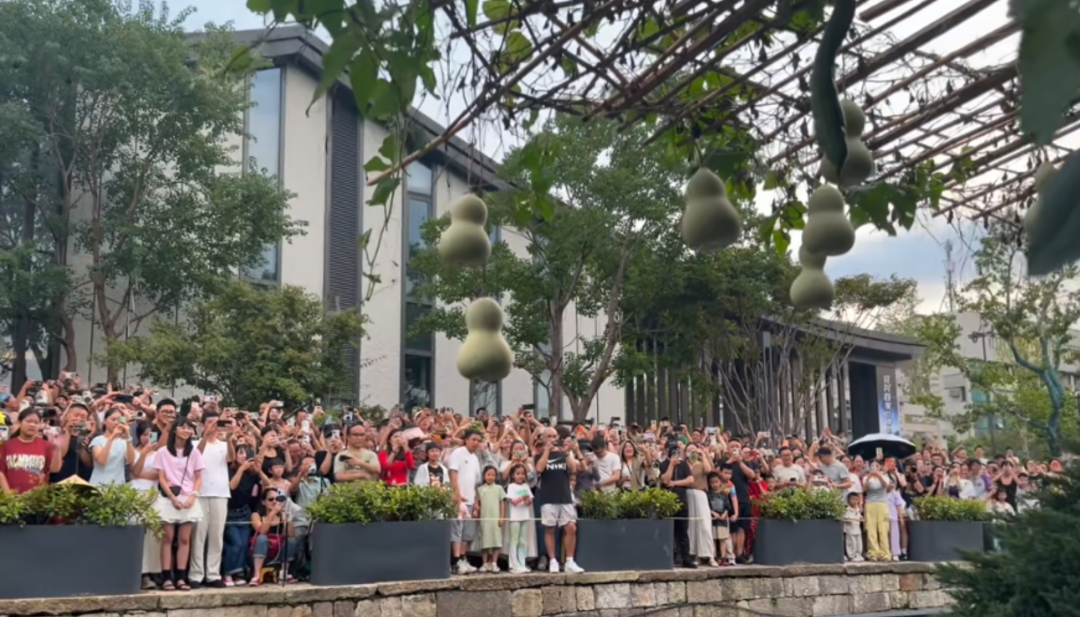
But the attention that brought such unexpected joy also brought exhaustion. During peak hours, visitors called out to Chen every five to ten minutes. He would emerge from his house each time, wave, and chat with the crowd, sometimes dozens of times a day. The couple, both in their seventies, found themselves struggling to keep up. On September 2, a sign was placed near their home asking visitors not to shout loudly because "Grandpa is resting". By September 5 — the first weekend after Chen's fame exploded — the crowds had reached overwhelming proportions. Tourists packed the narrow lanes and crowded the riverbank. Some tried to enter the old house to take photographs. Live-streamers set up their equipment directly outside the couple's windows, pointing cameras into their bedroom and living room. That evening, Chen's wife suffered a bout of dizziness from the strain. It was the breaking point.
Chen had previously announced that the gourds would remain until the Frost's Descent solar term, roughly a month away. But the situation had become untenable. The old house sits directly beside the water, and the surrounding lanes are perilously narrow. With hundreds of people gathering daily, the risk of someone falling into the canal or being injured in a crush was real and growing. Chen and his wife were also simply exhausted. And so, on that September evening, Chen made the difficult decision to bring the gourds down early.
What made the moment remarkable was how it unfolded. As Chen clipped each gourd, a small crowd gathered across the water to watch. When he finished, he did not retreat indoors in frustration. Instead, he stood on his balcony, sang a passage from a traditional Shaoxing opera, and then broke into a spirited rendition of Our Lives Are Filled with Sunshine. His wife held up two of the harvested gourds like trophies. Together, they waved to the onlookers, called out "good night," and disappeared into their home. It was, by all accounts, a gracious and dignified farewell — a gentle man choosing peace over fame, and doing so with warmth rather than bitterness.

The response from local authorities was swift and supportive. The Shaoxing Municipal Culture and Tourism Bureau issued a statement acknowledging Chen's decision and asking the public to respect the couple's privacy. "We give the quietness and daily life back to the elderly couple and wish them health and peace," the bureau said. Officials emphasised that Chen was never a manufactured "internet celebrity" but rather "a kind and lovable elder of Shaoxing". They urged visitors to explore the many other beautiful corners of the ancient city rather than congregating at one elderly couple's doorstep.
Not everyone was happy. Some tourists expressed disappointment at having travelled long distances only to find the gourds gone. A few questioned whether the decision was truly Chen's own. But the overwhelming majority of responses expressed understanding and even admiration. Commenters praised the couple for prioritising their health and safety over fame. Many noted that the gourds, after all, belonged to Chen and his wife — they were never public property, and the couple had never sought or profited from the attention. In fact, they had placed two signs outside their home: "No gifts accepted" and "No commercial advertising". When visitors later knocked on their door offering to buy the harvested gourds, Chen politely refused. "No amount of money," he said, "would make me sell them".
The story, however, did not end with the fall of the gourds. The very next day, a neighbouring café hung seven new gourds from its own balcony. Tourists, it seemed, simply migrated next door. Local authorities clarified that this was a private commercial decision and not something they could or would intervene in. Chen, for his part, expressed no interest in the imitations. When asked whether he would plant gourds again next year, he indicated that he probably would not. The magic, it seemed, belonged to a specific time and place — and that time had passed.
For foreign readers unfamiliar with Chinese social media culture, this story may seem puzzling at first. Why would seven simple gourds on a balcony become a national phenomenon? The answer lies partly in the deep emotional resonance of the Calabash Brothers cartoon, which has been a touchstone of childhood for generations of Chinese people. But more than that, the story tapped into something universal: the human longing for connection, the loneliness of old age, and the complicated relationship between public attention and private life. Chen and his wife were not performing for an audience; they were simply living their lives when the internet discovered them. Their warmth and openness in the face of sudden fame touched millions. And their decision to step back, to reclaim their quiet existence, was a quiet act of resistance against the relentless machinery of viral culture.
In an age when internet fame is often pursued at any cost, Chen Jin'ao did something radical: he walked away. He chose his wife's health, his own peace of mind, and the safety of strangers over the fleeting adoration of the crowd. He did not monetise his sudden celebrity, nor did he seek to prolong it. He simply thanked his visitors, sang a song, and closed his door. It was, in the words of one observer, not an ending but "a thoughtful farewell" — a gentle man's act of kindness toward both himself and those who had come to see him.

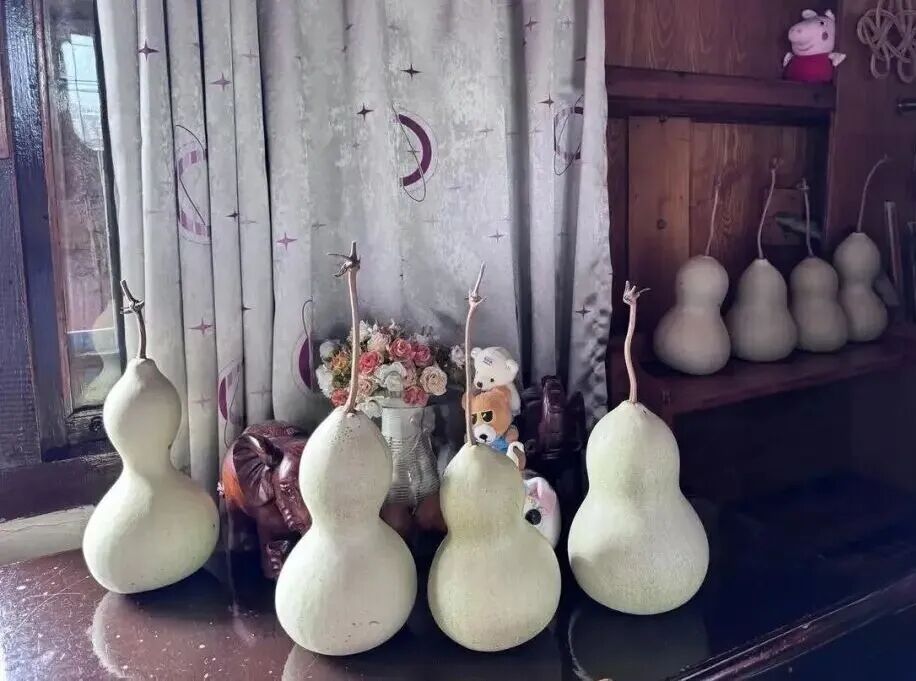
The seven gourds now sit on a table inside Chen's home, reminders of a strange and wonderful few weeks. Outside, the narrow lanes of Shusheng Guli have returned to their usual quiet hum. The tourists have mostly moved on, drawn by the next viral sensation. And Chen and his wife, once again, have their privacy. But for those who witnessed it — whether in person or through a screen — the image of an elderly man cutting down his beloved gourds while singing a song of sunshine will linger. It was a moment that asked a simple question: in a world that constantly demands our attention, what is it worth to keep a small piece of life for ourselves? Chen Jin'ao's answer was clear. And in its clarity, it spoke to something far deeper than any internet trend ever could.

