


The booming online food delivery industry has greatly facilitated people’s daily lives and become an integral part of civilian consumption. Nevertheless, behind the prosperous market, unregulated underground workshops known as "ghost takeouts" are frequently found hidden in residential buildings. Operating without valid qualifications and producing meals in unsanitary conditions, these illegal stores rely on false online registration to receive orders. Such chaos exposes inadequate review mechanisms on delivery platforms and loopholes in food safety supervision. It not only severely endangers consumers’ health but also disrupts the orderly operation of the catering market, calling for targeted rectification and standardized governance.

Rampant Chaos: Underground Takeout Workshops Hidden in Residential Buildings
"Ghost takeouts" refer to unlicensed food processing workshops without legitimate physical stores or official catering qualifications. Mostly concealed in urban residential compounds and urban villages, they profit solely by receiving online orders via delivery platforms. These makeshift workshops suffer from appalling sanitary conditions: raw ingredients are randomly stacked, oil stains accumulate everywhere, and disinfection measures are rarely implemented. Most workers lack valid health certificates, leaving food safety completely unguaranteed. Many operators register on service platforms by forging or appropriating licenses from legitimate stores, displaying exquisite storefront pictures online while conducting production in shabby and filthy environments. Due to their high concealment and low identification, consumers are highly vulnerable to unsafe meals, which not only threatens public health but also poses persistent difficulties for food safety supervision.
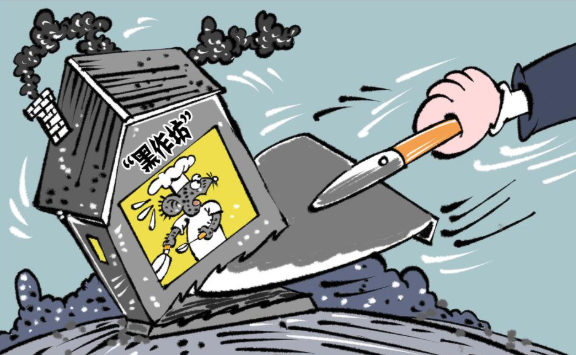
Causes and Consequences: Supervision Deficiencies Fuel Industrial Chaos
The recurring prevalence of "ghost takeouts" stems from a combination of platform dereliction of duty, lagging supervision, and profit-driven violations. The fundamental cause lies in inadequate platform review. Pursuing maximum traffic and market share, some online delivery platforms adopt perfunctory formal examinations for merchant admission rather than substantial verification. They tolerate certificate forgery, information appropriation, and inconsistent registered addresses, granting illegal workshops easy access to online operation. In addition, platforms lack regular dynamic inspection mechanisms. Merchants can easily alter registered information after admission with almost no violation costs, enabling continuous disorderly practices.
Deficiencies in grassroots supervision further exacerbate the problem. Scattered in residential areas, illegal workshops are highly concealed and difficult to inspect. Once penalized, violators often resume business under new store names and registered accounts, making traditional offline supervision ineffective for full and long-term regulation. Free from rental and standardized operation costs, unlicensed workshops attract customers with extremely low prices. Driven by excessive profits, many operators choose to take legal risks and continue illegal production.
The chaos has triggered widespread negative impacts. For consumers, unsanitary ingredients and non-standard processing easily cause food poisoning and gastrointestinal diseases, while tracing responsibility and safeguarding rights remain difficult after incidents. For the catering market, low-price dumping by unregulated workshops squeezes the living space of compliant merchants and undermines fair market competition. For social governance, frequent food safety scandals erode public trust, trigger people’s anxiety, and hinder the healthy and stable development of the catering industry.
Targeted Governance and Improving Industrial Ecology
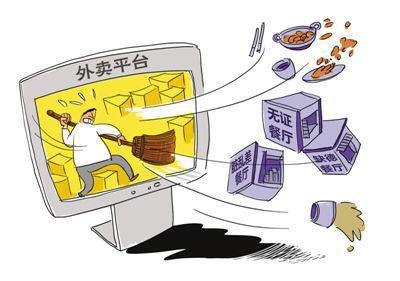
To address the governance dilemma of "ghost takeouts", market supervision authorities have joined hands with delivery platforms to launch comprehensive rectification campaigns, consolidate responsibilities, make up for supervisory shortcomings, and promote the standardized development of online catering services. Primary efforts focus on enforcing platform accountability, reversing the profit-oriented practice of prioritizing traffic over regulation. Platforms are required to undertake full-chain responsibilities for merchant review, verification and daily supervision. By connecting with government data systems, platforms can automatically verify and lock merchant qualification information to prevent unauthorized tampering, removing all unlicensed, counterfeit and inconsistent online stores. Meanwhile, regulatory authorities have intensified law enforcement penalties, imposing fines on platforms with inadequate supervision to force them to fulfill due obligations.
Furthermore, a collaborative supervision mechanism between government and enterprises has been established to improve governance efficiency. Leveraging big data and artificial intelligence technology, regulators have built intelligent online supervision systems to realize dynamic monitoring and precise screening of all registered merchants. Targeted offline inspections are regularly carried out in key areas such as residential buildings and urban villages, severely punishing qualification forgery, unlicensed operation and off-site order receiving to form strong deterrence. Multiple regions have introduced new regulations requiring all food delivery merchants to have authentic physical stores, prohibiting false order receiving and order subcontracting, so as to eliminate the survival space of underground workshops from the source.
In addition, long-term regulatory systems have been continuously improved. Mandatory information disclosure rules are implemented to require merchants to fully publicize business qualifications and real store photos for public supervision. Complaint channels have been optimized to encourage public reporting, forming a diversified co-governance pattern featuring platform self-inspection, governmental supervision and public oversight.
Thanks to a series of targeted rectification measures, existing "ghost takeout" violations have been largely eliminated, and new illegal practices have been effectively curbed, greatly enhancing industrial compliance awareness. With the improvement of full-chain and normalized supervision, the extensive growth era of the online catering industry has ended, ushering in a standardized and law-based development stage. In the future, the multi-party co-governance system will be further consolidated to firmly guard the bottom line of food safety, protect people’s dietary health, and promote the sound and sustainable development of the online food delivery industry.

