


As a green solution to the "last mile" problem in cities, shared bicycles have integrated into citizens' lives with their advantages of convenience, economy and environmental protection, becoming an important part of the urban slow traffic system. However, with the rapid expansion of the industry, problems such as random parking, over-placement, and lack of operation and maintenance have become increasingly prominent, damaging urban public order and triggering management disputes, turning this "convenient benefit" into a pain point in governance. How to balance its convenient nature with urban management order has become an important issue in current urban governance.
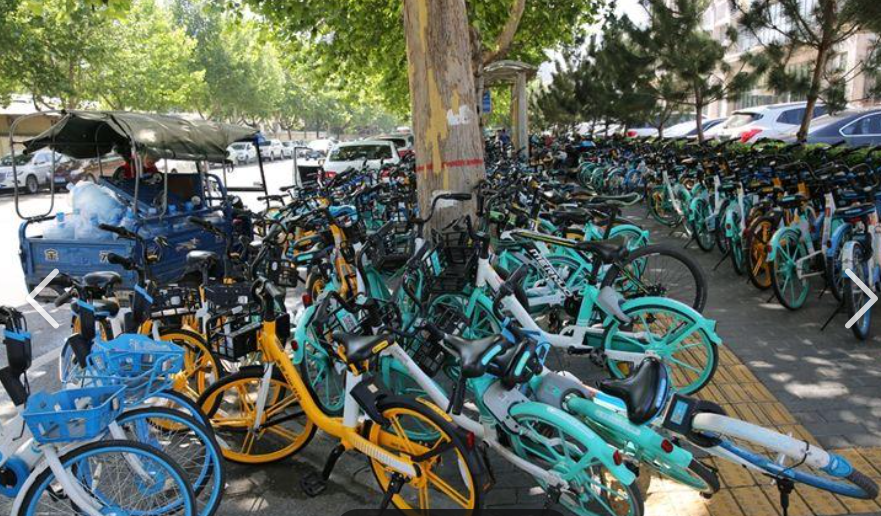
Chaos Highlighted: Shared Bicycles Trapped in Multiple Governance Dilemmas
The management problems of shared bicycles are concentrated in three aspects, which are intertwined to form a governance dilemma. Random parking is the most intuitive. In densely populated areas such as subway stations, commercial districts and community entrances, bicycles are piled up randomly, occupying sidewalks, blind paths and even fire-fighting accesses. The sidewalk on the south side of Yinchuan Jinfeng Wanda Plaza was once occupied by a large number of bicycles, affecting citizens' travel; some users even randomly park their vehicles in green belts and bus stops, damaging the urban appearance.
Over-placement is the root cause of the chaos. Driven by market competition, some enterprises blindly expand their quantity, ignoring the urban carrying capacity. As of the beginning of 2024, the national total number of shared bicycles has exceeded 30 million, and the density in some areas is far beyond the reasonable range. Shenzhen has about 800,000 legally placed shared bicycles, while the number of illegal shared electric bicycles reaches 30,000 to 50,000, forming a "seizure-placement" cycle. Idle vehicles form "bicycle graveyards", wasting public space.
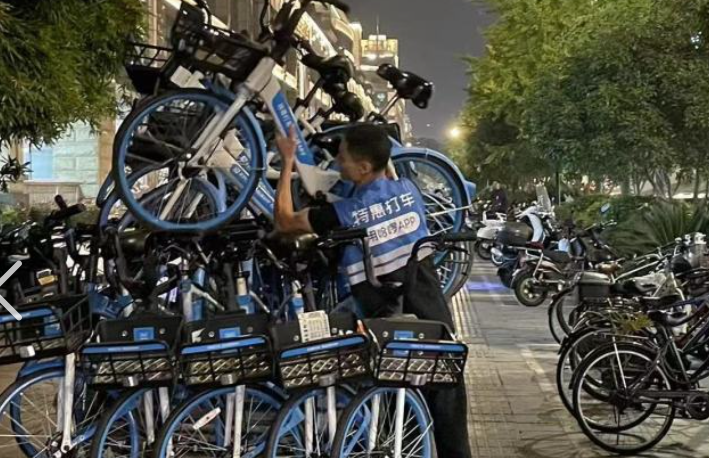
The lack of operation and maintenance exacerbates the chaos. Most enterprises pay more attention to placement than operation and maintenance. The ratio of operation and maintenance personnel to vehicles of mainstream enterprises such as Meituan and Qingju is about 1:1200, far exceeding the reasonable standard of 1:800. After the morning peak, bicycles pile up at subway stations, and it often takes 2-3 hours for enterprise operation and maintenance to respond. Some enterprises even refuse to handle randomly parked vehicles in complex areas, increasing the burden of urban management.
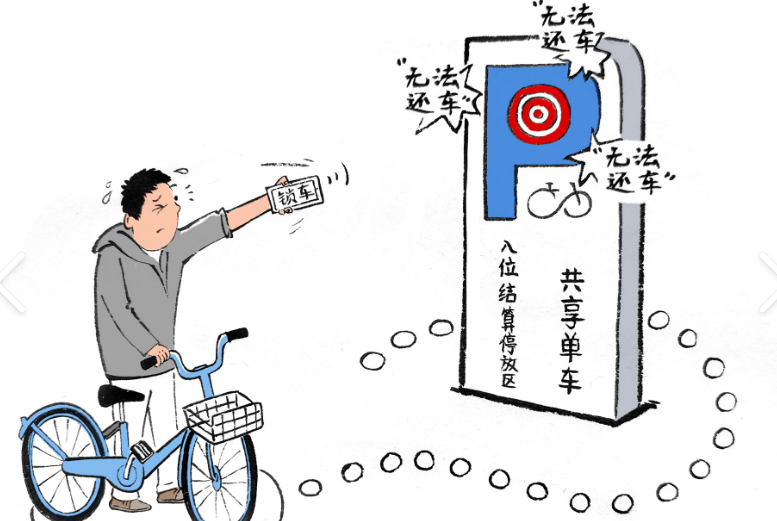
Chain Reactions: Hidden Worries in Urban Governance Behind the Chaos
The chaos of shared bicycles has multiple negative impacts on citizens' lives, public safety and urban governance. First, it occupies public space, blocks sidewalks, blind paths and non-motor vehicle lanes, and interferes with traffic order. At the exit of Huaqiang North Station of Shenzhen Metro Line 1, the random parking of shared bicycles reaches more than 80 meters during the morning peak, forcing pedestrians to detour to motor vehicle lanes and increasing safety hazards.
Second, it threatens public safety. Shared bicycles occupying fire-fighting accesses will hinder emergency rescue. Luohu District once investigated and dealt with a case where 12 shared bicycles blocked the fire-fighting access; the lack of operation and maintenance leads to aging and damage of some vehicles, and illegal shared electric bicycles have no license plates and incomplete safety facilities, further amplifying riding risks.
Third, it damages the urban image and increases governance costs. Messy shared bicycles are like urban "psoriasis", which is contrary to the goal of refined governance. Yinchuan Jinfeng District has towed 2,550 randomly parked shared bicycles and standardized the parking of 22,500 bicycles this year. The governance cost remains high, which also triggers public doubts about the urban management capacity.
Joint Efforts: Building a New Pattern of Shared Bicycle Governance
To solve the governance dilemma, it is necessary to build a collaborative system of "government supervision, enterprise main responsibility and citizen participation". At the government level, it is necessary to scientifically delineate the total number of placements and parking areas, establish a dynamic regulation mechanism, force enterprises to take responsibility through quantitative assessment, and at the same time improve relevant laws and regulations, increase penalties, and make governance law-based.
At the enterprise level, it is necessary to abandon the concept of "valuing placement over operation and maintenance", reasonably control the quantity and intelligently dispatch through big data, equip operation and maintenance personnel according to standards, and establish a grid-based operation and maintenance mechanism. High-tech Zone of Chongqing has realized the disposal of illegally parked vehicles within 30 minutes through the "Urban Brain". Enterprises can also upgrade electronic fences and implement credit points to guide users to park standardizedly.
At the citizen level, it is necessary to improve civilization quality and establish the awareness of "civilized riding and standardized parking". Through the "take a photo and report" mechanism, users can get rewards for reporting and be restricted for violations, promoting citizens to change from "bystanders" to "supervisors" and forming a co-governance atmosphere.
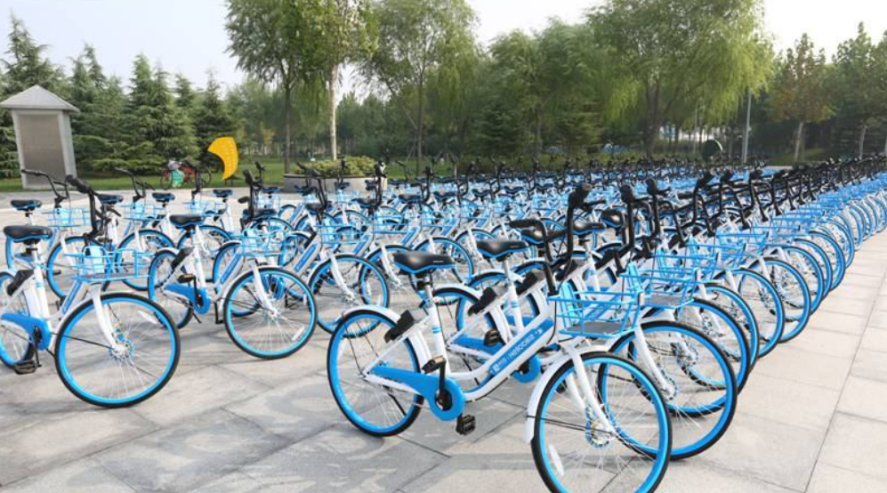
Positive Trend: Shared Bicycles Return to Their Convenient Nature
With the implementation of joint governance measures, the chaos of shared bicycles has been curbed, and the industry has shown a positive trend. The "technology-driven + system innovation" model created by Zhifu District and Laishan District of Yantai controls the total number of placements through intelligent monitoring, increasing the vehicle turnover rate by 40%, and its experience has been shared in more than 30 cities across the country; High-tech Zone of Chongqing relies on the "Urban Brain" to realize the "one-screen control" of 29,000 shared bicycles, improving the efficiency of illegal parking disposal.
The sense of responsibility of operating enterprises has been enhanced, with increased investment in operation and maintenance and the launch of rapid response guarantee plans in core areas; citizens' awareness of civilized riding has been strengthened, and standardized parking has become the norm. The essence of shared bicycles is convenience and greenness. As long as we adhere to joint collaboration and precise policies, we can solve the management problems, let them help urban refined governance, and realize the positive interaction between industry development and urban construction.

