


In recent years, the "involutionary competition" in China's takeaway industry has intensified. Platforms have scrambled for market share through huge subsidies, catering merchants have been forced to compress profits, and delivery riders have been trapped in penalties for overdue orders, plunging the industry into a vicious cycle of "losing money just to gain publicity". Since 2026, regulatory authorities have maintained continuous efforts to rectify industry chaos in multiple dimensions, driving the takeaway sector to shift from price wars to sound competition, with a series of measures achieving initial success.

I. Tracing the Origins: Multiple Causes of "Involutionary Competition" in the Takeaway Industry
The "involution" of the takeaway industry is not accidental, but the result of a combination of factors such as profit-driven capital, regulatory loopholes and supply-demand imbalance, with core contradictions concentrated in three aspects.
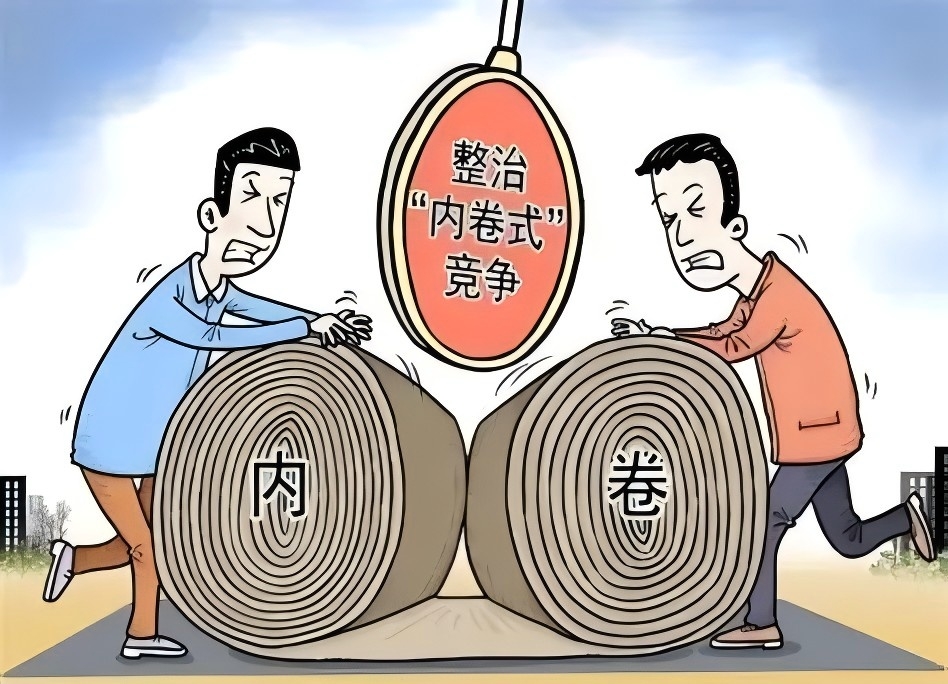
(I) Irrational Subsidy Wars Driven by Capital
Relying on capital advantages, takeaway platforms have competed for market share through high subsidies and promotions like "zero-yuan purchases". From 2025 to 2026, the cumulative subsidies provided by major platforms reached tens of billions of yuan. This "money-burning" model seemingly offered consumers low prices, but actually distorted the market pricing system. To undertake subsidized orders, catering merchants were forced to reduce dish quality and ingredient costs, exacerbating industrial homogenization competition. Many small and medium-sized merchants earned meager profits or even suffered losses. Meanwhile, subsidy wars pushed the per-capita spending of dine-in catering back to the level of a decade ago, restricting the industry's long-term healthy development.
(II) Algorithm Hegemony and Inadequate Protection of Riders' Rights and Interests
Platform algorithms dominate delivery time, order allocation and reward-punishment mechanisms, leading to frequent problems such as "extreme-time delivery", penalties for overdue orders and linked punishments for negative reviews. To fulfill orders, riders have to risk speeding and running red lights, resulting in high safety risks. In addition, opaque commission charges and the lack of rest rights have made riders direct victims of "involution", with their labor security rights difficult to guarantee.
(III) Lagging Regulatory Rules and Disordered Market Order
Most existing regulations are formulated based on traditional transaction models, with poor adaptability to issues such as promotion responsibility allocation and differential pricing in the platform economy, leaving legislative gaps in supervision. Some platforms use data advantages to force merchants to participate in promotions, restrict traffic, or mislead consumers through hidden fees and false discounts, further disrupting market order and worsening industrial chaos.

II. Breaking the Deadlock: Targeted Rectification Measures by Regulatory Authorities
Targeting industrial pain points, regulatory authorities adhere to a problem-oriented approach, building a full-chain governance system of "legal regulation + standard guidance + special rectification" to address "involution" chaos through multiple measures.
(I) Strengthening Anti-Monopoly Law Enforcement and Halting Irrational Competition
On January 9, 2026, the General Office of the State Council Anti-Monopoly and Anti-Unfair Competition Commission launched an investigation and evaluation of market competition in the takeaway platform service industry in accordance with the Anti-Monopoly Law, clearly identifying violations such as "subsidy competition, price rivalry and traffic control". Regulatory authorities have stationed relevant platforms for on-site investigations, extensively collecting appeals from merchants, riders and consumers through questionnaires and interviews to convey regulatory pressure. On March 23, 2026, the Beijing Municipal Administration for Market Regulation and other departments interviewed 12 platform enterprises, notified the first batch of rectification issues and put forward reform requirements, clarifying that continuous subsidies for market share growth are prohibited. The official website of the State Administration for Market Regulation republished the Economic Daily commentary The Takeaway War Should End, sending a clear regulatory signal.
(II) Issuing Industrial Standards and Regulating Platform Operations
In December 2025, the national standard Basic Requirements for Takeaway Platform Service Management was officially implemented, drawing red lines in merchant management, pricing practices, employment protection and dispute resolution. The standard explicitly bans misleading marketing such as "zero-yuan purchases", requires platforms to inform merchants of promotions 7 days in advance, and mandates platforms to bear promotion costs independently instead of passing them on to merchants or riders. Meanwhile, it protects merchants' independent management rights, prohibiting platforms from forcing merchants to participate in promotions by reducing search rankings or restricting traffic, promoting standardized industrial development. In addition, regulatory authorities have issued policies including the Measures for the Implementation of the Fair Competition Review Regulations and the Compliance Guidelines for Internet Platform Anti-Monopoly to improve the governance closed loop.
(III) Focusing on Riders' Rights and Promoting Algorithmic Consultation for Good
Since 2025, multiple departments have promoted special actions to protect the labor rights and interests of workers in new forms of employment. The All-China Federation of Trade Unions, together with the Ministry of Human Resources and Social Security and other departments, issued the Trial Guidelines for Platform Labor Rules and Algorithmic Consultation, explicitly requiring platforms to conduct algorithmic consultation with riders. By the end of 2025, 15 platform enterprises had completed algorithmic consultation, covering over 20 million workers in new forms of employment. Meituan fully abolished overdue penalties, Ele.me clarified the gradual cancellation of such punishments, and many regions piloted penalty exemption mechanisms for overdue orders, driving the reward-punishment system to transform from negative penalties to positive incentives. Algorithmic consultation has also optimized time estimation rules, dynamically extending delivery time limits for scenarios such as rainy days and construction sections. Meanwhile, platforms have set up bad weather subsidies and promoted the "mandatory log-off" function to protect riders' rest rights.

III. Achieving Results: Positive Changes Brought by Rectification Actions
Through the continuous efforts of multiple departments, the "involution" trend in the takeaway industry has been effectively curbed, with positive changes emerging in market order, merchant operations and rider rights protection.
(I) Industrial Competition Returns to Rationality and Pricing System Stabilizes
Subsidy wars have been effectively contained, and irrational platform subsidies have decreased significantly. The catering industry's pricing system has gradually returned to normal. Data from the China Hotel Association shows that the slowdown trend of the catering industry reversed in the first quarter of 2026, with dine-in unit prices rising steadily in some regions. Platform marketing has become more standardized, problems such as false discounts and forced promotions have been significantly reduced, and consumer rights have been better protected.
(II) Merchant Operational Pressure Eases and Innovation Vitality Unleashed
The cost pressure on small and medium-sized catering merchants has eased markedly. No longer having to sacrifice quality for subsidized orders, merchants can focus on dish innovation and service improvement. After the implementation of the Basic Requirements for Takeaway Platform Service Management, merchants' rights to independent pricing and voluntary participation in promotions have been guaranteed. Platform traffic distribution has become fairer, expanding customer acquisition channels for small and medium-sized merchants. In the first quarter of 2026, the number of newly registered catering merchants in many regions increased by 12% year-on-year, with sustained release of industrial innovation vitality.
(III) Riders' Rights Take Root and Professional Sense of Gain Improves
Unreasonable punishments such as overdue penalties have been basically eliminated, significantly enhancing the stability of riders' income. Platform commission rates were lowered in regions like Fujian, with drivers earning an average increase of about 600 yuan per month. Algorithmic consultation has made delivery rules more user-friendly, alleviating riders' anxiety to rush orders. Safety accidents caused by rushing have dropped by 35% year-on-year. The implementation of safeguards such as bad weather subsidies and mandatory rest has significantly improved riders' professional identity and well-being.
IV. Outlook: Building a New Ecosystem for High-Quality Development of the Takeaway Industry
The rectification of the takeaway industry has achieved phased results, but further deepening of governance is still needed to drive the sector toward high-quality development. In the future, regulatory authorities will further improve the legal system, refine supporting rules for algorithmic consultation and platform responsibilities, strengthen law enforcement and supervision to ensure the effective implementation of rectification measures. Platforms need to accelerate transformation, shifting from "traffic competition" to "efficiency competition", focusing on technological innovation, service upgrading and quality improvement to build a win-win ecosystem for "platforms, merchants and riders".
China's "anti-involution" campaign for the takeaway industry is not to restrict development, but to break the vicious cycle and achieve a win-win situation for the industry, consumers and practitioners. With sustained regulatory efforts and industrial self-innovation, China's takeaway industry will surely embark on a healthy and sustainable development path, becoming a model for the high-quality development of the platform economy.

