


For decades, the grand stage of China Media Group's Spring Festival Gala has been defined by familiar sights: dazzling traditional costumes, the comedic timing of beloved sketch performers, and the melodic voices of balladeers ushering in the lunar new year. But for the estimated one billion viewers who tuned in on the night of February 16, 2026, the Year of the Horse brought something unprecedented. The world's most-watched television spectacle transformed into what many are calling a "robot showcase," where gleaming humanoid machines did not merely assist human performers but often upstaged them. This dramatic shift from cultural pageantry to technological expo marks a pivotal moment for the gala, one that has ignited both national pride and a heated debate about the very soul of Chinese New Year.
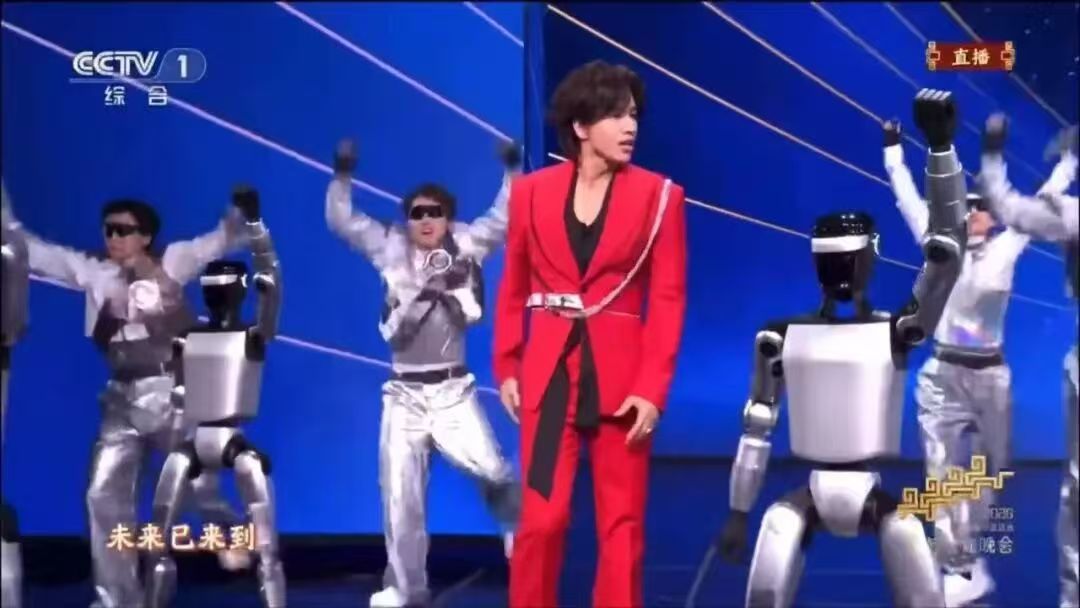
The 2026 gala was, by any measure, a coming-out party for China's robotics industry. Where previous years had seen cautious cameos—such as Unitree Robotics' quirky dancing robots in 2025—this year's broadcast was a full-blown technological blitzkrieg. Four of the country's most promising startups—Unitree, MagicLab, Galbot, and Noetix—converged on the CCTV studio, each vying for primetime real estate in what industry insiders have described as a high-stakes "Super Bowl" for hardware. The opening act itself set the tone, with MagicLab's machines executing a breathtaking "Thomas 360" spin alongside pop stars, immediately signaling that this would not be a typical evening of festive entertainment.
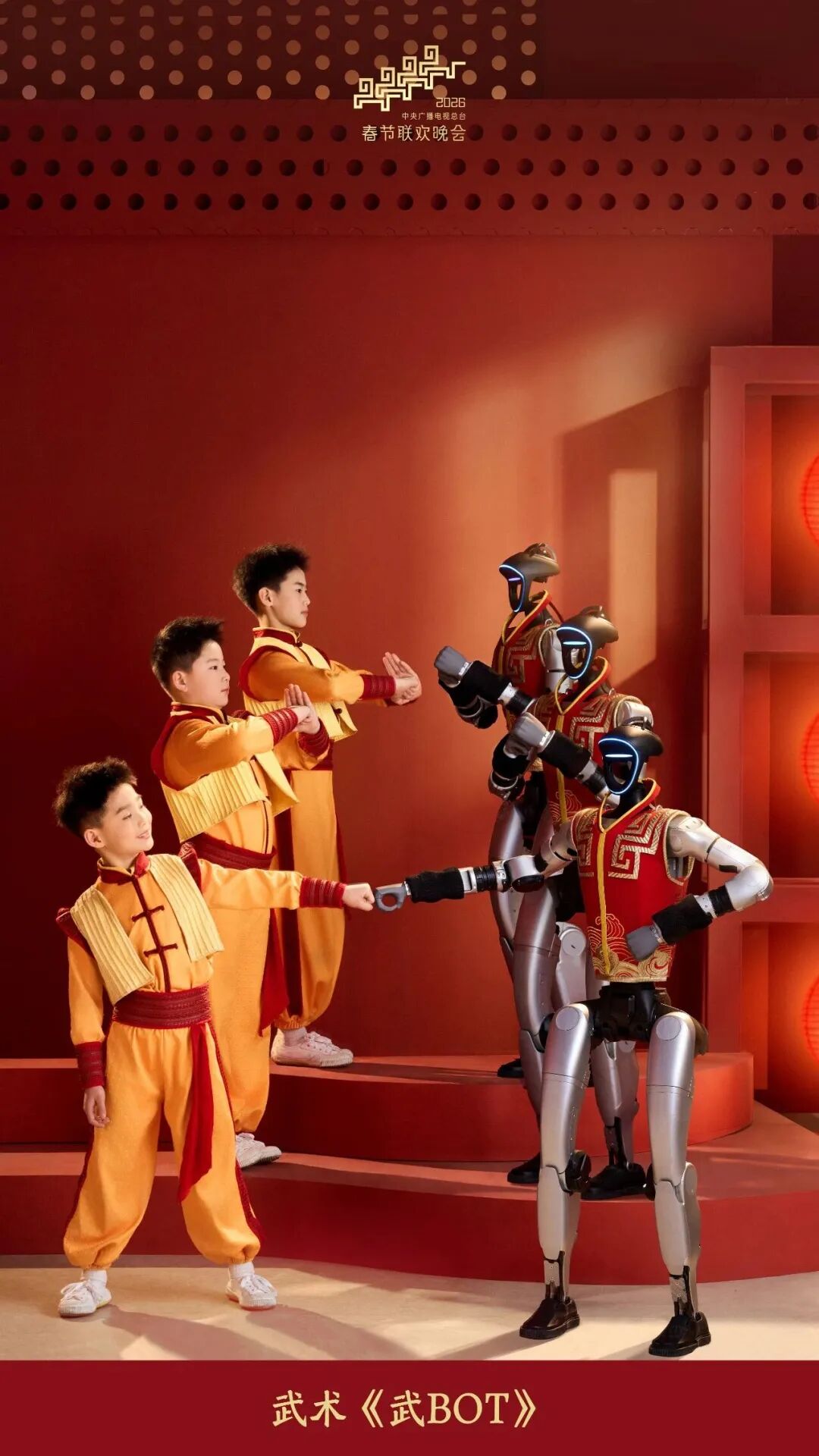
The undisputed highlight of the night was the martial arts spectacle titled "Wu BOT." In this segment, dozens of Unitree's latest humanoid robots shared the floor with seasoned practitioners from the renowned Tagou Kung Fu School. These were not the stiff, pre-programmed automatons of years past. They vaulted over tables, executed flawless backflips, and twirled nunchucks with a dexterity that blurred the line between man and machine. Unitree's founder, Wang Xingxing, revealed that the performance was the result of a frantic month-long development sprint, creating technologies that "did not exist" before the gala invitation arrived. The robots navigated the 600-square-meter stage using a fusion of 3D LiDAR and AI algorithms, correcting their positions in real-time after every high-impact maneuver. To achieve synchronization with their human counterparts, every kick and spin had to be timed to within hundredths of a second. For many viewers, it was a jaw-dropping display of how far Chinese engineering has come. "This is the coolest thing I've ever seen on TV," one user commented on Chinese social media, reflecting the awe of those who saw the performance as a powerful symbol of national technological prowess.
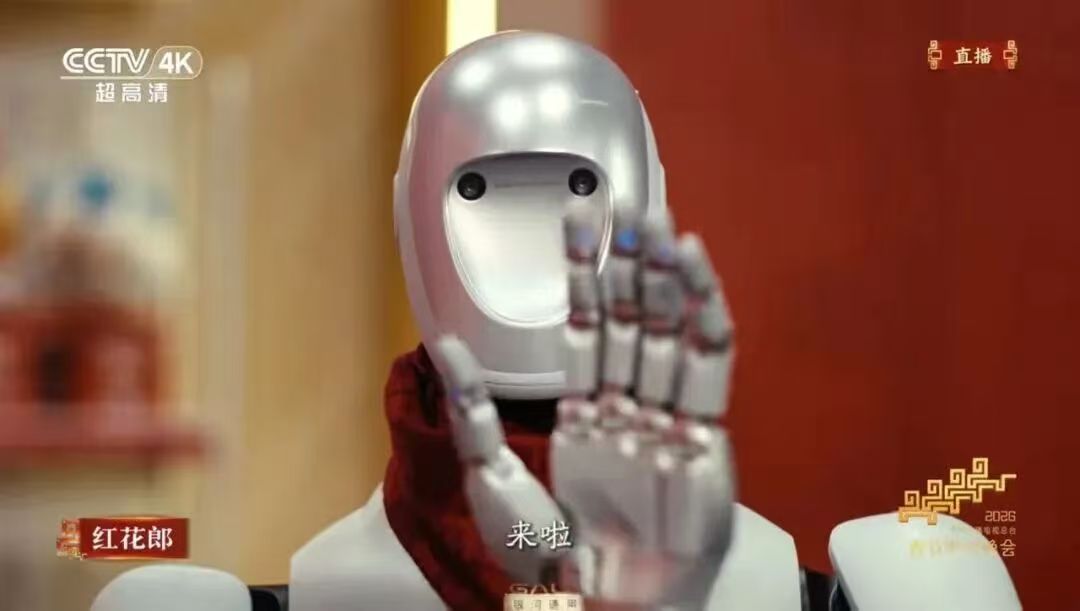
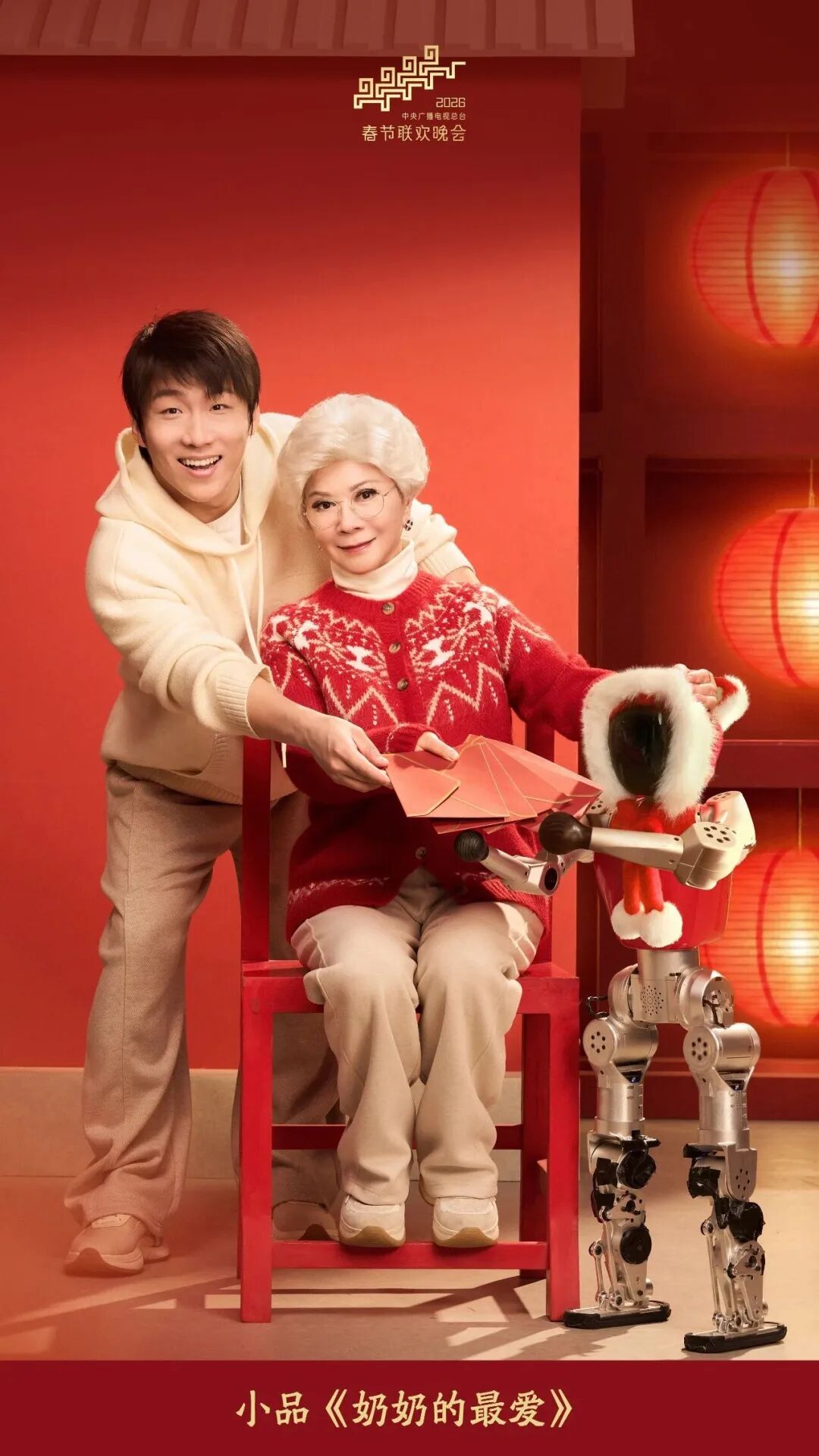
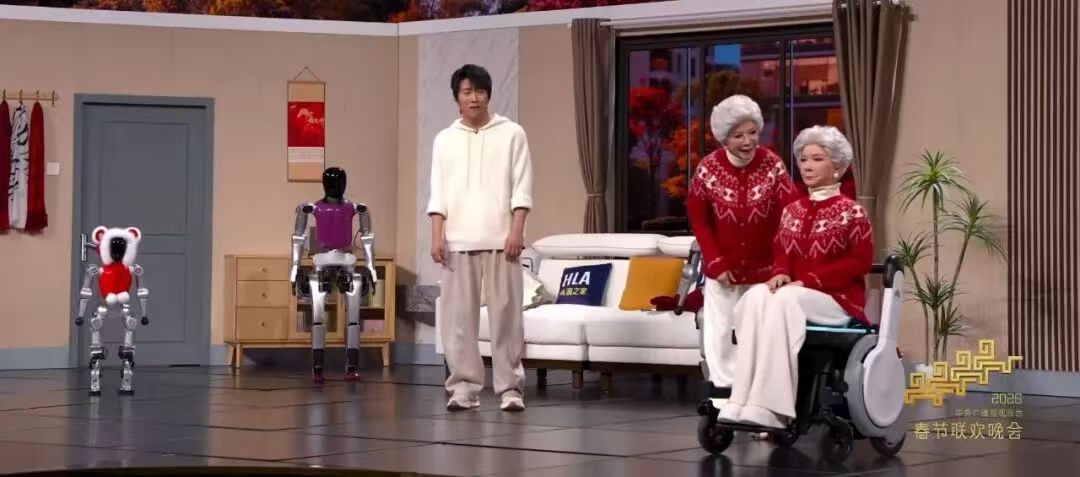
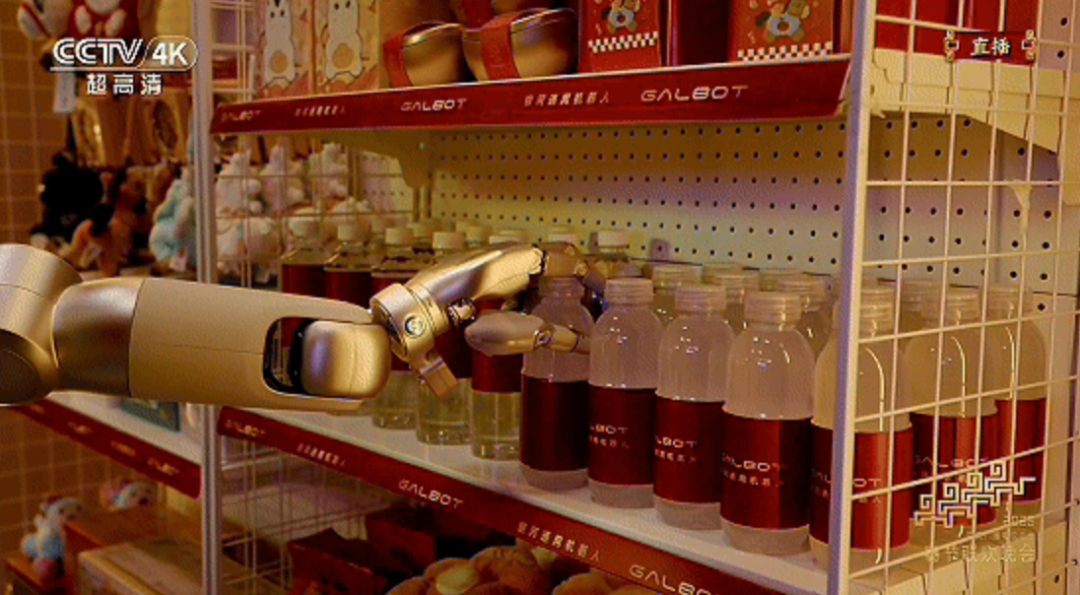
Yet the invasion of the machines extended far beyond the martial arts arena. In a poignant collision of eras, veteran comedian Cai Ming returned to the gala stage thirty years after her first robot-themed sketch. This time, in "Grandma's Favorite," she was joined not by a human in a foil suit but by Noetix's hyper-realistic "Bumi" robot. The android, designed to play her grandson, was a marvel of mimicry. Its neck contained three degrees of freedom to simulate the subtle rhythm of breathing, and its face could produce thirty-two distinct micro-expressions, allowing it to smirk, fret, and raise an eyebrow in perfect sync with Cai's performance. The sketch cleverly explored the anxieties and possibilities of human-robot relationships in an aging society, using humor to probe a question that is becoming increasingly urgent: can a machine provide the warmth of family? Elsewhere, Galbot's robots appeared in a short film demonstrating mundane domestic tasks—cracking walnuts, folding laundry, and skewering sausages—showcasing a future where such devices might move beyond the stage and into the living room.
The international media took immediate notice. Reuters interpreted the robotic showcase as a live demonstration of China's industrial policy, framing it as evidence of the country's aggressive push into the future of manufacturing. A German publication, Table Briefings, went further, suggesting that the gala was being used as a strategic tool to project "soft power," broadcasting an image of China not just as the world's factory, but as a fountainhead of innovation. U.S. tech blogs marveled at the technical specs: the ability to perform single-leg consecutive flips, to spin seven and a half times in the air, and to coordinate dozens of units moving at speeds of up to four meters per second. The global consensus was clear: China's robotics industry had arrived, and it had chosen the Spring Festival Gala as its coming-out party.
However, within China, the reaction was far more divided. As the night wore on, a counter-narrative began to emerge on social media platforms, one that had little to do with torque, LiDAR, or megabytes. For every viewer thrilled by the technological wizardry, there was another who felt a profound sense of loss. The language category, a beloved staple of the gala known for its sharp wit and social commentary, was slashed to just three sketches, with no cross-talk performances at all. In their place stood ranks of spinning, dancing, and joking machines. Of the first six programs, four were saturated with robotic elements. For many, the cumulative effect was not wonder, but alienation. Some users lamented that the gala felt less like a family reunion and more like a corporate annual meeting for a tech conglomerate. "At first, we just lost the New Year's flavor," one viral comment read. "Now, we've lost the human flavor too." Another user posted a sentiment that resonated with thousands: "We invented robots so they could be the workhorses, and we could go sing and dance. Now, I'm still the workhorse, and they're the ones singing and dancing."
This backlash touches upon a sensitive cultural nerve. The Spring Festival Gala is more than just entertainment; it is a ritual. For generations of Chinese people, both at home and abroad, it has been a comforting backdrop to the holiday, a repository of shared jokes, songs, and memories. To see that space increasingly occupied by corporate marketing—especially given reports that each robotics firm paid a staggering 100 million yuan, approximately 13.7 million U.S. dollars, for the privilege of participating—feels to some like an intrusion. The gala, critics argue, is in danger of losing its cultural soul to commercial and political expediency. The very intimacy of the family reunion seems threatened when a significant portion of the broadcast is dedicated to what is essentially a high-budget infomercial for the "new quality productive forces" that the government is keen to promote.
Yet, to dismiss the spectacle as mere advertising would be to miss the larger picture. The 2026 gala represents a significant cultural shift in how technology is perceived and integrated into everyday life in China. For years, artificial intelligence and robotics were abstract concepts discussed in specialized forums or seen in dystopian sci-fi films. By placing them in the intimate setting of a New Year's Eve broadcast—having them crack jokes with Cai Ming, bow respectfully to kung fu masters, and perform chores in cozy homes—the gala is performing a vital function of normalization. It is familiarizing the public with the idea that these machines are not coming to replace them, but to live alongside them. As one industry executive noted, placing robots in festive scenarios is a form of "social grooming," building a cognitive foundation for a future where human-robot interaction is mundane. The gala is effectively translating the complex jargon of "embodied AI" into a visceral, national experience, making the future feel accessible rather than frightening.
This year's broadcast also subtly illustrated the diverging paths of the robotics industry itself. On one hand, Unitree's focus on extreme athleticism demonstrated a vision of robots as physical laborers, capable of operating in dangerous or complex environments. On the other, Noetix's emotionally responsive android pointed toward a future of companionship and caregiving. This diversity suggests that the industry is maturing, moving away from "one-size-fits-all" prototypes toward specialized solutions for specific markets. The gala stage, therefore, served as a crucial proving ground, allowing these companies to stress-test their products under the most demanding conditions imaginable: a live broadcast with no retakes, viewed by a billion people. If a robot can handle the chaotic lighting, tight choreography, and unpredictable variables of the gala, the logic goes, it might just be ready for the even messier reality of the human world.
As the final notes of the closing song faded and the robotic performers took their bows alongside their human counterparts, the question lingered: what has the gala become? It is no longer simply a variety show, and it is not yet a full-fledged technology expo. It exists in a hybrid space, a reflection of a nation standing at a crossroads between its deep cultural traditions and its relentless push toward a high-tech future. The robots on stage were impressive, but they also served as mirrors, reflecting back the hopes and anxieties of the society that built them. For those who see China's future in terms of strength and innovation, the sight of dozens of machines moving in perfect unison was a stirring vision of national rejuvenation. For those who cling to the gala as a last bastion of analog warmth in a digital age, it was a sign that even the most sacred of traditions are not immune to the march of progress.
Perhaps the ultimate meaning of the 2026 Spring Festival Gala lies not in the debates it sparked, but in the question it posed for the years ahead. As the technology improves and the robots become even more lifelike, the line between performer and machine will only blur further. The challenge for the gala's producers moving forward will be to strike a balance—to harness the excitement of innovation without sacrificing the human connection that has made the show a beloved institution for over four decades. The Year of the Horse may be remembered as the year the robots took over the stage, but it should also be remembered as the year China began a national conversation about what it truly means to be human in an age of intelligent machines. The answer to that question will likely determine the shape of the gala for generations to come.

