


Blue stone slabs wind and stretch, with shops of blue bricks and gray tiles standing row upon row, and red lanterns swaying gently under the overhanging eaves — this is the soul of Suixi Ancient City in Huaibei, Anhui Province, China: Stone Slab Street. This 650-meter-long ancient blue stone road is the best-preserved Ming and Qing commercial street in northern Anhui, engraving the millennium-long changes from the prosperity of water transportation in the Song Dynasty to the revival of cultural tourism in modern times.
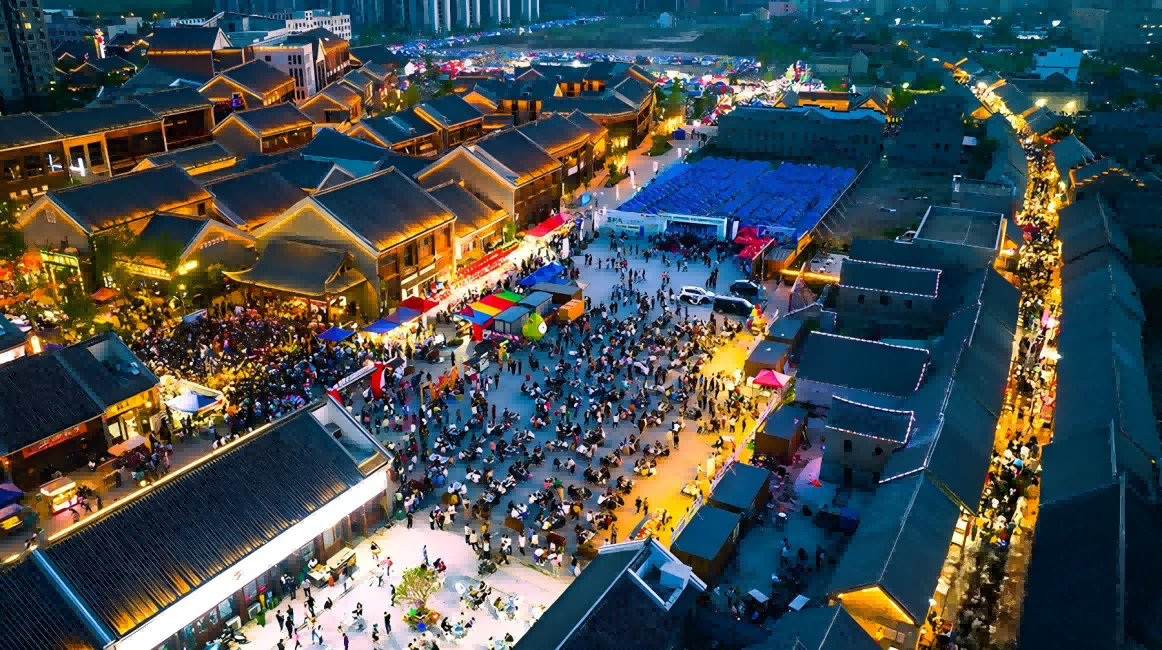
The origin of Stone Slab Street dates back to the Song Dynasty. Thanks to the convenient water transportation of the Suihe River, a dock market gradually formed here, becoming an important canal transportation hub connecting the Central Plains and the Jiangnan region. During the Xianfeng period of the Qing Dynasty, local gentleman Zhou Junzhe took the lead in its construction, mobilizing over a thousand laborers and hundreds of oxcarts, using tens of thousands of cubic meters of stone, and completing the street surface after several months of hard work. Paved with blue tile stones, the road surface is as smooth as a mirror, hence the name "Stone Slab Street". In the Ming and Qing dynasties, commerce here flourished, developing into the "top town in the region" at the junction of Jiangsu, Shandong, Henan and Anhui provinces. It enjoyed the grand scene of "merchants gathered like clouds and goods flowed like rain" and was hailed as "Little Shanghai in Northern Anhui". The entire street runs east-west, starting from Ningxi Gate on the west bank of the old Suihe River in the east and ending at the south end of Guandi Temple Lane in the west. It is divided into four sections: Huasheng Street, Yong'an Street, Yongning Street and Paifang Street, forming the complete central axis of the ancient city.
Wandering along Stone Slab Street, the crisscrossing structure of "one main street and eight alleys" remains intact. The eight alleys crisscross and connect with the main street, forming a pattern of "interconnected blood vessels", which profoundly reflects the commercial layout and residential form of the Ming and Qing dynasties. On both sides are uniform Ming and Qing buildings with blue bricks, gray tiles and carved window lattices, full of ancient charm. Most shops adopt the traditional mode of "front shop, back workshop and upper residence" — opening stores facing the street for business, setting up workshops in the backyard for production, and using the upper floors for family residence. This trinity spatial layout fully shows the essence of traditional Chinese commercial civilization. The blue stone slabs underfoot are warm and shiny after years of polishing, and the sauce aroma from the sauce workshops, the fragrance from the teahouses and the mellow aroma from the old wine cellars blend together, making people feel as if they have traveled through time and space.
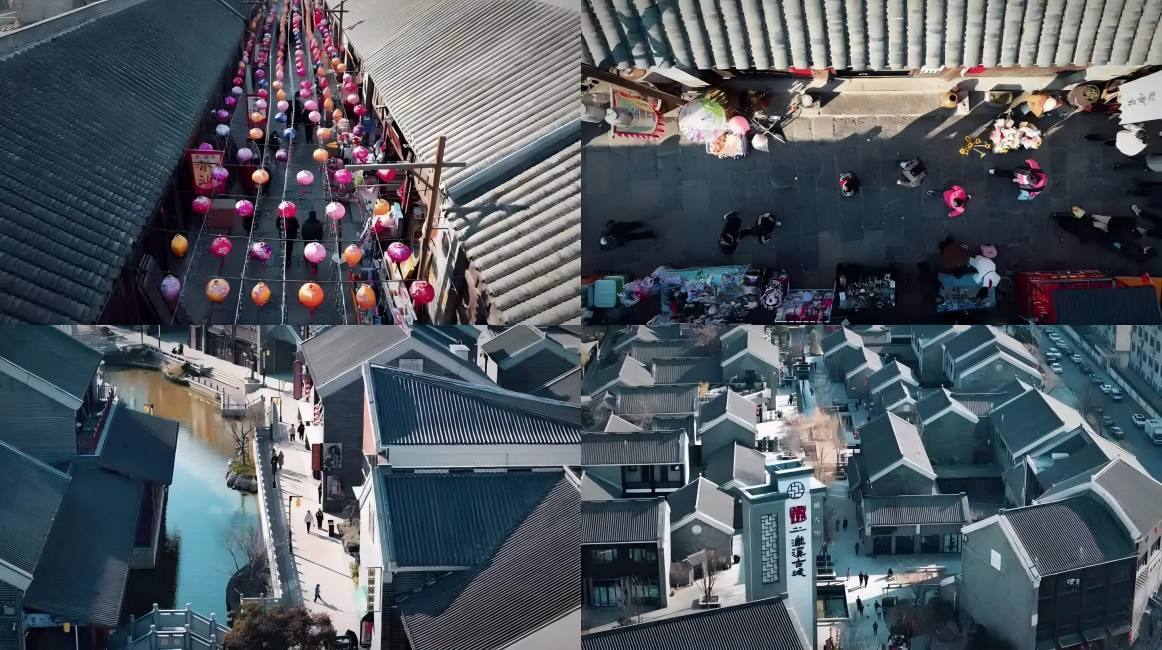
Stone Slab Street is even more a "living cultural treasure", carrying the living inheritance of multi-cultural integration. Suixi has been famous for wine-making since ancient times, once having "seventy-two wine workshops", known as the "hometown of wine" and also the birthplace of Kouzijiao Liquor. The local traditional wine-making techniques (three-curve collaborative process and three-step circular storage method) have been listed as provincial intangible cultural heritage, and the group of cellars has been selected into the national industrial heritage. There are many existing Ming and Qing wine-making relics in the block, such as old cellars, distillation stoves and wine storage earthen jars. The Suixi Wine-Making Site Exhibition Hall completely reproduces the whole wine-making process through real-scene displays, allowing tourists to immersive experience the charm of the "ancient city of wine fragrance". At the same time, more than 30 intangible cultural heritage projects such as Huaibei clay sculpture, Zong's paper cutting, porcelain mending and tie-dyeing have set up studios here. Inheritors demonstrate their skills on site, and tourists can participate in making by themselves, turning millennium-old skills from "exhibits" into experienceable life practices.
This ancient street is also a paradise for food, gathering Suixi's characteristic delicacies. Wang Hanzi's Oil Tea is boiled with local chicken broth, mixed with tofu skin, handmade gluten, peanuts and other ingredients, mellow and long-lasting, warming the stomach and maintaining health. The Ancient City Zhuangmo is crisp on the outside and tender on the inside, full of wheat fragrance, and is the favorite staple food of local people. The Northern Anhui Lamb Soup has milky white soup and tender meat; sprinkled with coriander and served with baked cakes, it is a perfect match — every bite carries the taste of millennium history. When night falls, lanterns are hung high, and food stalls are steaming. Tourists sit around the table to taste delicious food, listen to the flow of the Suihe River, and feel the liveliness of the ancient city's "night market that never closes".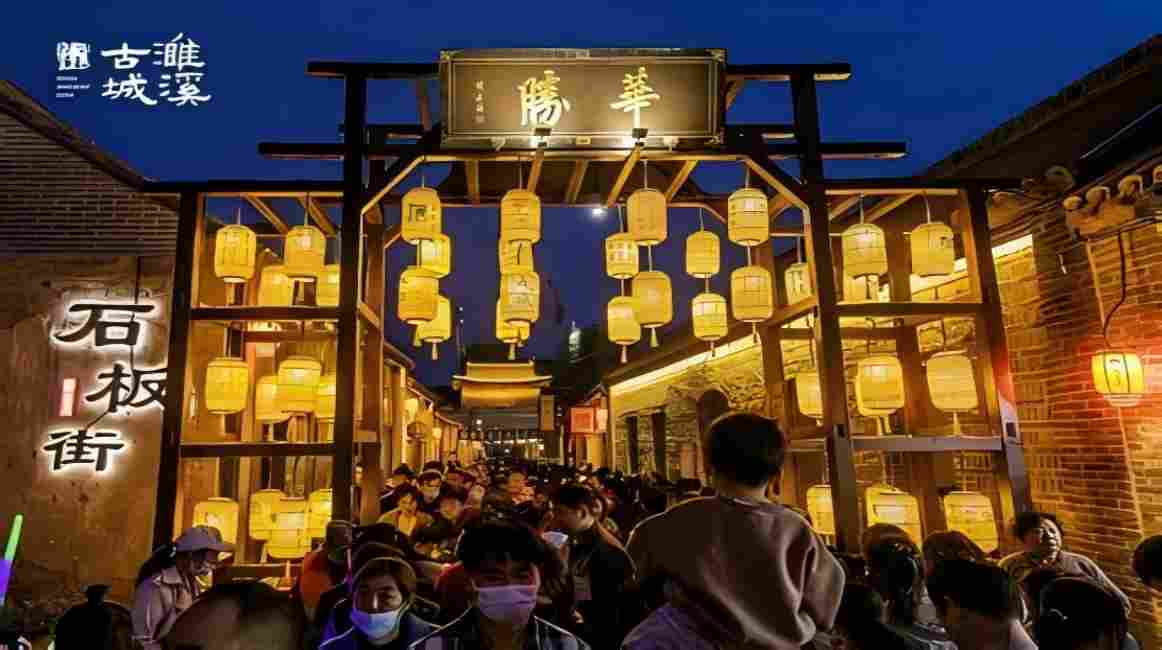
Today's Stone Slab Street has achieved the integrated rebirth of tradition and modernity. In recent years, the Chinese government has adhered to the concept of "repairing as old and activating utilization" and carried out systematic renovation of Stone Slab Street — while retaining the appearance and texture of ancient buildings, it has renovated modern facilities such as water supply and drainage and fire protection, making the old street retain its ancient charm and meet modern needs. After the completion of the revival project in 2021, Stone Slab Street has regained the style of "one main street and eight alleys" and was listed as a key cultural relics protection unit of Anhui Province. As a new cultural and tourism landmark in northern Anhui, it received over one million tourists in 2023: during the day, visitors can watch wine-making demonstrations and visit intangible cultural heritage workshops; at night, the lights are bright, with traditional opera performances and night market snacks staged in turn, forming an all-weather cultural consumption scene. Today, it has become the most popular City Walk route in Huaibei. People wander along it, taste delicious food, listen to stories, and feel the cultural temperature of the ancient city.
Stone Slab Street in Suixi Ancient City is a time tunnel paved with blue stone slabs, a three-dimensional history of Huaibei civilization, and a model for the protection and activation of ancient cities in China. Every stone slab tells a millennium-old story, and every alley flows with historical and cultural context. If you want to truly understand the essence of northern Anhui culture, you may wish to step on this stone road, measure history with your feet, feel civilization with your heart, and find the peace and confidence of traditional culture among the blue stone slabs and red lanterns.

