


Specimens of Northern Mountain Dwellings in the Wrinkles of Time: A Visit to the Ancient Village of Zhujia Yu
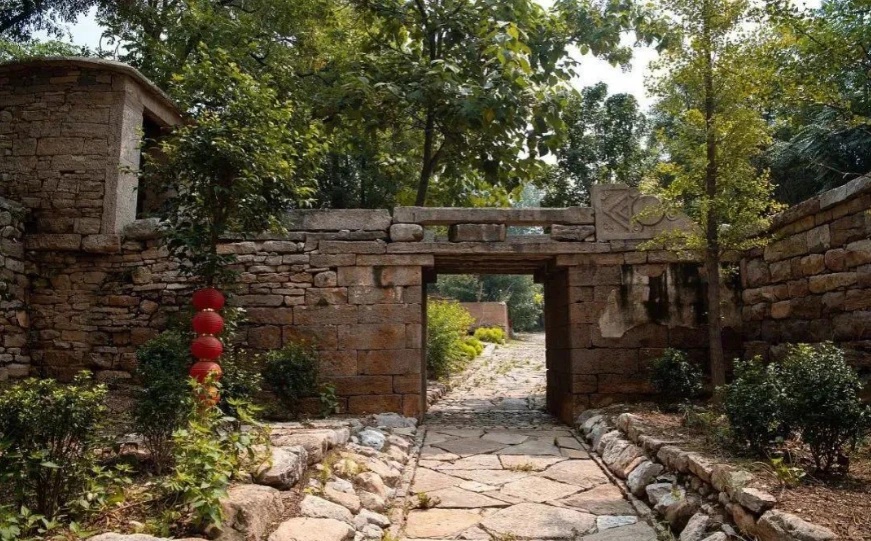
The first gate of Zhujia Valley, its bluestone steps bathed in the morning light filtering through the contours of Mount Hu, stood where a villager pushed open a creaking wooden door. The plaque above it, inscribed with 'Mingjing Jinshi' (a title for scholars who passed the imperial examination), glimmered faintly in the backlight, as if time had stood still.
On the Kangxi Overpass in the village, several foreign tourists are carefully studying this ancient structure entirely assembled from bluestone without any adhesive. Beneath the stone bridge, the tracks of history remain clearly visible on the ancient dual-track path. This mountain village, hailed as the "First Ancient Village of Qilu and a Model Settlement in Northern Jiangbei," preserves nearly 200 ancient buildings, 99 stone bridges, and 66 wells and springs, documenting the complete memory of six centuries of rural life in northern China.
Source of Time
The story of Zhujiayu begins in the early Ming Dynasty. According to the Zhu Family Genealogy, Zhu Liangsheng, the ancestor of the Zhu family, migrated from Hebei and initially lived in a cave at the foot of Mount Hu.
In the second year of the Hongwu reign of the Ming Dynasty (1369), the Zhu family officially settled here. Due to their shared ancestry with Zhu Yuanzhang, the founding emperor of the Ming Dynasty, this place originally named "Chengjiaoyu" was renamed Zhujia Valley, becoming the settlement of the Zhu family. The village grew naturally along the mountain slopes, forming a unique trapezoidal settlement. It is surrounded by mountains on three sides, backed by the plain to the north, reaching Hushan and the Holy Water Spring to the south, bordering Changliu Spring to the east, and connecting to Hushan Forest Park to the west. Throughout the long history of agricultural civilization, this mountain village has maintained a self-sufficient and closed state. However, it is precisely this isolation that makes it a cultural time capsule, preserving intact the lifestyle and architectural wisdom of northern Chinese mountain villages. The layout of Zhujia Valley reflects the traditional Chinese feng shui philosophy everywhere. To the south of the village stands the solitary Wenfeng Peak, to the north rises the Wenchang Pavilion, and to the west lies the Bijiashan Mountain, forming a harmonious coexistence of nature and culture.
Smart Building
The architecture of Zhujia Valley stands as a testament to the harmonious dialogue between humans and their environment. The village houses, built along the mountain slopes, feature high terraces, bluestone foundations, and gable roofs that both protect against rainwater erosion and conserve farmland. The crowning achievement is the "Kangxi Overpass" constructed in 1724 during the Kangxi reign. This marvel of engineering is entirely constructed from bluestone with an arched structure, where all stones are naturally interlocked without any adhesive. While pedestrians traverse the bridge, it also serves as a vital conduit for vehicles and floodwater discharge, showcasing ingenious functional design.
The village's road system also demonstrates practical wisdom. To accommodate the increasingly busy traffic of carriages and horses, the villagers built a two-way road with alternating lanes for both vehicles and horses, known as the "Double-Rail Ancient Road." Such a design is extremely rare in ancient Chinese villages.
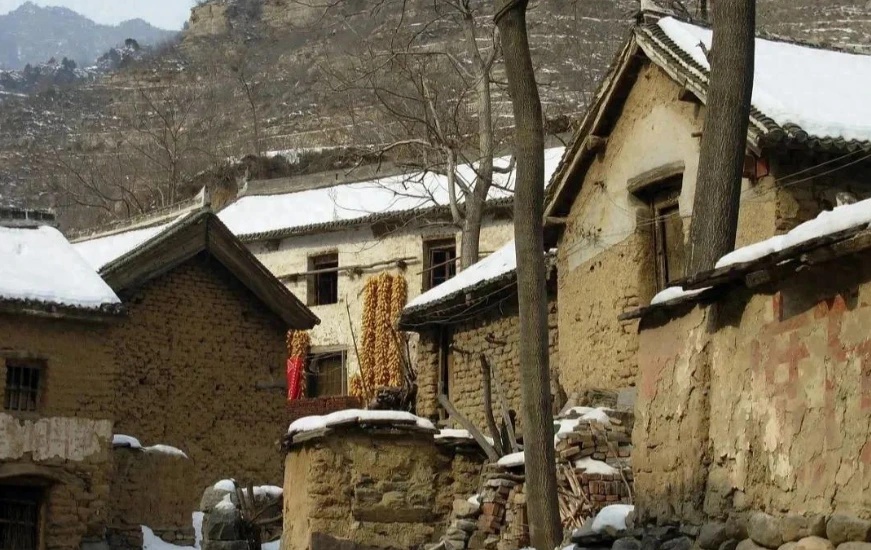
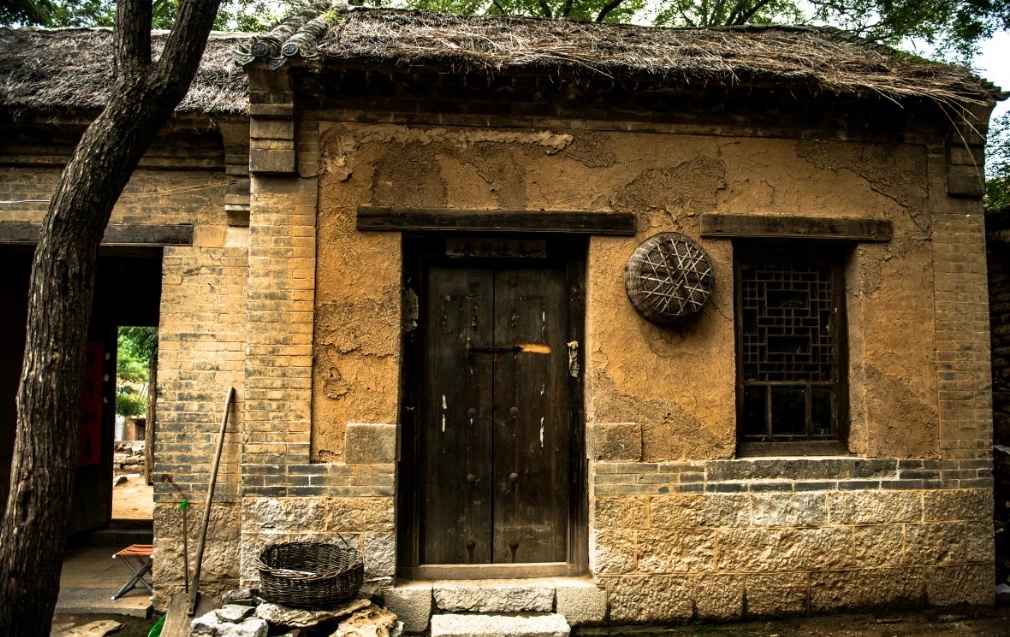
The water system in Zhujia Valley is meticulously planned. The village boasts 66 wells and springs, interconnected through carefully designed channels that serve both daily needs and create a unique landscape. Strolling through the village, one can see traditional tools like stone mills and pulleys everywhere. Zhu Kaishan's former residence retains its simple original appearance: two west wing rooms and three south rooms, with adobe walls that are low and unadorned. This stands in stark contrast to the grand courtyards of the village, where "one family produced three imperial scholars," highlighting the social disparities among different classes.
cultural pulse
The cultural heart of Zhujia Valley lies in its Confucian educational heritage. The village preserves a well-preserved private school, a compact quadrangle courtyard housing a kitchen, study room, and a two-story library. Zhu Fengyin, the school's founder, earned the imperial plaque "Mingjing Jinshi" (Master of Classics and Advanced Scholar) from Emperor Guangxu for mentoring two renowned provincial-level scholars. This honor has inspired generations of Zhujia Valley students to pursue their studies with unwavering dedication.
The culture of valuing literature and education is evident throughout Zhujiayu. The village boasts the Wenchang Pavilion and Kuixing Tower, dedicated to the literary stars Wenqu and Kuixing respectively. Behind the village lies a mountain named "Wenfeng," while the hills to the west are called "Bijia" —names that all reflect a strong emphasis on cultural and educational values. In 1932, enlightened individuals Zhu Lianba and Zhu Liandi established the Zhujiayu Girls 'School, one of the earliest women's educational institutions in rural China. It had a single class with over twenty students, taught by Ms.Sun Jixiang. Under the social conditions of that time, such progressive educational concepts were truly commendable.
The Zhu Family Ancestral Hall is another significant cultural landmark in the village, embodying the family's reverence for tradition. During the Guangxu era, after Zhu Fenggao, a villager, passed the imperial examination and became a fifth-rank provincial graduate, a flagpole was erected in front of the hall. The flagpole bore an engraving of the Seven Stars, serving as an inspiration for future generations to pursue academic excellence.

go to the world
The fame of Zhujia Valley has made a qualitative leap in 2008. With the popularity of the TV series "Chuang Guandong", Zhujia Valley, the hometown of Zhu Kaishan, has attracted the attention of the whole country.
This TV drama, which depicts the history of Shandong people migrating to the northeast, has transformed Zhujia Valley from an ordinary mountain village "isolated in a remote corner" into a cultural symbol embodying the "Shandong Spirit".
Cultural tourism flourished as a result. Luneng Group launched a comprehensive cultural development project for Zhujia Valley, transforming it into a dynamic hub where technological innovation and cultural creativity converge, while preserving its historical and cultural heritage. The local government actively promoted the Zhujia Valley tourism brand by integrating regional resources to launch the "Spring Appreciation-Garden Tour-Ancient Village Exploration" all-in-one premium travel route, enabling seamless resource sharing across scenic areas.
Meanwhile, the works of Shandong-born writers have been published overseas, opening a window for the international community to understand the ancient village culture of Shandong. Works such as "The Zhu Family Village of the Imperial Lineage" by Zhu Xiaoguang and Zhu Mengdi have successfully entered mainstream digital libraries and online bookstores in Europe and America, covering nearly 200 countries and regions worldwide.
Although these works do not describe Zhujia Yu directly, they provide the international readers with the cultural background to understand the ancient village.
international echo
For international tourists, the most attractive thing of Zhujia Yu is its integrity and authenticity. Unlike other ancient villages which are over-commercialized, the villagers of Zhujia Yu still live in the ancient village and keep the vitality and cultural continuity of the village.
Architects marvel at the wisdom of the village planning in Zhujia Valley. The village boasts nearly 200 ancient buildings of various sizes, preserving original ancestral temples, pavilions, stone bridges, ancient waterways, and springs, which experts praise as a "living specimen" for studying mountain villages in northern China. The tourism value of Zhujia Valley lies not only in the static appreciation of architecture but also in dynamic cultural experiences. Local authorities have organized interactive activities rich in folk characteristics, such as spinning and weaving, blacksmithing, and tofu grinding, allowing visitors to personally participate in traditional handicrafts.
International tourists are particularly interested in the traditional Chinese philosophical ideas embodied in Zhujia Valley. From the feng shui considerations in the village layout to the "unity of heaven and man" concept reflected in the architecture, and to the Confucian tradition that emphasizes education, Zhujia Valley has become a micro window for understanding traditional Chinese culture.
The uniqueness of Zhujia Valley also lies in its portrayal of the mountain village culture in northern China, forming a sharp contrast with the ancient water towns in the south. This difference enriches international tourists' understanding of the diverse regional cultures of China.
Balance the challenge
With the increasing number of tourists, Zhujiayu is facing the eternal contradiction between protection and development. On the one hand, tourism development brings economic benefits and development opportunities to the village; on the other hand, excessive commercialization may destroy the authenticity and cultural atmosphere of the ancient village.
The lack of infrastructure remains a pressing challenge. While Zhujia Valley boasts unique cultural resources, its tourism facilities and services still require improvement. Balancing modern tourist demands with preserving the ancient village's traditional charm demands smart solutions. Property rights issues also hinder conservation efforts, as many historic buildings are privately owned, requiring coordination of stakeholders' interests. Meanwhile, the growing conflict between villagers' desire for modern living and the preservation of traditional villages has become increasingly evident.
The future of Zhujia Yu lies in finding a sustainable development model. On one hand, we should "revitalize" the ancient village, so that the traditional culture can be revived in the modern society; on the other hand, we should control the environmental capacity, guide the tourists to travel in a civilized way, and reduce the interference to the ecology and culture of the ancient village.
The innovation of brand marketing model is also the key. Zhujiayu should go beyond the single theme of "Chuangguandong" and deeply explore its rich cultural connotation, so as to create diversified cultural products and experiences to meet the needs of different tourists.
As the sun dipped below the horizon, the contours of Hushan Forest gradually faded into the distance, while wisps of cooking smoke rose from Zhujia Valley Village. On Kangxi Overpass, the last wave of tourists were capturing the silhouette of the ancient bridge bathed in sunset glow. Beneath the ceremonial gate at the village entrance, an elderly man sat on a stone step, recounting the six-century migration saga of the Zhu family to his grandson in his dialect. The resilient grasses growing through the cracks of the bluestone walls mirrored the village's vitality, maintaining an upward posture through the folds of time.

