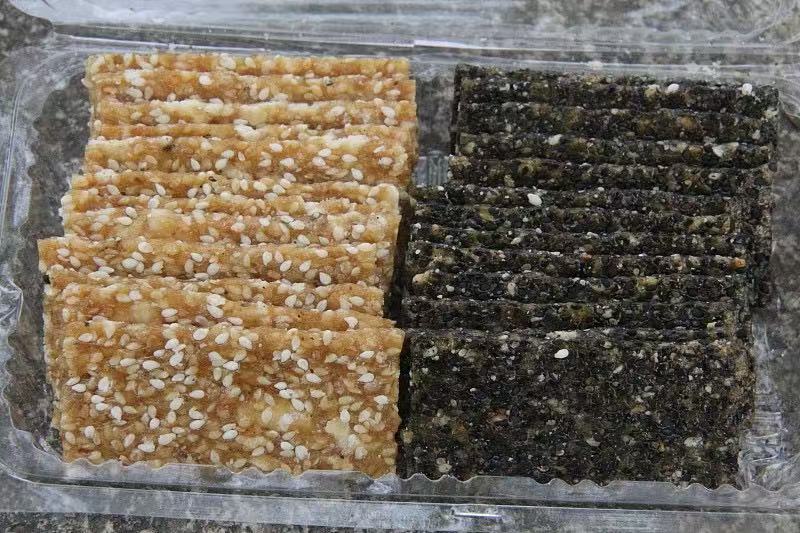


In Xiaogan, Hubei, there is a flavor that transcends a thousand years, embodying the nobility of a court tribute, the warmth of everyday life, and the condensed touch of artisans' fingertips—this is Xiaogan sesame candy. Shaped like a jade comb, thin as a cicada's wing, and white as frost, one bite releases an explosion of sesame aroma and malt sweetness on the palate. Crispy yet not sticky, with a lingering aftertaste, it is the taste of the New Year and a homesickness etched into the bones of Hubei people. Xiaogan Sesame Candy: A Thousand-Year-Old Sweet Fragrance of Chu, a Crispy Nostalgia in Intangible Cultural Heritage.
I. A Thousand-Year Heritage: From Court Tribute to a Cultural Icon of Chu
The history of Xiaogan sesame candy can be traced back to the reign of Emperor Zhuangzong of the Later Tang Dynasty (924 AD), when it was designated as a court tribute, more than a thousand years ago. The Qing Dynasty Kangxi edition of the *Xiaogan County Gazetteer* records: "Sesame, also called sesame oil, can be used to make oil. Mixed with glutinous rice flour, it becomes candy, called sesame candy. It is found everywhere, but Xiaogan is uniquely famous for it." These few words succinctly express its unique status.
Folklore adds a legendary touch: Legend has it that the Seven Fairy Maidens bestowed upon Xiaogan a special rice variety, enabling the locals to create sweet and crispy sesame candy. Emperor Taizu of Song, Zhao Kuangyin, praised it highly after tasting it, further enhancing its fame. From imperial use to folk gifts, sesame candy has long been an integral part of Xiaogan's seasonal traditions, a must-have for festivals and a top choice for visiting relatives and friends, witnessing the warmth and coldness of human relationships in the Chu region.
Its honors are the badges of time: It won the National Quality Award Silver Medal in 1981, was recognized as a "China Time-Honored Brand" in 1993, and in 2013, the Xiaogan sesame candy-making technique was included in the Hubei Provincial Intangible Cultural Heritage Representative Project List, becoming a symbolic icon of Hubei's culinary culture.
II. A Gift from Nature: A Unique Flavor from a Unique Environment
The uniqueness of Xiaogan sesame candy stems from its exceptional soil, water, and raw materials.
• Core Production Area: Babukou in the south of the city is the origin of sesame candy, with water quality and climate ideal for sugar production.
• Golden Ingredients: Locally sourced crystal-purple glutinous rice (high in amylopectin, highly viscous), premium sesame seeds from Nanwan, and "Dragon Spitting Water" from Chenghuangtan—all are indispensable.
• Ancient Essence: Glutinous rice and maltose are saccharified to create maltose, imparting a natural malty aroma; this is then combined with granulated sugar and sesame seeds, enhanced with osmanthus and candied kumquats for added fragrance—additive-free and purely natural.
III. Intangible Cultural Heritage Craftsmanship: 12 Processes, 32 Steps of Temperature
The creation of a piece of sesame candy is a testament to the artisan's ultimate control over temperature, time, and force. The 12 processes and 32 steps still rely 30% on manual labor and touch.
1. Making Maltose: Soaking and steaming glutinous rice, adding maltose, and simmering until thick—this is the soul and foundation of sesame candy.
2. Roasting Sesame Seeds: Shelling and slowly roasting sesame seeds until golden brown, releasing their aroma, is key to crispness.
3. Sugar Mixing and Shaping: The maltose, sesame seeds, and other ingredients are thoroughly blended, then repeatedly stretched and rolled until as thin as a cicada's wing.
4. Slicing and Packaging: While still hot, the mixture is sliced into comb-shaped thin slices. After cooling and setting, it is packaged to lock in freshness.
Every step requires meticulous attention: the heat of the sugar-cooking process, the proportion of sugar mixed, and the thickness of the rolled-out slices all rely on the experience passed down through generations of artisans—this is the charm of intangible cultural heritage.
IV. Flavor and Enjoyment: A Crispy Bite, A Myriad of Flavors
• Appearance: Comb-shaped thin slices, white as frost, evenly inlaid with sesame seeds, exquisitely crafted like a work of art.
• Taste: Fragrant, sweet, thin, and crispy, melting in the mouth, not sticky or greasy, with a rich sesame aroma, a warm and sweet malt flavor, and a long-lasting aftertaste.
• How to Eat: Eat it directly: Experience the instant collision of crispness and sweetness.
Pair with tea: Perfect with green or black tea, refreshing and enhancing the aroma, making it an excellent tea snack.
Creative ways to enjoy it: Soak it in hot milk or soy milk, or crush it and add it to desserts to unlock new flavors.
V. Upholding Tradition and Innovation: The Rebirth of an Old Flavor
Today, Xiaogan sesame candy, while upholding its intangible cultural heritage techniques, is also embracing the times:
• Introducing new flavors such as low-sugar, salt and pepper, peanut, and ginger juice to meet modern health needs.
• Creating intangible cultural heritage experience workshops and culturally themed streets, allowing tourists to make candy by hand and experience the warmth of intangible cultural heritage.
• Protecting the industry through legislation, promoting the integration of "industry + culture + tourism," and allowing the old flavor to reach the whole country.
Xiaogan sesame candy is more than just a piece of candy; it is a flavor carrier of the thousand-year-old Chu culture and a vivid testament to the craftsmanship of intangible cultural heritage. It contains the nobility of the court, the warmth of the common people, and the longing of every Hubei person for their hometown. When you bite into that crispy piece, you taste not only sweetness but also the flavor of a thousand years.