


China’s artificial intelligence industry has seen explosive growth in the past couple of years. Large-language models dominate public attention, self-driving technologies are put into real-world use, and humanoid robots are deployed in factories, making headline after headline. For all the fanfare, however, a disquieting question looms large for everyone: with AI advancing at such breakneck speed, will ordinary people hold on to their jobs?
Is AI Stealing Jobs — Alarmist Hype or a Real-World Threat?
Let us be frank: AI’s impact on employment is no online-fueled anxiety. It is unfolding right before our eyes.
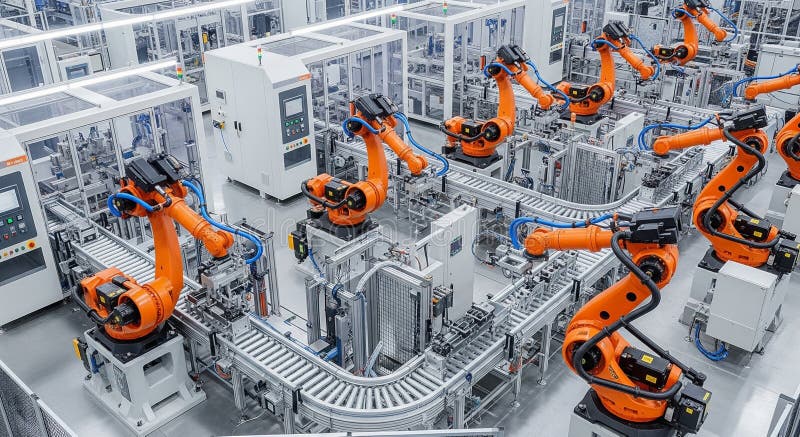
The changes are most visible in manufacturing plants. On production lines across the Pearl River and Yangtze River Deltas, workstations once staffed by dozens of workers per shift are now manned by rows of robotic arms operating non-stop around the clock with superior precision. Where have the former assembly-line workers gone? Some retrain to maintain the new equipment, yet many more face the cold reality: their jobs no longer exist.
White-collar workers outside factories are equally gripped by anxiety. Roles involving copywriting, basic customer service, data sorting and junior-level programming — positions once deemed relatively secure — can have rough drafts generated by AI in mere seconds. Many companies have begun replacing entry-level staff with AI tools. This is not because AI is flawless, but because it is cheap, fast and never tires.
What makes the situation even more unsettling is structural mismatch. Traditional jobs are shrinking, while enterprises complain they cannot recruit suitably qualified talent. It is not people that get phased out; it is outdated skill sets.
AI Is Not Here to Take Away Livelihoods — It Is Here to Transform Them
Yet reducing the story to “AI devours jobs” would be an oversimplification. History repeatedly bears this out: every technological revolution eliminates old roles, yet invariably creates many more new ones.
Automobiles put coachmen out of work, but gave rise to drivers, vehicle repair specialists and an entire industry built around road construction. Today AI follows the same pattern. While it replaces certain repetitive tasks, it has spawned a host of previously unheard-of professions: AI trainers, prompt engineers, data annotators, AI operation and maintenance specialists, smart-product managers, to name a few.
More importantly, AI is less a competitor and more a productivity booster for human workers. A copywriter proficient with AI can finish three days’ worth of conventional work in one day. A designer leveraging AI multiplies output speed. As productivity rises and the overall market expands, new demands emerge. Projects once unaffordable become feasible, and creative ideas once deemed out-of-reach can now be brought to life.
To put it plainly: AI does not replace human beings. It replaces people who cannot use AI. Humans and AI are not locked in a zero-sum fight; they work side-by-side as partners.
China Moves Early — Its Strategy Goes Further Than You Might Expect
Instead of standing idle amid these tensions, China has taken well-timed measures.
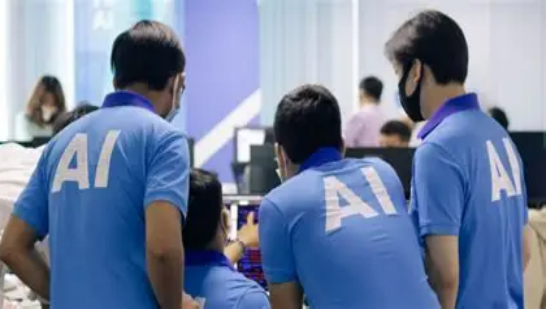
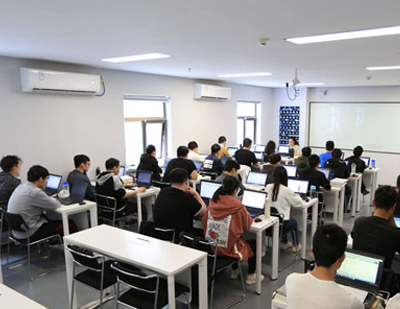
Large-scale vocational-skill training initiatives: Governments and enterprises nationwide have rolled out digital-skill upgrading programs, offering free government-subsidized courses covering AI fundamentals, big-data applications, intelligent manufacturing and more.
A lifelong-learning framework: Online learning platforms work alongside offline practical-training bases, enabling middle-aged workers to update their skill sets. Upon completion, learners may obtain official certificates and connect with newly-opened job openings.
Social-safety-net improvements for emerging work patterns: Social-insurance and medical-insurance coverage is gradually being extended to flexible employees, platform-economy workers and freelancers, groups that historically lacked robust welfare safeguards.
Forward-looking adjustments in education: AI-literacy modules are being introduced in primary and secondary schools, while universities have set up new artificial-intelligence faculties. The goal is to equip younger generations from the start, so they do not risk being left behind.
This multi-pronged strategy follows clear logic: rather than halt AI progress, policymakers strive to help ordinary citizens keep pace with technological change. Training provides a ladder for advancement; social security offers a safety net; emerging occupations point toward new opportunities.
AI is coming. It cannot — and should not — be stopped. The real question is never whether AI will take our jobs. It is whether we are willing to upgrade alongside AI. Secure livelihoods are not handed to us; we earn them ourselves. Time will pass you by without warning. But take one proactive step forward, and new opportunities will unfold.

