


In many Western countries, a birthday is a personal milestone marked by candles, cake, and a chorus of "Happy Birthday." In China, however, the celebration of a birthday carries meanings that extend far beyond the individual. It is an occasion woven into a larger fabric of family duty, communal blessing, and deeply rooted philosophical beliefs about life, longevity, and the proper order of things. For centuries, Chinese birthday customs have varied enormously from region to region and from one stage of life to another, yet they share a common thread: the conviction that a birthday is not merely a private anniversary but a moment when the bonds between generations are reaffirmed and the forces of good fortune are invited into a household.
The story of a Chinese birthday begins, paradoxically, long before the first birthday is ever celebrated. In traditional Chinese culture, the arrival of a newborn was itself a series of ceremonial events, each with its own name and significance. In many parts of China, the birth of a boy was traditionally called a "great joy," while the arrival of a girl was referred to as a "small joy," a distinction that reflected the patrilineal priorities of earlier eras. On the day of birth, families would dye hard-boiled eggs a bright red and distribute them to close relatives and neighbors who came to offer congratulations. The red color was no mere decoration; it was a deliberate invocation of luck, vitality, and protection against misfortune. The specific customs surrounding these eggs could be remarkably precise. In some regions, a son-in-law sent to his wife's family to announce the birth would deliver eggs with blackened tips in even numbers to signal the arrival of a boy, or eggs with red tips in odd numbers to signal a girl, all without speaking a word. The mother-in-law, reading the eggs, would immediately understand the news.
The first month of a child's life was punctuated by a series of rituals known collectively as the "birth rites." On the third day after birth, a ceremony called "washing the third" was performed, involving the gentle bathing of the infant with water infused with herbs or fragrant substances. The hundredth day was marked as the "hundred days" celebration, its name a play on words that wished the child a full century of life. These early rituals were not simply medical or hygienic practices; they were symbolic acts designed to integrate the new child into the family lineage and to secure the protection of ancestors and deities.
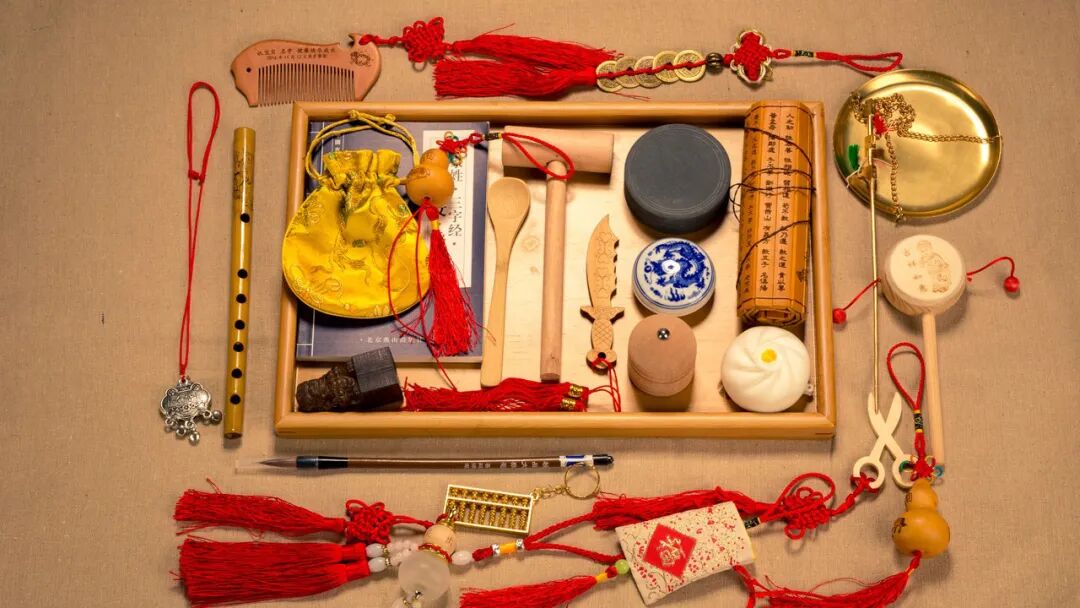
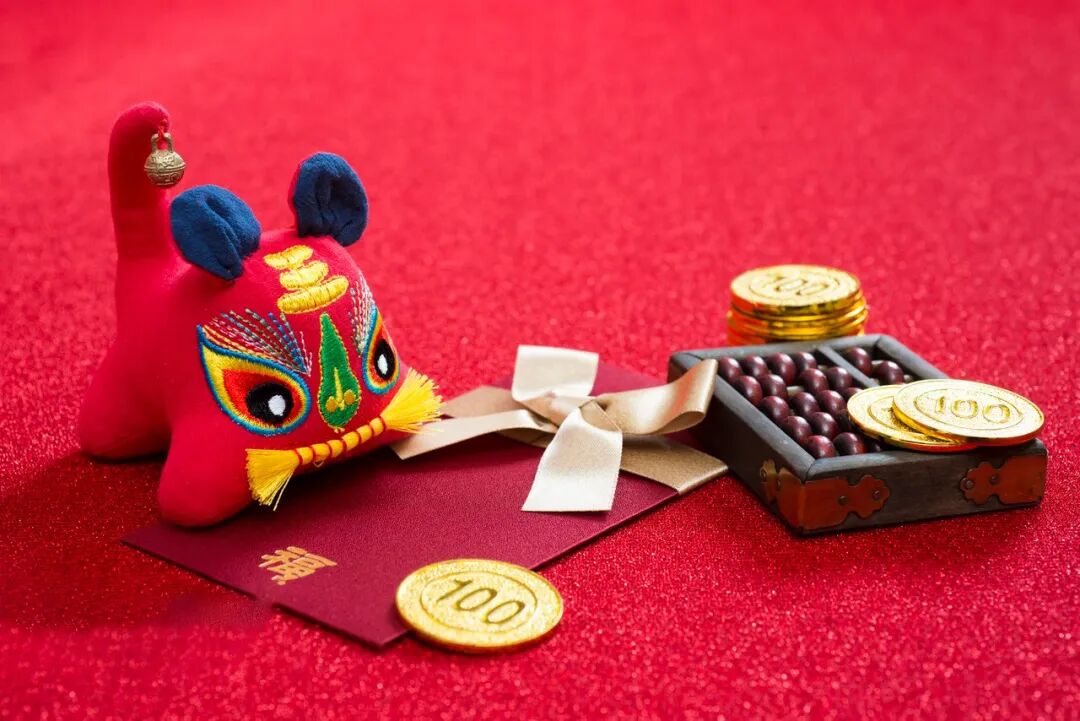
The most elaborate and widely practiced of all childhood birthday customs, however, was the zhuazhou, or "grasping the first birthday," a ritual that remains familiar to Chinese families today. The zhuazhou ceremony traditionally took place on the child's first birthday. The family would spread out a selection of objects on a table or a tray, and the child would be set down before them, free to crawl toward whatever caught its attention. The objects were carefully chosen to represent different life paths and virtues. A seal or official stamp suggested a future in government; a brush, ink, and paper indicated literary talent; an abacus pointed toward a life in commerce; coins or gold signaled wealth; and a book might foretell a scholarly disposition. For a girl, additional items such as scissors, a ruler, needle and thread, and a design book for embroidery were often included, reflecting the traditional expectation that she would become skilled in domestic arts. The child's choice was not treated as a binding prophecy, but it was received as a meaningful sign, a glimpse into the inclinations that parents and grandparents hoped to nurture in the years to come.
The origins of zhuazhou are ancient. The earliest written records of the custom can be traced to the Northern and Southern Dynasties period, more than fourteen centuries ago, and it was well established by the Song Dynasty, when it was described in texts as a popular practice in the Jiangnan region south of the Yangtze River. Over the centuries, it spread throughout China and became a standard feature of the first birthday celebration. Even today, although the objects have changed with the times, many parents still place a computer mouse, a calculator, or a musical instrument on the table alongside the traditional brush and abacus, adapting an old ritual to the aspirations of the present.
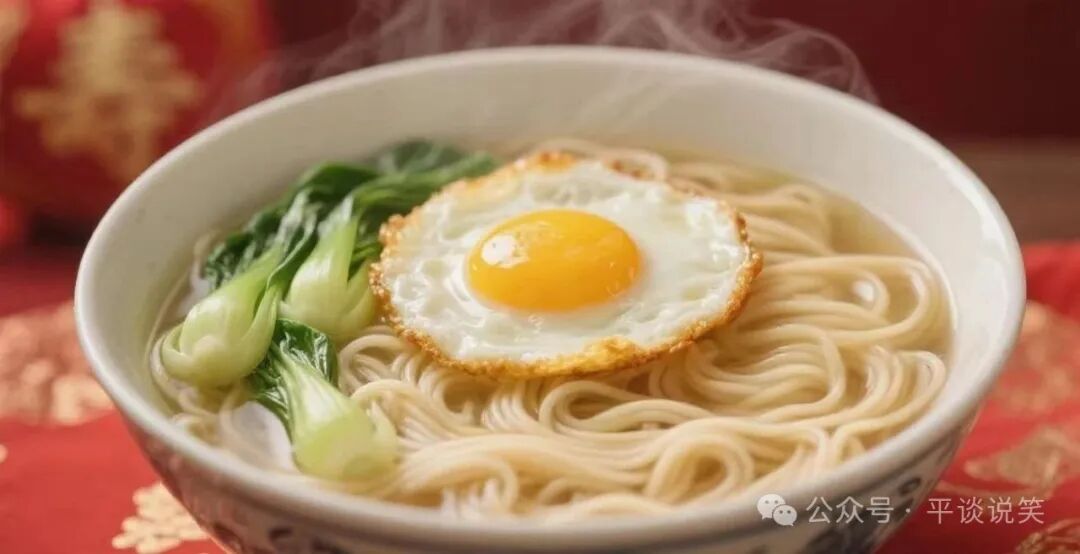
The first birthday also introduced the foods that would accompany nearly every subsequent birthday celebration in a Chinese household: the long noodles known as changshou mian, or "longevity noodles," and the ubiquitous red eggs. The noodles, which are served in a broth and are traditionally eaten without cutting or breaking them, are a direct and unmistakable symbol of long life. The longer the noodle, the stronger the wish. It is considered unlucky to bite a noodle in half on one's birthday, for to break the strand is to break the continuity of life itself. The red eggs, meanwhile, carry a layered symbolism. The egg, round and whole, represents completeness and the cyclical nature of existence. Peeling the shell is likened to shedding the old and emerging into a fresh start. And the red dye, as in the birth announcements, invokes good fortune and joy. In some regions, the eggs are eaten for breakfast, while the noodles are reserved for the main meal, often a family gathering at home or a banquet in a restaurant.
The shape of birthday celebrations changed dramatically as a person moved through the stages of life. For children, birthdays were modest affairs. A mother might remember the day quietly and prepare two boiled eggs or a special dish, or perhaps buy a new piece of clothing. The elaborate banquets and gift-giving that characterized the first birthday were not repeated every year. It was only when a person reached certain milestone ages that the scale of celebration expanded once more. The age of twelve, which in the traditional Chinese zodiac completes one full cycle of years, was sometimes marked with particular attention. But it was the elderly who received the most elaborate and formal birthday observances.
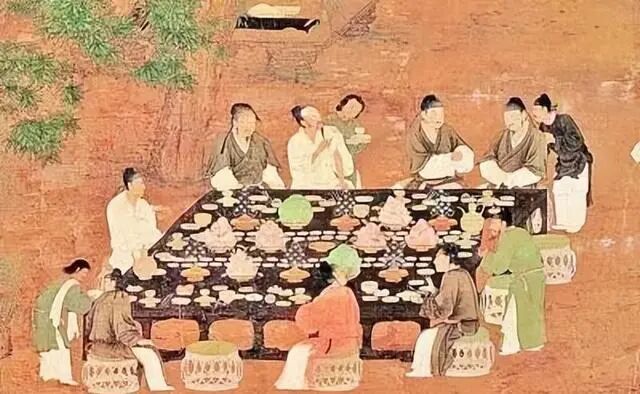
In traditional Chinese society, the birthday of an elderly parent was an occasion for the expression of filial piety, the deep reverence and duty that children owed to their elders. The celebration of a parent's birthday was not primarily about the parent's personal enjoyment; it was an opportunity for the younger generation to demonstrate their respect and gratitude, and for the family as a whole to affirm its continuity and harmony. The banquet, the gifts, and the ritual offerings were all outward signs of an inner moral obligation.
The customs surrounding elderly birthdays were governed by a set of rules that could seem puzzling to outsiders but were entirely logical within the Chinese worldview. The most striking of these was the practice known as "celebrating the nine, not the ten." According to this tradition, a person's sixtieth, seventieth, eightieth, and ninetieth birthdays were not observed in the year that corresponded to the round number. Instead, the celebration was held one year earlier, on the fifty-ninth, sixty-ninth, seventy-ninth, or eighty-ninth birthday. The reason lay in a linguistic taboo. The Chinese word for "ten" sounds similar to the word for "death" in several dialects, and to celebrate a birthday in a year containing that sound was considered inauspicious. The number nine, by contrast, sounds like the word for "long-lasting" or "enduring," making it a far more auspicious number for a milestone birthday. Thus, a family might gather to celebrate a grandmother's eighty-ninth birthday with the full ceremony appropriate to her eightieth, and the actual eightieth birthday would pass with quiet acknowledgment.
This principle extended even to the hundredth birthday. To say that someone had reached the age of one hundred was, in traditional belief, to suggest that they had reached the natural limit of human life, and to celebrate such an occasion openly was to risk inviting misfortune. Instead, families would celebrate the ninety-ninth birthday as a proxy for the hundredth, combining the auspicious number nine with the wish for a century of years.
The foods served at an elderly person's birthday banquet were laden with symbolic meaning. The longevity noodles were, of course, essential. But they were often accompanied by shoutao, or "longevity peaches," which were not real peaches but steamed buns shaped and colored to resemble the fruit. Peaches hold a special place in Chinese mythology as the fruit of immortality, grown in the orchard of the Queen Mother of the West and eaten by the immortals to renew their youth. A peach-shaped bun, filled with sweet bean paste or lotus seed paste, allowed ordinary families to share in that mythic promise. In some regions, the banquet might include a whole fish, symbolizing abundance and surplus, or a dish of noodles served with a single egg, the egg representing the harmonious wholeness of a life well lived. There was also a curious custom in certain rural areas, in which a daughter would present her sixty-six-year-old parent with a piece of meat weighing exactly six ounces and six drams, which the parent would eat as a talisman against illness and a wish for a hundred years of life.
Beyond the Han Chinese majority, China's ethnic minority communities developed their own distinctive birthday customs, many of which are still practiced today. Among the Korean ethnic minority in northeast China, the first birthday celebration, known as doljanchi, is a major event. The child is dressed in a colorful striped jacket called saekdongjeogori, whose five colors—red, yellow, blue, white, and black—correspond to the five cardinal directions and the five elements in traditional cosmology, and are believed to confer health and long life. The table of objects for the child to grasp includes not only the standard brush and abacus but also a bow and arrow to represent martial skill, a ruler and scissors to represent handicraft, and a ball of thread to symbolize longevity. Alongside these are plates of baekseolgi, a white rice cake symbolizing purity of heart, and songpyeon, half-moon-shaped rice cakes representing a mind filled with learning and wisdom.
Among the Mongolian communities of Inner Mongolia and the Qinghai region, the birthday customs of early childhood center on a different ritual entirely. Rather than a zhuazhou at one year, many Mongolian families hold a hair-cutting ceremony, known as the orbo ritual, when the child reaches the age of three. The child's accumulated baby hair is cut from around the head, with the crown hair left intact, in a ceremony that marks the child's transition from infancy to a new stage of personhood. The event is accompanied by the recitation of blessings, the serving of milk wine, and a feast that includes a whole sheep, and it is regarded as one of the most important rites of passage in a person's life, second only to marriage in significance.
Even among the Han Chinese, regional variations in birthday customs have been pronounced. In Fujian and among the Hakka communities, the birthday noodle is often prepared with red rice wine, giving it a festive crimson hue and a rich, savory flavor, and the dish is considered incomplete without a "peace egg" floating in the broth. In the city of Quanzhou and the surrounding Minnan region, the first birthday is called duzui, and the celebration includes not only the zhuazhou but also a ritual of sealing a jar of wine to be opened at a future milestone, and the presentation of gold and silver jewelry to the child by grandparents and close relatives. In parts of northern China, where wheat rather than rice is the staple grain, the birthday noodle is often a hand-pulled variety, stretched into thin, continuous strands that can be several feet long, and the skill of the noodle-maker is itself a source of family pride.
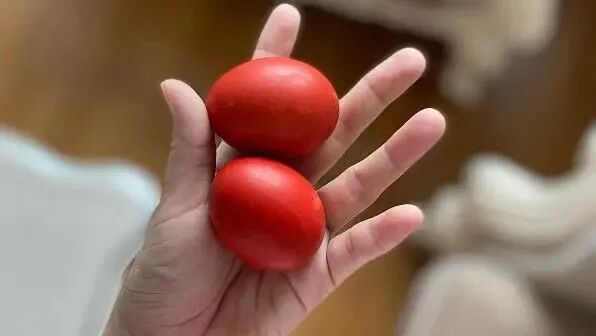
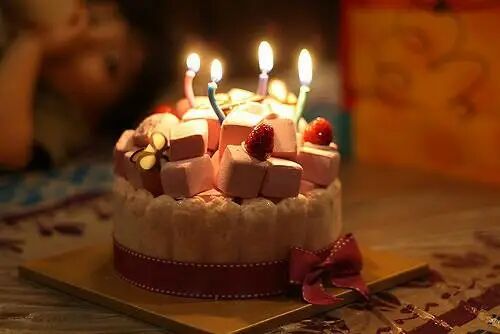
In contemporary China, birthday celebrations have absorbed many Western elements. The birthday cake, with its candles and its sweet frosting, has become a familiar sight in urban households, particularly for children's parties. The singing of "Happy Birthday" in English or in Chinese translation is now commonplace. Yet the traditional foods have not disappeared. In most Chinese families, a birthday is still incomplete without a bowl of longevity noodles and at least one red egg, even if a cake is also present on the table. The coexistence of the two traditions is not a sign of cultural confusion but of practical adaptation: the cake satisfies the desire for festivity and sweetness, while the noodles and eggs maintain a connection to a deeper set of meanings about health, continuity, and the ties that bind one generation to the next.
There is a quiet wisdom in these customs that a foreign observer might easily miss. A Chinese birthday is not primarily a celebration of the self. It is a celebration of the relationships that sustain the self: the parents who gave life, the ancestors who came before, the children who will carry the family forward. The long noodle is not merely a wish for many years; it is a wish that those years will be lived in the warmth of family, in the continuity of tradition, and in the steady, unbroken thread of life that runs from one generation to the next. Whether it is a red egg pressed into the hand of a newborn, a child's first grasp at a wooden abacus, or a bowl of noodles placed before an elderly grandmother on the eve of her ninetieth year, the message is the same. To be remembered on one's birthday is to be held within the embrace of a community, and to be wished not only happiness, but length of days and the enduring strength of the family name.

