


For decades, private tutoring has been a defining feature of Chinese childhood. Parents queued overnight to secure places at famous test-preparation chains, and the after-school hours of millions of students were consumed by supplementary lessons in mathematics, English, and science. The scale of the sector was staggering: before 2021, China had more than 700,000 tutoring institutions employing over ten million people, a figure that dwarfed the roughly 210,000 compulsory-education schools and their 10.3 million full-time teachers. This vast shadow-education system, as sociologists call it, operated alongside the formal school system and at times seemed to overshadow it.
In July 2021, the Chinese government introduced the so-called "double reduction" policy, an ambitious set of regulations aimed at curbing both the excessive homework assigned by schools and the heavy reliance on off-campus academic tutoring for students in compulsory education, typically grades one through nine. The policy prohibited for-profit tutoring in core school subjects, barred tutoring institutions from teaching advanced content, restricted their operating hours on weekends and holidays, and required them to register as non-profit entities. Within roughly a year, the results were dramatic: the number of offline academic tutoring institutions plummeted by 92 to 96 percent, while online providers shrank by about 87 percent. The government's stated goals were to reduce the financial burden on families, ease the academic pressure on young students, and promote greater educational equity.
Yet the story did not end there. What followed was not the disappearance of tutoring but its transformation. Many institutions closed, but others adapted. Some shifted to non-academic subjects such as art, music, and physical education. Others rebranded themselves as "education consulting" firms or "cultural companies" and continued to operate in a legal gray zone. Still others moved underground entirely, offering their services in private apartments, residential compounds, and online channels that were far harder for regulators to monitor. This underground migration has created a new set of problems that threaten the policy's objectives and pose risks to families and students alike.
One of the most striking developments is the proliferation of tutoring disguised as after-school childcare. Across China, an estimated 540,000 "care" institutions now operate, a number that grew by more than 130,000 in a single year, with the market valued at over 200 billion yuan in 2025. Many of these facilities present themselves as providers of basic after-school supervision and homework assistance, services genuinely needed by working parents. However, investigations have revealed that a significant proportion quietly offer academic instruction under the guise of "homework coaching," "thinking training," or "reading enrichment." A village outside Tianjin, home to only a few dozen families, reportedly hosts more than ten such tutoring centers, their signs lining the walls of newly constructed schools and surrounding cornfields. In these settings, the academic content continues, often with the same textbooks and teaching methods that the double reduction policy was designed to restrict.
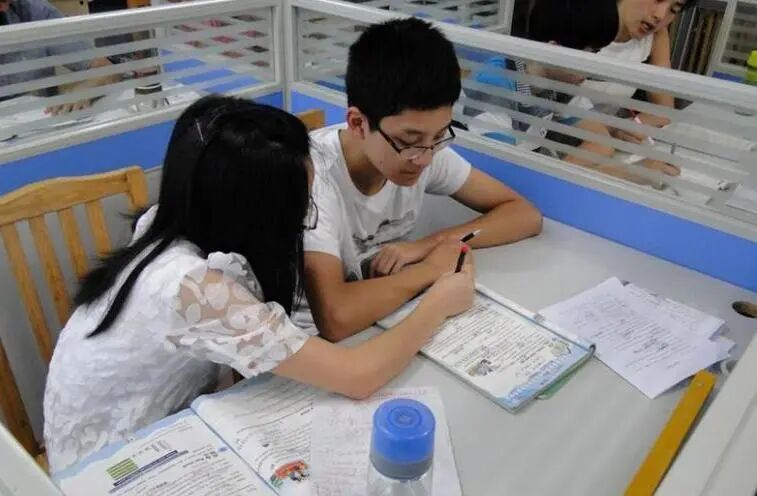
The hidden nature of these operations makes them difficult to regulate. Many underground tutors advertise through social media groups and parent networks, with recruitment often relying on personal introductions rather than public advertising. A typical arrangement involves small groups of two to three students meeting in a rotating set of private homes, making detection and enforcement extraordinarily difficult. One parent in Beijing explained the logic simply: "The school's pace doesn't meet my child's needs, so we have to supplement. Rotating the venue makes it harder to be discovered". Some families have resorted to even more creative arrangements, hiring "live-in nannies" who provide four hours of daily instruction in language, mathematics, and English for fees of 600 yuan per day, while teachers currently employed at public schools can command rates as high as 2,000 yuan per session.
The economic consequences of this underground shift are significant. As supply has been squeezed, prices have risen sharply. Independent tutors have raised their rates by as much as 30 percent, and the cost of one-on-one instruction has climbed to levels that only affluent families can afford. This outcome runs directly counter to one of the policy's core goals: reducing educational inequality. Families with greater financial resources can still secure high-quality tutoring through private channels, while lower-income families are increasingly priced out of the market. Researchers have noted that despite the government's fierce efforts, "families still felt the need to compete in uncertain environments, and many continued to seek tutoring through underground channels". The result is a system that has become more expensive, more opaque, and arguably more unequal than before.
Consumer protection concerns have also intensified. The underground nature of much tutoring means that standard contractual protections and quality guarantees are often absent. Reports of institutions collecting large prepayments and then closing without refunding families have become common. In one notable case, a parent in Hangzhou paid nearly 28,400 yuan for a one-on-one tutoring program that promised to improve her son's grades; after completing the course, his mathematics score dropped from 86.5 to 43, and his English score fell from 57 to 30, yet the institution refused to refund the fees. Another case in Xi'an involved an institution that collected over 120,000 yuan from a single family through a combination of aggressive sales tactics, including claims that their program would provide access to elite social networks and ensure future success; the institution was later fined for false advertising. These examples are not isolated. According to consumer complaint platforms, refund disputes accounted for more than 60 percent of all complaints against digital education platforms in the third quarter of 2025, with false advertising and deceptive promotions also featuring prominently.
The regulatory challenge is compounded by structural issues within China's governance system. Tutoring institutions that operate as "education consulting" or "cultural companies" are registered with market regulation authorities but often fall outside the education department's licensing framework. This division of responsibilities creates information gaps and coordination failures. As one academic study observed, "the education department is responsible for school licensing while the market regulation department handles registration, and cross-system information barriers lead to a degree of disconnect between approval and supervision". Moreover, current regulations emphasize pre-approval rather than ongoing risk management, making it difficult to address evolving forms of disguised tutoring, such as one-on-one private lessons in residential settings.
The Chinese government has not been passive in the face of these challenges. In 2022, twelve government departments jointly issued guidelines on preventing and addressing disguised and mutated forms of academic tutoring. In 2025, the Ministry of Education introduced measures to strengthen digital oversight through a national platform for monitoring and servicing off-campus education, aiming to track the entire lifecycle of tutoring institutions from registration to operation. Local governments have also conducted high-profile crackdowns; in Chengdu, for instance, a joint task force involving education, market regulation, and public security authorities inspected multiple institutions and shut down operations that were using childcare as a cover for academic instruction. These efforts demonstrate a clear awareness of the problem, but enforcement remains uneven. The underground nature of much tutoring means that regulators are often playing catch-up, responding to complaints rather than proactively preventing violations.
At its root, the persistence of China's tutoring industry reflects deeper cultural and structural forces that no single policy can easily address. The national college entrance examination, or gaokao, remains the single most important determinant of a young person's educational and career trajectory. The competition for admission to elite universities is intense, and families understandably invest heavily in any advantage they can provide for their children. This cultural emphasis on educational achievement, combined with a perception that the public school system alone may not adequately prepare students for high-stakes examinations, sustains demand for supplementary tutoring even when it is officially restricted. As one study of parental decision-making observed, "the fundamental needs of parents and students remain unchanged, particularly due to the Gaokao system". Parents employ what researchers call "heuristics" — mental shortcuts based on imitation of peers and observation of successful families — to justify continued investment in tutoring, even when the practice operates outside the law.
The double reduction policy has achieved notable successes in reducing the most visible and commercialized forms of academic tutoring. The sharp decline in registered institutions and the reduction in household education expenditures are measurable outcomes that indicate genuine progress. However, the emergence of a thriving underground market raises fundamental questions about whether regulation alone can address the underlying demand for supplementary education. When tutoring moves from brightly lit commercial centers into private apartments and online chat groups, it becomes harder to monitor, harder to regulate, and potentially more harmful in its consequences. The families who benefit most are those with the resources to navigate this shadowy landscape, while those with fewer means are left further behind.
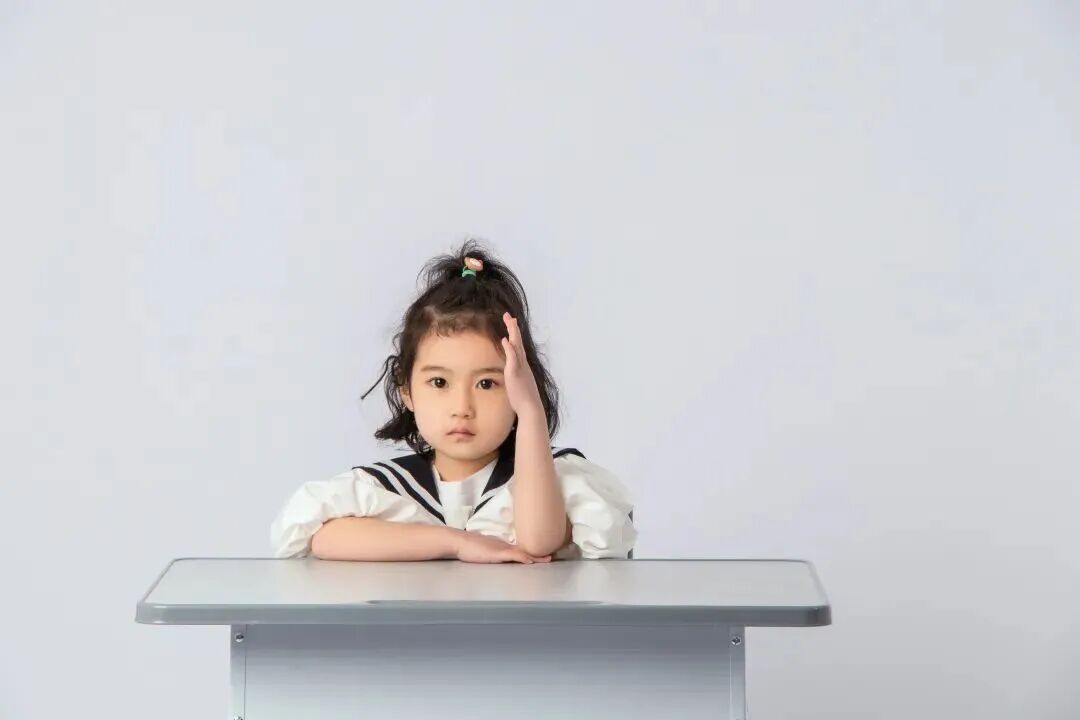
For observers outside China, the Chinese experience offers a cautionary tale about the limits of top-down regulation in education markets. It illustrates that when demand is rooted in deep cultural values and structural inequalities, simply banning a service may drive it underground rather than eliminate it. It also highlights the importance of addressing the underlying drivers of educational competition — the scarcity of elite university places, the perceived inadequacies of public schooling, and the intense pressure on families to secure their children's futures. Until these fundamental issues are addressed, China's tutoring industry, whether visible or hidden, is likely to remain a persistent and problematic feature of its educational landscape.

