


Outbreak of Public Outrage: Four Mantis Shrimp Spark a Sky-High Pricing Dispute
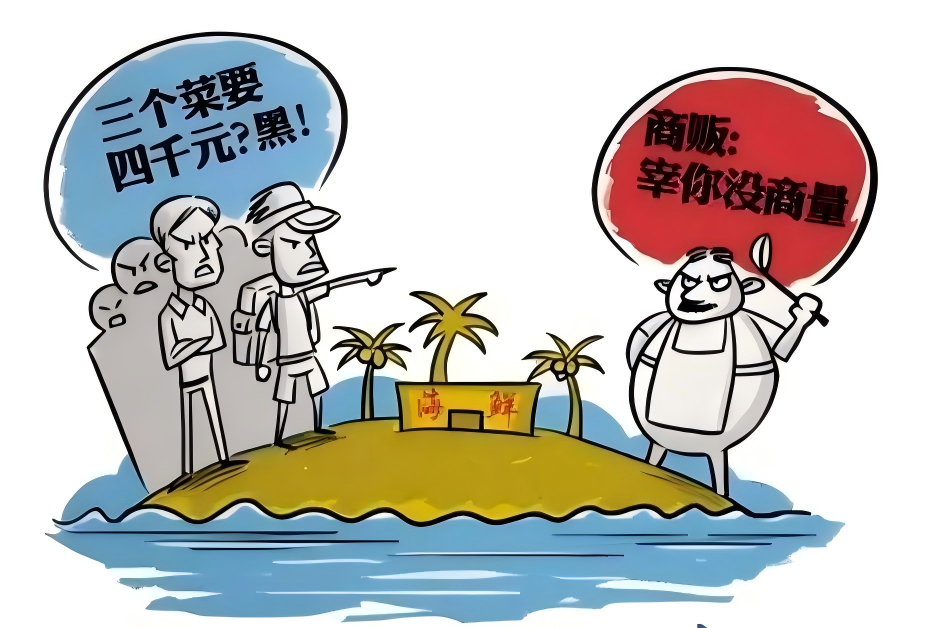
During the May Day holiday in 2026, an online post claiming that four mantis shrimps were charged 1,035 yuan in Sanya quickly went viral across the internet, reviving long-standing controversies over unfair seafood pricing in Sanya. On the evening of May 4, several tourists dined at a seafood restaurant in Haitang District, Sanya. They were shocked to find that four mantis shrimps alone cost 1,035.7 yuan, with the total bill reaching 1,815 yuan. Questioning exorbitant overcharging, the tourists filed a complaint via the 12345 government service hotline and shared their experience on social media. They stated that they had been deliberately guided to the restaurant by a taxi driver, suspecting a targeted overcharging scam.
The post gained explosive popularity within hours and topped trending searches. In the public’s general perception, mantis shrimps are affordable daily seafood, making a price of over 1,000 yuan for four specimens utterly unreasonable. Netizens widely condemned local merchants for profiteering and arbitrary pricing, criticizing the persistent irregularities in Sanya’s tourism industry. Labels such as “sky-high seafood” and “tourist scam” were once again attached to the city. The targeted restaurant was flooded with online denunciations, negative reviews and complaints. Many netizens vented their dissatisfaction with Sanya’s consumer environment, reviving long-held negative impressions of the city’s seafood overcharging scandals.
Root Causes: Overlapping Impacts of Cognitive Bias and Industrial Malpractices
The public opinion storm stemmed not from isolated overcharging by a single store, but from a combination of consumer cognitive gaps, inherent seafood industry characteristics, and long-standing hidden problems in the tourism market. First and foremost lies the information asymmetry in product cognition. Most consumers regard mantis shrimps as cheap, common seafood, unaware that the disputed products were not ordinary local mantis shrimps but premium imported giant Thai mantis shrimps. As high-end seafood, these crustaceans incur high procurement costs and suffer massive losses during live transportation, justifying their far higher market prices. Consumers, limited by insufficient industry knowledge, mistakenly equated premium imported seafood with ordinary local products, leading to the perception of being overcharged.
Secondly, there is a severe trust deficit in the tourism industry. Frequent past incidents of overcharging, arbitrary price hikes, and commission-driven customer diversion have made consumers inherently wary of Sanya’s seafood market. Faced with an unexpectedly high bill, the public instinctively assumed merchant fraud rather than verifying product categories and pricing standards, allowing entrenched negative stereotypes to dominate public judgment.
Finally, hidden interest chains fueled the controversy. The long prevalent commission-based customer diversion scheme has long plagued Sanya’s tourism sector. The tourists’ claim of being steered to the restaurant by taxi drivers is well-founded. Some taxi and ride-hailing drivers collude with seafood restaurants to divert customers for hefty rebates. Such grey market practices disrupt industrial order, fuel consumer resentment, and create fertile ground for public disputes. Furthermore, although high-end seafood prices are clearly marked, the lack of plain-language explanations leaves ordinary tourists unable to distinguish product grades, easily triggering consumption misunderstandings.

Truth Reversal: Hidden Malpractices and Tragedy Behind Compliant Pricing
Amid overwhelming online criticism of the restaurant, market supervision authorities in Sanya launched an overnight investigation, bringing a dramatic truth reversal that overturned public prejudice. Official announcements released on May 7 confirmed no illegal overcharging by the restaurant. The store posted clear price tags, with imported giant Thai mantis shrimps priced at 756 yuan per jin. The four shrimps weighed 0.685 kilograms in total, with the final charge fully compliant with standard calculations. The procurement cost neared 700 yuan per jin. After accounting for over 50% loss rates in live seafood transportation, the store’s 57.5% profit margin stayed below the official 60% upper limit for local seafood retailers. All consumption procedures including surveillance recording and weighed-item signatures were fully transparent and standardized.
Nevertheless, the incident took a heartbreaking turn. Burdened by groundless online abuse and massive public pressure, the 43-year-old restaurant owner suffered a sudden illness and passed away the day after the dispute, forcing the permanent closure of the legally operating store. A law-abiding merchant paid the ultimate price of life for a consumer misunderstanding fueled by public ignorance.
Subsequent in-depth investigations further uncovered hidden industrial irregularities, completing the full truth reversal. The controversy was never a simple consumption misunderstanding but a symptom of deep-rooted market chaos. The involved taxi driver was found guilty of deliberate customer diversion for illegal commissions and deleted chat records to evade investigation, resulting in immediate dismissal by his company. Though the restaurant’s pricing complied with regulations, it was placed on official investigation for commercial bribery and maintaining illegal diversion interest chains.

What began as a public outcry against “merchant overcharging” evolved into a perceived “consumer misunderstanding”, finally settling into a complex conclusion featuring compliant pricing, industrial irregularities, and unjust public opinion damage. This incident corrects simplistic public prejudice against Sanya’s tourism industry while exposing the persistent malaise of hidden interest chains in scenic consumption markets. It serves as a vital reminder: internet public opinion demands rationality, and blind online condemnation based on partial information must be avoided. Meanwhile, regulatory authorities need to refine supervision mechanisms and cut off illegal interest chains to purify the tourism consumption environment fundamentally.

