


Currently, the number of people over 60 in China has exceeded 300 million, accounting for more than 20% of the total population. The process of population aging is accelerating, and the demand for elderly care services is growing by leaps and bounds. However, the current supply of elderly care services is difficult to match the strong demand. The anxiety of "bed shortage" coexists with the chaos of uneven service quality, and disputes around elderly care supply continue to highlight, becoming an important issue related to the well-being of hundreds of millions of people and the harmony and stability of society. Resolving the contradictions in elderly care supply has become an urgent livelihood task at present.
Dilemma Highlighted: The Real Anxiety of "Bed Shortage" in Elderly Care Institutions
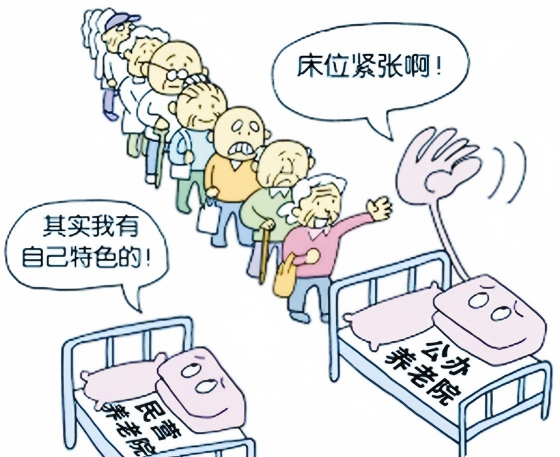
"I have been waiting in line for two years and still haven't got a bed in a public elderly care institution." Such complaints are common among the elderly and their families. Today, the "bed shortage" in elderly care institutions has become a common phenomenon, especially in public elderly care institutions. Behind the situation of "hard to get a number and tight beds" is the deep-seated contradiction of unbalanced supply and demand.
From the supply side, the insufficient total number and uneven distribution of elderly care institutions are the core reasons. Although the number of elderly care beds in China has exceeded 8.3 million, the average occupancy rate is only 60%, with prominent structural shortages. Public elderly care institutions have become the first choice due to government subsidies, low fees and standardized services, but they are unable to meet the demand due to limited quantity, and the waiting time for some institutions can be as long as several years. Although the number of private elderly care institutions is increasing year by year, most of them are located in suburban areas, with insufficient transportation supporting facilities and high fees, making ordinary families flinch.
The rigid growth on the demand side has further aggravated the contradiction. With the miniaturization of family structure and the increase of empty-nest elderly, the traditional mode of "supporting the elderly by children" has gradually weakened. More and more elderly people tend to choose professional elderly care institutions, especially the 40 million disabled and dementia elderly, who have an even more urgent demand for nursing beds. However, the supply of nursing beds is seriously insufficient, which further amplifies the anxiety of "bed shortage".

Chaos Abounds: The Hidden Worries of Uneven Service Quality in Elderly Care
If "bed shortage" is the "quantitative" shortcoming of elderly care supply, then uneven service quality is the "qualitative" Achilles' heel. At present, the service quality of elderly care institutions in China is polarized. Some institutions are professional and standardized, while more institutions have problems such as simple hardware, lack of care and chaotic management, which have caused many disputes.
There is a huge gap in services between high-end and low-end institutions: high-end institutions are equipped with professional personnel and equipment and can provide all-round services, but the monthly fee is thousands or even tens of thousands of yuan, which can only meet the needs of a few wealthy families; most low and medium-end private elderly care institutions have outdated hardware, lack basic medical and nursing equipment, and even find it difficult to ensure the diet and hygiene of the elderly.
The shortage of nursing staff and their insufficient professionalism are the key incentives. There are only 200,000 certified nurses in the country, with a gap of more than 1 million. The average age of employees is 43 years old, and most of them lack systematic training. Due to the high intensity of nursing work, low salary and low social recognition, young people are unwilling to enter the industry. The existing staff can only complete basic care and cannot meet the needs of emergency treatment, rehabilitation care and other needs. In addition, some institutions have irregular charging standards, and the service is seriously inconsistent with the charge, which has aggravated the dissatisfaction of the masses.
Controversy Focus: Multiple Contradictions Behind the Imbalance of Elderly Care Supply
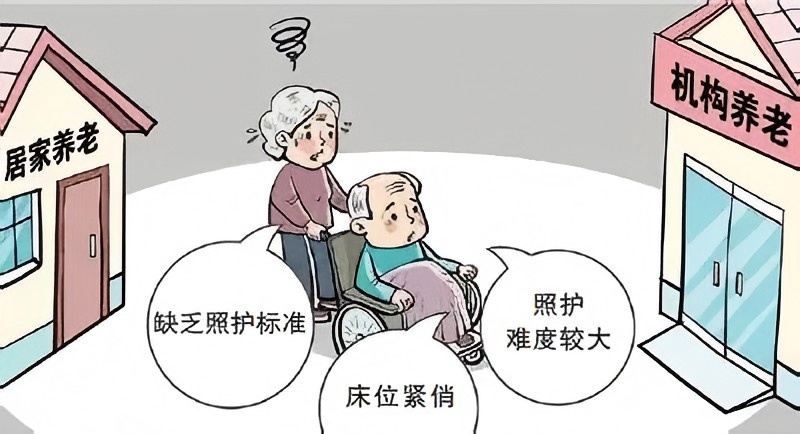
The disputes over elderly care supply are essentially the concentrated embodiment of multiple contradictions such as unbalanced supply and demand, inadequate supervision and backward concepts, focusing on two core issues: "mismatch between supply and demand" and "difficulty in balancing public welfare and the market".
On the one hand, there is a serious mismatch between the supply and demand structure. Most private elderly care institutions focus on low-age and healthy elderly, resulting in a vacancy rate of up to 48% for some beds, while the elderly and disabled elderly are faced with a shortage of beds; at the same time, some elderly care services "emphasize hardware over service", and the utilization rate of community elderly care stations is low, becoming a "decorative display".
On the other hand, the contradiction between public welfare and market operation is difficult to reconcile. Elderly care services have a strong public welfare attribute and need government policy support and financial investment, but the government investment in some areas is insufficient, and the supply of public institutions is limited. As market entities, private elderly care institutions need to balance profitability and service quality. Some institutions reduce investment to reduce costs, leading to a decline in service quality. In addition, the backward consumption concept and insufficient payment capacity of the elderly have put many families in the dilemma of "unable to get a place in public institutions and unable to afford private ones".
The Path to Breaking the Dilemma: Multi-party Collaboration to Solve the Problems of Elderly Care Supply
To break the dilemma of elderly care supply, it is necessary for the government, the market and the society to work together to build an elderly care service system that is "inclusive and accessible, covers urban and rural areas, and has high quality".
The government should play a leading role, increase financial investment, expand the supply of public institutions, and increase the supply of inclusive beds through public construction and private operation; improve the service standards and supervision system, severely crack down on illegal operations, improve the long-term care insurance system, and reduce the payment pressure on the elderly.
The market should optimize the supply structure, focus on increasing the supply of nursing beds, provide professional services for the disabled and dementia elderly; strengthen the construction of the nursing staff team, improve the salary and training level, attract young people to enter the industry, and innovate models such as "community + property + elderly care" to solve the problem of uneven distribution.
The society should create a good atmosphere, guide the masses to rationally view institutional elderly care, encourage volunteers to participate, promote the "time bank" model to alleviate the shortage of human resources, and promote the healthy development of the industry through publicity and guidance.
Elderly care is no trivial matter, and people's livelihood is more important than anything else. Faced with the challenge of population aging, only by facing up to the problems, making up for the shortcomings and improving the quality can we resolve disputes, let every elderly person enjoy a dignified and high-quality old age, and promote the high-quality development of the elderly care service industry.

