


Jinan, an ancient city with a history of thousands of years nestled on the banks of the Yellow River and at the northern foot of Mount Tai, is renowned worldwide as the "City of Springs". "Jinan's mountains and rivers are the best in Qilu, and its springs are the best under heaven" — the praise from Yu Qin of the Yuan Dynasty fully reveals the elegant and delicate background of this city. It is widely known that Jinan has 72 famous springs, which are like scattered pearls dotted among the ancient city's streets, lanes, gardens and valleys. They possess both the grandeur of "springs gushing like wheels" and the gentleness of "pearls falling on a jade plate", nourishing the mortal life of Jinan and carrying a thousand years of cultural heritage, becoming the most distinctive symbol of this famous historical and cultural city.
Nature's Masterpiece: The Hidden Mystery of Underground Spring Veins
The birth of Jinan's 72 famous springs is no accident, but a perfect combination of nature's craftsmanship and unique geological structure. Jinan's terrain slopes from south to north. The southern mountainous area features permeable carbonate rock formations, acting like a huge "underground reservoir". The atmospheric precipitation received seeps into the ground and flows slowly northward along the inclined direction of the rock layers. When the groundwater reaches the urban area, it encounters an impermeable gabbro rock mass. The enormous water pressure forces the groundwater to gush out from the weak points of the geological structure, forming the scattered spring groups and famous springs.
In fact, Jinan has far more than 72 springs. There are more than a hundred large and small spring pools in the urban area alone, and as many as 1,209 named natural springs in the entire city, truly deserving the title of "City of a Thousand Springs". The concept of 72 famous springs originated from the "Stele of Famous Springs" in the Jin Dynasty, and was later supplemented and revised by literati of successive dynasties. Although the names of the springs vary slightly in different records, they have always been the core representatives of Jinan's springs. These springs maintain a constant water temperature of 17~18℃ all year round, clear and sweet, rich in lithium, strontium and many other trace elements beneficial to the human body. They are not only a gift from nature, but also the life-giving water that the people of Jinan have drunk for generations.
Five Major Spring Groups: Each Shining with Unique Charm
Jinan's 72 famous springs do not exist in isolation, but converge into ten major spring groups. Among them, the Baotu Spring Group, Heihu Spring Group, Pearl Spring Group, Wulongtan Spring Group and Baimai Spring Group are the most famous, accounting for half of the 72 famous springs, each with its own characteristics and complementing each other.
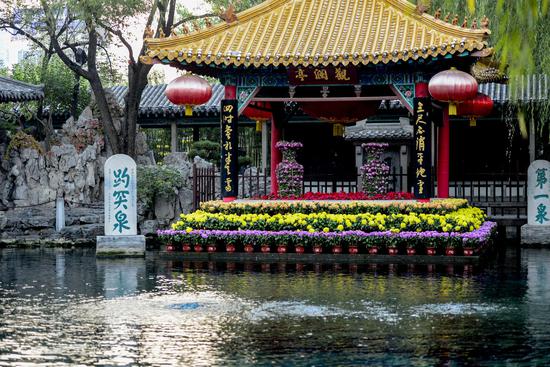
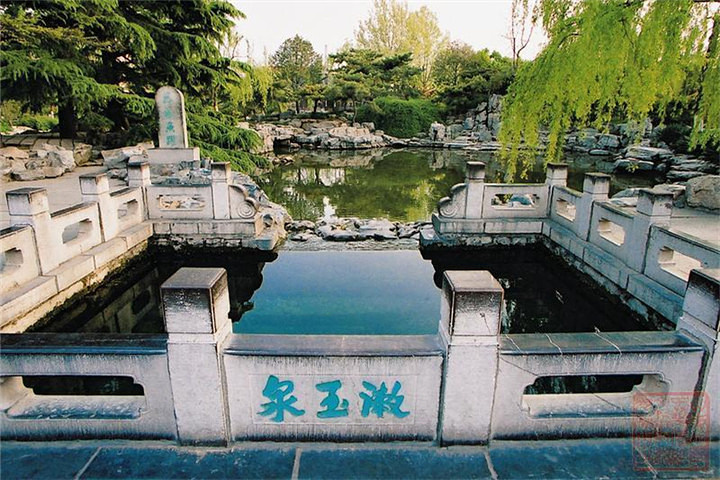
The Baotu Spring Group is known as the "leader of the 72 famous springs", and its core, Baotu Spring, is hailed as the "No.1 Spring Under Heaven". Three streams of spring water gush out from the ground, "surging like wheels" with a thunderous sound, flowing continuously for thousands of years. The group is accompanied by other famous springs such as Jinxian Spring, Shuyu Spring and Liuxu Spring. Shuyu Spring is famous because Li Qingzhao once fetched water here to dress up and compose poems. The clear spring water reflects the willows by the bank, showing an elegant and gentle beauty.
The Heihu Spring Group exudes a bold and heroic spirit. Located along the moat, with Heihu Spring as its core, the spring water gushes out from tiger-mouth-shaped stone carvings, as powerful as a tiger roaring, its sound echoing for miles. The group includes unique springs such as Pipa Spring and Manao Spring. The water of Pipa Spring drips on the stone slabs, making a sound like playing the pipa, gentle and pleasant; the water of Manao Spring is clear, with crystal-clear bubbles like agate.
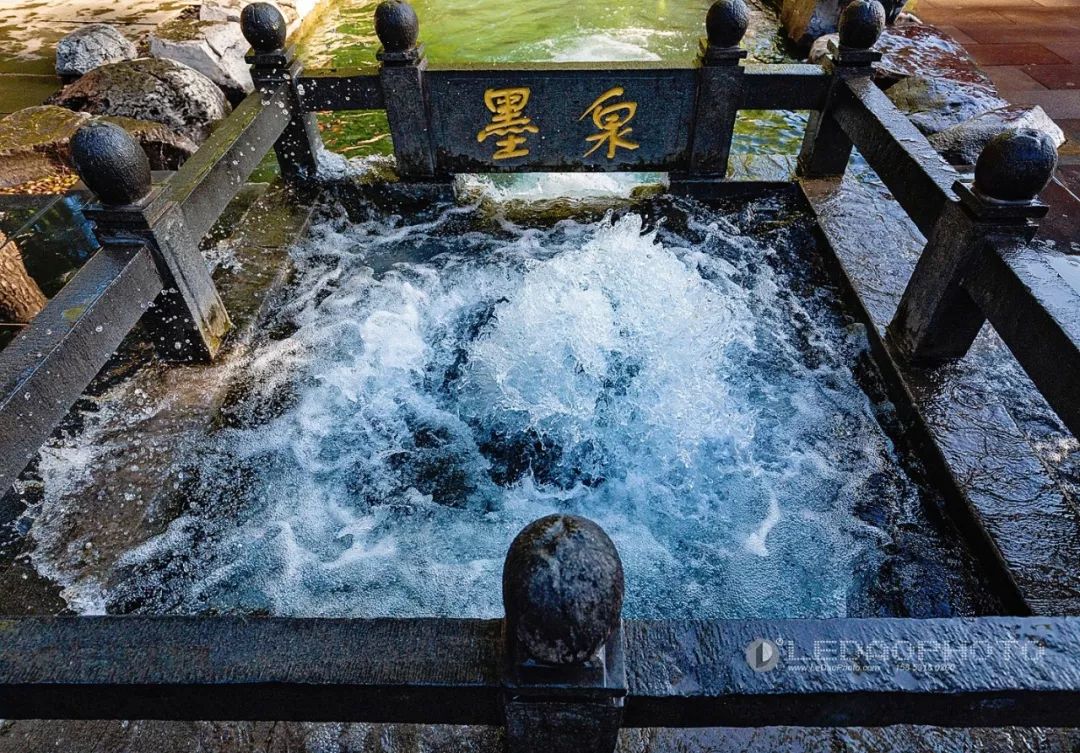
The Pearl Spring Group is hidden in the compound of the Shandong Provincial People's Congress. Spring water gushes out from the ground, forming strings of crystal-clear bubbles like falling pearls, hence its name. The environment here is quiet and secluded, with towering ancient trees, forming a delightful contrast with the surrounding ancient buildings, fully showing the tranquility and elegance of the ancient city. The Wulongtan Spring Group is located in Wulongtan Park, legendary to be the former site of Qin Qiong's residence. The spring water is crystal clear to the bottom, with ancient willows swaying by the pool, full of legendary color. The Baimai Spring Group is located in Zhangqiu District. Its core, Baimai Spring, gushes like a weaver's shuttle, adjacent to Dongmawan, Mo Spring and Plum Blossom Spring. The spring water converges into a river, nourishing this fertile land.
A Thousand Years of Cultural Heritage: Springs Nourish Poetry Through the Ages
The 72 famous springs are not only natural landscapes, but also carriers of Jinan's thousand-year cultural heritage. Since the Spring and Autumn Period record of "The Duke met the Marquis of Qi at Luo", springs have been closely linked with Jinan's history. Literati and poets from successive dynasties have come here admiringly, composing poems and paintings for the springs, leaving countless eternal stories.
The "Stele of Famous Springs" in the Jin Dynasty first clearly listed the 72 famous springs. Yu Qin of the Yuan Dynasty detailed the location and features of each spring in "Qi Cheng". Yan Bi, a poet of the Ming Dynasty, wrote a poem for each of the 72 famous springs. Hao Zhigong of the Qing Dynasty supplemented and revised the 72 famous springs, forming different versions of the list. Literati and scholars such as Ouyang Xiu, Zeng Gong, Su Zhe, Zhao Mengfu, Pu Songling and Lao She all lingered by Jinan's springs, leaving many masterpieces praising the springs. Lao She wrote in "Winter in Jinan": "As for the water, it not only does not freeze, but also steams a little over the duckweed. The algae are so green, showing all the green they have stored up all year round" — with a few simple strokes, he vividly depicted the warmth and agility of the spring water.
Springs have also integrated into Jinan's folk customs and mortal life. "Every family has a spring, every household has willows" is the most true portrayal of Jinan. Old Jinan people fetch a handful of spring water to wash their faces in the morning, chat in the shade by the spring in the afternoon, and cook with spring water in the evening. Springs have long become an indispensable part of their lives. During the annual Spring Water Festival, Quancheng Square and the moat are bustling with activity. Appreciating, tasting and reciting poems about springs have become a national feast, continuing the thousand-year vein of spring culture.
Passing on the Torch: Protecting Spring Veins for a Brilliant Future
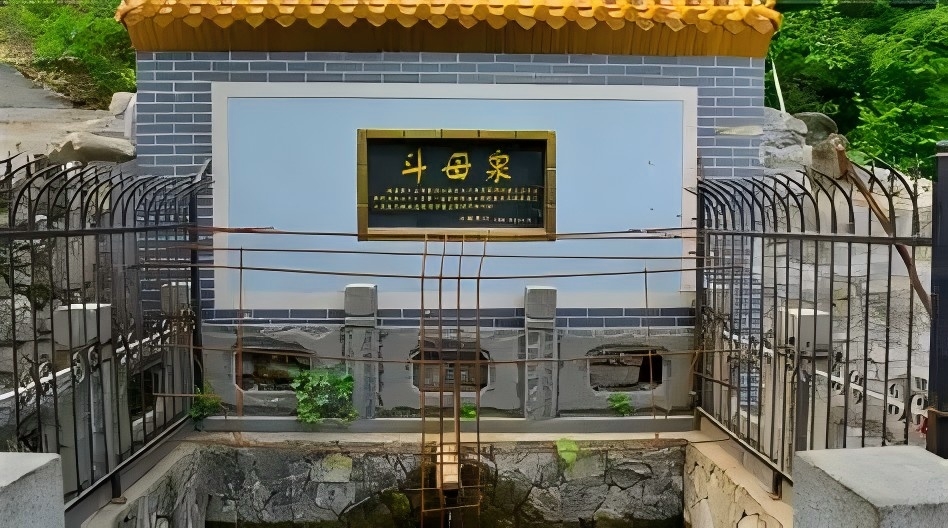
After thousands of years of vicissitudes, Jinan's 72 famous springs have also faced difficulties such as weak gushing and water quality damage. Protecting the springs is protecting the root and soul of Jinan. To ensure the eternal gushing of the thousand-year spring veins, Jinan has always adhered to the principle of "spring protection first", safeguarding the springs with the rule of law and science and technology.
In 2005, Jinan promulgated the only local regulation on spring protection in China, the "Regulations on the Protection of Famous Springs in Jinan", which was revised in 2017. It delineated four ecological red lines: "mountainous areas, river systems, key seepage zones and direct recharge areas", strictly controlling construction projects within the spring protection scope. To protect the springs, the construction of Jinan's rail transit has undergone more than 30 years of research and demonstration. In spring-sensitive areas, measures such as "detouring, avoiding and elevating" have been adopted, realizing the harmonious coexistence of subways and springs.
Today, with the joint efforts of all parties, most of Jinan's 72 famous springs maintain a good gushing state, with clear water and unchanged charm. From the surging three streams of Baotu Spring to the roaring tiger-like gush of Heihu Spring; from the round and smooth pearls of Pearl Spring to the elegant agility of Shuyu Spring, the 72 famous springs still nourish this ancient city, witnessing the changes and development of Jinan.
Springs moisturize the ancient city, and springs nurture the people. Jinan's 72 famous springs are a gift from nature, a carrier of thousand-year cultural heritage, and the deepest nostalgia in the hearts of Jinan people. They gush endlessly, carrying the legends of the past and telling the hopes of the future, making this "City of Springs" always full of vitality and elegance, shining immortal splendor in the long river of time.

