

The urban area of Jiangmen is located at the confluence of the Xijiang River and its tributary Pengjiang River. Penglai Mountain to the north of Pengjiang River and Yandun Mountain to the south of the Yangtze River face each other like a gate, hence the name "Jiangmen". In the early Ming Dynasty, Jiangmen had become an important commercial town in the Xijiang River Basin. It became a municipality under the jurisdiction of Guangdong Province in 1925. In 1983, the Wuyi area began to be under the jurisdiction of Jiangmen City, gradually forming the current administrative structure of "three districts and four cities". Jiangmen is also the famous "Chinese Capital of Overseas Chinese". There are more than 5.73 million overseas Chinese and compatriots from Hong Kong, Macao and Taiwan who are native to Jiangmen. They are spread across 145 countries and regions around the world. There is a saying that "there is one Jiangmen at home and one Jiangmen overseas". The first is a large area of historical old streets in Pengjiang District. This place is well-known to the public for its popular TV series such as "The Blast", "Manslaughter 2" and "Let the Bullets Fly", and the streets and alleys are filled with a strong sense of the times. Next, let’s take a look at how to get around Jiangmen!
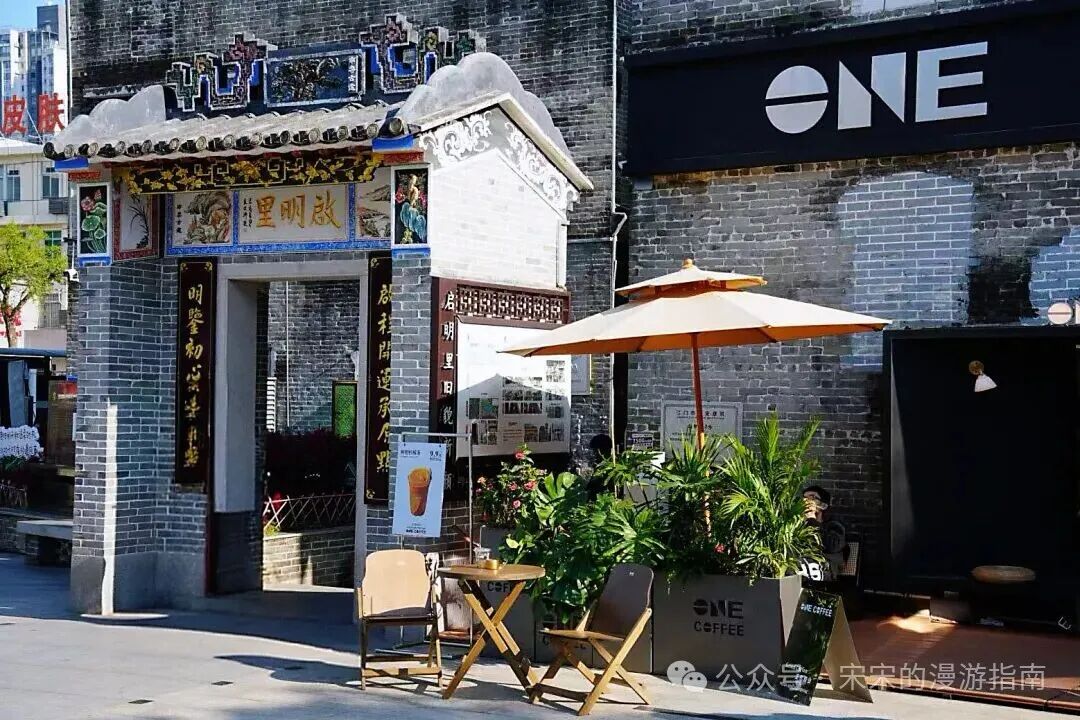
Qimingli Historical and Cultural District: As the hometown of overseas Chinese in Jiangmen, the first place to visit must be Qimingli. As a century-old overseas Chinese village, it has a profound historical heritage and has witnessed the historical changes of Jiangmen. The buildings in the alley are a combination of Chinese and Western styles. The stone bricks are in a very unique Lingnan style. The lush flowers and plants are integrated with the buildings, and there are traces of time everywhere.
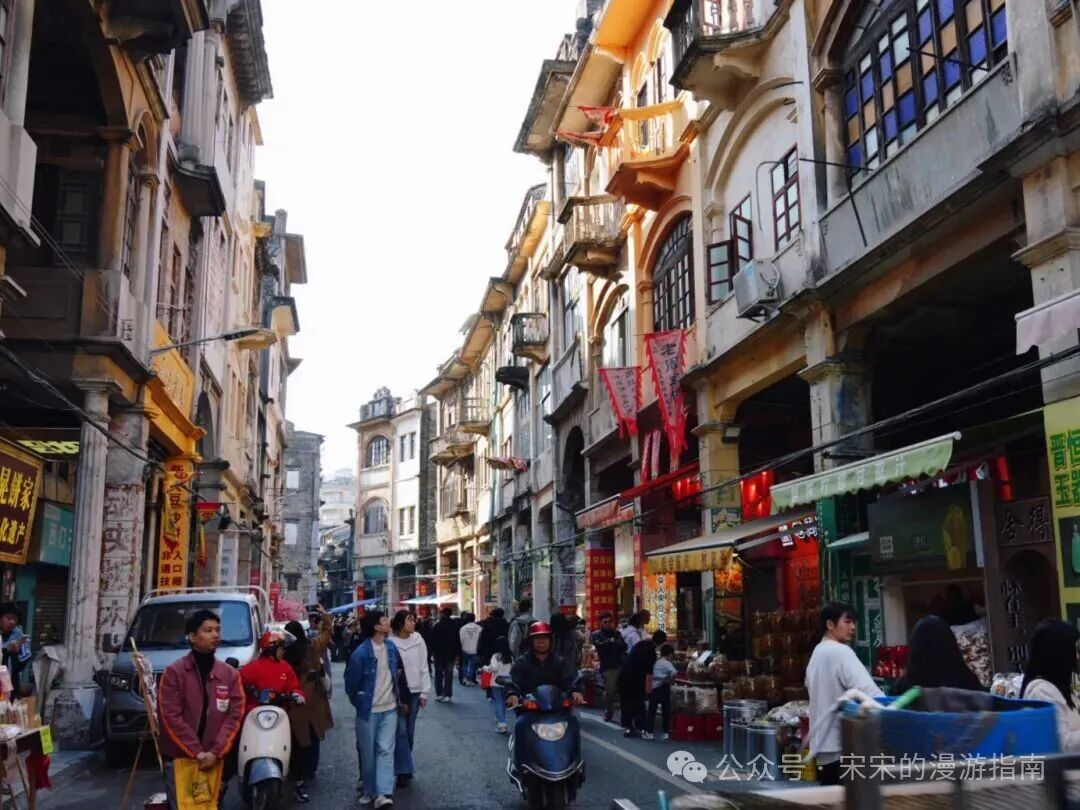
2. Sansanxu Street: It is not a specific street name, but a collective name for several historical streets such as Xuding Street, Dizhong Street, Lianping Road, Xingning Road, and North Street. Because there are 33 bluestone steps in Shui Po Tou, it is named Thirty-three Market Street. This is also the old factory street where Gao Qiqiang lived in the drama "Hurry Up". This neighborhood is very large and retains a very old, even decayed atmosphere. However, the local residents and businesses here are still living in an orderly manner. It is the New Year's Day holiday and there are many tourists. The fusion of lively crowds and old streets feels quite magical. There is also the Water Street Farmers Market nearby, which is also one of the most famous markets in Jiangmen Old Town. There are many snack bars nearby, full of life. After the renovation of the farmer's market, the stalls have become more neat and tidy and clean. However, it has always maintained the most vivid appearance of Jiangmen Old Town.
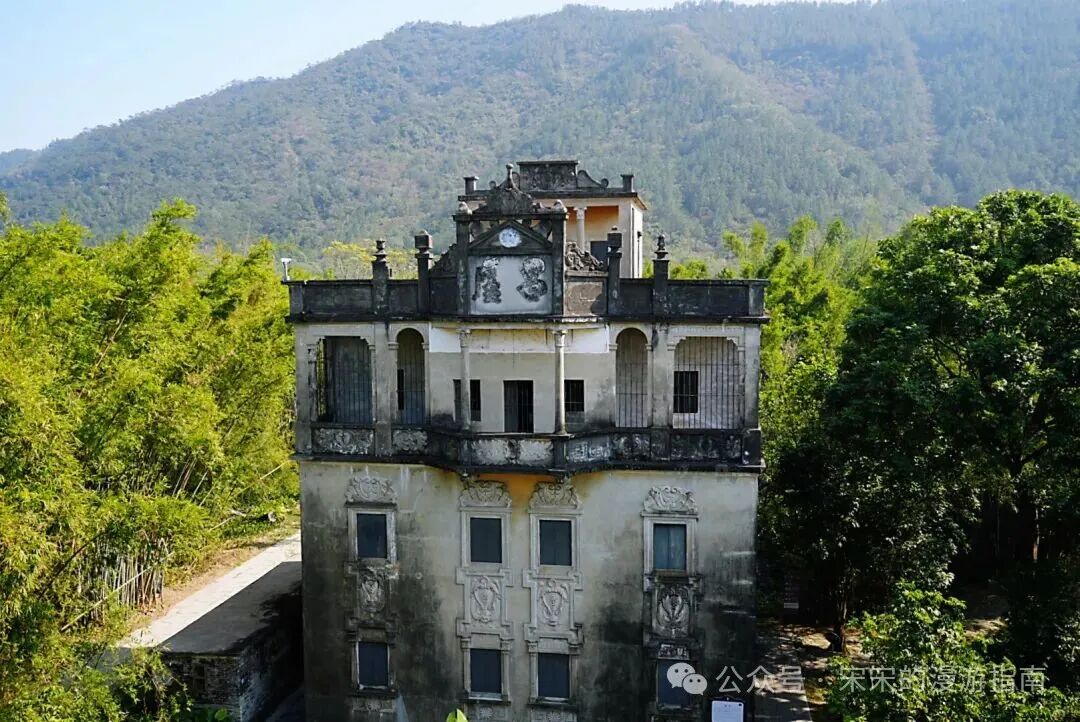
3. Kaiping Diaolou: This unique building integrates defense, residence, and Chinese and Western architectural art. It is known as "a model of overseas Chinese culture." In 2007, Kaiping Diaolou was successfully applied for World Heritage and became China's 35th World Cultural Heritage and the first overseas Chinese cultural World Heritage project in China. Kaiping is located in the southwest of the Pearl River Delta. Banditry has been frequent in history, and the terrain is low-lying and flood-prone. In order to resist looting and flooding, local expats began to build watchtowers. Since the mid-19th century, a large number of Kaiping people have gone to Europe, America and Southeast Asia to make a living. After becoming rich, they returned to their hometowns to build watchtowers and incorporate Western architectural elements.
4. Liyuan Garden: Initially built in 1936, it is the private garden of Xie Weili, an overseas Chinese in the United States. Compared with other watchtower groups, Liyuan is more Western-style and more refined; it has red velvet, terrazzo, and various tiled doors and windows. The collision of colors and materials, the fusion of Eastern and Western aesthetics, the aesthetics are very advanced.
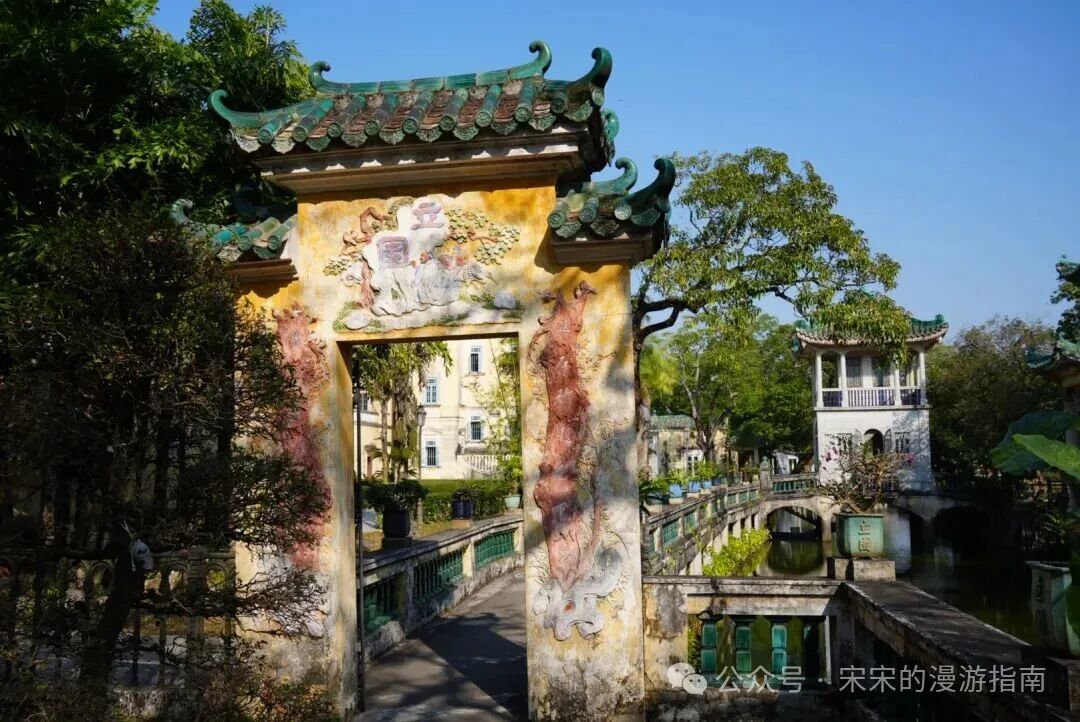
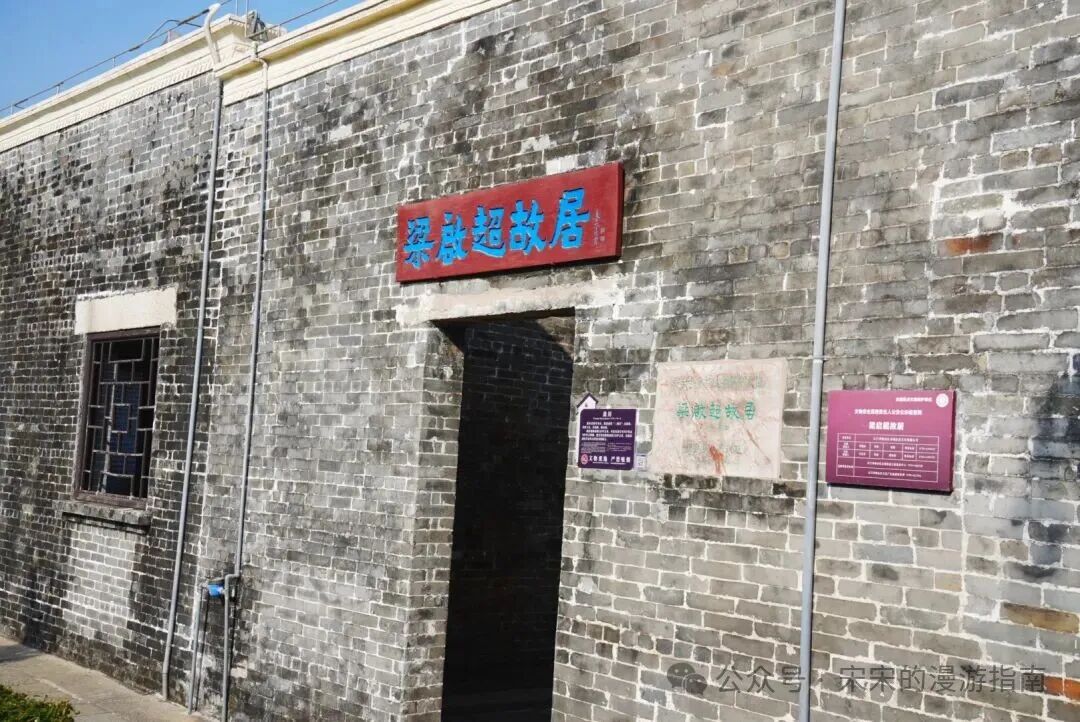
5. "Liang Qichao Memorial Hall": Liang Qichao, a native of Chakeng Village, Xinhui County, Guangdong. He is a famous thinker, politician, educator, historian, and writer in modern China, one of the leaders of the Hundred Days Reform (1898 Reform), and a representative figure of the reformists and neo-Legalists. Chakeng Village is located at the foot of Fengshan Mountain in Xinhui and on the bank of Yinzhou Lake. It is an ancient village with a history of more than 600 years. Liang Qichao was born here. His family had been farming for generations. His grandfather Liang Weiqing began to study and became a local squire. Liang Qichao's former residence was built in the Guangxu period of the Qing Dynasty (1875-1908). It is a one-story house with blue bricks and earth tiles, consisting of the former residence itself and Yitang study room. Yitang Study Room is the place where Liang Qichao studied and received traditional Confucian education.
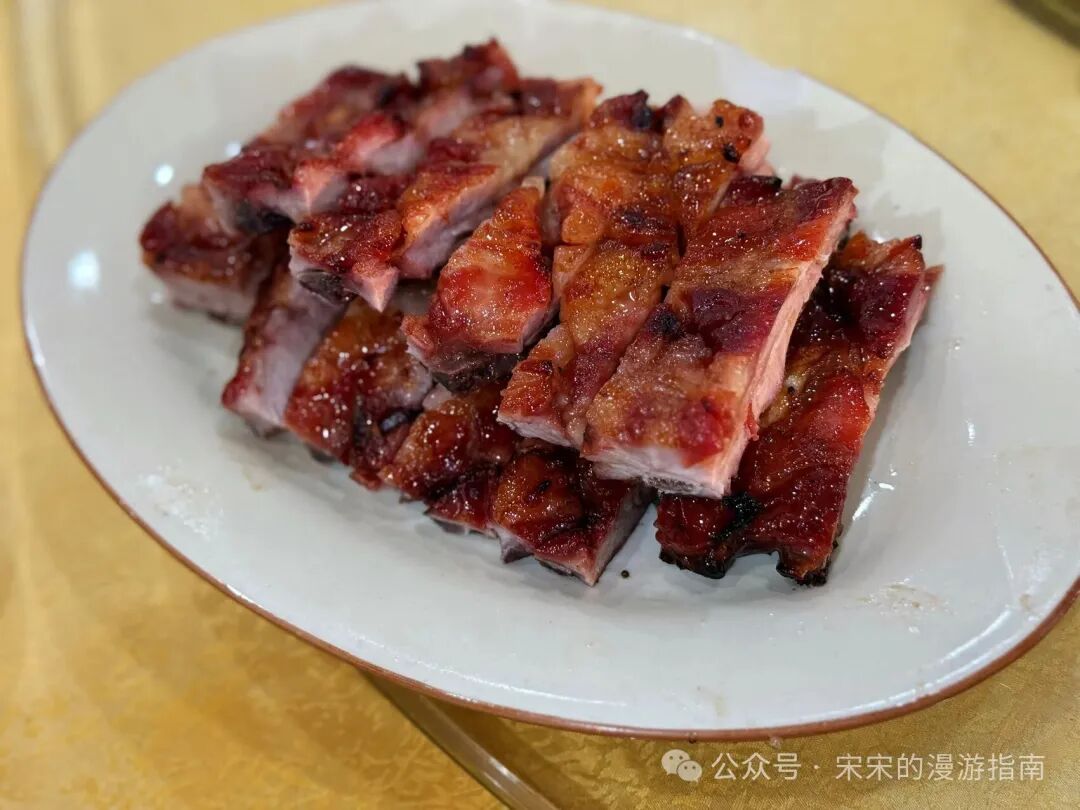
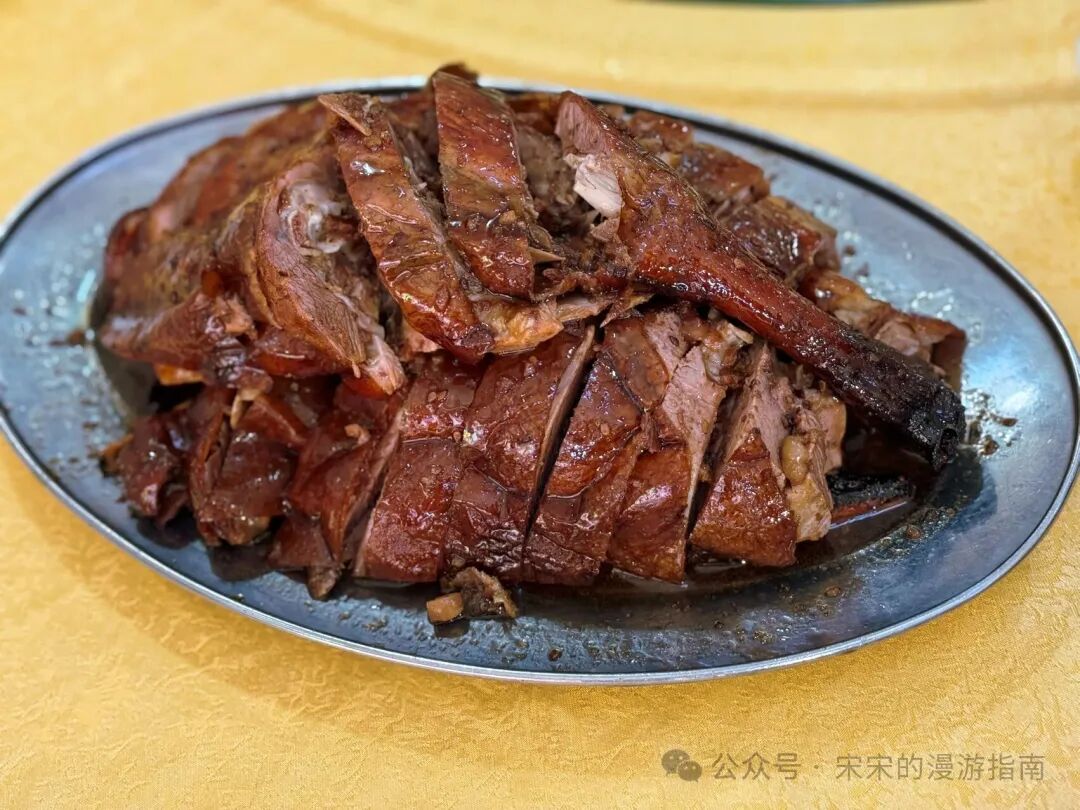
6. Gujing Roast Goose: In Guangzhou, the roast goose in hotels and restaurants is the result of two sects competing for "the best in the world" - either Shenjing Roast Goose or Gujing Roast Goose. This "Gujing" refers to Gujing Town in Xinhui, Jiangmen. In Gujing Town, there is a street called Roast Goose. It’s really a street full of roast goose shops. There are two old brands, Pingxiang and Hengyi. Just pick one to eat. Compared with the Sham Tseng style, the Gu Jing roast goose skin is thinner and leaner, and it tastes burnt. And the authentic method must use lychee wood as the cooking material and Xinhui tangerine peel as the marinade. The goose meat is sweet and the tangerine peel is fragrant when you take a bite, then it tastes right.
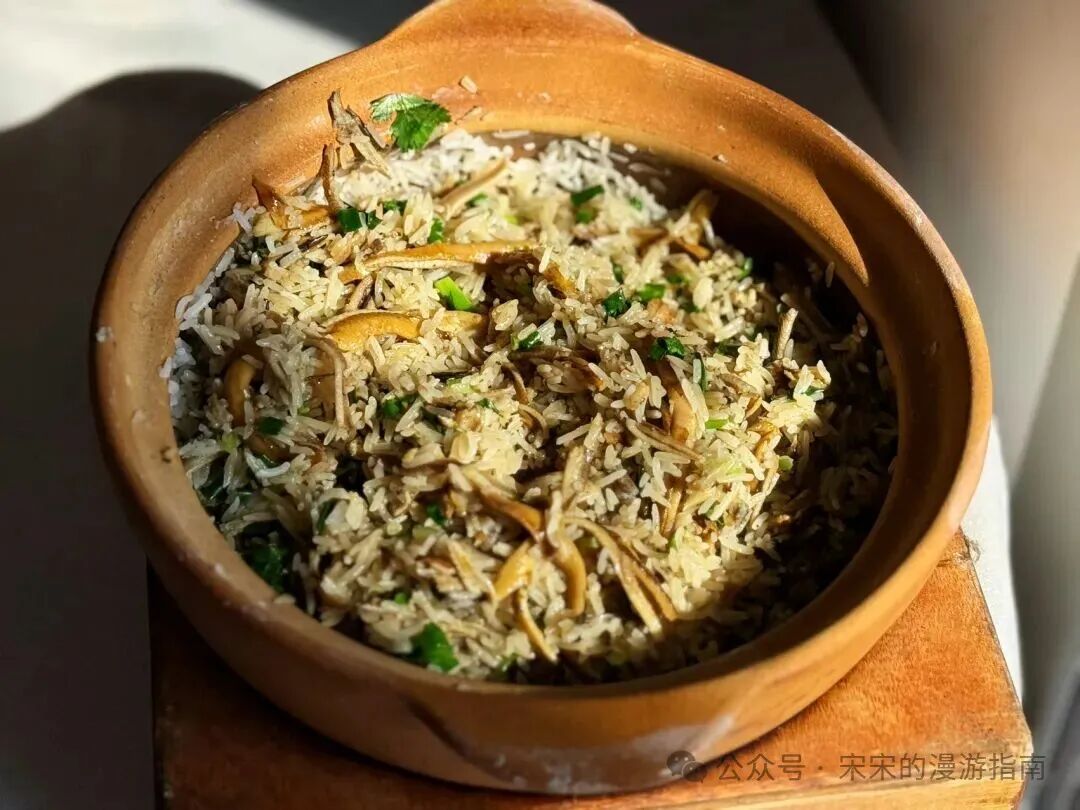
7. Taishan eel rice: When you see this combination of place name + ingredients, you know that it must be the most popular local signature dish. Taishan eel rice was first born in Shuibu Town, Taishan, Jiangmen. Different from the traditional claypot rice cooking principle, Taishan eel rice is made by "stewing". There are three steps to making a rice dish, and the eel is used to its fullest potential: the rice is boiled in a soup made from eel bones, then the rice is stir-fried with meat and eel blood, and finally it is put back in a casserole for baking. The founding restaurant in the birthplace of Taishan eel rice is "Taishan's first Xinghua eel rice·Eel Po (Pengshakeng Main Store)". The eel rice is really excellent. It is full of aroma as soon as it is served. The umami flavor of the eel and the aroma of the silk rice are well blended. The taste is also relatively light. Look at the crispy rice at the bottom. It is not oily at all and is very fragrant.
8. Claypot rice: In addition to eel rice, Jiangmen’s claypot rice is also great. Zhao Gongxiang remembers clay pot rice. This store is a community store, opened in a small alley. The store is not big, with seven or eight tables, and there are quite a lot of people. Judging from the accent, they are all local friends. A special claypot rice with scallops, shrimps, vegetables, fruits and cured meats. Note that it’s vegetables and fruits, not apples! The vegetables and fruits are kohlrabi, baked very sweet in the clay pot rice, the scallops and shrimps are very fresh, the sausages are very fragrant and oily, and the texture is very rich when mixed together. The crispy rice balls are also excellent, fragrant and crispy, but not oily at all.