


A Millennium-Old Secret Realm Between Two Mountains
In the folds at the northern foot of Tianmu Mountain lies a secret realm gently embraced by time——Badujie. The character "Jie", which specifically refers to a valley between two mountains, vividly outlines the geographical features of this place surrounded by green mountains and traversed by clear streams. This narrow valley, about 12.5 kilometers long, got its name from the legend that Liu Xiu of the Han Dynasty hid from pursuers eight times here. Originally, "Badu" was "Baduo" (meaning "eight hides"), and the homophonic pronunciation in the local dialect has been passed down to this day, adding a touch of mystery and depth. Known as "the hometown of ginkgos in the world", more than 30,000 native ginkgo trees are scattered at the bottom of the valley, forming a delightful contrast with ancient villages, old residences, green mountains and clear streams, composing a magnificent picture of "villages in mountains, trees in villages, houses in trees, and people in paintings".
The Four-Season Charm of the Ten-Mile Ginkgo Corridor
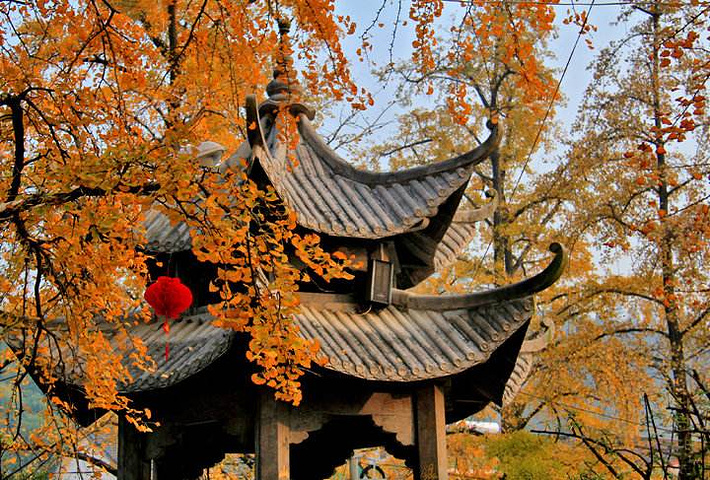
The soul of Badujie is the ten-mile-long corridor of ancient ginkgo trees. There are six ancient ginkgo groups distributed here, with more than 3,000 ancient trees over a hundred years old. The oldest "Ginkgo Queen" has a history of more than 1,500 years. It is said to have been planted by Emperor Wu of the Southern Chen Dynasty with his own hands and still bears abundant fruits today, revered as a "sacred tree" by local people. In spring, new leaves burst forth, and the light green leaves shimmer in the sun. When it rains, water droplets slide down the leaf veins like marbles played by children. In summer, the dense branches and leaves interweave into a natural vault, blocking the intense heat. The bluestone road under the trees is cool and dry, and the breeze passes through the forest, making the leaves rustle like whispers. Late autumn is the most stunning. After Frost's Descent, the entire valley is dyed golden. The sun penetrates the branches and leaves, casting dappled light and shadow on the ground. Stepping on it, it rustles, as if walking on a golden velvet blanket. When the wind blows, thousands of golden leaves dance like butterflies, falling on black tiles, stone steps and shoulders. The S-shaped "Golden Tunnel" from Fangyicun to Fangyancun pushes this magnificent scenery to the extreme. In winter, the leaves fall and the branches become sparse, while the vigorous trunks stand tall in the cold wind, outlining simple and powerful lines, with a unique charm.
The Quiet Beauty of Clear Streams and Lush Forests
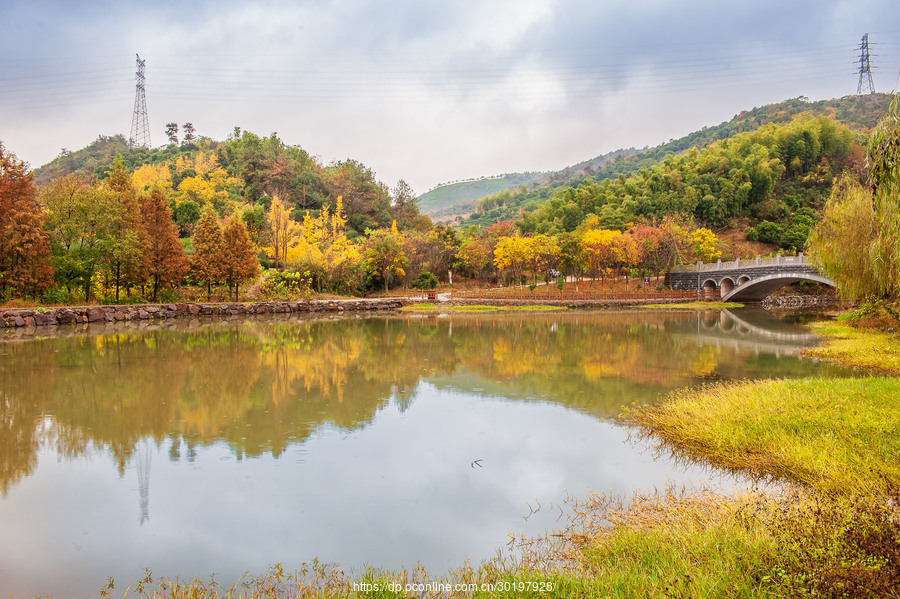
In addition to ginkgo trees, the mountains and rivers of Badujie are equally enchanting. Green mountains stretch on both sides of the valley, with dense green bamboos and pines. Clear streams gurgle down the mountains, so clear that you can see small fish swimming and green moss attached to the stones. Upstream of the sluice dam in Xiananjie, there is a pool of green living water, and downstream, a vivid small waterfall is formed. The splashing water droplets form an interesting contrast with the ancient ginkgo trees on the opposite bank. Badu Weir, known as "Little Switzerland of Badujie", covers 70 mu of original wetland, backed by green mountains and adjacent to Xueyangjie in the south. You can walk around to enjoy the scenery, or experience leisure activities such as fishing and water golf. The valley is extremely quiet in the early morning, with white mist lingering by the stream and fine bubbles floating on the water surface. Touching it, you can feel the coolness to the bone. The singing of birds, the sound of the stream and the distant sound of chopping firewood interweave, painting a vivid picture of pastoral morning scenery.

The Years' Marks on Ancient Residences and Roads
Beyond the natural beauty, Badujie also hides profound cultural heritage. The ancient dwellings in the valley are quite distinctive, with Wu Family's Old Residence and Qian Family's Old Residence well-preserved. The lintel of Wu Family's Old Residence is carved with auspicious inscriptions such as "Carry Forward the Past and Forge Ahead into the Future" and "Step into Peace and Prosperity", with exquisite and complex brick carvings, which have a deep connection with the Wu Changshuo family. Qian Family's Old Residence has a regular layout of three courtyards. The plaque "Yijin Hall" witnesses the family's glory. The third courtyard was once a place for studying, and traces of children's play can still be found on the stone slabs in the courtyard. Kongwang Jiao Temple was first built in the Wuyue Kingdom of the Five Dynasties, with yellow walls, black tiles and golden leaves. The "Ginkgo Queen" beside the temple echoes the "Ginkgo King" in the Ancient Ginkgo Park from afar, where the sound of Buddha and poetry blend. Ancient roads are witnesses to history. Nanzhou Ancient Road hides relics of ancient temples and wells from the Song and Yuan dynasties. Wulong Ancient Road carries the prosperous memories of carrying salt and tea in ancient times. The bluestone slabs have been polished smooth by time, and broken steles and stone inscriptions can occasionally be seen among the dense green moss. The words such as "post station" and "stage" are faintly distinguishable, evoking the scene of jingle of horse bells and an endless stream of merchants and travelers in the past.

The Daily Beauty of Ancient Village Life
The beauty of Badujie also lies in the daily fireworks integrated into life. The fragrance of food drifts from the farm stays in the mountains: braised pork with dried bamboo shoots is rich but not greasy, the tea-flavored chicken slowly braised over firewood has thin skin and tender meat, and the mountain spring tofu sprinkled with chopped green onions and shrimp skins is fresh and delicious. In late autumn, the sun-drying grounds are covered with ginkgo noodles as tall as a person, and the wheat fragrance mixed with the delicate fragrance of ginkgo has become a new business card of the scenic spot. In the evening, cooking smoke curls up. Villagers dry corn and bamboo mats in the yard. Chickens and dogs bark at each other. Cats lie lazily on the stone piers at the door. Time seems to slow down here. When you meet enthusiastic villagers, they will invite you to taste a cup of "Changxing Purple Bamboo Shoot Tea", a tribute tea of the Tang Dynasty. The tea soup is clear and refreshing with a long aftertaste. The poem "Plucking the fragrant clusters of purple bamboo shoots neatly" written by Bai Juyi is a vivid portrayal of the tea scenery here.
The Longing for the Secret Realm in the Depths of Time
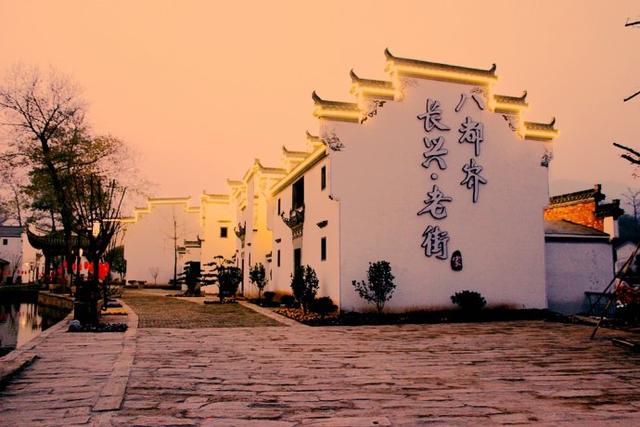
When leaving, looking back at Badujie, the setting sun coats the ginkgo trees with a warm halo. The stream gurgles, the ancient road winds, and the ancient residences are quiet. There is no hustle and bustle of the city here, only the tranquility of nature and the depth of humanity. From the golden feast in late autumn to the ordinary scenery of the four seasons, from the thousand-year-old ginkgo trees to the ancient residences and roads, from the charm of mountains and rivers to the warmth of fireworks, Badujie, with its unique charm, makes every visitor feel attached. This secret realm nourished by time is worth slowing down to savor the beauty hidden in the depths of time.

