


Rolling endlessly, the Yellow River surges across China, carrying the profound spirit of the Loess Plateau. At the narrow throat of the Shanxi-Shaanxi Grand Canyon, its mighty waters suddenly narrow and plunge downward, forming the world-famous Hukou Waterfall. As the second-largest waterfall in China and the world’s only yellow waterfall, it boasts overwhelming momentum, varied scenery and profound cultural heritage, standing as the most iconic natural landmark of the Yellow River. Boasting the spectacular scene of “the entire Yellow River pouring into a single pot”, it showcases the marvelous craftsmanship of nature and the grandeur of China’s mountains and rivers, stunning every visitor who beholds it.
Forged by Millennia: A Geological Wonder Shaped by Nature
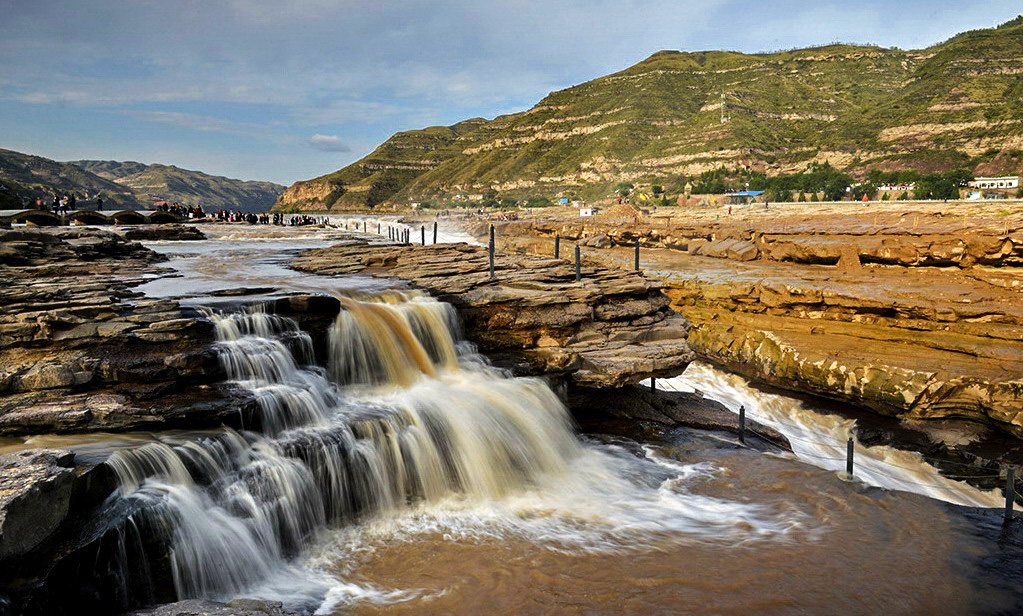
The magnificence of Hukou Waterfall stems from tens of millions of years of geological evolution. In ancient times, the terrain of the Shanxi-Shaanxi Canyon was flat, and the Yellow River flowed gently. With crustal uplift and rock stratum changes, gradual drops formed along the riverbed. Over tens of millions of years, the river’s relentless scouring and erosion of alternating sandstone and loess layers eventually shaped the unique pot-shaped canyon at the border of Ji County in Shanxi and Yichuan County in Shaanxi.
The river features a distinct terrain: its upstream surface stretches as wide as 300 meters, with water flowing vast and unrestrained. Upon reaching Hukou, the channel abruptly narrows to merely 50 meters. Steep cliffs confine the surging water, forcing it to rush into a stone trough more than 30 meters deep. Resembling a giant pot embracing myriad currents, the waterfall earns its name “Hukou”, meaning “pot mouth”. The 30-meter drop creates a breathtaking cascade, with rushing water plunging and surging. It also nurtures distinctive geological landscapes including the Ten-Long Trough and Mengmen Mountain, fully demonstrating the tremendous power of natural geological changes.
Scenery of Four Seasons: Changing Charms Throughout the Year
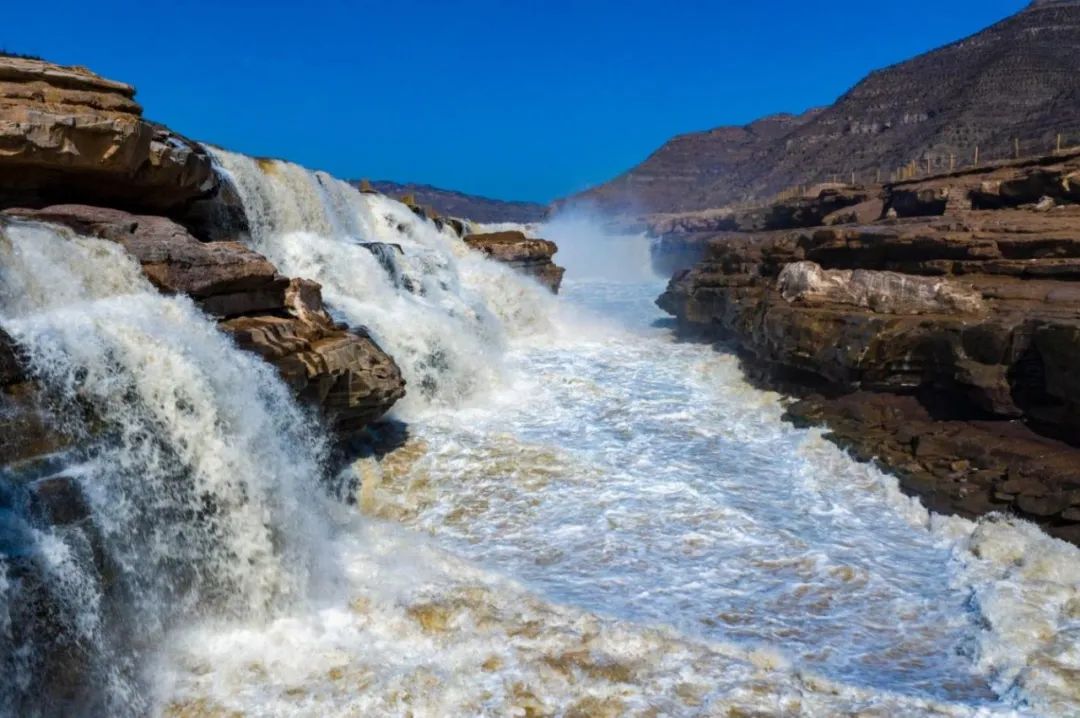
Hukou Waterfall presents distinct scenery in every season, with varied views even within a single day. In spring, glacial ice thaws and the annual peach flood arrives. Melting ice mingles with surging river water, swelling the current and churning up muddy waves. Warm sunlight pierces the rising water mist, refracting into a colorful rainbow spanning the canyon, forming the stunning spectacle of “Rainbow Connecting the Sky”, where tenderness and grandeur blend perfectly.
Summer endows Hukou Waterfall with its most unrestrained and powerful demeanor. The rainy season boosts the river’s water volume dramatically. The yellow current laden with sediment rushes forward irresistibly, overflowing the cliff edges and merging into a vast continuous waterfall. Towering waves crash down with thunderous roars audible for miles, while dense water mist sweeps over visitors, embodying the Yellow River’s fearless and unyielding wild spirit.
In crisp autumn, rainfall declines and the river calms down with clearer water, shaping neat and elegant waterfall views. The plunging current stirs up layers of mist that curl and linger in the valley, creating the classic ethereal spectacle of “Smoke Rising from the Water”. Against the clear sky and serene mountains, the waterfall is grand yet gentle, magnificent and tranquil. In winter, the land is wrapped in snow and ice. The river freezes over and the flowing water turns into crystal ice falls and icicles. The once roaring Yellow River falls into silence, revealing the stern and sublime beauty of northern China’s rivers and mountains.
Eight Unique Wonders: Peerless Creations of Nature
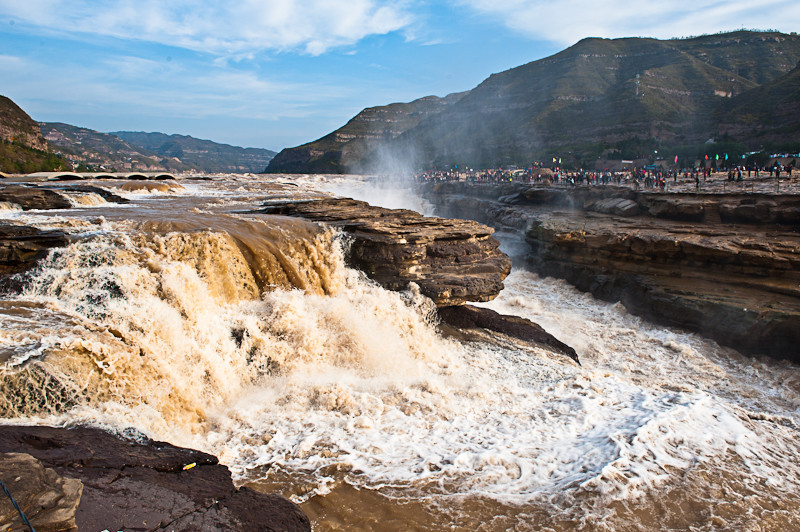
Endowed by unique hydrological and geological conditions, Hukou Waterfall features eight iconic natural wonders that delight the eye at every turn. Beyond the seasonal sights of “Smoke Rising from the Water” and “Rainbow Connecting the Sky”, wonders such as “Dancing Dragon Waves”, “Thunder echoing in the Valley” and “Mirror Stones” hold unique charms. As the torrent plunges into the deep trough and swirls violently, countless rolling waves surge and interweave, just like groups of dragons frolicking in the water, forming the vivid scene of “Dancing Dragon Waves”.
The water crashes against the cliffs with thunderous reverberations echoing through the valley, forming the breathtaking spectacle of “Thunder echoing in the Valley”. After millions of years of water erosion, round hollow pits of varying sizes have formed on the cliff rocks. Filled with clear rainwater that mirrors the sky and clouds, these pits are exquisitely known as “Mirror Stones”. These diverse dynamic and static wonders endow Hukou Waterfall with both overwhelming grandeur and delicate natural grace.
Soul of Rivers and Mountains: An Enduring National Spirit
More than a top-tier natural scenic spot, Hukou Waterfall serves as a spiritual symbol bearing the essence of Chinese civilization. A national 5A-level tourist attraction and national geopark, it is featured on the back of the 1990 version of China’s 50-yuan banknote, representing the classic image of the Yellow River in Chinese people’s hearts. The endless surging waves symbolize the Chinese nation’s perseverance and progressive spirit, while its unstoppable momentum interprets the self-improving character of the Chinese people.
For thousands of years, Hukou Waterfall has stood quietly amid the mountains and rivers, witnessing historical changes and inspiring countless literati to compose odes in its praise. It carries the profound heritage of the Loess Plateau, embodies the maternal warmth of the Yellow River, and embodies the noble spirit of China’s land. The Yellow River flows on endlessly, and Hukou Waterfall stands eternal. It is not only a precious natural treasure bestowed by nature upon China, but also an immortal spiritual totem deeply rooted in the Chinese nation’s blood.

