


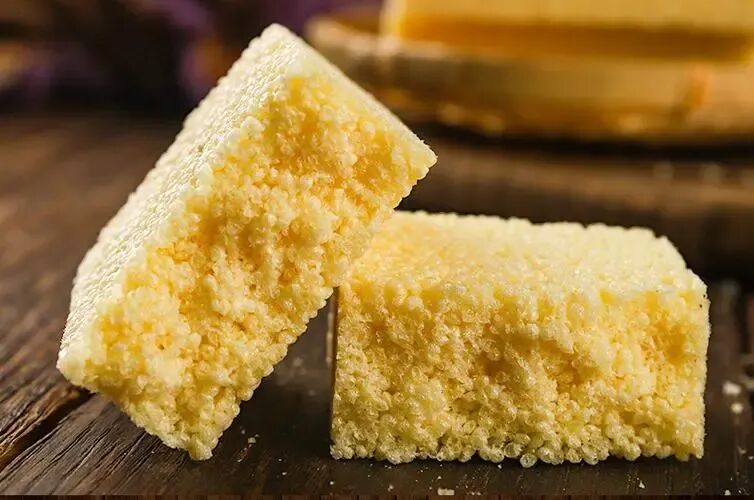
In the vast and varied landscape of Chinese cuisine, where delicate dim sum and fiery Sichuan dishes often steal the spotlight, there exists a quieter, more humble pleasure that has sustained and delighted people for centuries. This is the millet crisp, known in Mandarin as xiaomi su. To the uninitiated, it might appear as nothing more than a simple golden square or an irregular shard of puffed grain. Yet, to those who grew up with it, this unassuming confection is a taste of home, a symbol of celebration, and a living link to China's ancient agricultural past. It is a snack that tells a story—not just of flavour and texture, but of survival, ingenuity, and the enduring human desire to transform the simplest of ingredients into something truly memorable.
The story of the millet crisp begins, quite literally, at the very foundation of Chinese civilisation. Long before rice became the dominant staple of the Chinese diet, it was millet that filled the bowls of the nation's ancestors. Archaeological evidence has revealed that millet was cultivated in northern China as far back as 8,700 years ago, with carbonised remains unearthed at the Cishan Site in Hebei province confirming its status as one of the earliest domesticated grains. For thousands of years, throughout the Xia and Shang dynasties, millet was the grain of the people—the crop that fuelled empires and fed generations. It was a staple so vital that the earliest known noodles, discovered in China and dated to around 4,000 years old, were found to be made not from wheat, but from millet.
Given this deep-rooted history, it is hardly surprising that millet found its way into countless forms of traditional cooking. Among these, the millet crisp emerged as a stroke of rural genius. Its origins are not found in the grand palaces of emperors, but in the practical kitchens of farming communities. After a bountiful harvest, farmers would dry their surplus seeds, puff the grains, and bind them with maltose or sugar syrup. This was not merely a culinary experiment; it was a clever method of preservation—a way of capturing the abundance of the season and storing it for the leaner months ahead. Over time, these humble, resourceful mixtures transcended their practical purpose and became woven into the fabric of celebration. They were offered at Lunar New Year festivities, presented at weddings as tokens of goodwill, and sold at bustling temple fairs, where their golden colour and sweet taste came to symbolise good fortune and happiness.
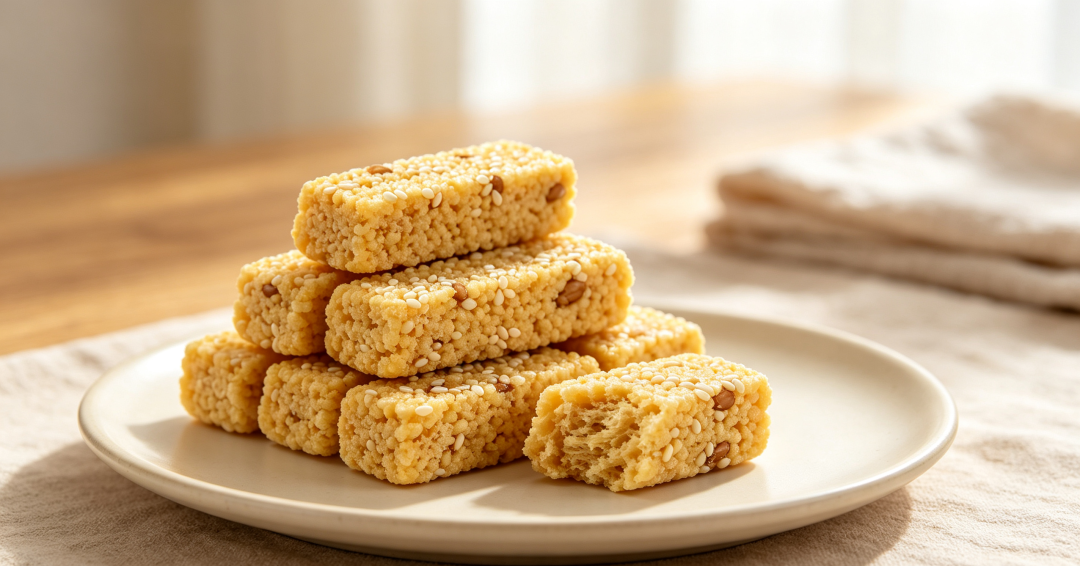
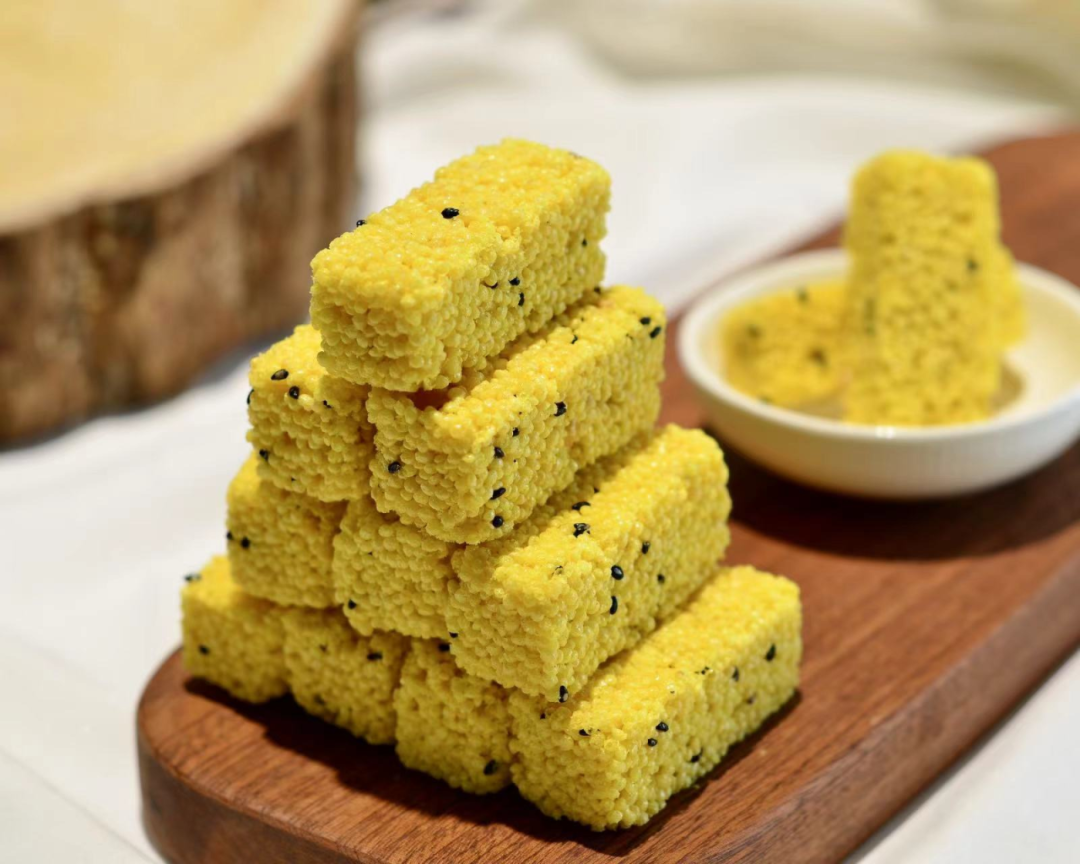
The millet crisp is a confection of delightful contrasts. At its most authentic, it is a study in simplicity and texture. The primary ingredient is, of course, millet, which is processed to achieve a light, airy puff. This puffed grain is then combined with a symphony of nuts and seeds—often including peanuts, walnuts, sesame seeds, and sunflower or pumpkin seeds—before being bound together with a sweet, sticky syrup made from sugar and maltose. The resulting mixture is pressed into slabs and cut into neat rectangles or squares. The first bite delivers a satisfying, resounding crackle, a sonic promise of the crispness to come. This is quickly followed by the rich, toasty flavour of the grain, the earthy nuttiness of the seeds, and the gentle, lingering sweetness of the maltose. It is a combination that is at once rustic and refined, hearty and delicate.
The process of making millet crisp is a craft that has been honed over generations. One of the most theatrical steps is the puffing of the grain itself. In regions like Shanxi province, a traditional method involves heating fine river sand in a large wok until it is fiercely hot. The millet grains are then stirred through the sand, and in an instant, they bloom and expand, transforming from hard little seeds into fluffy, edible morsels. It is a dramatic and beautiful spectacle. The grains are then mixed with the syrup and nuts in a carefully orchestrated sequence, as the sugar syrup must be cooked to the precise temperature—around 145 degrees Celsius, or the soft-crack stage—to ensure the final product has the perfect brittle texture without becoming unpleasantly hard. The entire process requires speed and skill, as the syrup sets quickly, and the confection must be pressed and cut before it hardens completely.
Beyond its agricultural and culinary roots, the millet crisp is also steeped in legend and cultural significance. In the ancient town of Anju in Chongqing, a local variation is known as "Hanlin Crisp," a name that honours a touching story of maternal love and scholarly ambition. According to local lore, during the Qing dynasty, a poor but determined scholar named Wang Shu was preparing to travel to the capital for the imperial examinations, a daunting journey that would test his intellect and endurance. His mother, worried about how he would sustain himself on the road, spent days gathering the finest ingredients from various households to prepare a large batch of millet crisp for him to carry. Armed with his mother's love and the nourishing snack, Wang Shu journeyed to the capital and achieved the highest honour, being appointed as a Hanlin academician by the Kangxi Emperor. His son later followed the same path, carrying millet crisp made by his grandmother, and also achieved the same prestigious rank. From that day forward, the people of Anju came to view the millet crisp as a miraculous food that brought luck to scholars, and they renamed it "Hanlin Crisp" in honour of the family's achievement. Today, the snack remains a beloved symbol of perseverance and familial devotion, and it has been recognised as a local intangible cultural heritage item.
Another legend traces the millet crisp back even further, to the golden age of the Tang dynasty. It is said that the Emperor Minghuang, in a grand romantic gesture, commanded his imperial chefs to create a new pastry that would delight his beloved consort, the legendary beauty Yang Guifei. The chefs crafted a golden, crispy confection made from millet, and its pure, fragrant flavour and gentle sweetness won the heart of the lady. Thus, the "Guifei Millet Crisp" was born, a name that has endured through the centuries and continues to evoke the romance and opulence of the Tang court. Whether the story is historically accurate or not, it speaks to the high regard in which this simple snack has long been held.
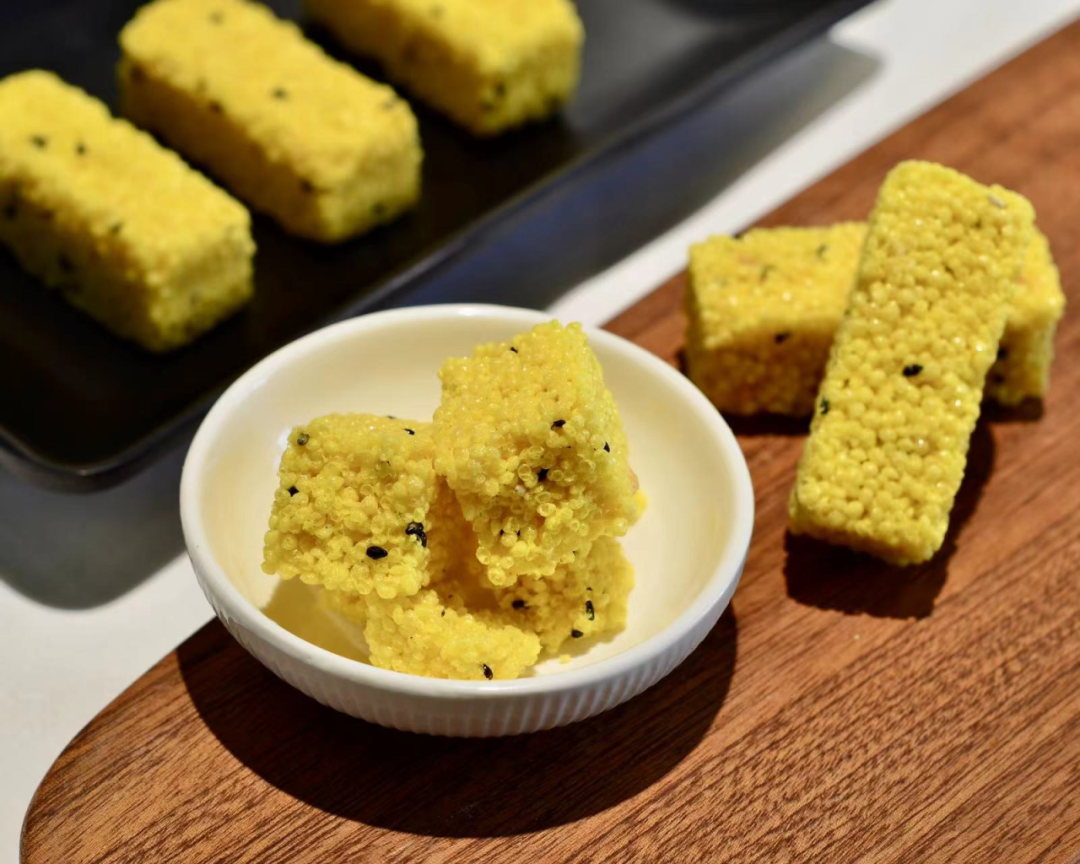
In contemporary China, the millet crisp has successfully navigated the journey from a practical, rural food to a beloved nostalgic treat. While factory-made versions are widely available, there remains a deep appreciation for the traditional, handmade variety. In many regions, particularly during the lead-up to the Spring Festival, families will still invite a skilled "candy maker" to their homes to prepare a fresh batch. The snack's enduring appeal lies not only in its delicious taste but also in its wholesome qualities. Millet itself is highly nutritious, rich in protein, dietary fibre, and B vitamins. In traditional Chinese medicine, it is valued for its ability to nourish the stomach and spleen. This has made the millet crisp a popular choice for parents seeking a healthier alternative to processed snacks for their children.
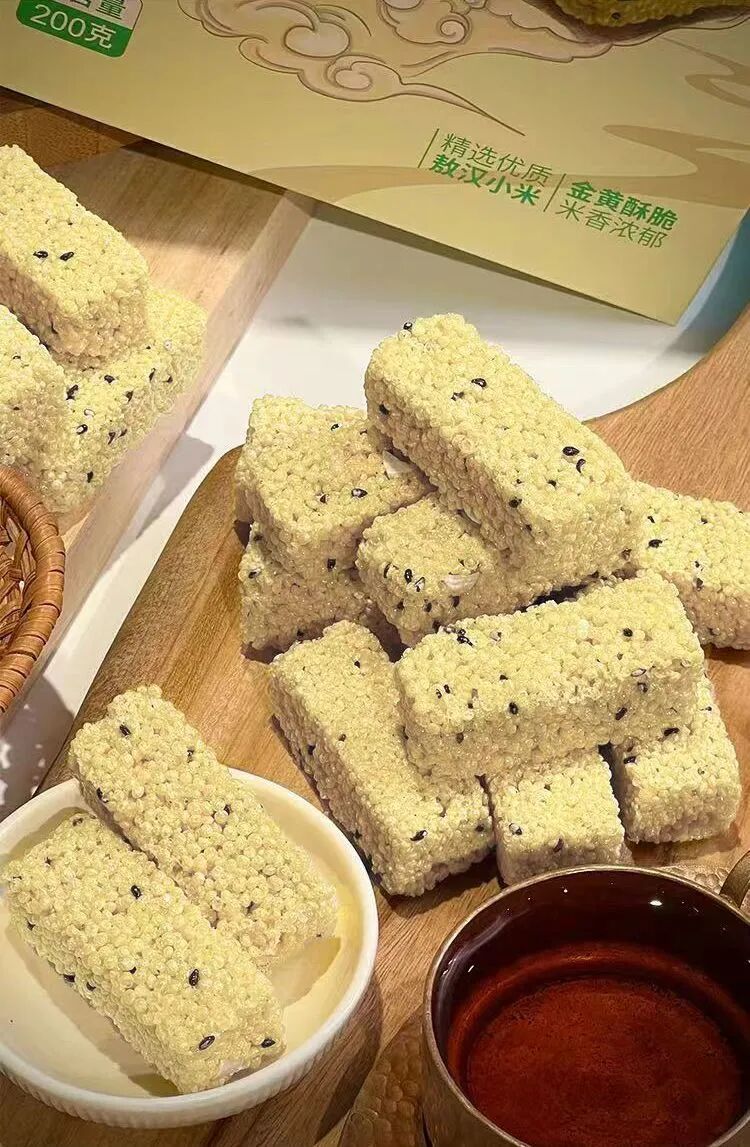
In conclusion, the millet crisp is far more than a simple sweet treat. It is a culinary artefact that encapsulates thousands of years of Chinese history, from the Neolithic farms of the Yellow River valley to the bustling street markets of today. Its golden hue and satisfying crunch carry the echoes of ancient harvests, the ingenuity of resourceful farmers, and the tender stories of mothers and emperors. For the foreign visitor, tasting a millet crisp is to partake in a tradition that is authentically and profoundly Chinese—a small, golden crumb of a vast and ancient culture.

