


Hidden within the ancient city of Datong in China's northern Shanxi Province lies one of the most remarkable Buddhist temple complexes in East Asia – Huayan Temple. This sprawling sanctuary, whose name derives from the Avatamsaka Sutra – the Flower Garland Scripture that stands as one of Mahayana Buddhism's most profound philosophical texts – represents not merely a place of worship but a living museum of Liao and Jin dynasty civilisation. For the visitor who walks through its gates, Huayan Temple offers an unparalleled journey through nearly a millennium of Chinese architectural, sculptural, and pictorial art, a testament to the enduring power of faith and the extraordinary craftsmanship of ancient builders.
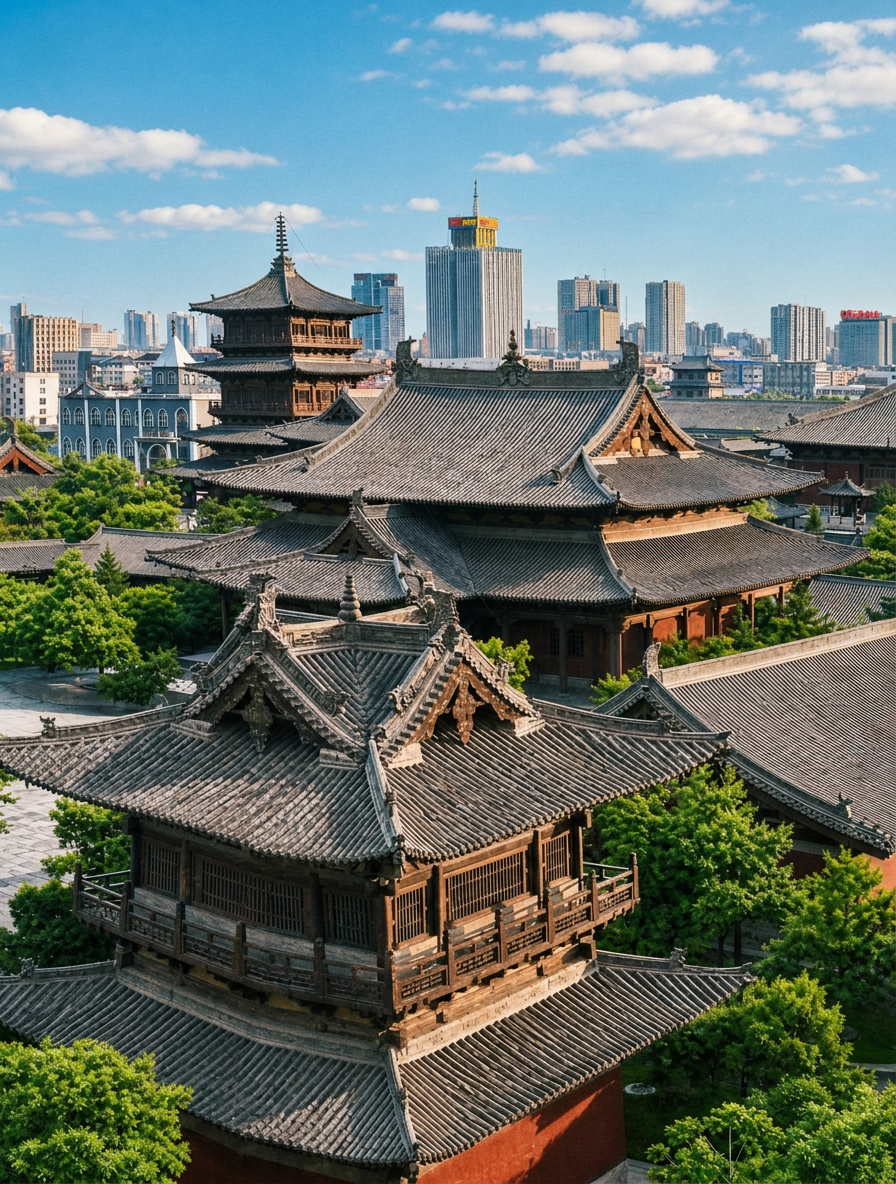
The temple's story begins in 1038, during the seventh year of the Chongxi reign of the Liao dynasty (907–1125), when it was first established as an imperial ancestral temple serving the royal family. Unlike most Chinese Buddhist temples, which traditionally face south, Huayan Temple was constructed facing east, following the customs of the Khitan people who founded the Liao dynasty and who held the sun in particular reverence. This orientation, still visible today, immediately signals to the informed observer that this is no ordinary Buddhist monastery but rather a site deeply entwined with the political and cultural identity of a non-Han dynasty that once ruled much of northern China. In 1062, the temple was expanded and renovated, and it was during this period that imperial statues and bronze images of Liao emperors were installed, reinforcing the temple's status as a royal shrine. Tragedy struck in 1122, when warfare between the Liao and Jin dynasties reduced much of the complex to rubble. Yet from these ashes, the temple rose again – in 1140, during the Jin dynasty (1115–1234), the Mahavira Hall was rebuilt, beginning a new chapter in the temple's long and tumultuous history.
The centuries that followed brought further transformations. During the Ming dynasty (1368–1644), the temple was divided into two separate entities – the Upper Temple and the Lower Temple – each with its own entrance and independent layout. This division persisted until 1963, when the two halves were finally reunited into a single integrated complex. Today, the temple occupies an expansive area of 66,000 square metres, with more than thirty individual structures arranged along two north-south axes. In 1961, Huayan Temple was designated among the first batch of National Key Cultural Relic Protection Sites by the State Council of China, a recognition that underscores its exceptional historical and artistic significance.
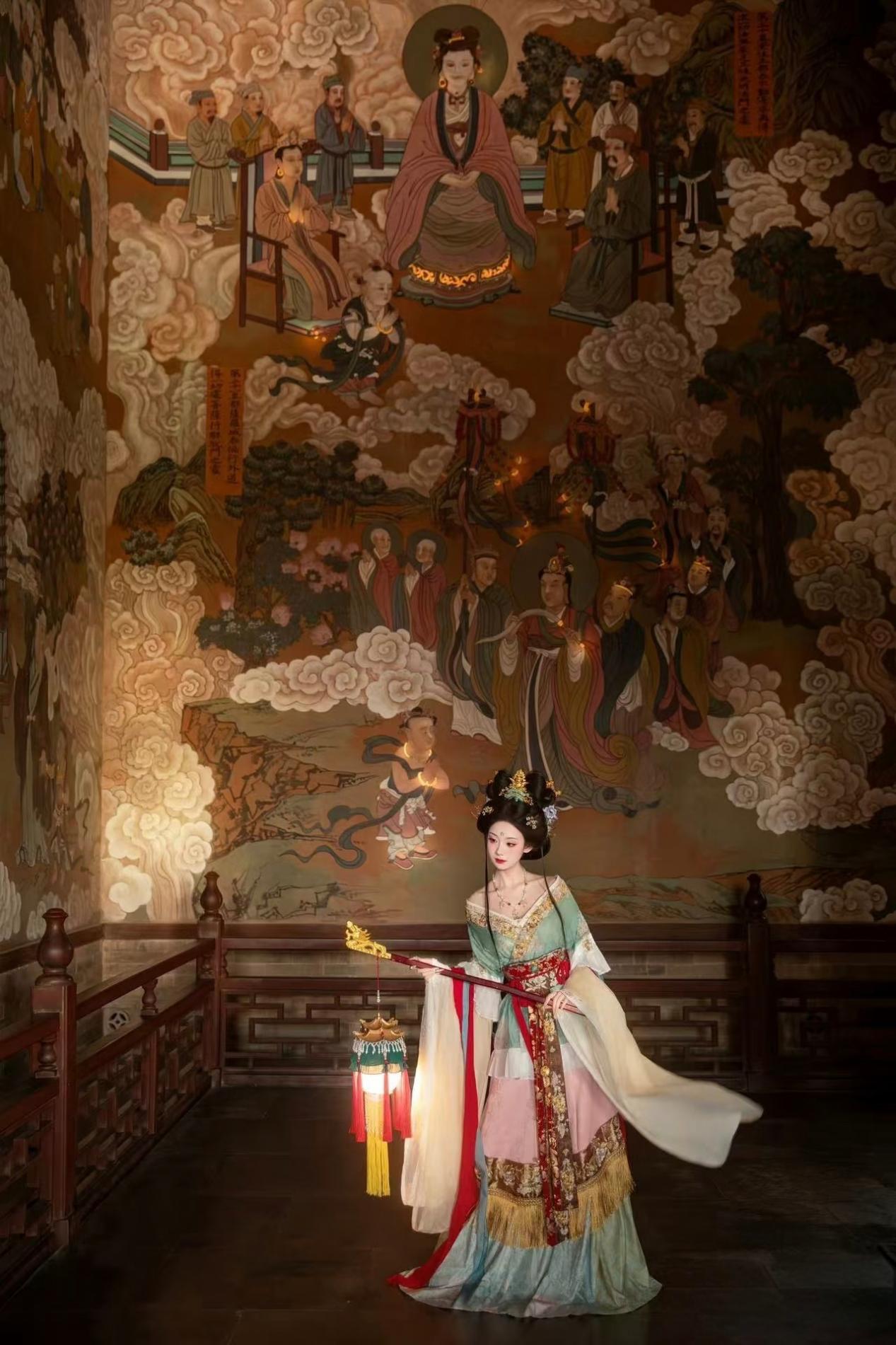
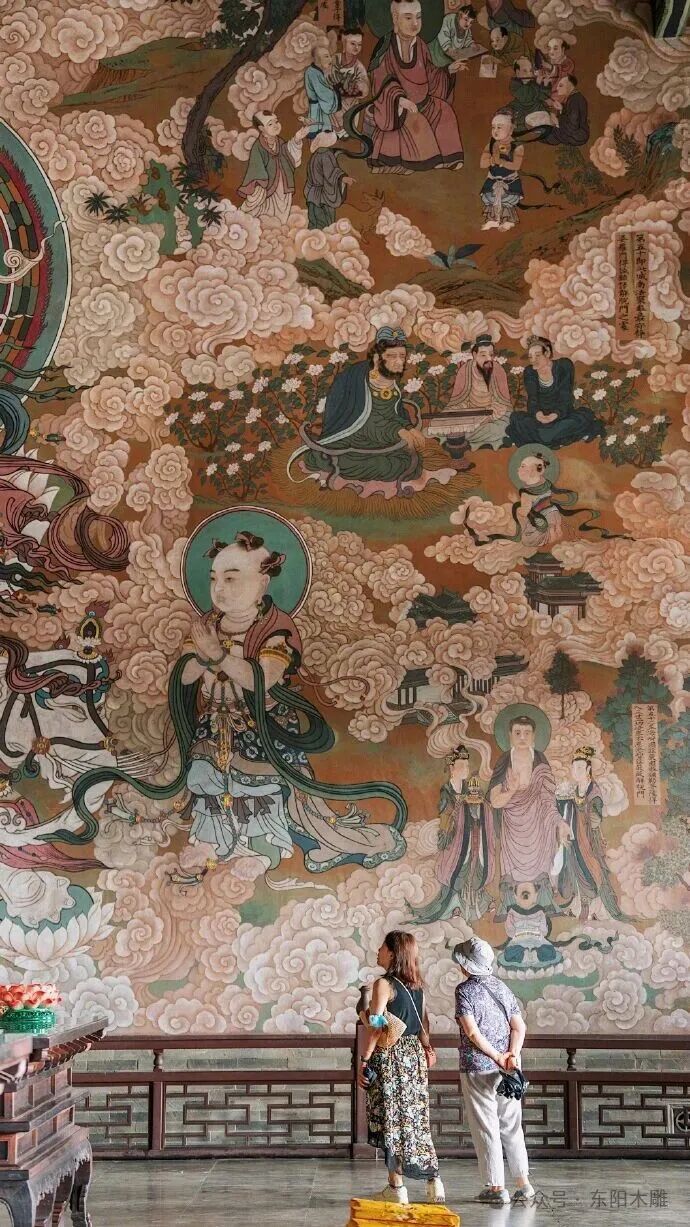
The Upper Temple centres upon the Mahavira Hall, a structure of breathtaking scale and majesty. Rising from a four-metre-high platform, the hall features a single-eave hip roof and measures nine bays wide by five bays deep, making it the largest surviving Buddhist hall from the Liao-Jin period in all of China. Its sheer size inspires awe, yet it is the details that truly captivate. Upon the ridge of the roof perch two monumental chiwen – mythical roof ornaments in the form of dragon-like creatures that swallow the ridge beam. These magnificent sculptures, each standing 4.5 metres tall, are the largest glazed ceramic roof ornaments found in any surviving ancient Chinese building. The example on the right side is an original from the Jin dynasty, while its counterpart on the left was added during the Ming dynasty – together they offer a visible chronology of the temple's long history. Stepping inside the hall, the visitor encounters five monumental principal Buddha statues, flanked on either side by twenty Ming dynasty clay sculptures of celestial guardians. These figures, each leaning forward at an angle of fifteen to nineteen degrees as if ready to spring into action, wear armour and bear ritual implements with an intensity that is almost palpable. The walls are covered with twenty-one enormous frescoes, painted during the Qing dynasty (1644–1911) and restored in the Guangxu era (1875–1908), depicting Buddhist narratives including scenes of the Buddha preaching, the fifty-three visits of Sudhana, and the thousand-armed thousand-eyed Guanyin. Covering an area of more than 875 square metres and featuring over five thousand figures, these murals rank among the largest and most ambitious wall paintings found in any single Buddhist hall in China. Above, the ceiling is adorned with a checkerboard pattern of gilded paintings, each panel uniquely decorated with dragons, phoenixes, flowers and cranes – a breathtaking display of colour and craftsmanship that has survived the centuries remarkably intact.
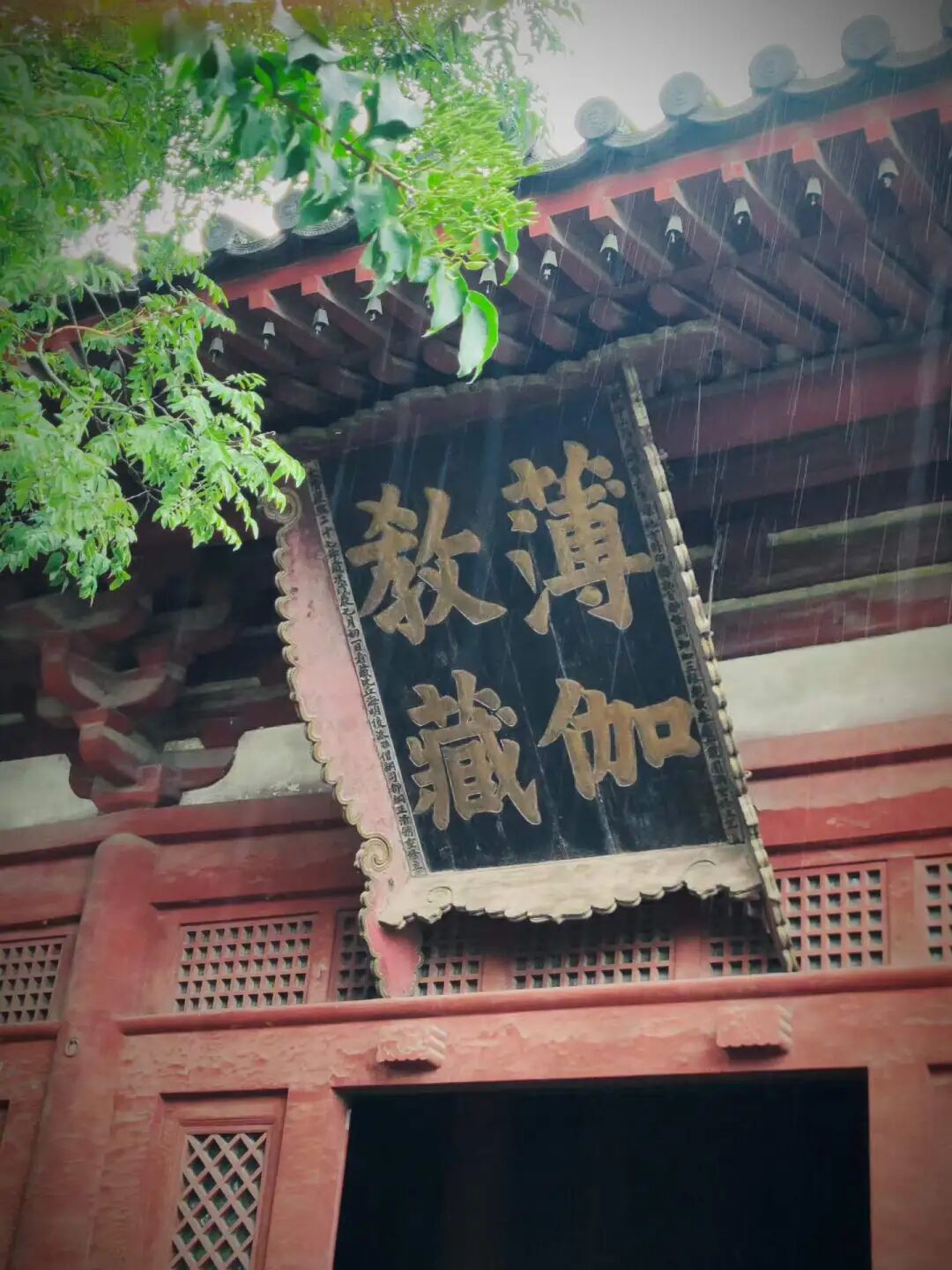
Yet for many visitors, it is the Lower Temple that holds the greatest treasures. At its heart stands the Bhagavad Sutra Hall, built in 1038 and the oldest surviving structure in the entire complex. This hall is one of only eight major Liao dynasty wooden structures still standing in China, and it is the sole completely preserved Liao dynasty scripture hall in existence. Its architecture is a masterpiece of its age: facing east like the temple as a whole, it features a single-eave xieshan (hip-and-gable) roof, with dougong bracket sets layered like blooming lotus flowers beneath the eaves. Inside, the hall employs an innovative column-reduction technique, using only eight supporting pillars to create an unusually spacious interior that seems to defy the structural limitations of its time. This is the earliest known example of this method in Chinese architecture.
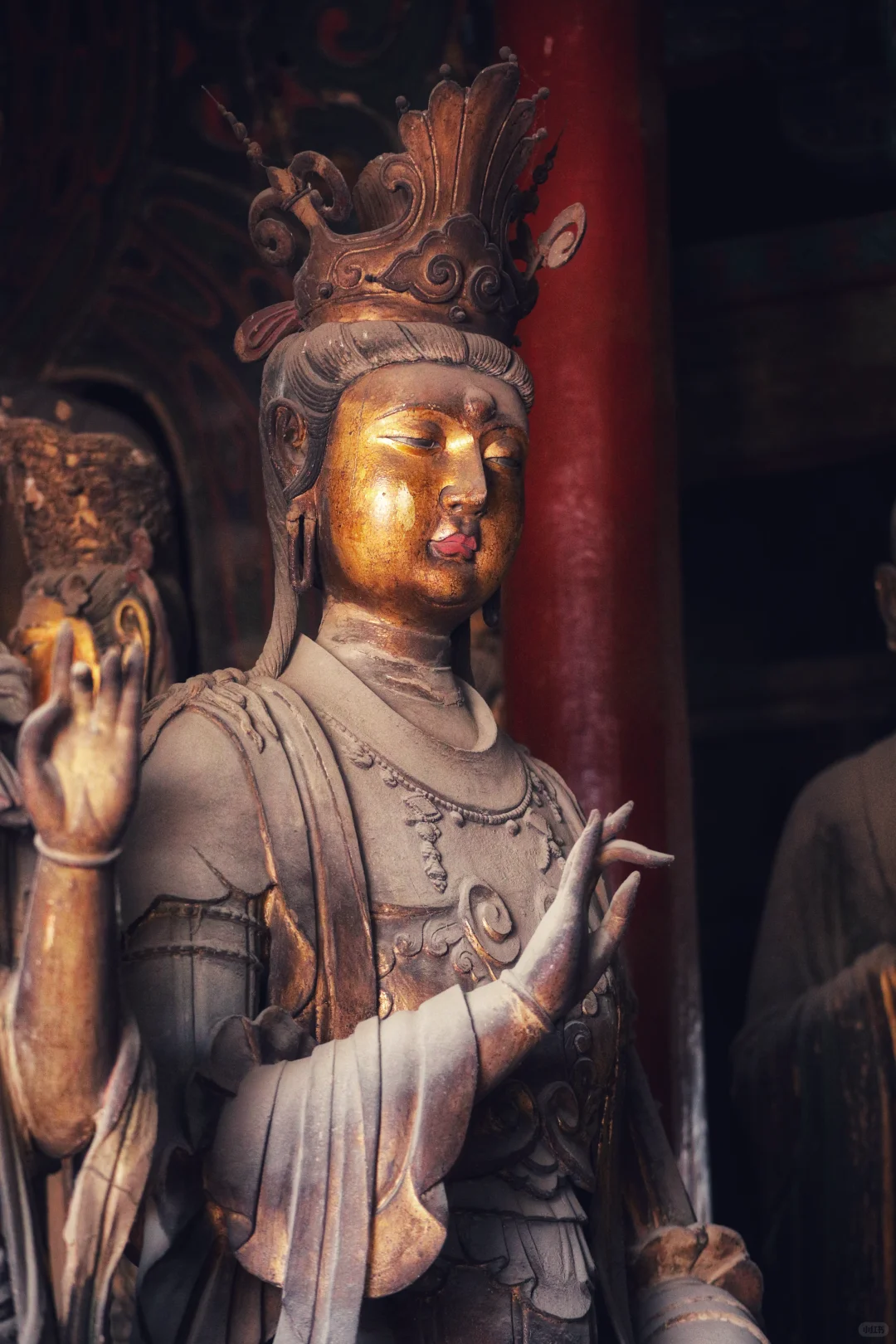
Within the Bhagavad Sutra Hall resides what many consider the temple's crowning glory: thirty-one polychrome clay sculptures from the Liao dynasty, restored during the Jin and Ming periods. These figures, arranged upon a broad altar platform, depict the Buddhas of the Three Ages – past, present, and future – surrounded by disciples, bodhisattvas, and offering attendants in a hierarchical composition of extraordinary sophistication. The gilding that once covered these statues has oxidised over the centuries to a deep bronze colour, lending them an antique patina that only enhances their solemn beauty. Among these figures stands one sculpture that has achieved near-legendary status: the bodhisattva with hands joined in prayer and teeth visible in a subtle smile. Known as the “Hands-Joined Teeth-Baring Bodhisattva,” this figure stands approximately two metres tall, barefoot upon a lotus pedestal, her head adorned with a jeweled crown and two long braids falling gracefully over her shoulders. Her body turns slightly, her weight resting on her right foot, her expression one of serene and almost mischievous warmth. This departure from the solemn, impassive countenance typical of most Buddhist sculpture represents a revolutionary moment in the history of Chinese religious art – a movement toward secularisation and humanity that marked the Liao dynasty's distinctive artistic vision. The historian Zheng Zhenduo, upon seeing this figure, proclaimed it the “Venus of the East,” while the literary scholar Guo Moruo, visiting in 1964, declared it “China's number one sculpture”. Local legend tells of a young woman who disguised herself as a man to assist her father, a craftsman working on the temple; when her deception was discovered and she faced humiliation, she smiled and leaped into molten bronze, and a young artisan, grieving her loss, sculpted her likeness with that final, unforgettable smile frozen upon her lips. Whether history or myth, the story speaks to the profound emotional resonance this sculpture continues to evoke.
Equally remarkable is the hall's interior wall cabinets – thirty-eight miniature wooden pavilions in the form of multi-storey buildings, lining the walls to house Buddhist scriptures. Above these cabinets, a curved arched bridge connects five “Heavenly Palace Pavilions,” creating the illusion of celestial palaces floating among clouds. This intricate wooden miniature, known in Chinese architectural terminology as xiaomuzuo (small woodwork), was hailed by the legendary architect Liang Sicheng as a “unique treasure in the world, the sole example of its kind”. For Liang, who devoted his life to documenting and preserving China's architectural heritage, this Liao dynasty creation represented an irreplaceable link to a lost world of craftsmanship and imagination.
In 2008, a new addition joined the ancient complex: the Huayan Pagoda, a forty-three-metre-tall square wooden structure built using traditional mortise-and-tenon joinery, making it the second-largest wooden pagoda of its kind in China after the famous Yingxian Pagoda. Beneath this pagoda lies a five-hundred-square-metre underground hall, its walls, ceiling, and floor crafted from one hundred tons of pure copper. This subterranean space, shimmering with reflected light, houses a thousand Buddha statues and enshrines the sacred relics of the Yuan dynasty abbot Huiming. Though a modern construction, it continues the temple's tradition of creating spaces of overwhelming spiritual intensity.
Huayan Temple thus presents the visitor with an extraordinary palimpsest of Chinese history and art. Within its walls, one can trace the architectural innovations of the Liao dynasty, the sculptural brilliance of its golden age, the pictorial ambition of Qing dynasty muralists, and the enduring devotional practices that have sustained this sacred site for nearly a thousand years. It is a place where the boundaries between heaven and earth seem to dissolve, where the smile of a single bodhisattva has echoed across the centuries to touch hearts in the present day. For the traveller who seeks not merely to see but to understand the depth and complexity of Chinese civilisation, Huayan Temple offers an experience that is at once humbling and transcendent – a silent, smiling testament to the enduring power of human creativity in the service of the divine.

