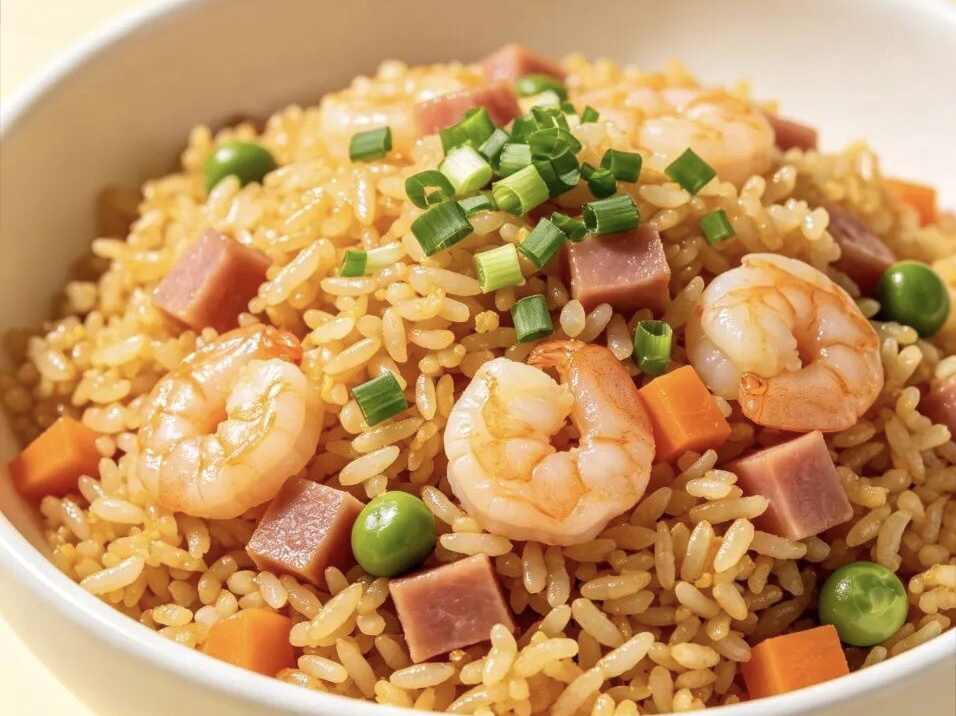


In the vast and varied tapestry of Chinese cuisine, few dishes have travelled as far or been embraced as warmly as the humble yet exalted plate of Yangzhou fried rice. To the uninitiated diner in London or New York, it might appear as little more than a convenient staple—a reliable backdrop to more flamboyant sweet-and-sour pork or fiery mapo tofu. But to those who pause to look closer, this gleaming mound of golden grains tells a story of imperial refinement, maritime commerce, and the quiet genius of Cantonese and Jiangsu culinary traditions. It is not merely fried rice; it is a edible chronicle of Yangzhou, a city that once stood at the crossroads of the Grand Canal and the Yangtze River, where merchants, scholars, and mandarins converged and demanded food that was both nourishing and exquisitely balanced. To understand Yangzhou fried rice is to understand a philosophy of cooking that prizes texture over heat, harmony over excess, and subtlety over spectacle—a philosophy that has quietly conquered palates across the globe without ever raising its voice.
The dish's origins are shrouded in the gentle mist of legend, but most culinary historians agree that its modern form crystallised during the Qing Dynasty, specifically in the bustling kitchens of Yangzhou prefecture. Unlike the fiery wok-hei of Cantonese street food or the numbing spice of Sichuan, Yangzhou fried rice emerged from the refined banquet culture of the Jiangnan region, where cooks were expected to demonstrate their skill not through bold sauces but through precise knife work and impeccable timing. One popular tale attributes its creation to a Qing-era official named Yi Bingshou, who, while travelling through Yangzhou, requested a simple meal from a local chef. The chef, eager to impress, took leftover cold rice and transformed it with ham, shrimp, and spring onions into a dish so luminous that the official declared it a masterpiece. Whether apocryphal or accurate, this anecdote captures the essential soul of the recipe: it is, at its core, an act of culinary resurrection, elevating humble leftovers into something fit for a scholar's table.
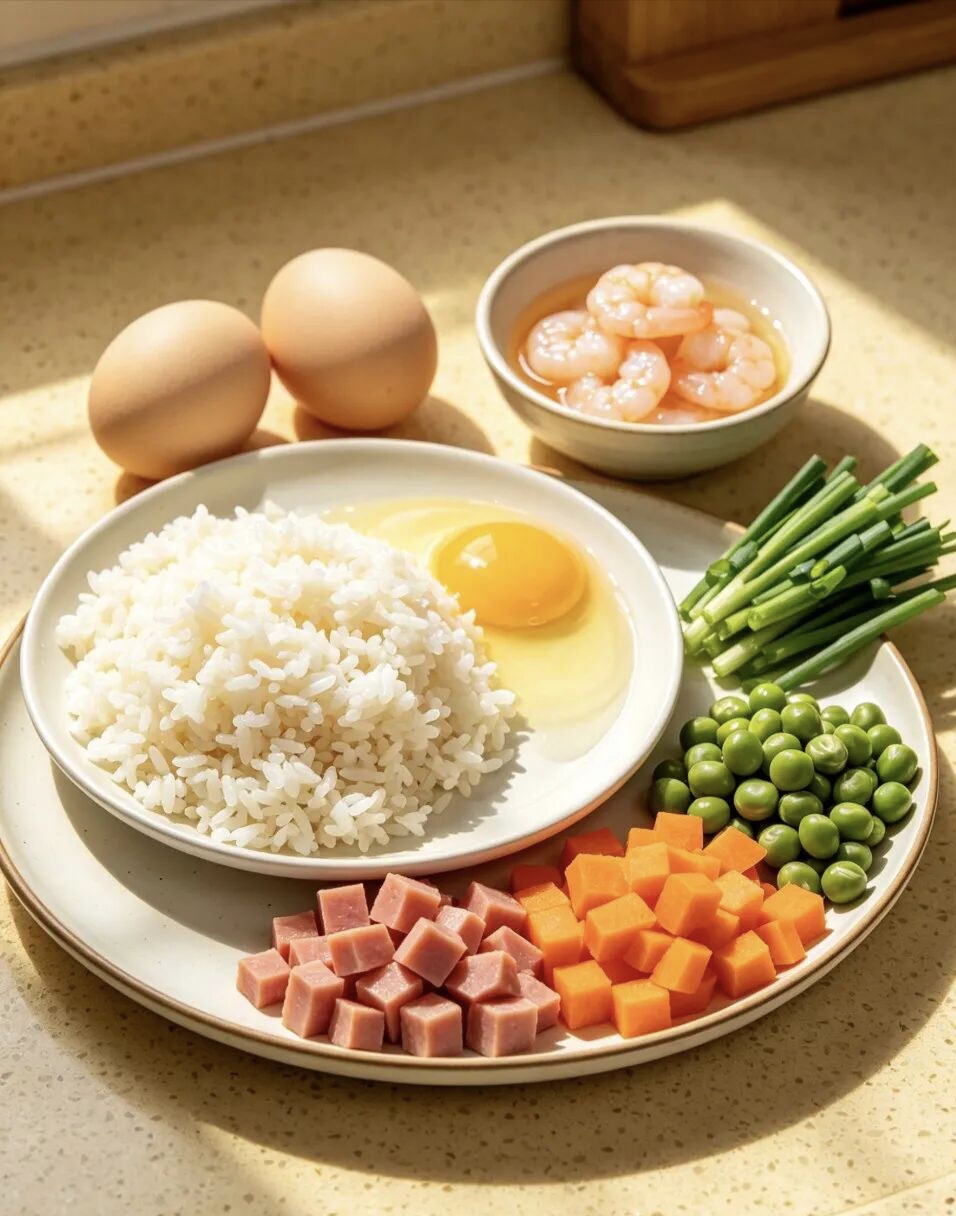
The true genius of Yangzhou fried rice, however, lies not in its ingredients—which are, after all, readily available in any well-stocked pantry—but in the meticulous orchestration of their preparation. The rice itself must be day-old, preferably cooked with slightly less water than usual, so that each grain stands separate and firm. Freshly steamed rice, with its clammy moisture, would turn into a stodgy paste the moment it meets the wok; only aged, chilled rice can achieve that coveted al dente resilience. The chef then proceeds with almost surgical precision: the prized Jinhua ham, a dry-cured treasure from neighbouring Zhejiang, is diced into tiny, uniform cubes no larger than a lentil. Shrimp, peeled and deveined, are cut into similar dimensions, while bamboo shoots, shiitake mushrooms, and carrots are subjected to the same geometric discipline. This is not mere fussiness; it is a foundational principle. When every component shares a comparable size, the final forkful delivers a simultaneous burst of savoury, sweet, earthy, and briny notes, without any single element overwhelming the others. The peas, bright green and plump, are the only concession to irregularity, and even they are chosen for their tender pop against the chewy rice.
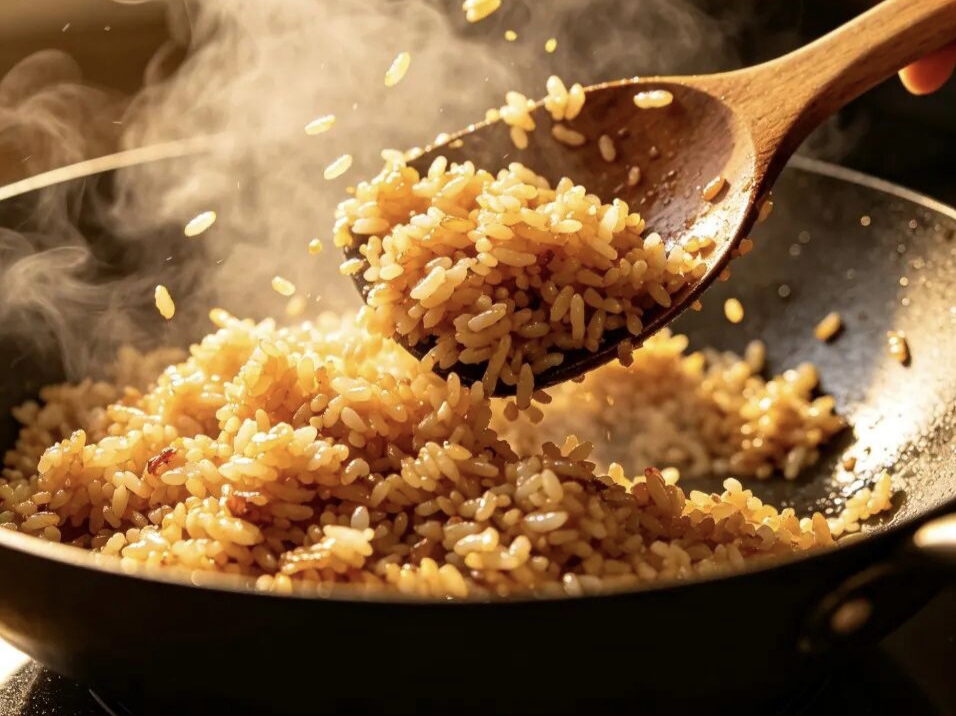
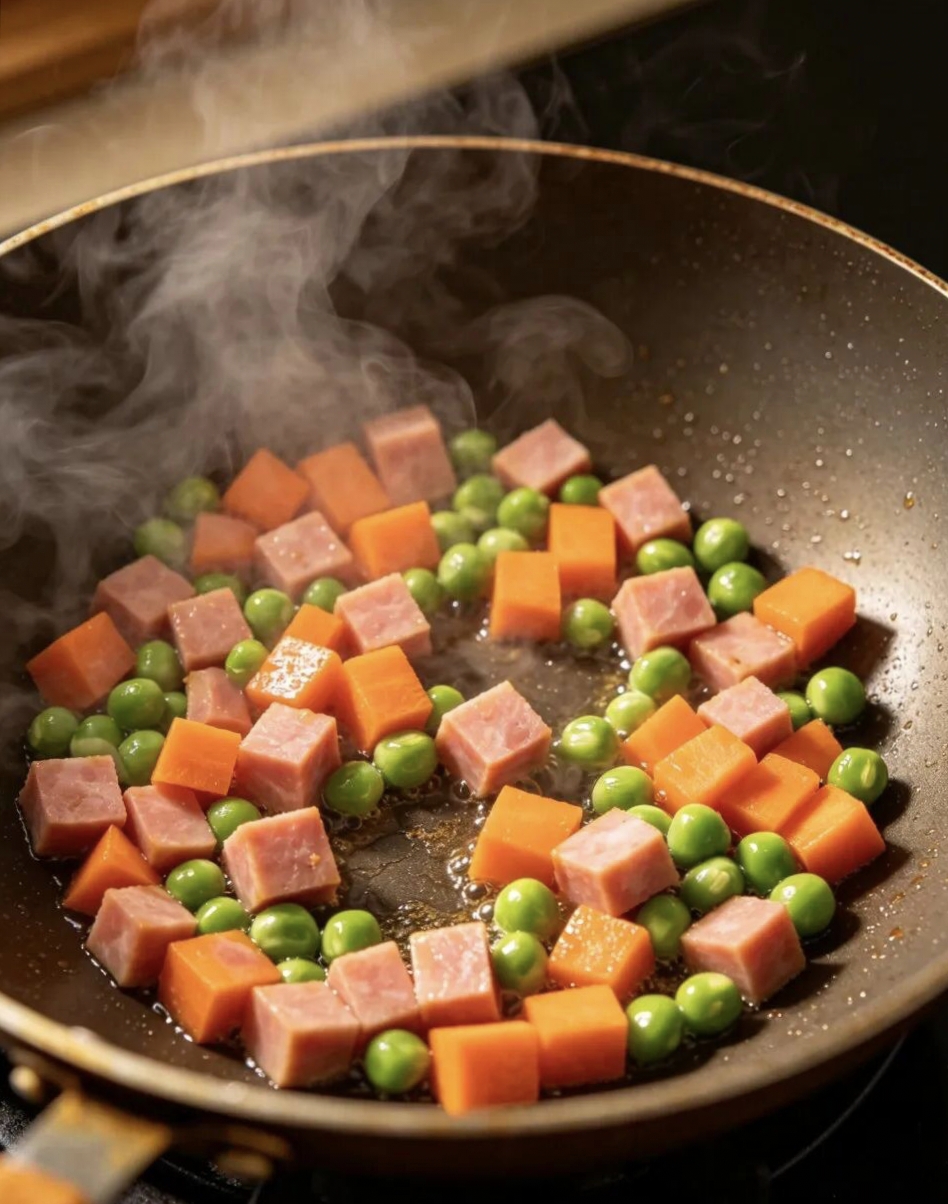
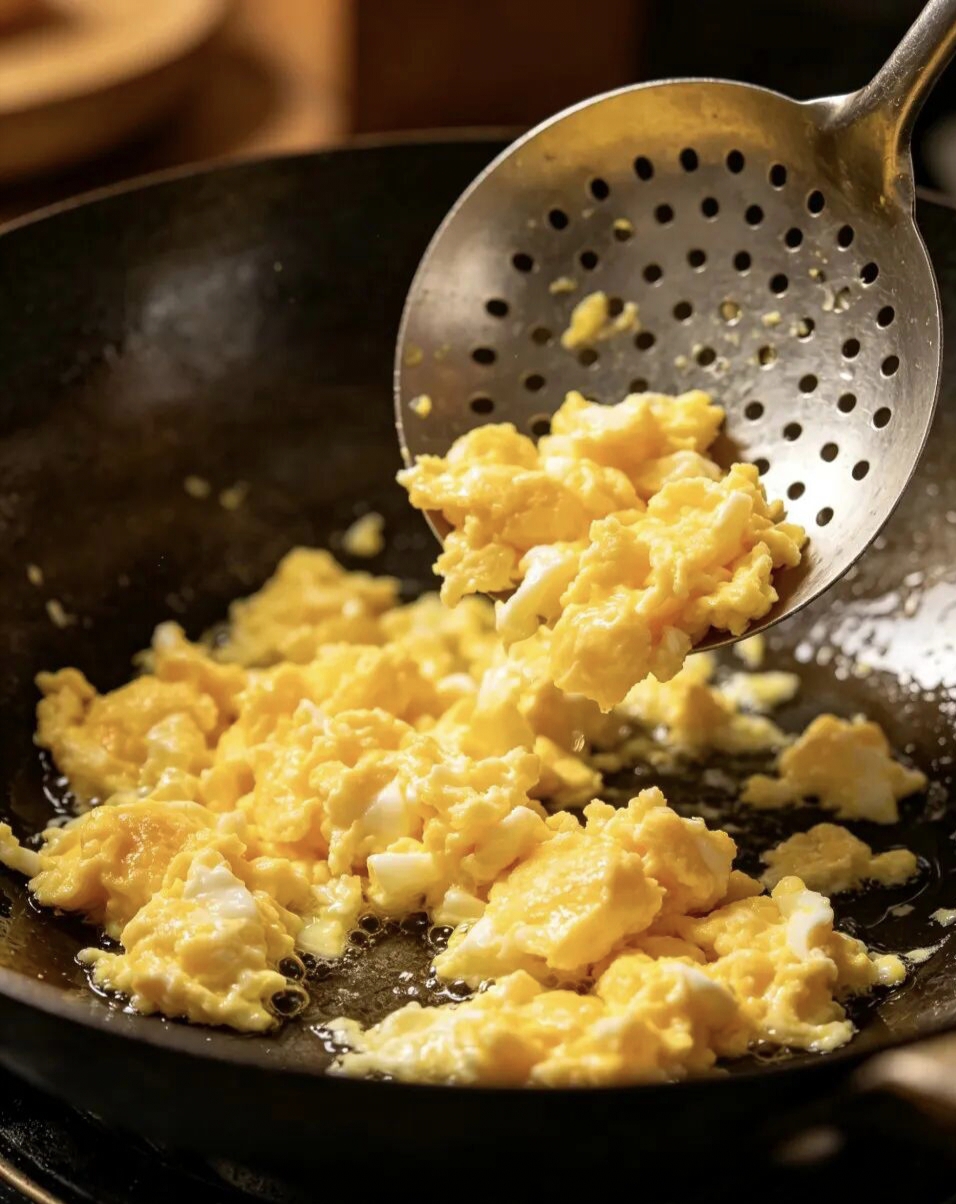
The cooking process itself is a ballet of high heat and swift motion, executed in a seasoned carbon-steel wok that has been heated until it shimmers with a faint blue haze. Oil—traditionally a blend of lard and vegetable oil for richness without heaviness—is swirled to coat the entire concave surface. The eggs, lightly beaten with a pinch of salt, are poured in and scrambled with a flick of the spatula just until they form soft, custardy curds. Crucially, they are not fully cooked at this stage; they are removed to a side bowl while the other ingredients take their turn. The ham and shrimp are flash-fried for mere seconds, releasing their aromatic fats, followed by the vegetables, which are tossed until they glisten but retain their crunch. Only then does the cold rice enter the wok, broken up with the back of the spatula and turned repeatedly so that every grain is coated in the residual oil and mingles with the colourful medley. The eggs are returned, and the entire assembly is seasoned with nothing more than a whisper of sea salt and a dash of light soy sauce—never dark, for that would muddy the golden hue. The final flourish is a generous handful of finely chopped spring onions, scattered just as the heat is killed, so their raw pungency cuts through the richness like a fresh breeze. The entire operation, from first crack of the egg to final toss, rarely exceeds three minutes; any longer, and the rice would dry out, the shrimp would turn rubbery, and the vegetables would weep their moisture into the mix.
What distinguishes Yangzhou fried rice from its countless imitators is this very restraint. In many Western Chinese restaurants, the dish is often overloaded with peas, carrots, and scrambled eggs, then drenched in dark soy sauce or even ketchup, resulting in a muddy brown mess that bears little resemblance to the original. Authentic Yangzhou fried rice is unmistakably pale gold, each grain distinct and lightly glistening, with the colours of the add-ins peeking through like jewels in a mosaic. It is never greasy; when the wok is tilted, not a single drop of excess oil should pool at the bottom. The flavour profile is layered but subtle—the umami of the ham, the sweet brine of the shrimp, the earthiness of the mushrooms, and the grassy note of the peas all coexist in a delicate equilibrium. There is no garlic, no ginger, no chilli—not because they are unwelcome in Chinese cooking, but because they would bulldoze the very delicacy that the dish seeks to celebrate. This is food for a contemplative meal, not a raucous feast; it pairs beautifully with a clear soup and a plate of blanched greens, allowing the palate to appreciate each grain's individual texture.
The global journey of Yangzhou fried rice is itself a fascinating parable of cultural adaptation. When Cantonese immigrants brought their wok skills to Southeast Asia and then to the United States and Europe in the nineteenth and twentieth centuries, they carried this recipe as a reliable crowd-pleaser. In Honolulu, it became a staple of plate lunches; in London's Chinatown, it was served alongside crispy duck and prawn crackers; in Mumbai, it was given a local twist with turmeric and cashews. Yet despite these regional variations, the core technique—the separate cooking of eggs, the use of leftover rice, the quick high-heat toss—remained remarkably faithful. In 2014, the Chinese government even attempted to standardise the recipe through an official national guideline, specifying that an authentic Yangzhou fried rice must contain at least three of four premium ingredients: ham, shrimp, chicken, and sea cucumber. While this move was met with some amusement—and indeed, resistance from chefs who valued creativity over codification—it underscored the dish's symbolic weight as a culinary ambassador. It is no exaggeration to say that for millions of foreigners, this golden plate is their first and most enduring memory of Chinese food, the comforting bridge between the familiar and the exotic.
Nutritionally, Yangzhou fried rice offers a remarkably balanced profile, which may explain its enduring popularity among health-conscious diners. The carbohydrates from the rice provide sustained energy; the eggs and shrimp supply high-quality protein; the vegetables contribute dietary fibre and essential vitamins; and the ham, though salty, delivers a concentrated dose of minerals. A single portion, typically around 300 grams, contains roughly 400 to 500 calories, making it a satisfying yet not excessive main course for an active adult. More importantly, the dish's low water content and high salt concentration from the cured ham mean it keeps well for hours, which historically made it a favourite for picnic lunches and railway journeys across China. Even today, many Yangzhou natives recall childhood memories of their grandmothers packing fried rice into lacquered wooden boxes for school outings, the aroma of ham and scallion escaping through the lid like a promise of joy.
Yet for all its simplicity, mastering Yangzhou fried rice is considered a rite of passage for any serious Chinese chef. Culinary schools in Shanghai and Guangzhou devote entire modules to its execution, testing students on their ability to control flame temperature, judge oil viscosity, and achieve that elusive "wok breath" —the faint charred fragrance that comes from kissing the rice against the hot metal without burning it. A flawed batch is immediately detectable: the rice clumps, the eggs form dry flecks, the ham turns leathery, or the peas become wrinkled. Perfection, on the other hand, produces a dish that is almost ethereal—each spoonful offering a gentle crunch from the bamboo shoots, a soft yielding from the shrimp, a salty chew from the ham, and a creamy richness from the egg, all bound together by the neutral, fluffy rice. It is a symphony of contrasts that never clashes, a testament to the Chinese aesthetic of he (harmony), which prizes balance above all else.
In contemporary Yangzhou, the dish has become a source of fierce civic pride. The city hosts annual fried rice festivals, where local chefs compete for the title of Grand Master, judged by a panel of food critics and randomly selected diners. Tourists flock to historic restaurants such as Shouxing Lou and Yechun Yuan, where the recipe has been passed down through generations, each chef adding a minuscule personal touch—a drop of Shaoxing wine, a pinch of white pepper, a swap of scallion for chive—while never betraying the foundational canon. Visitors often remark with surprise that the Yangzhou fried rice they taste in China is far less salty and far more fragrant than the versions they have encountered abroad; the difference, they learn, lies in the quality of the ham and the freshness of the shrimp, which are sourced daily from local wet markets. This is not a dish that can be rushed or replicated by mass-produced frozen packs; it demands the human hand, the watchful eye, and the instinctive flick of the wrist that only years of practice can hone.
Beyond its gastronomic merits, Yangzhou fried rice carries a deeper cultural resonance that resonates with the globalised diner. In an age of fast food and single-use packaging, this dish stands as a quiet rebuttal to wastefulness—it was born from the thrifty use of leftovers, yet it transforms them into something precious. It teaches the cook that constraint breeds creativity, that limitation is not impoverishment but opportunity. It also embodies the Chinese virtue of re nao (liveliness) through its cheerful rainbow of colours, yet simultaneously embodies the Zen-like calm of jing (stillness) in its composed, uncluttered presentation. For the foreigner who takes the time to learn its story, each bite becomes a meditation on history, geography, and human ingenuity—a reminder that the simplest foods often carry the most profound narratives.
As the evening light falls over the ancient canals of Yangzhou, casting amber reflections upon the water, locals and visitors alike gather around round tables to share this emblematic dish. They eat it with porcelain spoons, not chopsticks, for it is easier to scoop up the scattered jewels that way. They accompany it with a pot of jasmine tea, whose floral notes cleanse the palate between mouthfuls. They talk, they laugh, they argue gently about which restaurant makes the finest version—but they all agree that a plate of true Yangzhou fried rice is more than sustenance; it is a taste of home, even for those who have never set foot in Jiangsu. For the Western reader, this dish offers an accessible gateway to a cuisine often perceived as intimidatingly complex. It requires no exotic utensils, no forbidding spices, no elaborate fermentation—only good rice, fresh eggs, quality ham, and the patience to let each grain shine. In that sense, Yangzhou fried rice is the ultimate culinary diplomat: humble, honest, and irresistibly golden. It whispers, rather than shouts, its brilliance—and that whisper has carried across oceans and generations, proving that the most enduring flavours are not the loudest, but the truest. And so, the next time a fork descends into that glistening mound, the diner might pause to appreciate not just the taste, but the millennia of wisdom, the tidal flow of trade, and the unbroken chain of cooks who have insisted, against all culinary fashion, that rice, when treated with respect, can ascend to the level of art. That is the quiet majesty of Yangzhou fried rice—a golden mosaic that feeds both body and soul, one perfect grain at a time.