


The Pearl of the World's Roof: The Potala Palace, a religious monument suspended amidst the clouds
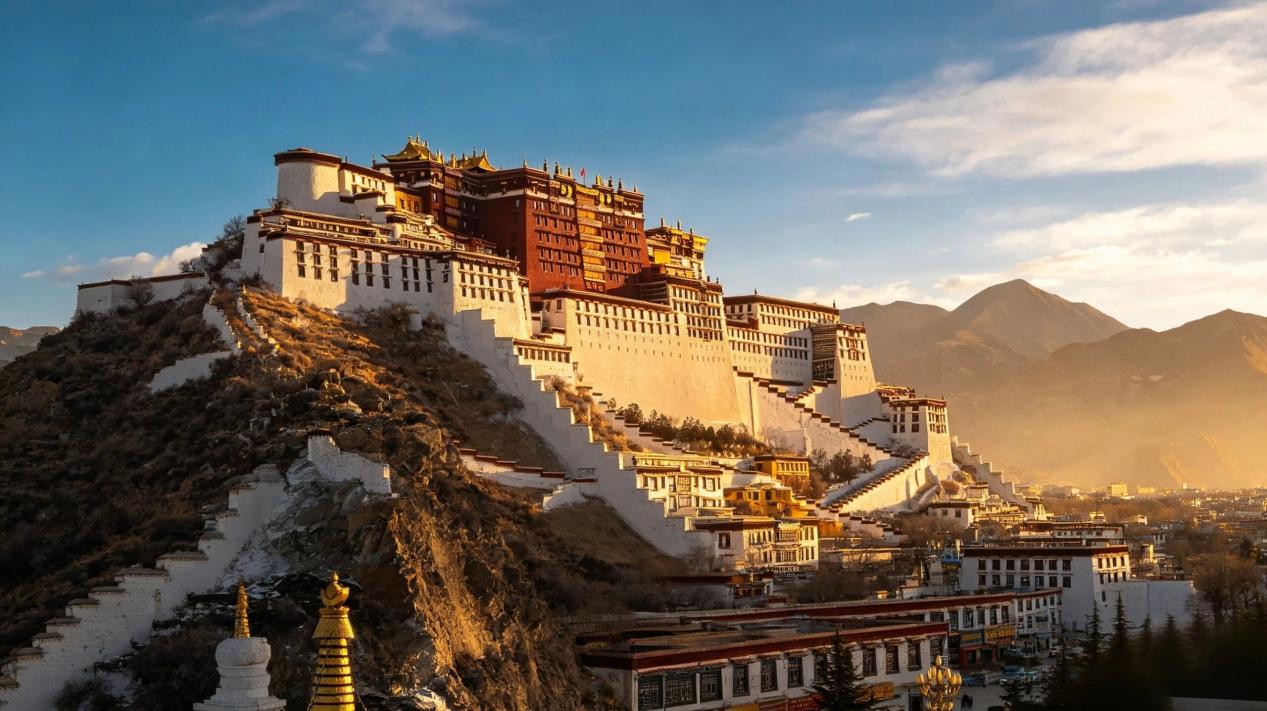
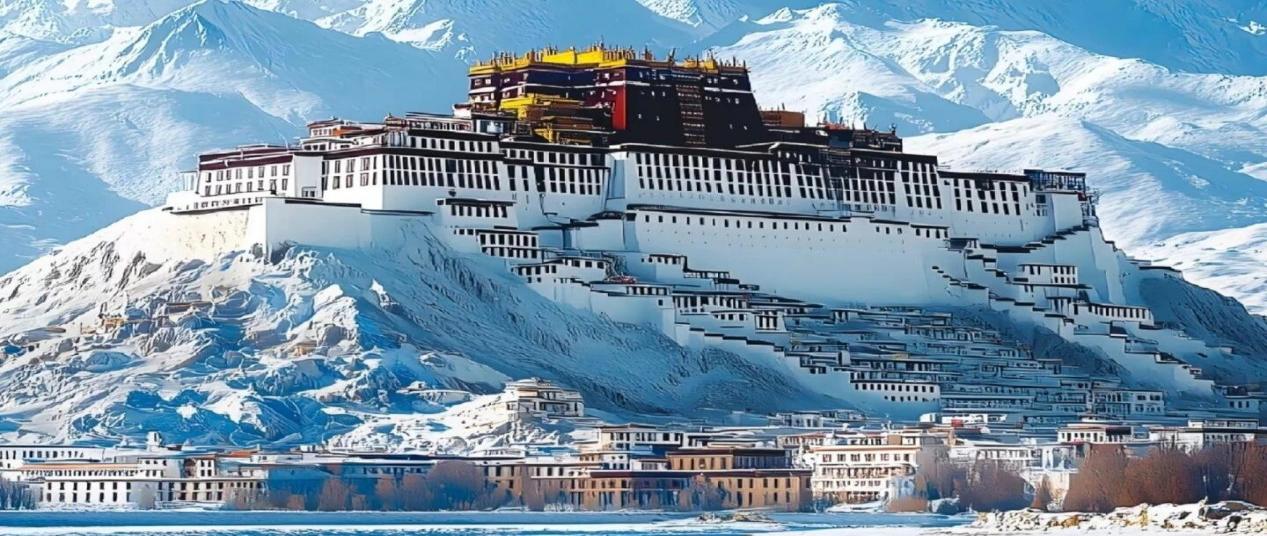
On the Red Hill at an altitude of 3,700 meters in the Lhasa Valley, a massive palace complex in red and white overlooks the entire sacred city. In 1994, the Potala Palace was inscribed on the UNESCO World Heritage List; the Jokhang Temple followed in 2000, and the Norbulingka in 2001 as part of expanded listings. UNESCO described these three sites as "exquisitely built with innovative designs that harmonize perfectly with their natural surroundings." From the wedding palace of the Tibetan kings in the seventh century to the political and religious center reconstructed by the Fifth Dalai Lama in the seventeenth century, this architectural ensemble—referred to as the "pearl on the roof of the world" —has told for over 1,300 years a story about how faith, power, and art converge amidst the high-altitude landscape.
I. From Hongshang Palace to the Political and Religious Center: A Vertically Growing Xizang Epic
The story of the Potala Palace dates back to 637 AD. Tibetan Emperor Songtsen Gampo built a nine-story palace fortress on Red Mountain to host the wedding between Princess Bhrikuti of Nepal and Princess Wencheng of the Tang Dynasty. However, this original "Red Mountain Palace" was destroyed by wars and lightning strikes over the following centuries, gradually falling into ruins.
The true transformation of the Potala Palace into its present form was achieved through the grand reconstruction undertaken by the Fifth Dalai Lama in the 17th century. In 1645, he ordered the construction of the White Palace on the site of Songtsen Gampo's former residence—a thirteen-story palace complex that served as the Dalai Lama's winter administrative headquarters. The East Hall of the White Palace hosted major ceremonial events, while the Sunlight Hall, named for its constant exposure to sunlight, functioned as the Dalai Lama's daily living quarters and office. Following the Fifth Dalai Lama's passing, Depa Sangye Gyatso initiated construction of the Red Palace in 1690, which took three years to complete. The main structure of the Red Palace houses the stupa halls of successive Dalai Lamas; the stupa of the Fifth Dalai Lama stands 12.6 meters tall, crafted from over 3,000 kilograms of gold and adorned with more than ten thousand gemstones. Together, the White Palace (white) and the Red Palace (red)—symbolizing secular governance and religious sanctity respectively—form the very soul of the Potala Palace, demonstrating how secular authority and religious reverence coexist harmoniously on this mountain.
II. Three Points Form a Line: The World Heritage Puzzle of the Jokhang Temple and the Norbulingka
The Potala Palace is not an isolated architectural marvel. In 2000, the Jokhang Temple, originally constructed in the seventh century, was included in the same World Heritage site; in 2001, the Norbulingka, built in the eighteenth century, followed suit. Together, these three structures form a complete narrative of the "Historic Architectural Complex of the Potala Palace in Lhasa."
The Jokhang Temple is one of the earliest Buddhist monasteries in Xizang. According to legend, Princess Wencheng calculated that the terrain of Xizang resembled a reclining witch, and thus required a temple to be built at its heart point for suppression—hence the Jokhang Temple was constructed precisely at this feng shui acupoint. Inside the temple stands a life-sized statue of Sakyamuni brought by Princess Wencheng from Chang'an, which Tibetan Buddhist devotees regard as the most sacred image in the world. The Barkhor Street surrounding the Jokhang Temple has witnessed continuous prayer pilgrimages for thirteen centuries without interruption.
The Norbulingka, however, presents another distinct landscape—it serves as the summer palace garden of the Dalai Lama. This "treasured garden" integrates Tibetan-style palaces, pavilions, towers, and garden artistry, combining the solemnity of a White Palace with the vitality of Jiangnan gardens. Three sites, each serving a different function—the Winter Palace, the monastery, and the Summer Palace—form a three-dimensional index to the history of Xizang, allowing visitors to grasp three facets of the plateau civilization within a single city.
III. From Missionary Sketches to Global Attention: The Overseas Perception Journey of the Potala Palace
The Western world first "saw" the Potala Palace much earlier than most people imagine. In 1661, European missionary Johann Grueber drew a sketch of the White Palace during his visit to Lhasa. In 1667, German Jesuit scholar Athanasius Kircher included this illustration titled "Bietala" in his work *China Illustrata*—marking the first recorded image of the Potala Palace seen by Europeans.
Over the following three centuries, the image of the Potala Palace gradually spread through explorers 'notes, travelers' photographs, and academic works. In the 20th century, with the rise of Xizang photography and Western Tibetan studies research, the Potala Palace became the most central visual symbol for global understanding of Xizang. After its successful inscription on the World Heritage List in 1994, its international reputation soared significantly. Today, the Potala Palace receives a daily maximum of 7,000 visitors, including numerous pilgrims and travelers from around the world. The management office reserves 3,000 tickets annually, which are allocated to foreign tourists through local tourism authorities. From Indian scholars to European journalists, an increasing number of international visitors have personally witnessed at the steps of the Potala Palace that what one sees firsthand about Xizang is far richer than what one hears indirectly.
IV. Three Thousand Seven Million Gazeings: The Balance Between Openness and Protection
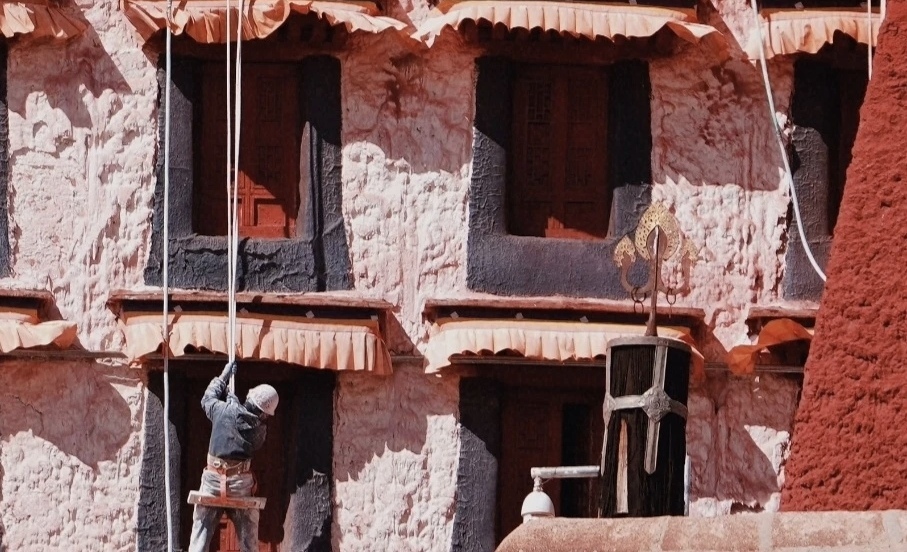
For over three decades since its successful inscription on the World Heritage List, the Potala Palace has attracted global attention while enduring unprecedented pressures. The massive influx of visitors has had a lasting impact on the structure—measurable deformations occur in the wooden framework during both peak tourist seasons and Tibetan New Year pilgrimage periods. Fortunately, these deformations resolve themselves at night when visitor numbers decline; however, the cumulative stress remains a significant concern.
Technology has become a vital ally for the guardians of the Potala Palace. In 2012, the first phase of its structural monitoring system was commissioned, installing 376 fiber-optic grating strain sensors throughout the building—these sensors transmit data exclusively via optical signals rather than electrical ones, completely eliminating safety risks associated with electricity and fire in ancient structures. The second phase of the system was launched in 2020, expanding coverage to ground ridges, walls, and caves with 388 additional sensors deployed. A mountain environment monitoring system was further established in 2023. From wooden frameworks to wall ridges and the surrounding terrain, this comprehensive monitoring network has enabled guardians to systematically "understand" the "的声音" and "heartbeats" of the Potala Palace for the first time. Since December 2025, the palace has implemented a Monday closure policy—a decision based on scientific analysis of structural monitoring data accumulated over nearly two decades.
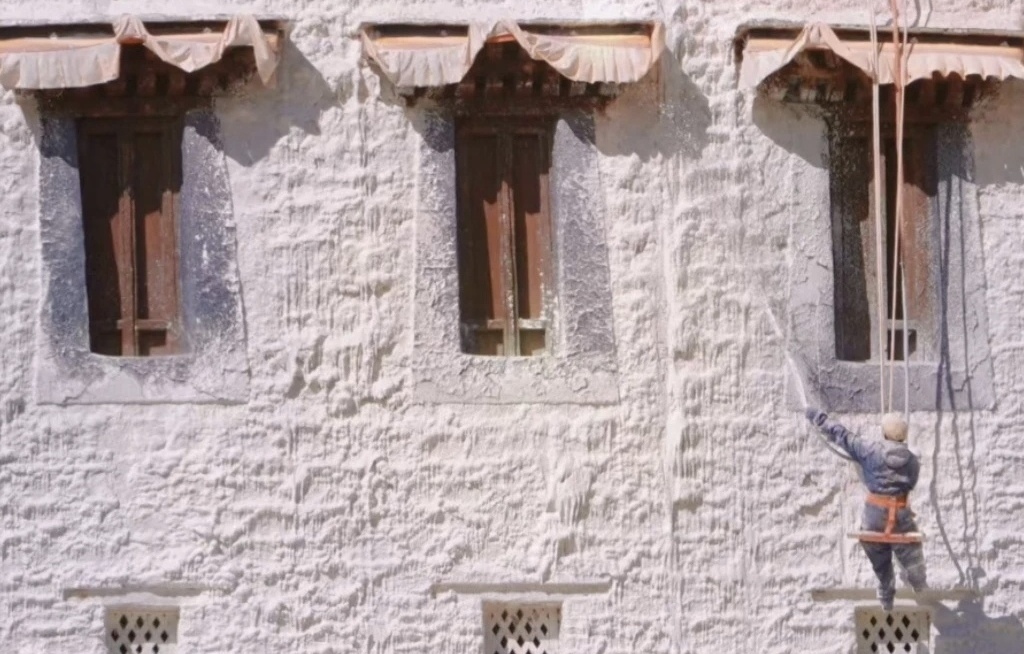
Meanwhile, the "Digital and Intelligent Potala" project is progressing steadily. Visitors can simply wear VR glasses to "enter" areas not open to the public; the integrated management platform combines 12 subsystems including power monitoring and fire warning systems; between 2025 and 2028, tens of thousands of ancient texts and palm-leaf manuscripts will undergo conservation and restoration. All these efforts address a single question: How can a 1,300-year-old structure maintain its solemnity and integrity after being viewed 37 million times?
For every traveler ascending Red Hill, the Potala Palace offers far more than a landscape on a postcard. It is the brilliance of the first morning sunlight illuminating the Golden Summit; the prayer wheels on the White Palace walls polished smooth by pilgrims 'hands; the murals faintly visible against the flickering butter lamps in the Sacred Stupa Hall; and the awe-inspiring sight of Lhasa's entire city unfolding beneath your feet from an altitude of 3,700 meters. As you ascend step by step along the zigzagging stone steps, your breath deepens and slows in the thin air—then you realize that the Potala Palace is never merely a palace to be admired from afar. It represents a pinnacle of civilization that can only be truly understood through personal ascent, quietly conveying to every visitor that great architecture is not simply a pile of stones and wood, but the courage of a nation to build faith upward, inch by inch.

