


The Buddhist Kingdom on Stone Walls: The Longmen Grottoes – an epic of Eastern civilization carved into stone
Along the limestone cliffs stretching for one kilometer on both banks of the Yi River, more than 100,000 Buddhist statues have stood silently for fifteen centuries. In 494 AD, Emperor Xiaowen of the Northern Wei Dynasty moved the capital from Pingcheng to Luoyang, and the accompanying imperial nobles and monks carved the first chisel into the cliff face on the west bank of the Yi River—they could not have imagined that this strike would mark one of the longest-lasting and most magnificent stone carving projects in human civilization history. In 2000, the Longmen Grottoes were inscribed on the UNESCO World Heritage List, with the evaluation committee describing them as "representing the pinnacle of China's stone carving art." Today, over a million international visitors visit annually along the Yi River, pausing before the weathered statues in an attempt to understand the stories of Eastern faith and aesthetics told by this cliffside Buddhist realm.
I. Four Centuries of Mountain-Carving into History: From the Beliefs of the Northern Wei Dynasty to the Grandeur of the Tang Dynasty
The excavation of the Longmen Grottoes represents a collective endeavor spanning seven centuries. Commencing during the Taihe era of the Northern Wei Dynasty (493 AD), it progressed through the Eastern Wei, Western Wei, Northern Qi, Sui, and Tang dynasties, concluding in the early Northern Song period, covering a construction period of over four hundred years. Today, the site comprises 2,345 caves, more than 70 Buddhist pagodas, over 2,800 stone inscriptions, and approximately 110,000 statues—equivalent to an average of nearly 300 Buddha statues carved onto the rock face each year.
The cave temples of the Northern Wei period are best represented by Guyang Cave and Binyang Middle Cave, featuring Buddha statues with slender features, flowing robes, and wide sashes, embodying a "slender bones and refined features" style that blends Xianbei aristocratic aesthetics with those of the Central Plains. The Tang Dynasty marked the pinnacle of stone carving art—the group statues at Fengxian Temple, carved during Empress Wu Zetian's reign, include the principal statue, the Vairocana Buddha, which stands 17.14 meters tall, with a head height of 4 meters and ears measuring 1.9 meters. The Buddha's face is full and rounded, with slightly raised lips and a downward gaze, widely regarded by scholars as the "Oriental Mona Lisa." Legend holds that the Buddha's facial features were modeled after Empress Wu Zetian's appearance to underscore the sacred authority of the emperor, symbolizing the idea that "the Buddha is the sovereign." The entire ensemble of statues at Fengxian Temple exhibits a meticulously planned layout with clear hierarchical relationships, seamlessly blending religious solemnity with human warmth—a sight that still leaves visitors in awe.
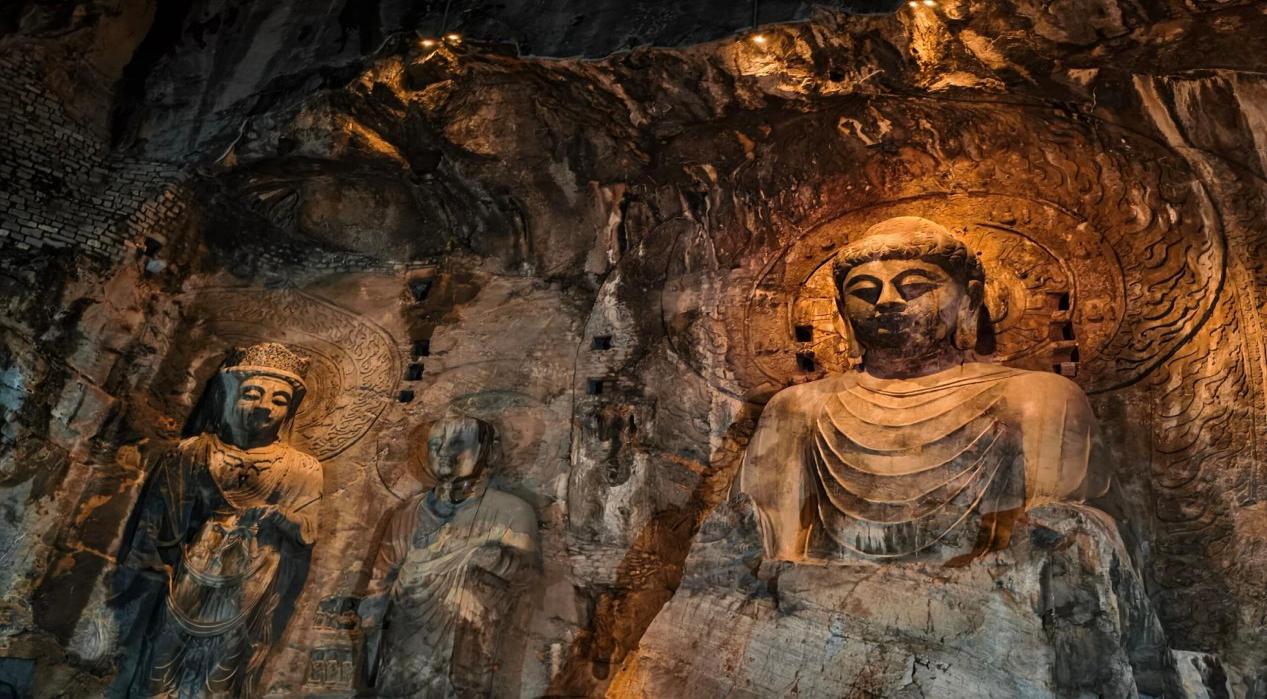
II. Carving Stones into Classics: The Dialogue of Civilizations in the Longmen Stone Carvings
The Longmen Grottoes are not only a treasure trove of Buddhist art but also a living testament to the exchange of civilizations etched into stone. In the Guyang Cave, one can observe clothing texture treatments characteristic of the Indian Mathura style; in the southern Binyang Cave, Persian Sassanian dynasty beadwork patterns are clearly visible; and within numerous relief sculptures depicting flying celestial musicians, the pipa and Qiang flute from the Western Regions harmonize with the sheng and xiao from Central China. These details demonstrate that Longmen was not merely a site of Buddhist Sinicization but also tangible evidence of the convergence of diverse cultures along the Silk Road.
The most illustrative example of this integration is undoubtedly the "Twenty Inscriptions from Longmen" —nineteen sculptural records from the Northern Wei period and the "Yique Buddhist Niche Stele" calligraphed by Chu Suiliang in the Tang Dynasty. These works not only represent the pinnacle of Wei stele script in the history of China's calligraphy but also document the diverse identities of the donors, spanning different social classes and ethnic backgrounds, including Xianbei nobles, Han officials, and merchants from the Western Regions. Behind each sculpture lies a story of devotion: some pray for their deceased mothers, others seek peace for relatives caught in war, and still others offer prayers for national unity. The Longmen Grottoes demonstrate in the simplest way that faith never exists in isolation; it always evolves through migration, collision, and integration.
III. From the Explorer's Lens to World Cultural Heritage: The History of Longmen's International Recognition
The first systematic "observation" of the Longmen Grottoes by the Western world began in the early 20th century. In 1907, French sinologist Edouard Chavannes arrived in Luoyang with a camera, taking numerous photographs of the grottoes which were later included in his monumental work *Archaeological Illustrations of Northern China*. Subsequently, Japanese scholar Tadashi Sekino and Swedish scholar Osvald Siren conducted thorough investigations, bringing images and line drawings of the Longmen carvings back to academic circles in Europe and America. Siren wrote in his publication: "The serenity of these Buddhist statues surpasses any divinity conveyed by known Greek or Roman sculptures." Since then, the Longmen Grottoes have become an essential subject in the study of East Asian art history.
After World War II, the influence of Longmen further expanded. Many temple sculptures in Kyoto, Japan, are clearly influenced by the Tang Dynasty style of Longmen; the sculptural arrangements at Korean grotto temples also reflect the impact of Fengxian Temple. In the 1970s, the Longmen Grottoes participated in the "China Art Exhibition" in London, UK, where their rubbings and replicas caused a sensation among European audiences. Following its successful inscription on the UNESCO World Heritage List in 2000, the Longmen Grottoes have become one of the three essential destinations for international visitors to understand Chinese Buddhist art, alongside the Mogao Caves and Yungang Grottoes. Today, both the British Museum and the Metropolitan Museum of Art in New York feature dedicated exhibition sections on Longmen, while annual academic conferences on "Longmen Studies" held at universities across Europe and America have further established this cliff site in Central China as a pivotal reference point for global grotto research.
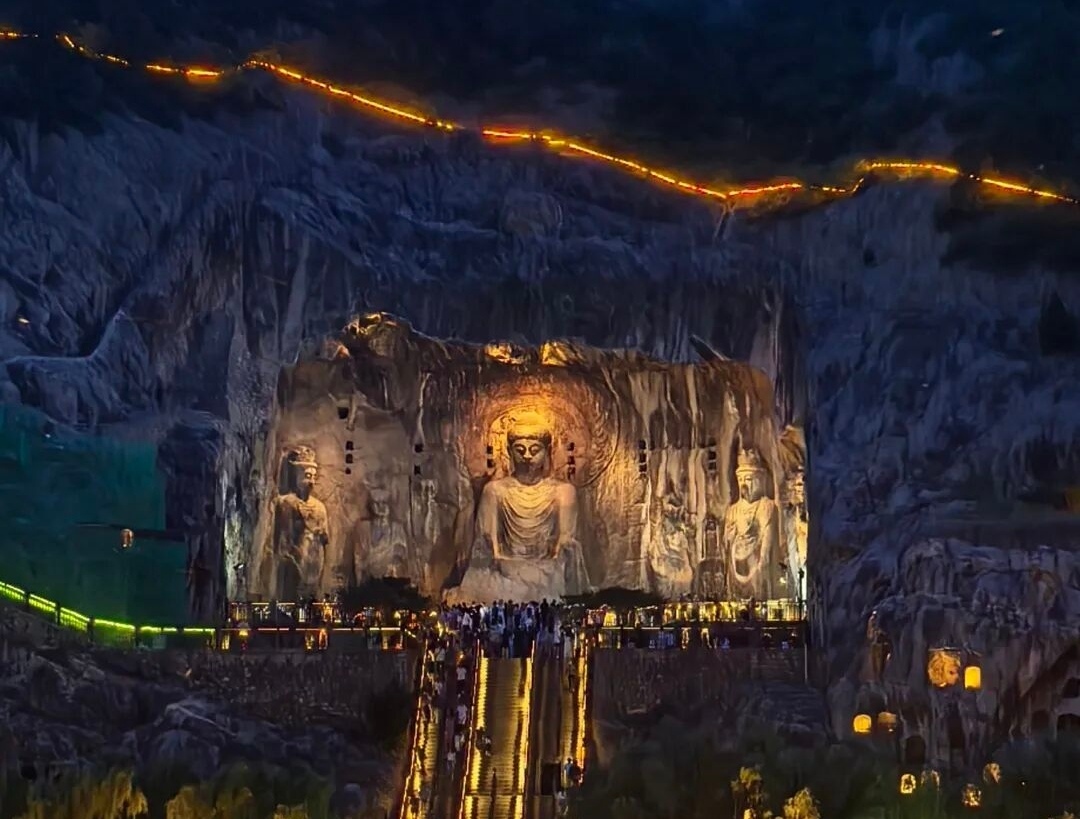
IV. Weathering and Gazing: The Dual Challenges of Protection in Contemporary Longmen
The status of World Heritage Site recognition brings both protection and scrutiny. The primary threat facing the Longmen Grottoes stems from nature: the limestone cliff faces are eroding at a rate of micrometers per year due to alternating effects of acid rain, temperature fluctuations, and water vapor from the Yi River. Monitoring data shows that multiple fine cracks have appeared on the face of the Vairocana Buddha, while the outlines of some small niche statues from the Northern Wei period have become blurred and indistinct. Since 2019, China and Italy have jointly launched the "Longmen Stone Carvings Conservation and Restoration Project," employing laser cleaning and nanomaterial reinforcement techniques; however, the restoration progress lags far behind the rate of erosion.
The greater challenge stems from the overcrowding of the tourism sector. Before the pandemic, Longmen Grottoes welcomed over 3 million visitors annually, with constant crowds on the grotto walkways throughout the day. The carbon dioxide exhaled by tourists, along with their touching and leaning on the rock surfaces, has inadvertently accelerated chemical erosion. Management authorities have implemented measures such as "reservation-based visitor control" and "digital guided tours replacing physical contact," while also experimenting with augmented reality (AR) technology to present visitors with virtual reconstructions of the Tang Dynasty's grandeur, thereby reducing actual visit durations. Notably, the Longmen Grottoes Research Institute is collaborating with Tsinghua University on the "Digital Longmen" initiative, utilizing 3D scanning and artificial intelligence to reconstruct damaged statues; digital archives have already been completed for more than 200 caves.
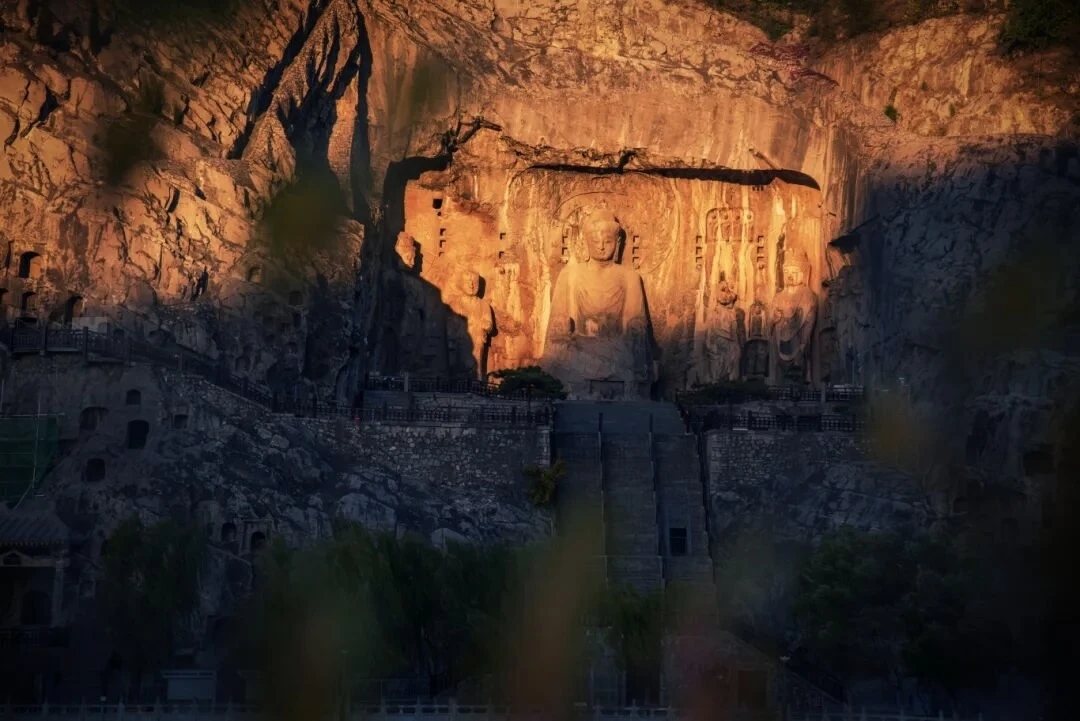
For international visitors, the Longmen Grottoes offer far more than a mere "I was here" photo. When you cross the Yique Bridge through the morning mist and look up to see the millennia-old smile of the Vairocana Buddha; when you gently place your palm against the stone wall beyond the railing and feel the lingering warmth of the afternoon on the cold rock; when you read the faint inscription "First Year of Yonglong in the Tang Dynasty" on the door of the Binyang Cave and realize that countless unnamed artisans devoted their entire lives to carving the folds of a attendant bodhisattva's robe—then you understand that the Longmen Grottoes are not cold exhibits in a museum, but a living dialogue. They tell every traveler from around the world: great civilizations never make a fuss; they simply carve themselves into the stone bit by bit, waiting for the wind to blow through and for people to decipher them.

