


Nestled amidst the mountains of Mangshi, Yunnan, an ancient De'ang ethnic village harbors a niche culinary treasure recognized as Intangible Cultural Heritage. "Sour tea pastries"—derived from the national-level intangible cultural heritage technique of making De'ang sour tea—are a unique specialty of the De'ang villages in western Yunnan. Crafted using traditionally fermented sour tea as the core ingredient, these pastries infuse the essence of tea into every bite; they offer a flavor profile that is slightly tart yet leaves a lingering sweetness, boasting a texture that is smooth and refreshing, accompanied by the natural, wild aroma of the mountains. For generations, this delicacy has been produced and consumed exclusively within local De'ang villages; it is not mass-produced for the general market and rarely circulates outside the community, remaining a little-known ethnic heritage flavor hidden deep within the secret landscapes of the Southwest.
The De'ang people are renowned as "ancient tea farmers." For over a millennium, they have cultivated tea on mountain slopes and built their lives around it, weaving the practices of growing, processing, and consuming tea into the very fabric of their ethnic identity. Breaking away from the conventional method of brewing tea as a beverage, the De'ang people pioneered a unique form of sour tea pastry that can be eaten, savored, and stored. Rooted in the secluded mountains of western Yunnan, this niche delicacy blends tea-making expertise with pastry craftsmanship—where a single pastry encapsulates the spirit of tea and a single flavor embodies folk tradition—quietly preserving the De'ang people's unique tea culture and the wisdom of the mountains.
I. The Heritage Foundation: A Millennial Tradition of Sour Tea Nourishing a Unique Pastry
The De'ang sour tea production technique is not only a national-level intangible cultural heritage but also a unique fermentation method within global tea culture, boasting a history that spans a thousand years. Adapting to their environment and leveraging the warm, humid mountain climate of western Yunnan, the De'ang ancestors developed a distinctive anaerobic fermentation process using bamboo tubes. Authentic De'ang sour tea is created through a series of traditional steps—including tea picking, steaming, rolling, tube packing, pit fermentation, pounding and shaping, and sun-drying—followed by a natural fermentation period lasting several dozen days. Unlike the crisp aroma and astringency of ordinary tea, "ancient-method" sour tea undergoes natural fermentation; this process sheds the harsh, raw astringency, giving rise to a unique, mellow, and slightly tart flavor profile. It also offers wellness benefits, such as promoting saliva production, relieving summer heat, aiding digestion, and strengthening the spleen. Sour tea pastries are a specialty delicacy evolved by the De'ang people from their millennia-old tea-making traditions. Transforming a beverage into an edible treat represents the wisdom of an ethnic minority in creatively utilizing natural resources to innovate their culinary culture.
II. Sourced from the Wild, Crafted by Ancient Methods: A Niche Tea Pastry Unique to the Village
De'ang sour tea pastries are a delicacy exclusive to De'ang villages; they have never been mass-produced commercially, as the process strictly adheres to traditional methods and locally sourced ingredients. The core ingredient is fresh leaf from local large-leaf ancient tea trees. Through a traditional fermentation process using earthen pits and bamboo tubes, the leaves are transformed into a rich, soft tea paste. This is then blended with natural ingredients and molded into shape. Free from industrial additives or artificial flavorings, the pastry preserves the authentic essence of the sour tea to the fullest extent.
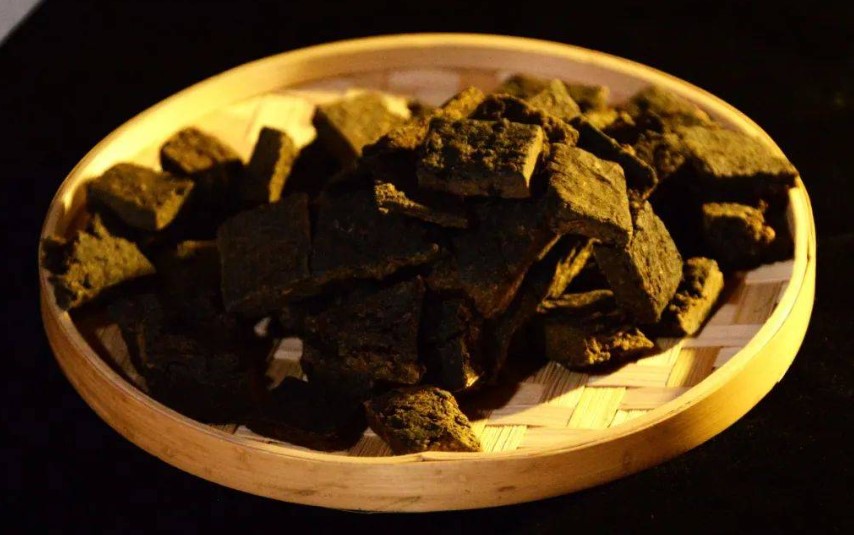
The production process is simple yet meticulous, carried out entirely by hand by villagers. Artisans pound the high-quality fermented sour tea into a fine paste, blend it with precise proportions of ingredients, knead and mold it, and finally set it through natural air-drying. The finished pastry boasts a warm, rustic hue and a firm yet soft, chewy texture, perfectly capturing the wild, fresh aroma of the tea leaves alongside the subtle tartness of fermentation. Upon tasting, one first perceives a delicate, mild acidity—devoid of heavy bitterness—followed by a lingering tea fragrance and a lasting, sweet aftertaste. Refreshing yet not cloying, and gentle on the stomach, it is perfectly suited to the mild climate of the southwestern mountain forests—a truly natural, wellness-oriented tea snack.
III. A Niche Flavor from a Hidden Realm: Preserving Millennia-Old Ethnic Tea Traditions
Unlike the ubiquitous "viral" pastries found everywhere, De'ang sour tea pastries possess a unique regional identity, with production preserved exclusively within the De'ang communities of western Yunnan. For centuries, this tea-based pastry was known only within the confines of the village, serving as a staple for festivals, guest hospitality, ritual offerings, and daily tea breaks—an integral part of the De'ang people's folk customs and etiquette.
In the cultural life of De'ang villages, these sour-tea pastries embody a unique ethnic spirit. Whether for festivals, family gatherings, or wedding celebrations, the villagers serve these homemade pastries alongside traditionally prepared sour tea to welcome their guests. A piece of tea pastry and a cup of sour tea represent the warm, sincere hospitality of the De'ang people and serve as a tangible embodiment of their millennia-old tea culture. Devoid of elaborate shapes or flashy packaging, the pastry relies on the unadorned flavors of the wild to preserve the lifestyle and ethnic sentiments passed down through generations of "ancient tea farmers."
IV. Living Heritage: A Niche Tradition Endures, Blending Ancient Charm with New Chapters
For a long time, due to geographical isolation, the constraints of manual production, and limited output, De'ang sour-tea pastries remained tucked away in remote mountains and villages—a niche intangible cultural heritage delicacy known to few. Yet, precisely because they remained far removed from commercial assembly lines, this ancient tea flavor has never been diluted; it has fully preserved the most primal, pure essence of wild tea and the craftsmanship of the De'ang people.
Today, thanks to the systematic protection and transmission of the De'ang sour-tea heritage craft, village artisans continue to uphold ancient fermentation methods and manual pastry-making techniques, safeguarding their unique ethnic flavor. This niche delicacy is more than just a delicious taste of the wild; it is a living vessel for De'ang tea culture, folk traditions, and agricultural wisdom, allowing the lineage of this millennia-old ethnic tea custom to flow quietly and endlessly within these remote mountain villages.
V. Summary of Intangible Cultural Heritage Value
One mountain holds a unique flavor; one tea carries a thousand years of history. Born from the national-level intangible cultural heritage craft of sour-tea making, De'ang sour-tea pastries draw their soul from ancient wild tea and their character from traditional fermentation methods, offering a flavor profile that is mildly tart yet sweet on the finish—refreshing, smooth, and authentically rustic. As a niche, intangible cultural heritage delicacy unique to the De'ang villages of western Yunnan, it embodies the ethnic group's wisdom in adapting to their local environment. Steeped in millennia-old tea traditions and the authentic atmosphere of village life, it is a precious culinary treasure—a taste of heritage preserved amidst the secluded landscapes and gentle passage of time in the Southwest.

