


The craftsmanship of Gaocheng "Gongmian" (Palace Noodles) is a provincial-level Intangible Cultural Heritage of Hebei Province. With a history spanning over 1,300 years, the tradition originated during the Sui and Tang dynasties and flourished throughout the Ming and Qing dynasties. Renowned in ancient times for its exceptional quality—characterized by translucency and a supple texture—it was designated as a tribute to the imperial court, earning it the name "Gongmian" (Palace Noodles). Distinguished by unique qualities—strands as fine as hair, a hollow yet resilient structure, a clear broth that remains unclouded, and a texture that holds firm even after prolonged boiling—the noodles are produced using more than twenty purely manual, traditional steps. Production is restricted to fair weather, resulting in limited output and a niche following; it is a hidden gem of intangible cultural heritage from North China, embodying centuries of culinary tradition.
The fertile lands of the Yan-Zhao region have nurtured a rich culinary culture. Unlike the widely known noodle varieties of Northern China, Gaocheng Gongmian carries the charm of a thousand-year legacy and the spirit of niche craftsmanship. Eschewing the heavy oil and salt typical of common street food, it achieves a pure, authentic flavor through minimalist ingredients and meticulous processing. Having weathered the eras of the Sui and Tang and the prosperity of the Ming and Qing, it evolved from a humble household staple into an imperial delicacy, eventually settling into its current status as a niche, artisanal heritage food. Each slender, silvery strand—hollow yet resilient, pure white yet rich in character—embodies the agricultural wisdom of North China’s ancestors, who adapted to their environment, and the enduring dedication of generations of artisans.
I. A Millennium-Old Legacy: Imperial Tribute Noodles Originating in the Sui and Tang Dynasties
The lineage of Gaocheng Gongmian is long and storied; it originated during the Zhenguan era of the Tang Dynasty and flourished during the Ming and Qing dynasties, boasting a profound historical foundation. Over the centuries, Gaocheng noodle artisans continuously refined their techniques, improving processes and enhancing mouthfeel to create a distinctive fine noodle characterized by delicate texture, elegant appearance, and a supple bite. By the Guangxu reign of the Qing Dynasty, the noodles were selected as an imperial tribute—reserved exclusively for the court—due to their superb quality, clean and mellow flavor, and durability in storage and cooking. Thus, the name "Gongmian" (Palace Noodles) was established, marking it as a unique imperial delicacy within the noodle traditions of the Yan-Zhao region. For centuries, this craft has taken root in the local soil of Gaocheng, passed down through generations via oral instruction and master-apprentice mentorship. Unlike mass-produced noodles, traditional *Gongmian* (Palace Noodles) steadfastly upholds the spirit of handcraftsmanship, preserving the authentic texture and pure aroma of wheat. It stands as a testament to the millennia-long evolution of Northern China’s agrarian noodle culture. In 2013, the craftsmanship of Gaocheng *Gongmian* was officially inscribed on the Hebei Provincial Intangible Cultural Heritage List, ensuring the systematic protection and transmission of this ancient technique.
II. Minimalist Ingredients, Natural Essence
Authentic Gaocheng *Gongmian* adheres to a philosophy of ingredient minimalism; free from industrial additives, it relies entirely on nature’s bounty and the artisan’s skill. It uses only three ingredients—high-quality local high-gluten wheat flour, crisp well water, and fine salt—combined in precise proportions. The wheat, nurtured by the abundant sunlight of the North, yields flour with a dense quality and rich aroma, laying the foundation for the noodles' supple, resilient texture. This simple formulation maximizes the wheat's natural freshness, creating a unique flavor profile that is delicate, elegant, and leaves a lingering, subtle sweetness—a wholesome, gentle food suitable for all ages.
III. Traditional Craftsmanship: Harmony with Nature and Artisan Dedication
The rarity and uniqueness of Gaocheng *Gongmian* stem from its rigorous, complex manual processes and the singular principle of "making noodles according to the weather." The entire craft involves over twenty meticulous steps—including mixing, kneading, resting, shaping into strips, coiling, winding onto rods, separating, hanging, stretching, pulling into fine strands, and air-drying. Each step is interconnected and demands precision; the process relies entirely on the artisan’s tactile sense, experience, and keen eye, as even the slightest deviation can affect the final product's appearance and taste.
The most distinctive feature is the hollow-strand pulling technique. Through repeated coiling, resting, and stretching, artisans allow the dense core of the dough to naturally form a hollow structure. Without deliberate carving or molding, this process creates the noodle's unique form: strands as fine as a human hair, yet hollow throughout. Once stretched, the noodles are uniform in thickness and possess a translucent, lustrous sheen; light as silver threads, they are truly a sight to behold.
What makes them even more remarkable is that the traditional production of *Gongmian* (Palace Noodles) relies strictly on favorable weather; they must be air-dried naturally on sunny days characterized by low humidity, good ventilation, and optimal sunlight. Rainy or humid conditions make production impossible, as the noodles easily absorb moisture, break, or spoil and grow mold. Due to these weather constraints, annual production is extremely limited and quality standards are rigorous. Consequently, authentic handmade Gaocheng *Gongmian* is rare and highly prized; it has never achieved mass-market ubiquity and remains far less known outside the region—a niche delicacy deeply rooted in the local culture of the Yan-Zhao region.
IV. Flavor Profile and Cultural Significance
Gaocheng *Gongmian* combines visual elegance, excellent texture, and practicality, earning the reputation of being "fine enough to pass through a needle's eye, yet hollow and resilient." When cooked, the noodles become translucent and smooth, remaining distinct rather than clumping together; the broth stays clear, and the noodles hold their shape without turning mushy, even after prolonged boiling. They offer a tender yet springy bite with a pure wheat aroma that is light and never cloying. Their unique hollow structure allows them to absorb broth effectively and evenly, creating a rich, layered mouthfeel that sets them apart from ordinary dried noodles—a distinctive and refined delicacy within the realm of Northern Chinese wheat-based foods.
In local folklore, *Gongmian* symbolizes a long, smooth life and enduring well-being; it is the ceremonial noodle of choice for weddings, birthdays, family reunions, and welcoming guests. A bowl of these "silver-thread" noodles embodies the simple, heartfelt aspirations of the local people—serving both as a nourishing everyday meal and as a cultural vessel for local customs and hospitality.
V. Niche Heritage, Ancient Traditions Reborn
For a long time, constraints such as weather dependency, complex production processes, and low output have prevented Gaocheng *Gongmian* from achieving mass commercial success, leaving it a niche Intangible Cultural Heritage delicacy tucked away in the countryside of Hebei. Yet, it is precisely this steadfast commitment—rejecting haste and mass production—that has allowed the ancient craftsmanship and the pure, authentic flavor of the wheat to remain intact, undiluted by industrial assembly-line methods. Today, leveraging platforms dedicated to the transmission of intangible cultural heritage, the local community is cultivating a new generation of young artisans. While steadfastly upholding twenty traditional steps and timing production to align with the natural seasons, they have also optimized storage and packaging techniques, allowing this rare, millennia-old "tribute noodle" to gradually reach markets far beyond its rural origins. A niche status does not imply decline, nor does a low-profile nature signify mediocrity; Gaocheng Palace Noodles—delicate strands of silver—embody a thousand years of craftsmanship, ensuring that the culinary legacy of the Sui and Tang dynasties and the cultural heritage of the Yan-Zhao region endure vibrantly within the rhythms of everyday life.
VI. Summary of Intangible Cultural Heritage Value
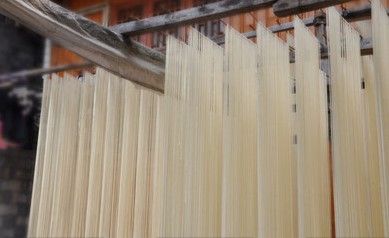
A single hollow silver strand, a thousand years of Yan-Zhao craftsmanship. Gaocheng Palace Noodles—created from simple ingredients through intricate processes and in harmony with the seasons—stand as a unique masterpiece of Northern Chinese noodle-making heritage. Rooted in techniques dating back to the Sui and Tang dynasties, honored as a former imperial tribute, and crafted with a rigorous adherence to natural timing, these noodles offer a rare, authentic taste of the countryside. They encapsulate the wisdom and artisan spirit of North China’s agrarian civilization. As a culinary treasure born of humble, everyday life and rural tradition, they allow the ancient charm of this noodle heritage to gently persist and remain ever-fresh in the modern era.

