


The land of Huxiang boasts a rich cultural lineage where folk traditions and culinary heritage shine in tandem. Tantou woodblock New Year prints from Longhui and the carved candied fruit craft of Jingzhou are both national-level intangible cultural heritages rooted in the rural landscape of southwestern Hunan. One is a folk art form on paper, capturing the essence of daily life and the spirit of the Lunar New Year; the other is an art form for the palate, sculpting the essence of nature with sweet, artisanal ingenuity. New Year prints infuse local festivals with a sense of ritual, while candied fruits add a mellow sweetness to folk life; together, these two heritage crafts blend harmoniously, sketching the unique folk customs and age-old wisdom of the Miao and Xiang regions of Hunan.
The picturesque landscapes of southwestern Hunan have nurtured a distinctive folk heritage culture. From the ink-scented ancient workshops of Longhui to the refreshing sweetness of Jingzhou’s pomelo preserves, these traditions have endured for a millennium, preserving the most authentic rural New Year spirit and ethnic craftsmanship. Tantou woodblock New Year prints represent the only traditional woodblock-printed New Year art in Hunan, adorning folk festivals year after year; meanwhile, Jingzhou’s carved candied fruits—originating in the Five Dynasties period and flourishing during the Ming and Qing dynasties—represent a unique "sculptural art for the palate" created by the ancestors of the Miao and Dong peoples. Combining art and cuisine, ink and sweetness, stillness and motion, form and flavor, they stand as a poetic, peerless duo among the niche intangible cultural heritages of the Huxiang region.
I. Intangible Heritage on Paper: Tantou Woodblock New Year Prints—Capturing the Spirit of the Rural New Year
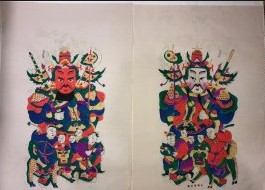
Tantou woodblock New Year prints are among the first batch of national-level intangible cultural heritages; with a history spanning four hundred years, they serve as a classic example of folk New Year prints in southern China. Distinct from the bold, intense style of northern prints, Tantou prints feature a rustic yet lively aesthetic and a palette of bright, mellow colors. Created using traditional local woodblock overprinting techniques, the process is intricate and entirely handmade. Artisans use solid wood blocks and natural mineral pigments to layer images—ranging from door gods and auspicious beasts to opera characters and propitious patterns—resulting in fluid, vivid lines and rich, festive compositions that overflow with the authentic atmosphere of rural life.
As a core medium for New Year customs in southwestern Hunan, Tantou New Year prints are deeply woven into the lives of the local people. During Lunar New Year celebrations, weddings, funerals, and other festive occasions, the custom of displaying New Year woodblock prints—intended to invoke blessings and adorn the home—is a ritual deeply etched in the memories of the people of Hunan. These prints embody the villagers' simple aspirations for goodness and beauty and document the traditional folk customs of the region. They are not merely treasures of folk art but also cultural links that connect local festivals and preserve folk etiquette, infusing various local delicacies with a rich festive atmosphere.
II. Intangible Cultural Heritage for the Palate: Jingzhou Carved Preserved Fruit—A Millennium of Sweetness Carved from Nature
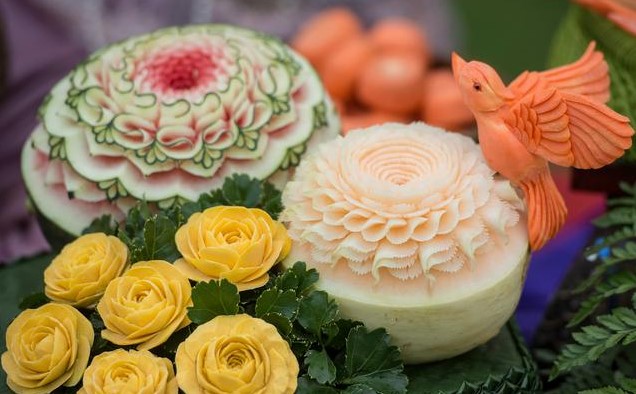
Building upon the festive atmosphere fostered by Tantou New Year prints, a unique local culinary tradition—Jingzhou Carved Preserved Fruit—emerged in southwestern Hunan. Recognized in 2021 as a national-level intangible cultural heritage, this craft dates back to the late Five Dynasties period—a history spanning a thousand years. Once a tribute delicacy for the imperial court, it originated from the "Wanhua Tea" (Myriad-Flower Tea) technique pioneered by the Miao and Dong ancestors of Jingzhou and stands as a unique form of "edible sculpture art" in China. Breaking the conventions of traditional preserved fruit making, it uses plant materials and carving knives to perfectly blend folk art with culinary skill, representing the pinnacle of folk cuisine in southwestern Hunan.
The selection of ingredients for these carved fruits is meticulous, adhering to ancient seasonal principles. Only immature green pomelos—harvested in late spring or early summer with thick rinds and tender texture—are used; the pulp is discarded, and the thin rind serves as the canvas for carving. The green pomelo rind is firm, resilient, and subtly fragrant, making it ideal for intricate carving. Once processed by hand, the fruit offers a clean, lingering sweetness and cooling properties that help clear internal heat, making it a wellness-oriented folk delicacy perfectly suited to the humid climate of the south.
The entire production process is complex and refined, carried out entirely by hand. It involves over a dozen traditional steps—including material selection and peeling, slicing and shaping, intricate "willow-leaf" carving, rinsing, boiling in copper pots, curing in cane sugar, and natural air-drying—with every link in the chain reflecting the artisan's dedication and craftsmanship. Holding a small, razor-sharp willow-leaf knife, the artisan—relying on a tactile intuition and aesthetic sense passed down through generations—carves freehand directly onto the delicate pomelo rind without a preliminary sketch. Alternating between intaglio and relief techniques, they deftly outline dragons, phoenixes, fish, shrimp, birds, insects, auspicious patterns, and scenes of folk life. As shavings of rind flutter to the ground, the humble peel transforms into a lifelike, candied work of art—a durable creation that retains its flavor and intricate designs over time.
In the folk traditions of the Miao and Dong peoples, these carved candied rinds are a special ceremonial delicacy reserved for festive hospitality, wedding gifts, and prayers for reunion and blessings; they complement and enhance the celebrated Tantou New Year paintings. During the Lunar New Year, the paintings adorn doorways while the candied treats are served to guests—a pairing of visual art and sweet flavor that evokes the true spirit of the holiday. For weddings and festivals, the carved treats symbolize a sweet life and enduring fulfillment, embodying the pure, beautiful aspirations of the Miao and Dong people. Far more than a mere delicacy, this is a living form of Intangible Cultural Heritage that fuses the aesthetics of carving, folk etiquette, and the wellness benefits of botanical ingredients.
III. Symbiosis of Dual Arts: A Living Legacy of Hunan’s Cultural Heritage
Tantou New Year paintings embody the soul of local folk culture, while carved candied rinds enrich the flavor of the land. Rooted in the mountain villages of southwest Hunan, these two forms of national-level Intangible Cultural Heritage are deeply intertwined with local festivals and ethnic customs, creating a unique cultural landscape where one can admire folk art through the paintings and appreciate the artisan's spirit through the taste of the candied treats. Unlike commercialized "viral" crafts, both arts steadfastly adhere to ancient, authentic methods, preserving the purest essence of local life and ethnic craftsmanship.
Today, both heritage forms have transcended the limitations of traditional transmission to find new life in the modern era. Tantou New Year paintings feature innovative pattern designs that incorporate contemporary "Guofeng" (national style) elements. Meanwhile, the carved candied rinds are reaching beyond the mountains through the training of a new generation of artisans at heritage workshops, the optimization of drying and preservation techniques, and integration with cultural tourism, educational study tours, and creative merchandise. This mutual empowerment of folk art and culinary craftsmanship ensures that the millennia-old charm of Hunan and the cultural heritage of the Miao and Dong peoples are known and carried forward by more people than ever before. IV. Summary of Intangible Cultural Heritage Value
A single sheet of New Year woodblock print captures the essence of daily life, while a piece of carved preserved fruit embodies the landscape and spirit of the land. Longhui Tantou woodblock New Year prints preserve the authentic folk customs and artistic heritage of the Huxiang region, whereas Jingzhou carved preserved fruit exemplifies the ancestral wisdom of adapting to the local environment and the pinnacle of craftsmanship. One static and one dynamic, one for the eyes and one for the palate—these two forms of national-level intangible cultural heritage flourish in tandem. Together, they embody the folk traditions and cultural sentiments of southwest Hunan that have endured for a millennium, standing as precious treasures that etch the vibrant life of the region into history and nurture its enduring cultural legacy.

