


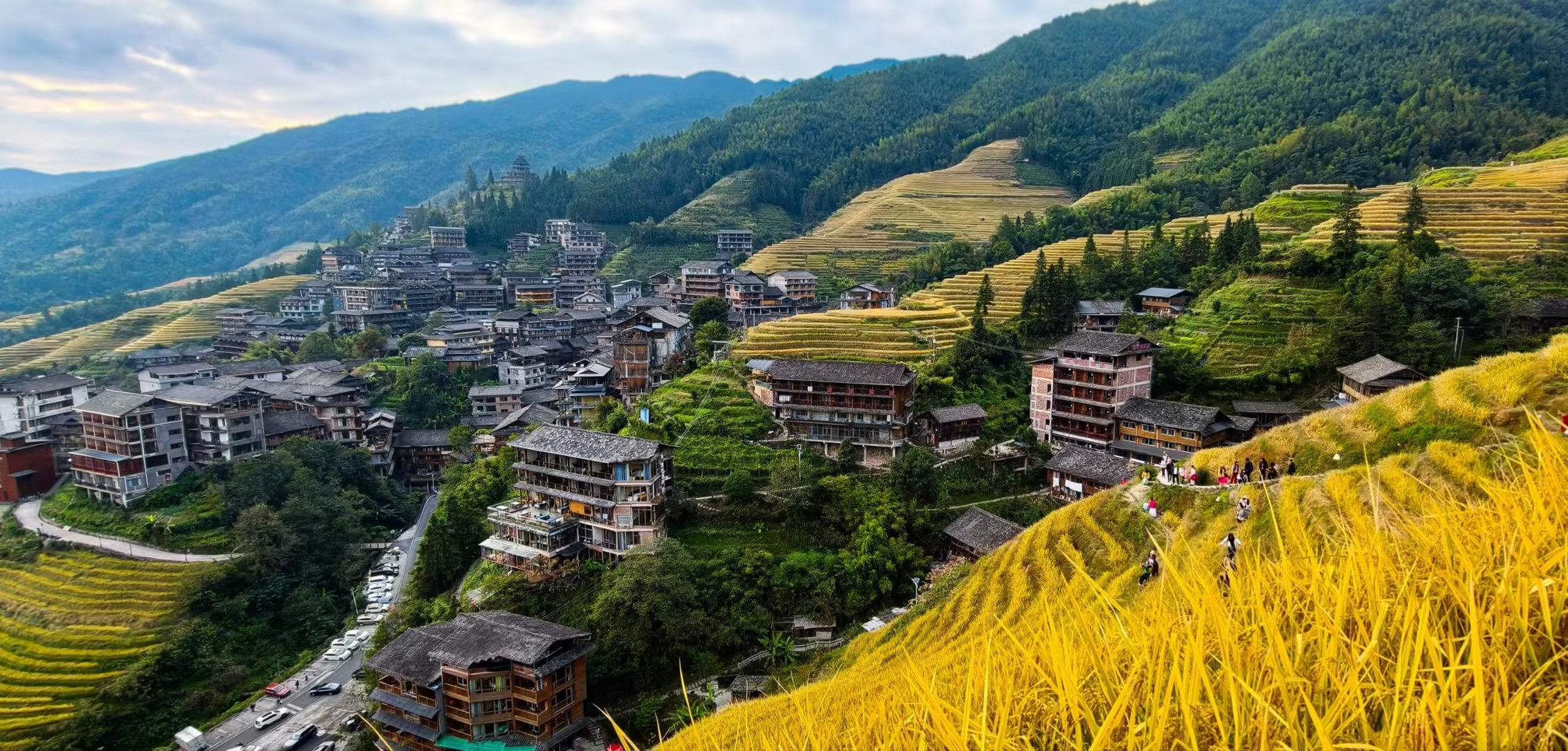
 Nestled in the mountainous region of Longsheng County, about 80 kilometers from Guilin in Guangxi, China, lies one of the most breathtaking agricultural wonders in the world—the Longji Rice Terraces. Known literally as the "Dragon's Backbone" Rice Terraces, this stunning landscape has captivated visitors for decades with its ingenious design, seasonal beauty, and rich ethnic culture .
 The Origin of the Name
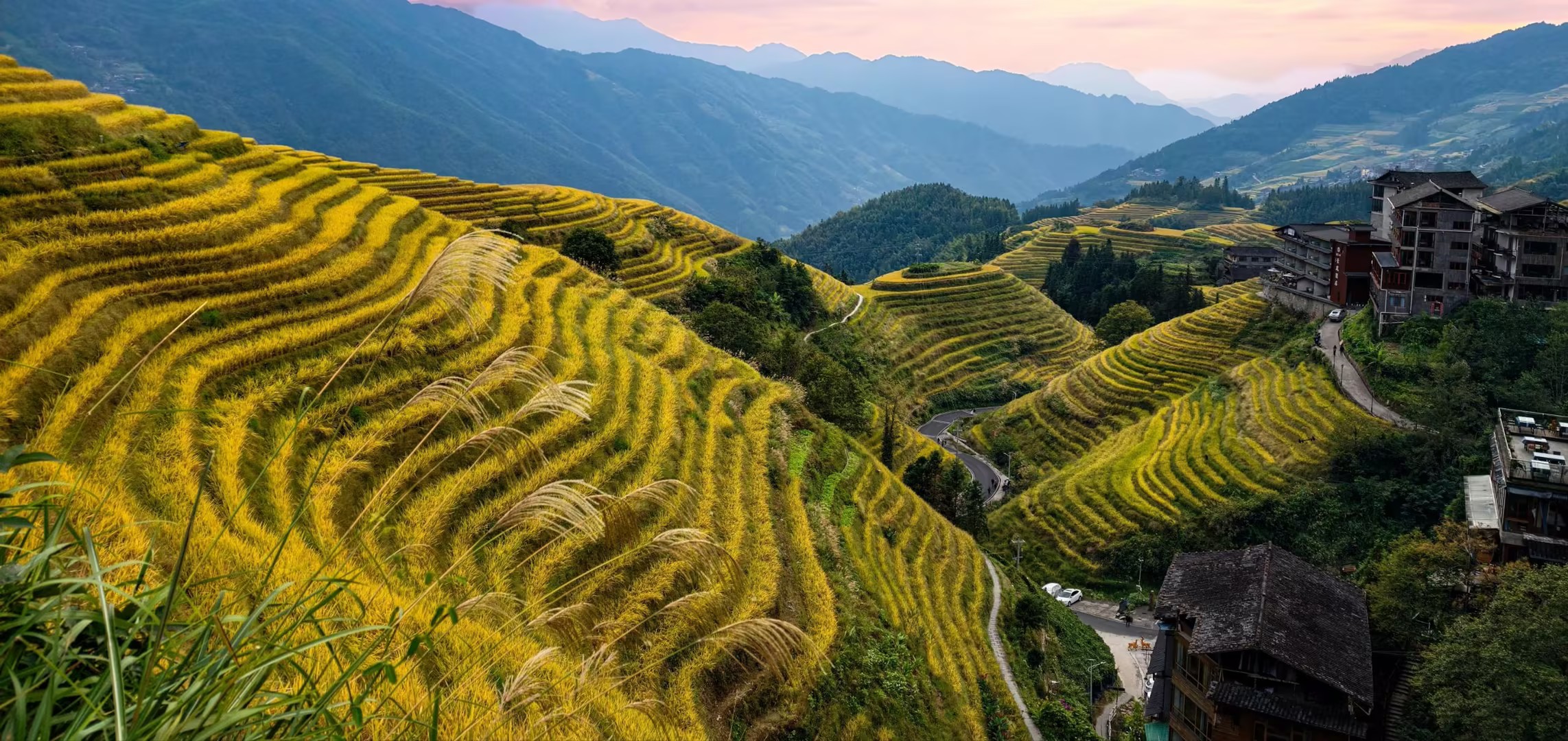
The name "Longji" (Dragon's Backbone) is poetically descriptive. The terraced fields cascade down the steep mountainsides like scales on the back of a giant dragon, while the mountain ridge itself forms the dragon's spine. As the rice matures from September to October, the "scales" transform from green to golden, creating what many describe as the most magical moment of the year .
 A Historical Agricultural Marvel
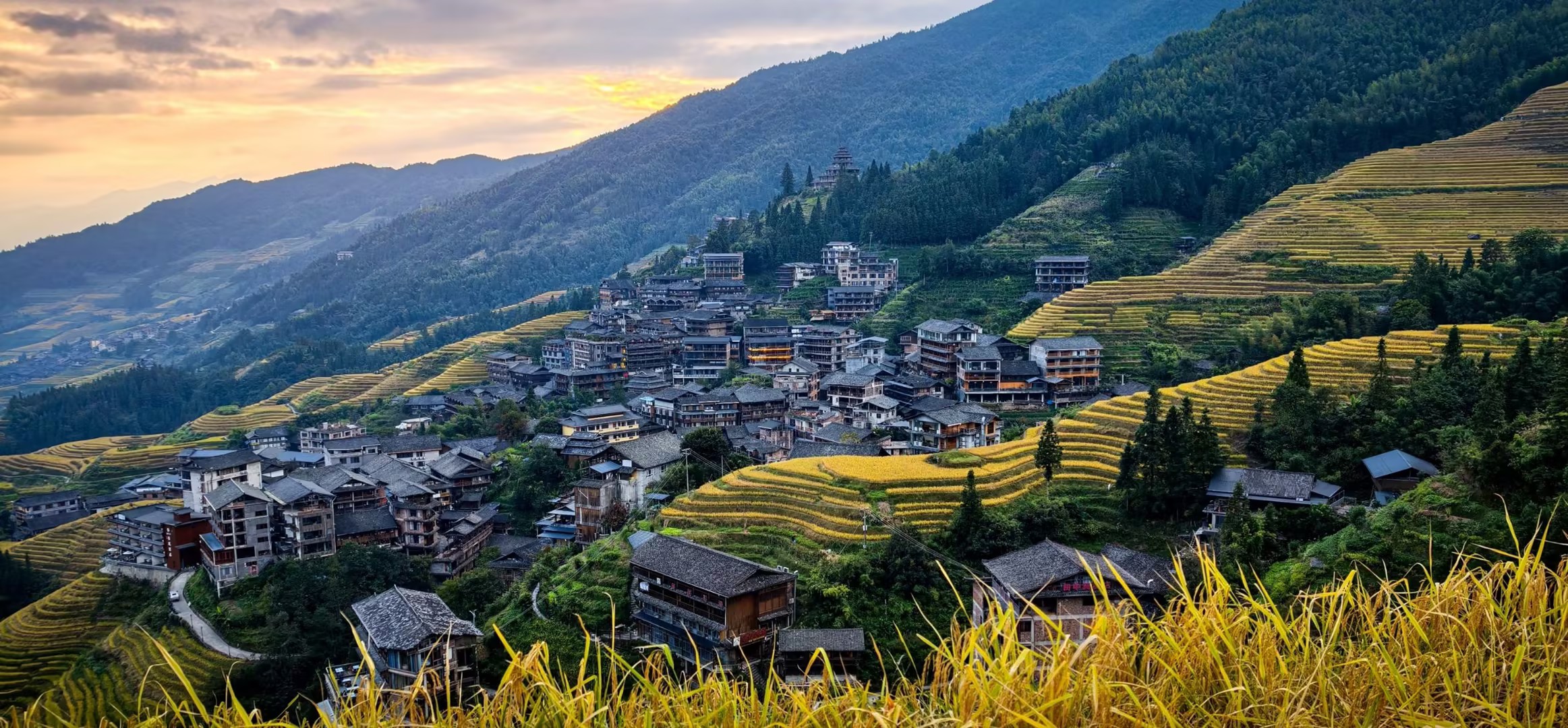
The construction of the Longji Rice Terraces began during the Yuan Dynasty (1271-1368) and was completed in the early Qing Dynasty (1644-1911), representing over 650 years of continuous human labor and ingenuity . The ancestors of the Zhuang and Yao ethnic minorities who first cultivated these slopes could hardly have imagined that their struggle for survival would one day create such an extraordinary scenic area.
Covering an expansive area of approximately 66 square kilometers, the terraces span an altitude from 300 meters to 1,100 meters, with a vertical drop of up to 800 meters—equivalent to the height of a 250-story building . The smallest terraces are just large enough for three rice plants to grow, illustrating the extraordinary effort required to make use of every available patch of arable land in this mountainous terrain .
In 2018, this remarkable landscape received international recognition when it was designated as a Globally Important Agricultural Heritage System by the Food and Agriculture Organization of the United Nations, acknowledging it as part of the "Southern China Mountain Rice Terrace System" .
 A Canvas Transformed by Seasons
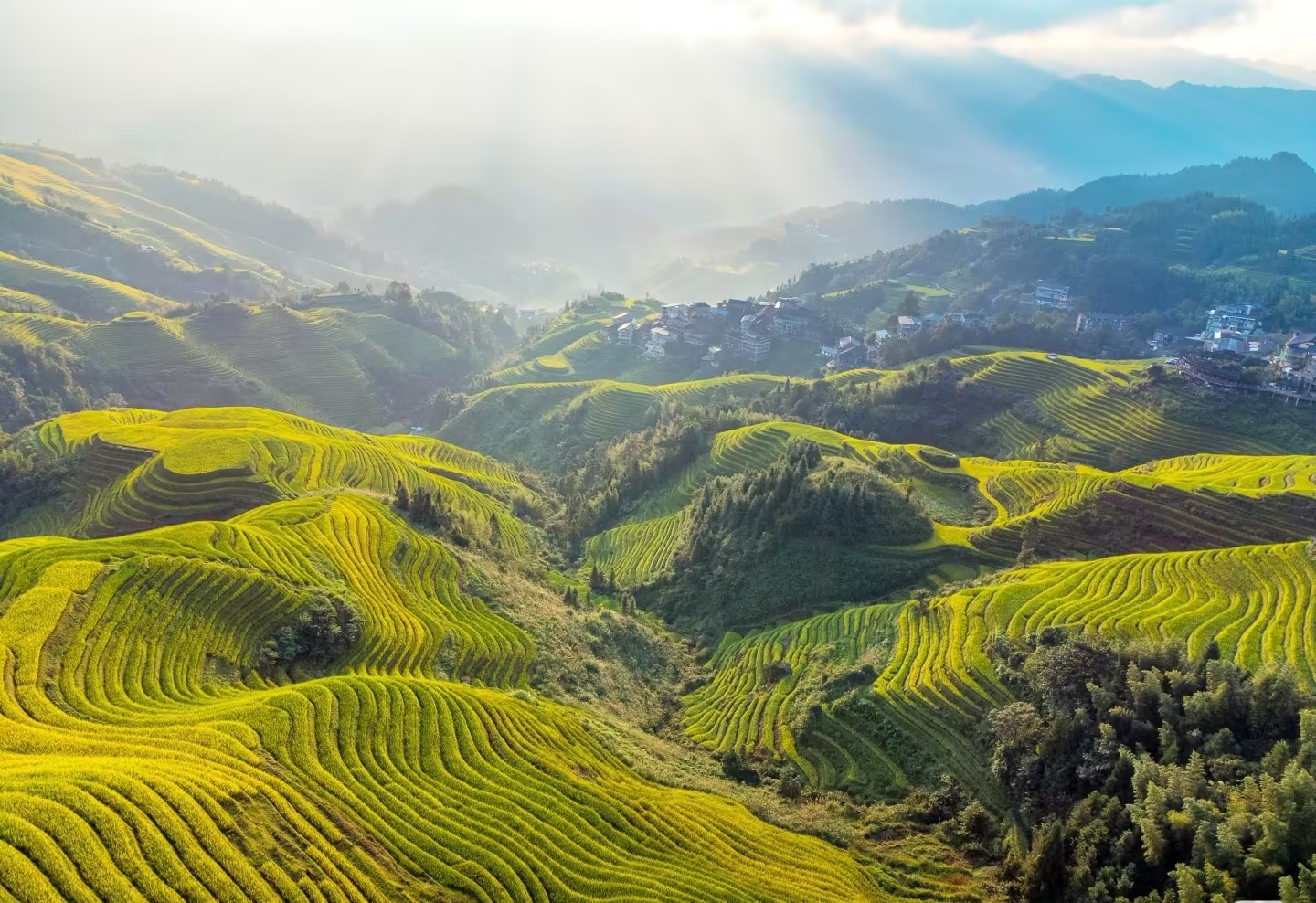
The Longji Rice Terraces paint a different masterpiece in every season, attracting photographers and nature lovers year-round.
Spring (April to mid-June) brings the "water mirror" season. After the fields are irrigated for rice planting, they reflect the sky, clouds, and mountains like countless mirrors scattered across the mountainside. This is the perfect time for capturing stunning sunrise and sunset reflections .
Summer (July to mid-September) transforms the landscape into a vibrant green world. Waves of green rice plants flow down the mountainsides, creating a sense of tranquility far removed from bustling city life. The cool mountain weather during this season provides a refreshing escape .
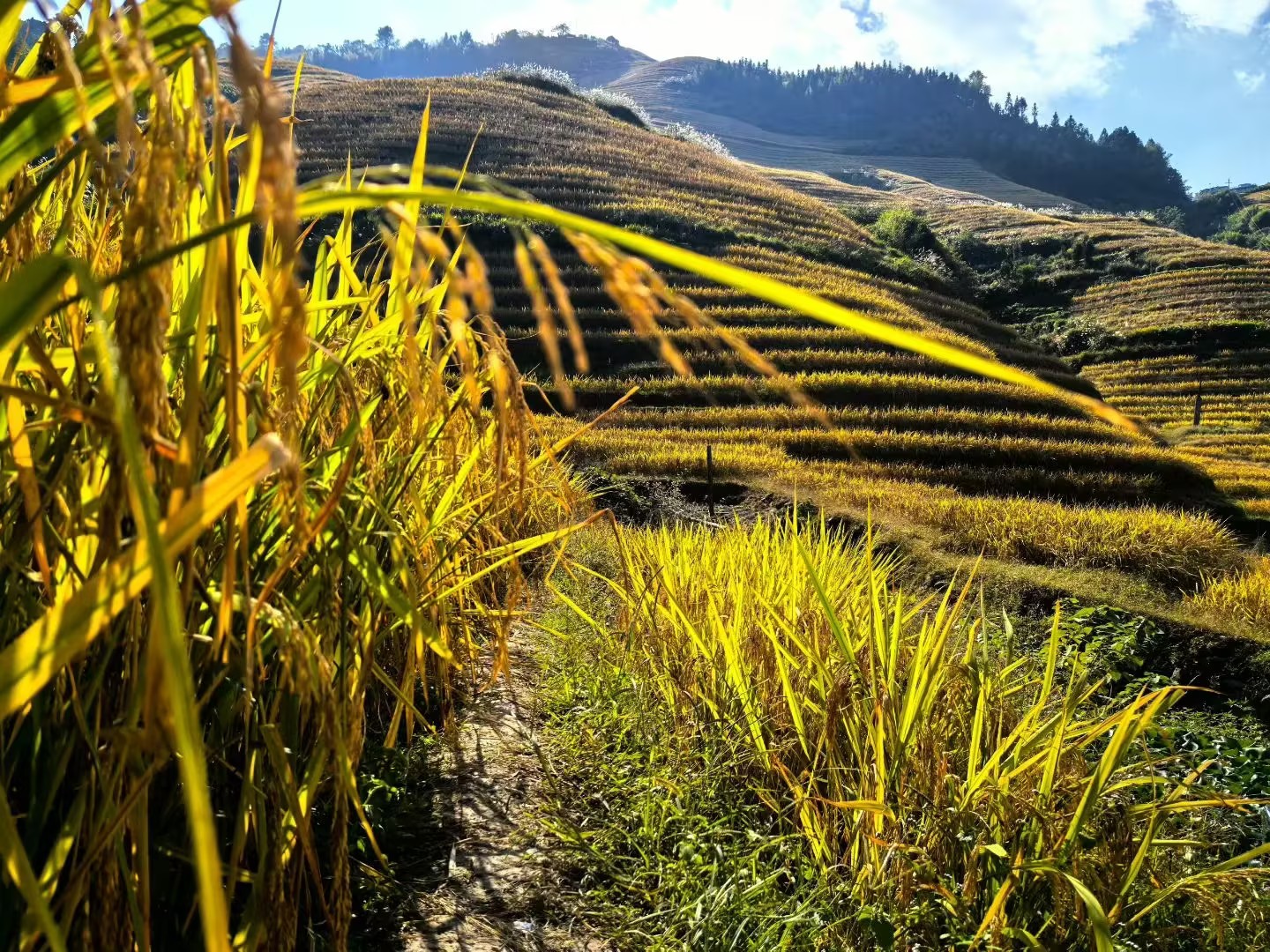 Autumn (late September to October) is widely considered the most spectacular season. As the rice ripens, the terraces turn into a golden sea, swaying and dancing in the wind. The harvest season also offers opportunities to witness farmers cutting rice by hand, adding cultural authenticity to the visual feast .
Winter (December to February) brings rare but magical moments. When snow falls—typically once or twice a year—the terraced lines become even more pronounced against the white landscape, creating scenes of "dragons playing with water" as the snow outlines every curve and contour .
The Longji Rice Terraces represent far more than a scenic attraction. They stand as a testament to human perseverance, ecological wisdom, and cultural richness—where generations of Zhuang and Yao farmers shaped the mountains into edible art, creating a landscape that continues to sustain both bodies and souls. Whether draped in spring's liquid silver, summer's emerald waves, autumn's golden glory, or winter's snowy silence, the Dragon's Backbone remains one of China's most unforgettable destinations .

