


The Labyrinth on the Loess Plateau: A Legend of Shanxi Merchants Hidden in the Mountain
Nestled in the mountains five kilometers southeast of Fenxi County, Linfen City, Shanxi Province, lies the Shijia Courtyard—a architectural gem hailed as "the First Village under Heaven." Built in 1769 during the Qianlong reign of the Qing Dynasty, this sprawling complex spans over 100,000 square meters, its terraced layout following the mountain contours. Surrounded by peaks on three sides and a river to the south, it resembles a mighty dragon coiled across the Loess Plateau. Unlike the globally renowned Qiao Family Compound and Wang Family Compound, the Shijia Courtyard remains a hidden hermit, quietly enduring over two centuries of vicissitudes. The local saying "Visit Qiao Family Fort in the north, tour Shijia Valley in the south" underscores its significance among Shanxi merchant residences. When images of Italy's UNESCO World Heritage site, the ancient town of Matera, spread among travelers worldwide, scholars marveled at the Shijia Courtyard's comparable grandeur. This architectural marvel, blending northern cave dwellings with Shanxi merchant culture, awaits to unveil its mysterious veil to the world.
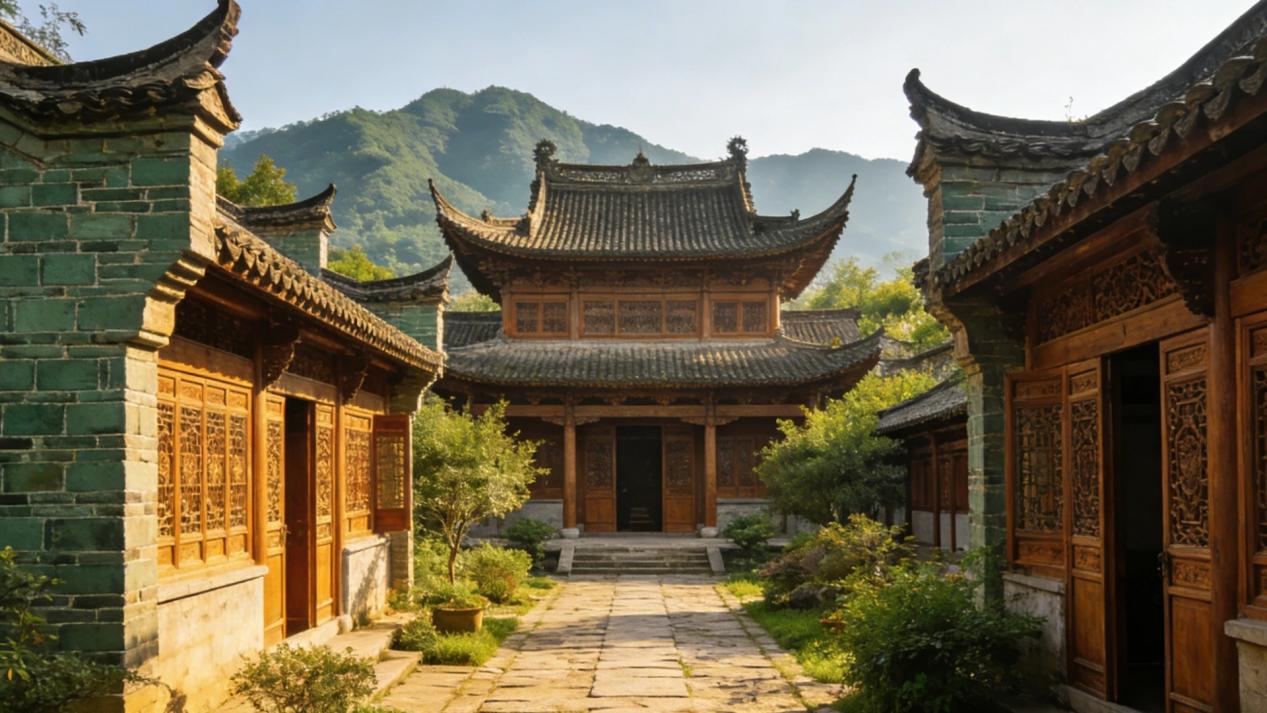
Origin and Development: A Century of Construction Dream of a Family
The legend of the Shi Family Compound traces its origins to Shanxi merchant Shi Faze. Born into poverty in Shijia Gou during the early Qing Dynasty's Qianlong reign, the young Shi Faze grew up mastering household management. He skillfully combined farming with commerce, operating both money shops and pawnshops, which steadily flourished. By 1769 (the 34th year of Qianlong's reign), the accomplished merchant had begun acquiring vast estates and constructing mansions, initiating a century-long architectural legacy for his family.
Spanning the reigns of Emperors Jiaqing, Daoguang, Xianfeng, and Tongzhi, the Shi Family Compound underwent successive expansions through generations, eventually reaching its current scale of over 100,000 square meters. At its zenith, the Shi family's shops and money shops extended north to Taiyuan and Beijing, south to Luoyang and Kaifeng, Hunan's Xiangxiang, and west to Xi'an and Mizhi, establishing them as a prominent clan in southern Shanxi. The true renown of Shijia Valley came from Shi Mingfeng, grandson of Shi Faze, who cultivated deep ties with the Zeng brothers, celebrated statesmen of the late Qing Dynasty. From then on, the Shi Family Compound became a hub for officials, nobles, and scholars, earning the title "First Village of Shanxi."
The architectural complex primarily features quadrangle courtyards, double-layered quadrangle courtyards, and triple-layered quadrangle courtyards, comprising 31 courtyards of varying sizes, 258 cave dwellings, and 108 rooms. Its overall layout follows a "one-center, one-ring, three-group windmill-shaped village configuration" — all courtyards are divided into three clusters surrounding the central "Fudi" (auspicious land), while public structures like workshops, memorial archways, and temples are arranged along the outer ring road. This unique spatial arrangement has been recognized by international archaeologists as a paradigm of "mountainous space expansion and utilization architecture."
Architectural Wonders: Labyrinths,Underground Passages and the Wisdom of Rainproof Shoes
Stepping into the Shijia Courtyard feels like entering a three-dimensional maze. The local proverb "One courtyard connects all village gates" perfectly captures its architectural charm. These seemingly isolated dwellings are ingeniously interconnected through secret passages, side doors, and hidden entrances. Hidden chambers within rooms and tunnels between courtyards form a defensive system where "eight main gates are locked and ten smaller ones secured, making it hard for travelers to leave the village." This layered layout of upper floors, inner courtyards, and gardens not only reflects the mountainous terrain's characteristic of building along slopes and ascending from caves, but also incorporates the architectural essence of the flatland's multi-courtyard siheyuan design.
What truly amazes visitors is the drainage system of the Shijia Courtyard. A rectangular stone-paved road stretching over 1,500 meters encircles the village, seamlessly connected to drainage channels. The ingeniously designed slope prevents rainwater accumulation, allowing pedestrians to walk "for half a month without getting wet" even during heavy downpours. This drainage system, built over two centuries ago, remains in perfect working order to this day. Remarkably, no collapses have occurred due to loess soil subsidence, making it a living testament to ancient engineering wisdom.
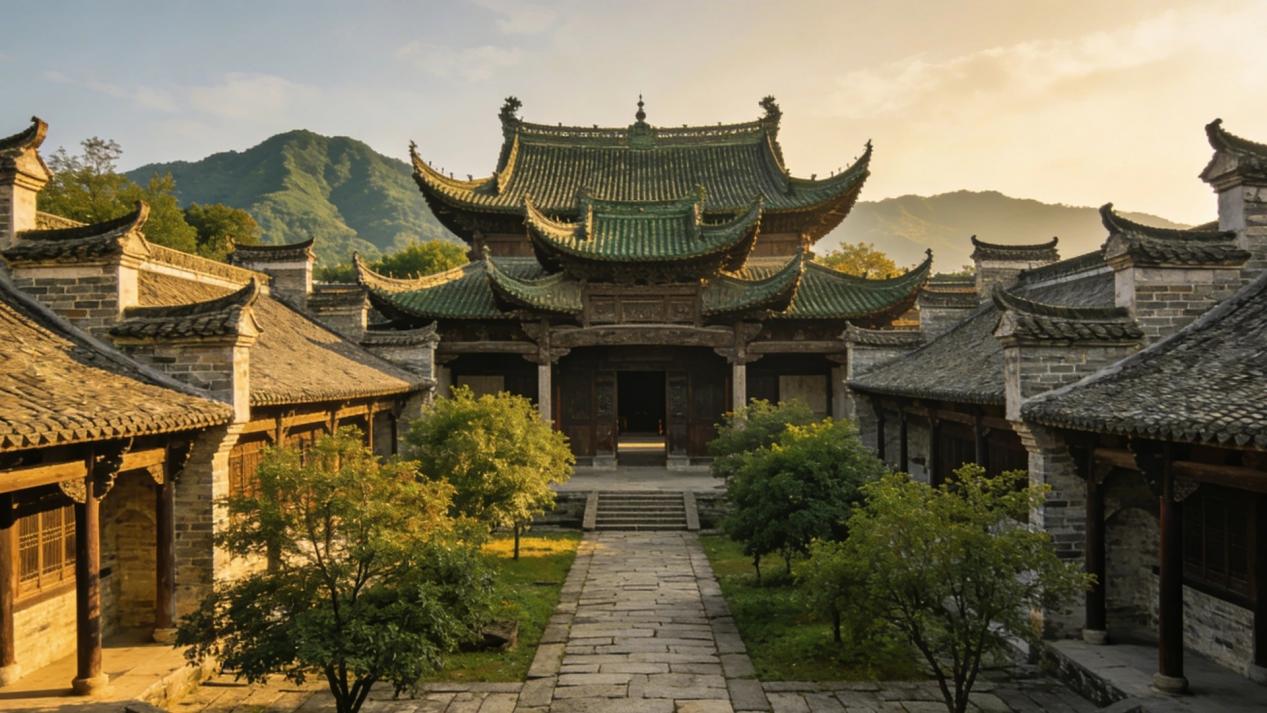
The most valuable feature of the Shi Family Compound is its architectural carving artistry. Over ten sets of wooden door carvings, 153 wooden plaques including door lintels and inscribed plaques, and 47 brick-carved plaques survive today. These wood, stone, and brick carvings adorn various architectural elements such as dougong brackets, queti purlins, hanging decorations, beams, screen walls, column bases, and door piers, showcasing diverse themes and rich content. The most remarkable are the window lattice patterns themed around the character "shou" (longevity), which feature as many as 108 variations—some interpret them as representing the Shi family's 108 businesses, while others symbolize Shanxi Province's 108 counties. The exquisite craftsmanship and delicate carvings vividly embody the rural customs and folk traditions of the Qing Dynasty.
Cultural Treasure: Calligraphy,Light and Shadow and the Master on the Screen
Every plaque in the Shijia Courtyard stands as a masterpiece of calligraphy art. The inscriptions "Dongshan Residence", "Beihai Breeze", "Nanshan Longevity", "Dunben Hall", "Integrity Family Tradition", and "Moonlit Pine Breeze" demonstrate profound calligraphic mastery, with bold strokes and extraordinary charm. These masterpieces by Qing Dynasty literati, complemented by exquisite carvings, transform the entire courtyard into an open-air museum of calligraphic art.
The serene and understated charm of the natural landscape has made the Shijia Courtyard a go-to filming location for renowned directors. It served as the backdrop for films like "Under the Flying Rainbow Tower," "Two Women and a Man," and "Wind and Sand Submerge Shijia Gully," as well as Feng Xiaogang's cinematic masterpiece "1942." As the camera sweeps over the weathered brick walls, winding alleys, and weathered gatehouses, the Shijia Courtyard silently yet powerfully etches its presence into the art of cinematic imagery.
In recent years, the academic value of the Shijia Courtyard has been increasingly recognized. After his inspection, Luo Zhenwen, a leading figure in the national cultural relics field, inscribed "The Essence of Cultural Relics, the Treasure of the Cave." Fei Xiaotong, former deputy director of the Standing Committee of the National People's Congress, proposed "Shijia Gou Folk Culture Activity Village in Fenxi County" after studying the development plan. Xi' an University of Architecture, Beijing University of Civil Engineering and Architecture, and Tianjin University of Architecture have all designated this site as a teaching base. China Oil Painting Academy has even long-term leased Courtyard No.10 as a sketching base. Scholars study classic examples of mountain architecture here, while artists capture the shifting light and shadow of the Loess Plateau.
International Vision: A World Vision on the Loess Plateau
The international recognition of Shijia Courtyard is steadily growing. Years ago, French architectural scholars came to study this Qing Dynasty residence nestled in the mountains, praising its exceptional craftsmanship. Some even compared it to Italy's UNESCO World Heritage site, Matera, noting that "Shijia Gou's grandeur rivals Matera's." Such cross-cultural comparisons have brought Shijia Courtyard into the global architectural spotlight.
The international architectural community's recognition of Shijia Courtyard is epitomized by its prestigious title: "The World's Premier Village in Spatial Expansion and Utilization of Mountainous Areas." This designation stands as an authoritative endorsement of the courtyard's distinctive spatial design, terrain adaptation, and architectural ingenuity embodied in its cave dwellings. The innovative construction philosophy of building along mountain contours and ascending terraces atop caves in hilly regions remains a valuable reference for sustainable development in mountainous areas today.
Yet the path to global recognition for Shijia Courtyard remains long. While Qiao Family Courtyard attracts hundreds of thousands of international visitors annually, Shijia Gou receives scarcely any overseas tourists. The village entrance features only a small convenience store, with no hotels or restaurants available. The lack of transportation infrastructure effectively blocks most international visitors. Ironically, this "hidden gem" status has preserved the courtyard's authentic ancient architecture and rustic charm. For international travelers seeking authentic experiences, this very authenticity constitutes its most precious allure.
Challenges and Future:Let the "First Village in the World" Reborn
Standing before the grand stone archway built during the Qing Dynasty's Xianfeng era, descendants of the Shi family voiced their heartfelt concerns: "If we don't restore and protect it now, this cave dwelling treasure will vanish. Our greatest dream is to bring the Shi family's dwellings out of this secluded paradise and into the global spotlight." This national treasure complex, weathered by over two centuries of storms, now faces severe conservation challenges.
The foremost challenge lies in funding shortages. As a national-level poverty-stricken county, Fenxi has long planned to preserve the Shijia Courtyard, yet financial constraints have kept conservation efforts barely sustainable. Most courtyards now stand in disrepair, with some completely abandoned and occasional thefts of cultural relics occurring. In January 2023, the Shijia Courtyard was designated as a national 3A-level tourist attraction—a positive step forward. However, genuine preservation and revitalization will require sustained investment.
It is gratifying to see that the conservation efforts are progressing steadily. Fenxi County has completed the third phase of the ancient architecture protection and restoration project, with supporting facilities such as a tourist reception hall, restrooms, and walking paths constructed. Shijiagou Village is now a national key cultural relic protection unit, a China historical and cultural village, and a China characteristic traditional ancient village. These "golden plaques" have laid a solid foundation for future protection and development.
Looking ahead, Shijia Courtyard must strike a balance between preservation and development. On one hand, it should adhere to the principle of "restoring the old as it was" to safeguard the authenticity of its cave dwellings. On the other hand, moderate development can breathe new life into this architectural treasure. Drawing inspiration from the success of Matera, Italy, the preservation of ancient buildings can be integrated with cultural tourism, artistic creation, and eco-agriculture. Local delicacies unique to Shijia Valley, such as Chagedou (a traditional dough pastry), Minjie'er (a sweet snack), and Zao Gao (jujube cake), could also become cultural experiences to attract visitors.
For international tourists, the charm of Shijia Courtyard lies in its provision of a rare time-space tunnel—allowing people to travel back to the Jin merchant era two hundred years ago, touch the texture of the Loess Plateau, and feel the order and warmth of China's traditional family society. As Mr.Luo Zhenwen inscribed, this place is "the essence of cultural relics and the treasure of cave dwellings." When more international travelers set foot on this mountain path, push open those hidden doors, and walk along the stone-paved roads that remain dry in rainy days, they will discover not only a cluster of ancient buildings but also a China story about perseverance, wisdom, and dreams.
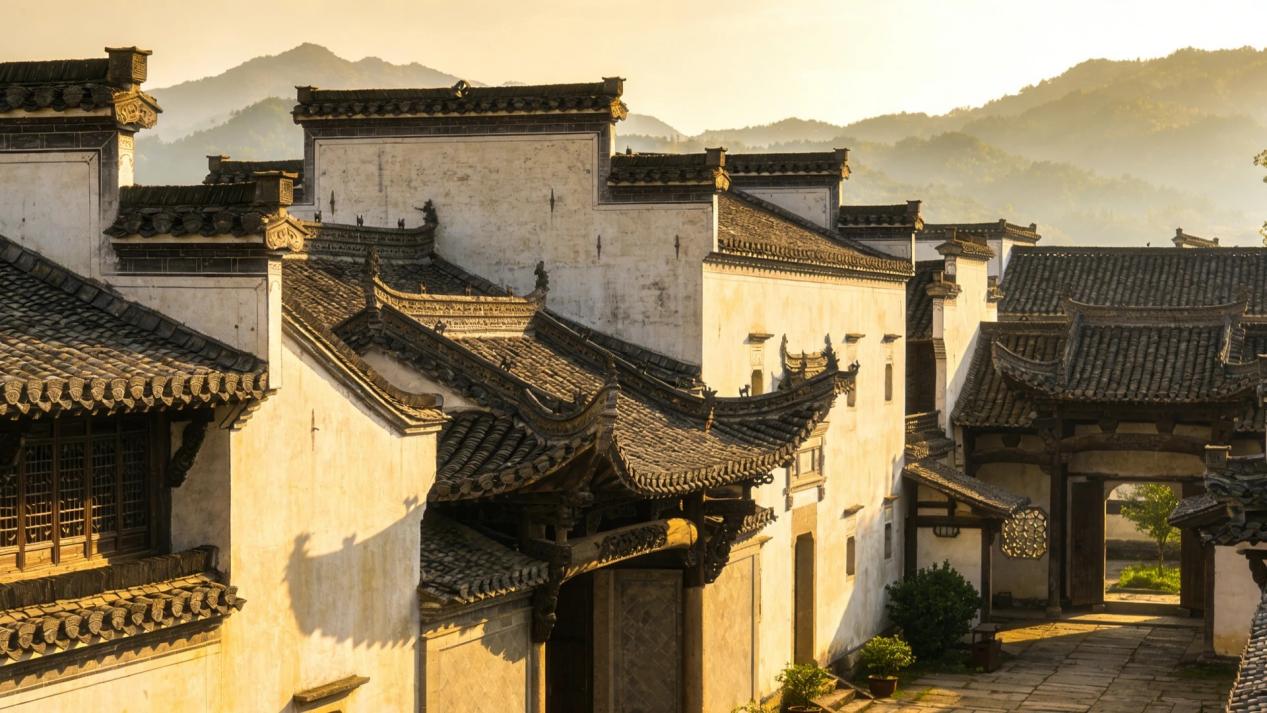
As the sun dips below the horizon, its golden afterglow bathes the stone archway of Shijia Gou, gilding its weathered carvings. In the distance, terraced cave dwellings cascade down the hillside, their chimneys curling into wispy smoke. At the village entrance, a massive stone lion stands sentinel, awaiting curious gazes. Shijia Courtyard—a labyrinth of ancient architecture hidden deep within the Loess Plateau—has stood silent for two centuries, now inviting the world to step inside: to unlock hidden doors, to journey through time, and to listen to the whispers of Shanxi merchants' legacy on the rain-resistant stone paths.

