


The prosperity of a city should be a symbiosis of the vitality of busy streets and the warmth of urban life. However, when the roar of construction, the melody of square dancing, and the hustle and bustle of commerce cross the line, they become "invisible sharp blades" disturbing residents' lives. Construction noise tears apart the peace day and night, excessive volume of square dance music triggers conflicts between neighbors, and the blaring loudspeakers of commercial promotions repeatedly "grate on the ears". These common urban noises not only shatter people's expectations of a livable life but also give rise to many disputes between "disturbance" and "control". Solving the problem of noise pollution has become an important task of urban governance in the new era.
I. Noise Siege: Three Major Pollution Sources Trigger Livelihood Disturbances and Control Disputes
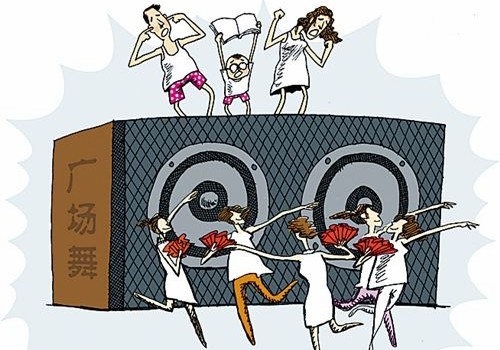
Currently, urban noise pollution is characterized by "concentrated sources, wide-ranging impacts, and prominent disputes", with construction, square dancing, and commerce being the three major disaster areas. Some construction sites conduct illegal night construction, with roars echoing through the night, making it difficult for surrounding residents to rest normally, and the problem often rebounds after complaints. Disputes over square dance noise are particularly common, as the demand of middle-aged and elderly people for fitness and entertainment conflicts with residents' demand for a quiet environment, leading to frequent neighborhood conflicts and difficulty in grasping the control scale. Commercial noise is hidden and persistent; the loud broadcasts of mall promotions, the sound systems of street shops, and the noise of food stalls last day and night, disturbing people's lives and damaging the urban acoustic environment.
These noises all have the problem of "blurred boundaries and unclear responsibilities", leading to "no one to complain to and ineffective handling" in the control process, which exacerbates conflicts and puts urban governance in a dilemma of "controlling will affect vitality, while letting go will breed disturbance". According to data from the Ministry of Ecology and Environment, in 2024, noise disturbance accounted for 59.2% of national ecological environment complaints, among which social life noise complaints accounted for 71.2%, making it the most complained-about environmental problem by the public.
II. Root Causes of Chaos: Multiple Factors Overlap, Plunging Noise Governance into Difficulty
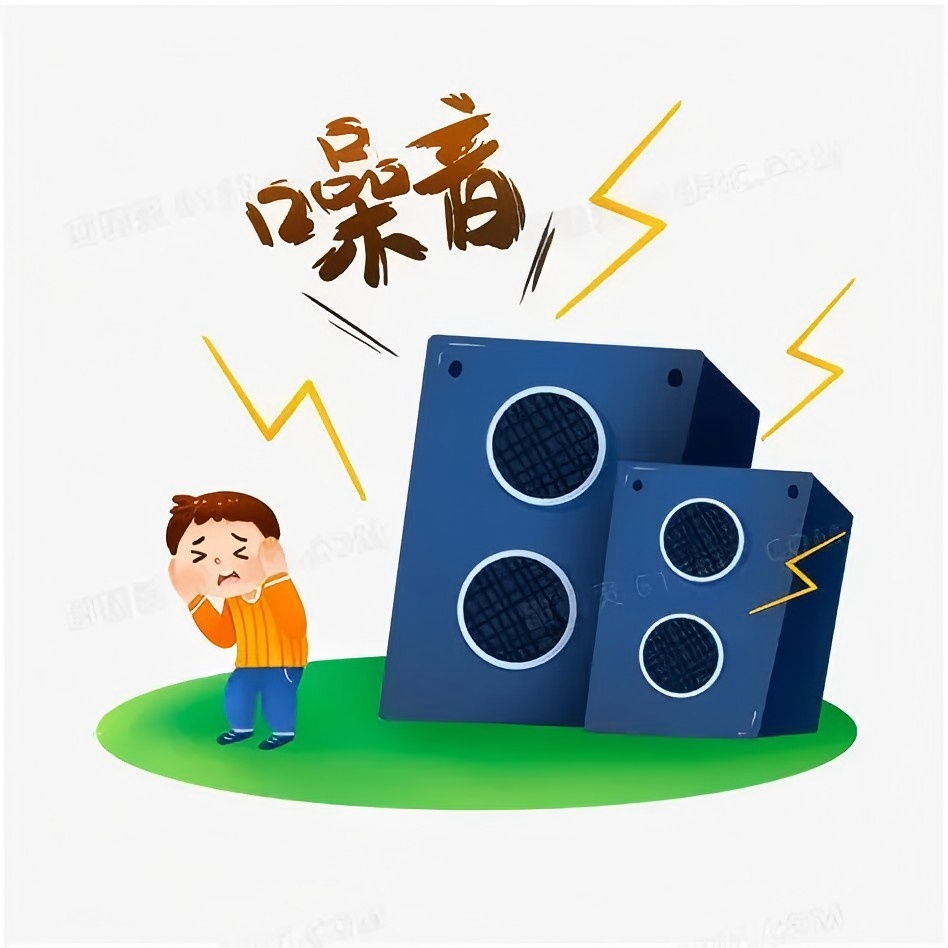
The reason why urban noise persists is the overlap of multiple factors including law, management, and awareness, leading to "faults" in the governance link. Since the implementation of the "Noise Pollution Prevention and Control Law" in 2022, there are still problems of vague standards and light penalties in actual implementation. The definition of decibel limits for commercial noise is not detailed enough, and the responsible subject for square dance control is unclear, making it difficult for law enforcement departments to take precise actions.
Insufficient management coordination is a key bottleneck. Construction noise is supervised by the housing and urban-rural development and ecological environment departments, while square dance and commercial noise are the responsibility of public security and urban management departments. There are problems of overlapping responsibilities and poor information flow among multiple departments, leading to the phenomenon of "passing the buck" when dealing with complex noise complaints. At the same time, noise pollution is characterized by "instantaneity and mobility", making evidence collection difficult. Even if illegal acts are found, it is often difficult to impose penalties due to insufficient evidence, resulting in greatly reduced control efforts.
In addition, the lack of subject awareness exacerbates the chaos: some construction units ignore noise reduction regulations to meet construction deadlines, square dance participants neglect the feelings of surrounding residents, merchants rely on high-volume promotions, and some residents have insufficient awareness of safeguarding their rights. These factors are intertwined, plunging noise governance into a dilemma of "treating the symptoms but not the root cause".
III. Harm of Noise: More Than Disturbance, It Is an "Invisible Shortcoming" of Urban Development
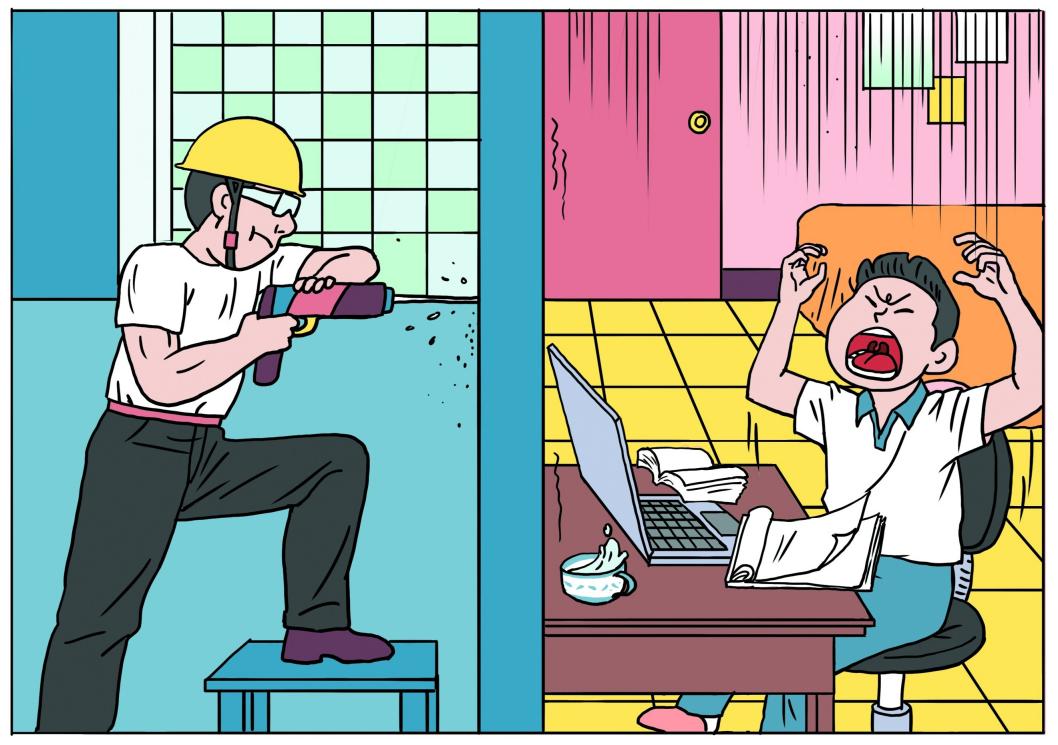
The harm of urban noise is far more than "affecting rest"; it not only endangers residents' physical and mental health but also undermines the foundation of urban development. Long-term exposure to noise can lead to decreased attention, poor sleep quality, and even diseases such as hypertension, with a more serious impact on the elderly and children.
From a social perspective, noise is likely to trigger neighborhood conflicts, consume administrative resources, and reduce residents' sense of happiness. For cities, noise weakens livability and attractiveness, which is contrary to the goals of high-quality development and building a civilized city. Professor Xie Hui from the School of Architecture and Urban Planning of Chongqing University said that although this "invisible pollution" is not intuitive, it subtly affects the quality of life and is an important issue that cannot be ignored in urban governance.
IV. Solutions: Multi-pronged Approach to Build a Long-term Noise Control Mechanism
Faced with the trouble of noise, various regions have made efforts to solve the problem from multiple aspects such as legislation, technological empowerment, and collaborative governance. All regions have refined the implementation rules of the "Noise Pollution Prevention and Control Law", clarified noise emission standards, and increased penalties, making law enforcement rules-based.
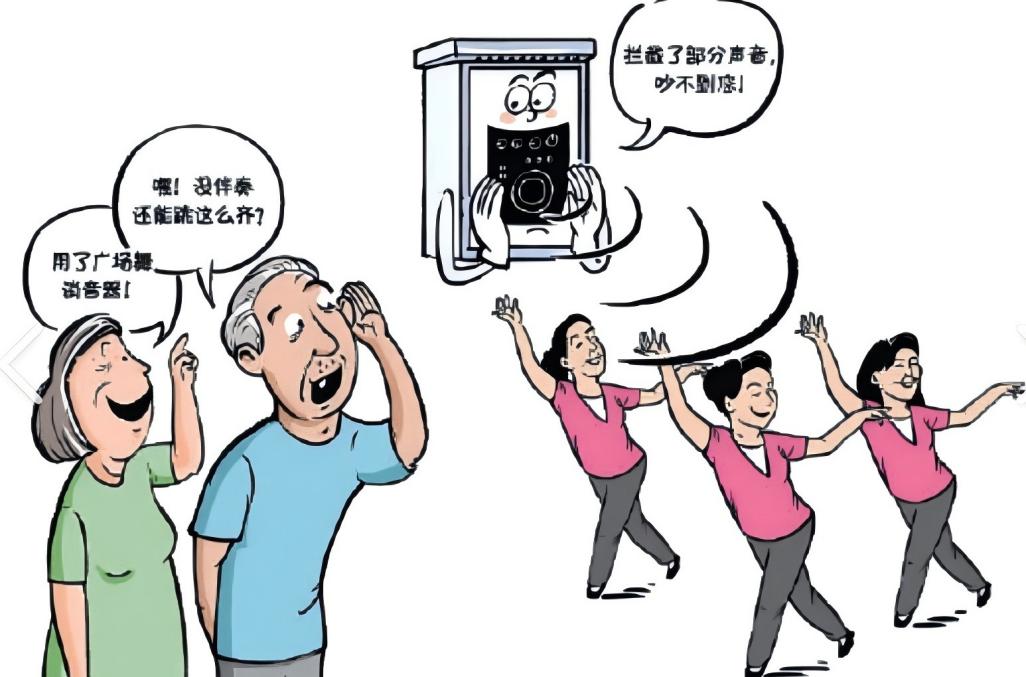
Technological empowerment has become a new starting point for control: Shenzhen has installed "remote monitoring systems" in various construction sites, using AI algorithms and acoustic cameras to monitor construction noise in real time, and "stop" it online once it exceeds the standard. This model has been promoted nationwide by the Ministry of Ecology and Environment; Hangzhou, Shenzhen and other places have promoted directional sound columns in communities and parks, confining square dance music to designated areas to achieve "sound in the dance area, no sound outside the area", effectively solving the problem of square dance disturbance. In addition, Changshu, Nanjing and other places have launched "noise heat maps", making the "invisible and intangible" noise visible and providing support for precise control.
Collaborative governance has solved the problem of "multi-head management". All regions have established a linkage mechanism among multiple departments including ecology and environment, public security, urban management, and housing and urban-rural development, clarified responsibilities, realized information sharing and joint law enforcement, and carried out special rectification on noise pollution in key areas and key periods. At the same time, it strengthens grassroots governance, gives play to the role of communities and property management, guides residents, merchants, and square dance teams to sign "quiet conventions", and promotes the formation of a good pattern of "government supervision, social co-governance, and public participation". By the end of 2024, all 338 prefecture-level and above cities in the country had completed the division of responsibilities for noise pollution prevention and control, basically realizing "someone is responsible for common noise problems".
V. Positive Trends: Noise Control Shows Results, Cities Regain Their Quiet Background
With the implementation of various control measures, urban noise pollution governance has shown obvious positive trends, the phenomenon of disturbance has been effectively curbed, and residents' living environment has been continuously improved. From the data perspective, in 2024, the daytime compliance rate of urban acoustic environment functional areas in the country was 95.8%, and the nighttime compliance rate was 88.2%, both showing a steady upward trend in the past 5 years; the number of noise complaints in various regions has decreased by an average of 30% compared with before the special rectification, and many once "noise disaster areas" have gradually returned to tranquility.
The control model has shifted from "passive response" to "proactive prevention and control". The combination of technology and governance has made noise control more precise and efficient. As of the beginning of 2025, a total of 2,132 quiet communities have been built in the country, and it is expected that by 2035, quiet communities will become the common standard for residential communities.
More importantly, the public's awareness of noise pollution prevention and control has been continuously improved. More and more construction units have taken the initiative to adopt noise reduction measures, square dance teams have consciously controlled the volume and limited the time, merchants have abandoned high-volume promotions, and residents have taken the initiative to participate in noise governance, forming a good atmosphere of "everyone guards tranquility and everyone respects the rules". The once "opposing sides" have gradually moved towards understanding and tolerance, and disputes over noise control have gradually decreased.
The vitality and tranquility of a city are never opposing choices. To solve the problem of urban noise pollution, we must not only hold the "bottom line of tranquility" to protect the basic living rights and interests of residents but also take into account the vitality and warmth of the city. With the continuous improvement of the governance system, the continuous empowerment of technological means, and the general improvement of public awareness, we believe that in the near future, we can not only enjoy the prosperity and vitality of the city but also have a quiet and peaceful place of our own, making the city a truly "livable and suitable for business" happy home.

