


Dialogue with Stone: A Symphony of Huangshan and Eternal Sea of Clouds
In the wish lists of international travelers exploring East Asia, Huangshan has always held a mythical status. This mountain range located in Anhui Province, China, is far more than just a scenic spot—it is a living masterpiece of nature, a source of inspiration for poets, painters, and philosophers for thousands of years, and the ultimate destination for modern global travelers seeking extraordinary experiences. Huangshan is renowned worldwide for its "four wonders": peculiar pines, bizarre rocks, sea of clouds, and hot springs. However, its true soul lies in its ability to perfectly blend the ultimate beauty of nature with profound cultural connotations, offering every visitor a journey that touches the soul.
Origin: Poetic Construction of Nature and Human Deification
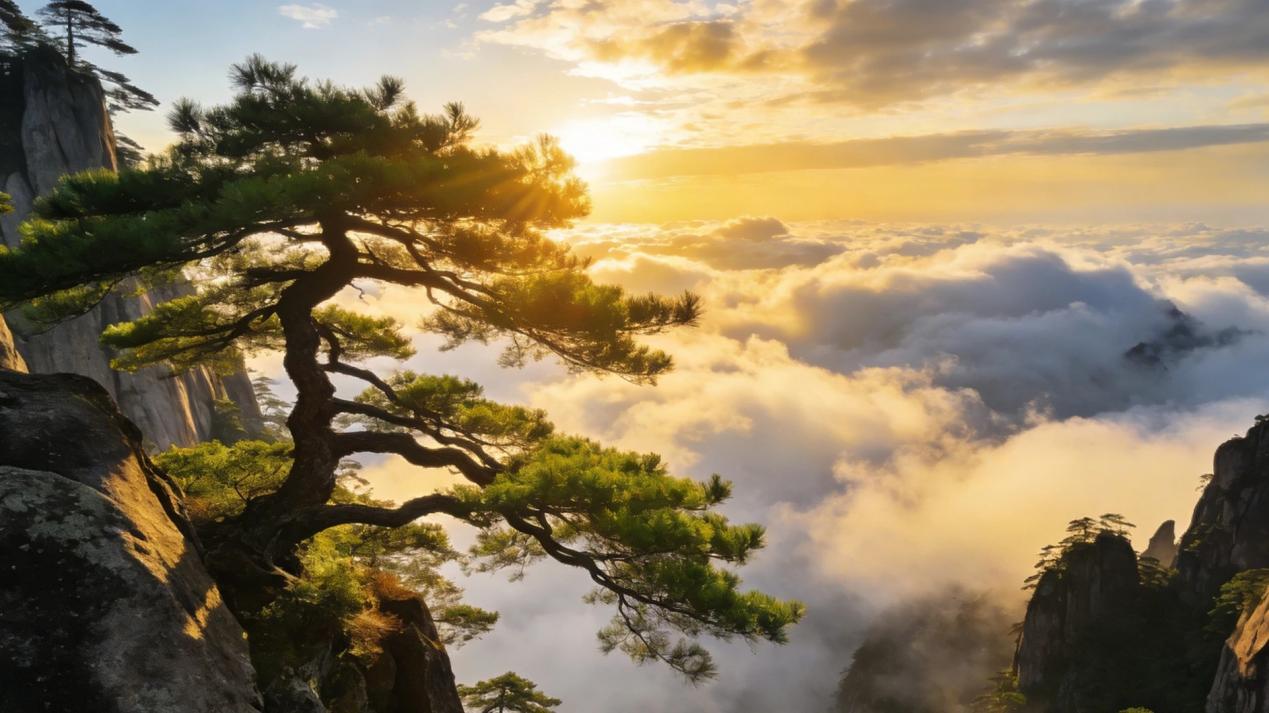
The formation of Mount Huangshan is a geological epic spanning hundreds of millions of years. Through ancient tectonic uplift and glacial sculpting, the granite mountains have shaped today's towering peaks and jagged rocks. Yet its cultural significance as a "sacred mountain" began in the Tang Dynasty. Legend has it that the Yellow Emperor (Xuanyuan Huangdi) refined elixirs and ascended to immortality here, giving the mountain its name. Since then, it has transformed from a mere geographical landmark into a symbol embodying Taoist ideals of celestial mountains and the spiritual aspirations of literati.
For thousands of years, this mountain has been continuously "humanized". Since the Tang Dynasty poet Li Bai left behind his widely acclaimed poems, the ascents, recitations, and depictions by literati and artists throughout the ages have layered upon each other a spiritual panorama. Especially during the Ming and Qing dynasties, artists represented by the "Huangshan School" such as Shi Tao and Hong Ren, who "searched every strange peak for sketches", infused the soul of Huangshan into ink and wash, establishing its pinnacle status in China and even Eastern aesthetics. This symbiosis of nature and humanity has made Huangshan a "living cultural heritage", where every seemingly living stone whispers ancient stories.
Global Resonance:From Oriental Secret Realm to World Heritage
The journey of Huangshan to the world is a history of aesthetic dialogue between the East and the West. Early on, through paintings and records spread along the Silk Road, it planted the seed of "China's fairyland" in the hearts of Westerners. At the beginning of the 20th century, the introduction of photography allowed the visual wonders of Huangshan to be more authentically disseminated worldwide. It truly became a focal point in the international travel industry when it was inscribed on the UNESCO World Heritage List in 1990 as a dual cultural and natural heritage. The World Heritage Committee's evaluation accurately summarized its universal value: "Huangshan... is a source of inspiration for painters and poets, and has long been an important subject in China's art world."
For international tourists, Huangshan offers a unique and intimate experience. Unlike many famous European mountains that focus on mountaineering itself, it emphasizes an immersive aesthetic of "wandering through a painting." The iconic Welcoming Pine has become a global symbol of China's hospitality; the ever-changing sea of clouds makes visitors feel as if they are strolling through the sky; while the steep trails and thrilling peaks satisfy the desires of adventurers. This combination of serene aesthetics and physical challenges transcends cultural boundaries, making it a travel destination repeatedly recommended by international media such as National Geographic.
The Mountain of Life: Ecological Wonders and Sustainable Challenges
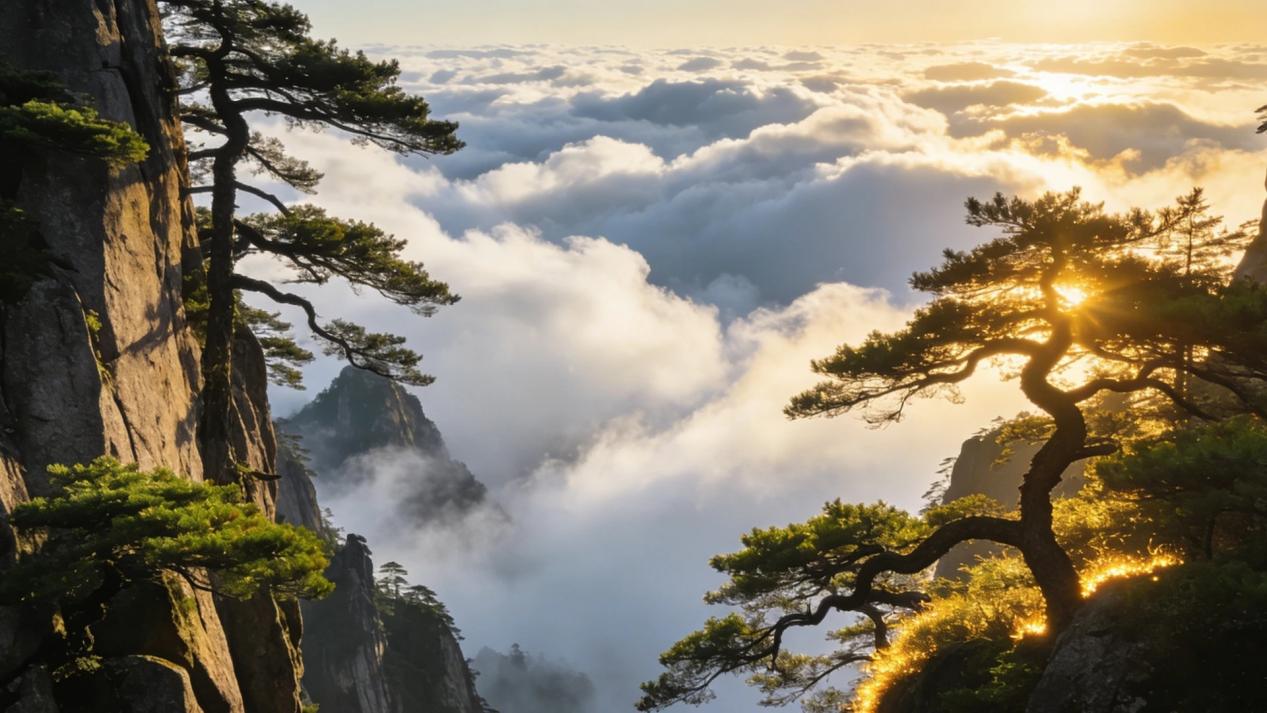
Huangshan Mountain is a dynamic ecosystem brimming with vitality. Its iconic Huangshan pines, with roots deeply embedded in granite fissures, display myriad postures that symbolize resilient life force. The mountain hosts diverse rare flora and fauna, including the Huangshan short-tailed macaque, milu deer, and numerous endemic plant species, forming a rich biodiversity treasure trove. For international nature enthusiasts, this area serves not only as a scenic viewpoint but also as a living laboratory for observing unique mountain ecosystems.
However, like all world-class attractions, Huangshan Mountain faces the eternal challenge of balancing conservation and development. The massive influx of tourists puts pressure on its fragile alpine ecosystem and cultural heritage. To address this, the management has implemented innovative measures: daily visitor caps, smart crowd control systems, eco-friendly shuttle buses, and eco-friendly toilets and waste collection networks spread across the mountains. The broader vision is to shift tourist experiences from "check-in sightseeing" to "in-depth ecological and cultural travel." For instance, visitors are encouraged to stay in nearby ancient villages (such as Hongcun and Xidi) to experience Huizhou culture, thereby dispersing pressure and achieving regional sustainable development.
The Future of Poetry:Reconstructing Classics in Global Dialogue
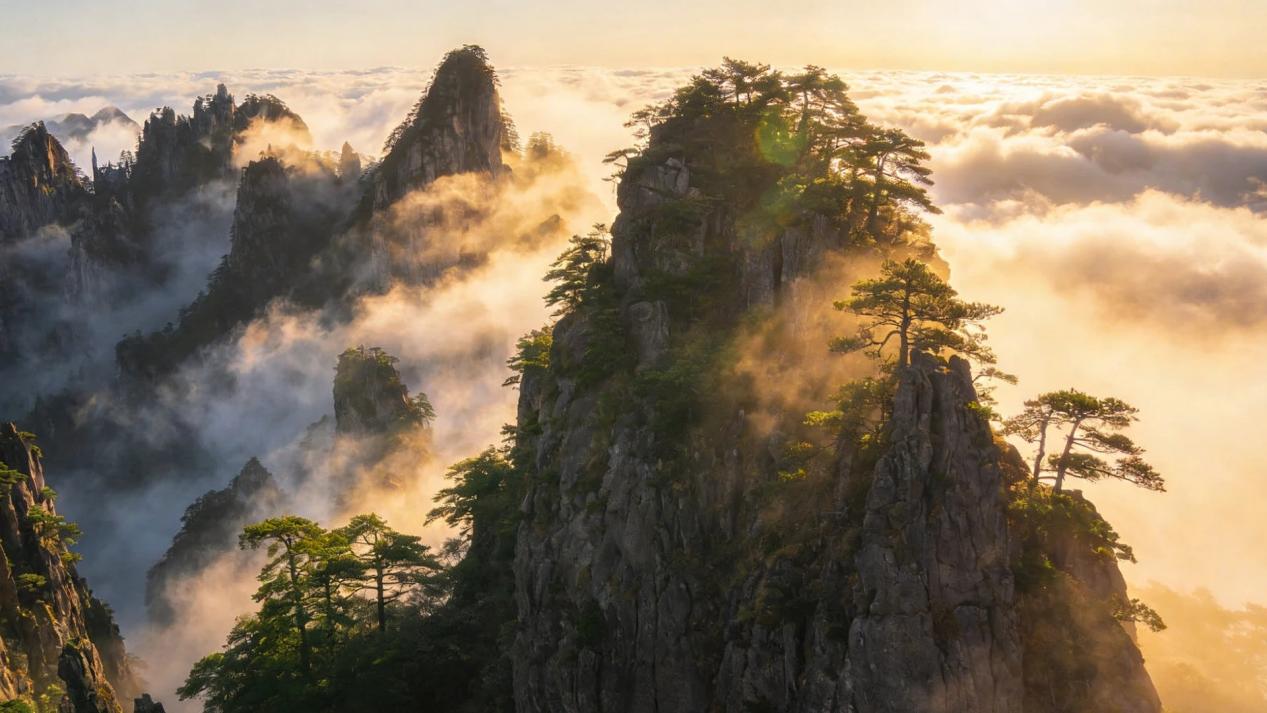
Looking ahead, Huangshan is evolving from a static tourist destination into a dynamic platform for global cultural dialogue and creative inspiration. More than just a travel destination, it has become a sanctuary for artists, writers, photographers, and thinkers. The area regularly hosts international photography competitions, alpine sketching camps, and academic forums centered on the theme of "mountain philosophy."
Digital technology has unlocked new possibilities for Huangshan's future. Through virtual reality (VR), global audiences unable to visit in person can "cloud-walk" atop Tian Du Peak, while augmented reality (AR) tours bring historical anecdotes to life before visitors' eyes. Yet the core wisdom of management remains clear: all technologies serve to deepen, not replace, authentic and reverent physical experiences. Huangshan's future lies in preserving its natural and cultural authenticity while embracing openness and innovation, inviting the world to listen to the whispers of its stones, the rhythm of pine waves, and the murmurs of cloud seas.
For every international traveler who journeys here, Huangshan ultimately offers a profound encounter with the ancient Earth and eternal beauty. It transcends the mere concept of "scenery," serving as a mirror that reflects humanity's universal yearning for the sublime, tranquility, and eternity. Here, each sunrise resembles the world's rebirth, and every mist that brushes against the face carries poetic essence spanning millennia. Huangshan is not just a mountain—it is a story in continuous evolution, a symphonic ode to Earth's beauty that resonates with all of humanity.

