


The Secret Language of White Marble: A Time Journey Across Liu Jiaqiao
In the mountains of Hubei, there lies an ancient village—Liujiabridge Village. Every inch of land here seems to be soaked in the sweat of history; every tile carries the glory of the imperial family. This ancient village, weathered by over four centuries of storms, rests quietly amidst the green mountains and clear waters of Xianning. It is not only a living fossil of Ming and Qing architecture but also a wall-less museum connecting China's clan culture, agrarian civilization, and natural philosophy. For international travelers, Liujiabridge is a profound experience that transcends ordinary sightseeing. It invites people to step into a slowly unfolding ink-wash scroll and listen to the ancient stories told by stones and flowing water.
Origin: The Hidden Peach Garden of the Royal Descendants
The story of Liujiabridge begins with a distinguished starting point. In the late Ming Dynasty, descendants of Liu Jiao, the younger brother of Emperor Gaozu of Han, Liu Bang, migrated here to escape war. They were not an ordinary farming family but a scholar-official class with imperial blood. Based on traditional feng shui principles, their ancestors chose this location—nestled between green mountains and water, sheltered from the wind and imbued with energy—to establish the village. The village's development was not a dramatic mutation but a slow accumulation over centuries, shaped by family proliferation, scholarly pursuits, official careers, and commercial ventures. Here, there are no grand palaces, yet the Confucian ideals of "self-cultivation and family harmony" are woven into the blue bricks and black tiles. The towering ancestral halls and the meticulous layout of the alleys all reflect the patriarchal system of respecting elders. For international tourists, Liujiabridge offers a microcosm to understand China's clan society and the culture of "homeland and family as one." It demonstrates how a family maintains its identity and glory through architecture, clan rules, and collective memory throughout history.
Architecture: Living Museum of Ming Dynasty
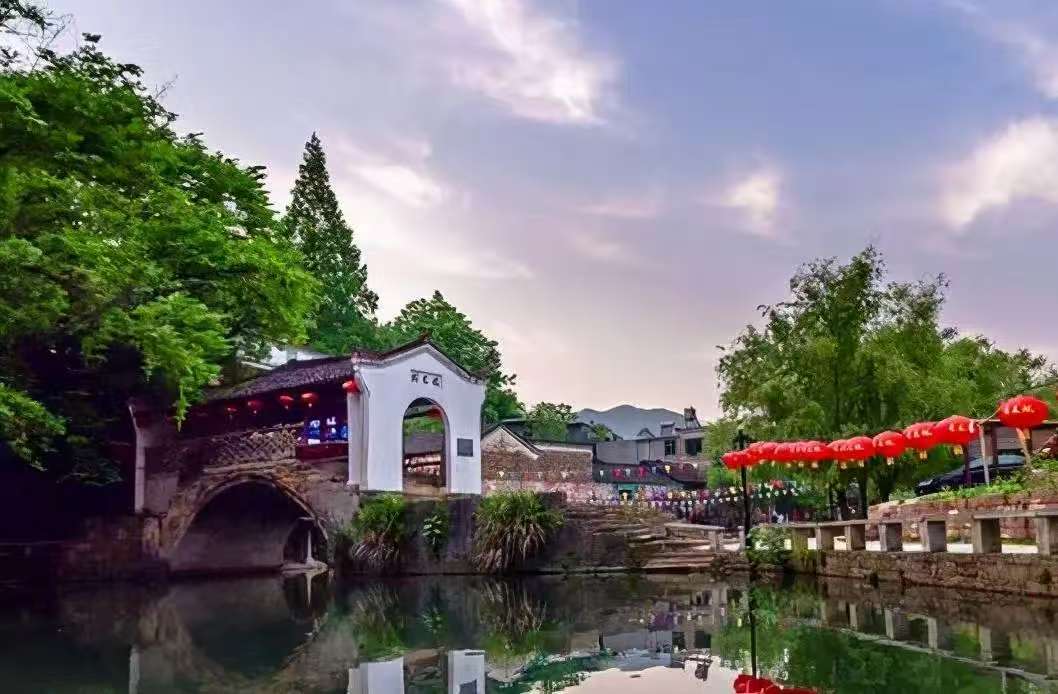
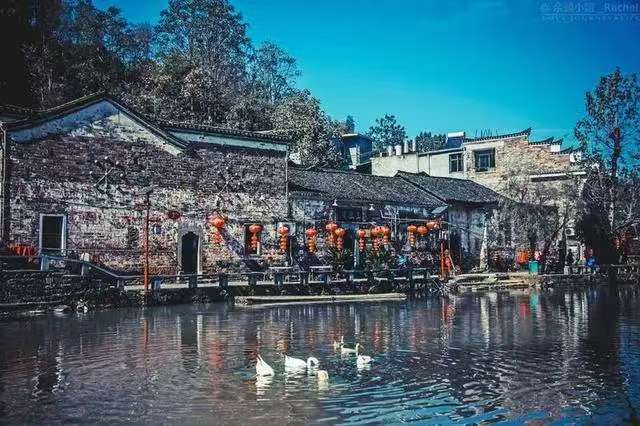
Stepping into Liujiabridge feels like entering a world forgotten by time. The village's soul is the white marble single-arch bridge spanning the Gan River, serving not only as a transportation link but also as a masterpiece of architectural artistry. The Ming and Qing dynasty residences along both banks are built in harmony with the mountains and water, their black tiles, white walls, and wooden lattice windows showcasing a warm texture refined by centuries. Architectural details reveal wisdom everywhere: towering horse-head walls for fire prevention, exquisite stone-carved window patterns symbolizing good fortune, and courtyard designs that balance natural lighting with water collection. Most astonishingly, these structures aren't mere relics for viewing—they still house villagers who live here daily, with wisps of cooking smoke curling and the sounds of chickens and dogs echoing through the air. This "living heritage" transforms history from textbook words into a tangible, audible, and touchable present. Visitors can observe villagers using traditional stoves to cook and washing clothes by the stream—real-life scenes that speak louder than any reconstructed exhibition.
Life Philosophy: Daily Practice of the Unity of Heaven and Man
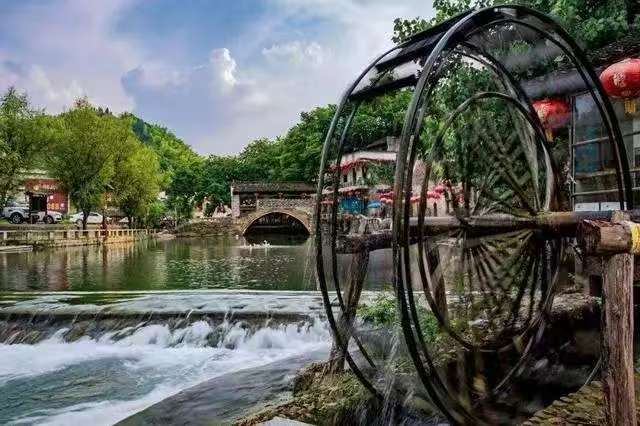
Liu Jiaqiao's allure extends far beyond its architecture. This village preserves a lifestyle deeply synchronized with natural rhythms, embodying the Taoist philosophy of "harmony between heaven and humanity." Backed by verdant mountains and facing the Gan River, it forms a natural ecological barrier. For centuries, villagers have adhered to sustainable wisdom: quarrying stones from the mountains for construction, diverting streams to irrigate fields, and using water-powered mills to process grains, creating a self-sufficient micro-circulation. Spring planting, autumn harvesting, ancestral worship, and festive traditions form the cultural heartbeat of the village. International travelers seeking profound cultural experiences can participate in simple farming activities, learn to prepare local cuisine, or listen to elders recount family legends at night. This immersive experience reveals a simple truth: true cultural heritage exists not only in tangible forms but also in enduring production methods, community bonds, and cosmic beliefs.
International Window: From the Deep Mountains of Hubei to the World Stage
In recent years, Liujiaqiao has gradually attracted global attention, becoming an important window for international tourists to explore "real China". The key to its success lies in avoiding excessive commercialization and preserving its authentic simplicity. Cultural travelers seek tranquility and authenticity here, distinct from Lijiang and Pingyao; anthropologists study its clan structures and rural governance; while architecture enthusiasts are fascinated by its unadorned construction techniques. The local community also welcomes the world with an open and confident attitude: villagers communicate in simple English, tour information is provided in multiple languages, and characteristic homestays maintain traditional charm while catering to the comfort needs of international visitors. The story of Liujiaqiao has spread overseas through documentaries, photography exhibitions, and travel blogs, proving to the world that China's historical heritage is not only found in the grandeur of the Forbidden City but also deeply embedded in these ordinary yet resilient villages.
Challenges and New Life:Preserving Tradition in the Wave of Modernization
Like all ancient villages, Liujiaqiao stands at a crossroads. The younger generation's migration to cities, the impact of modern lifestyles, and the balance between tourism development and preservation present formidable challenges. Yet, hope is also taking root. Local authorities have collaborated with cultural heritage conservation organizations to formulate scientific protection plans, prohibiting new modern buildings in the core area. More importantly, some young people have chosen to return, selling agricultural products through e-commerce platforms and running workshops centered on traditional culture, giving new economic value to ancient crafts. The future of Liujiaqiao may explore a "moderately scaled, high-quality" path of cultural-tourism integration, becoming not just a tourist destination but also a spiritual home where locals can thrive and take pride in their heritage. It safeguards not only four centuries of architecture but also a life wisdom about inheritance, adaptation, and dignity.
In this age of globalization, Liujiabridge Village stands like a serene white marble, resting peacefully in the river of time. It invites every visitor from afar to slow their pace, to touch the weathered stone bridge, to listen to the babbling stream, and to feel the centuries-old bond between a family and its land. Here, there are no noisy performances, only the authenticity of life; no frozen history, only a culture that still pulses. It reminds us that true glory lies not in past glory, but in how we humbly and tenaciously pass down a history and a spirit, and in how we quietly tell our story to the world in the new era.

