


In the history of Chinese ceramics, Tang Sancai (tri-color glazed pottery of the Tang Dynasty) has become a vivid embodiment of the spirit of the prosperous Tang Dynasty with its rich colors, vivid shapes, and profound cultural heritage. This low-temperature lead-glazed pottery, born in the Tang Dynasty, does not specifically refer to three colors, but rather is a type of colorful glazed ceramic product based on three hues—yellow, green, and white—supplemented by the blending of blue, ochre, purple, and other colors. Its emergence not only marks a major breakthrough in China's ceramic glazing technology but also records the prosperity and cultural inclusiveness of Tang Dynasty society through its diverse themes and exquisite craftsmanship.
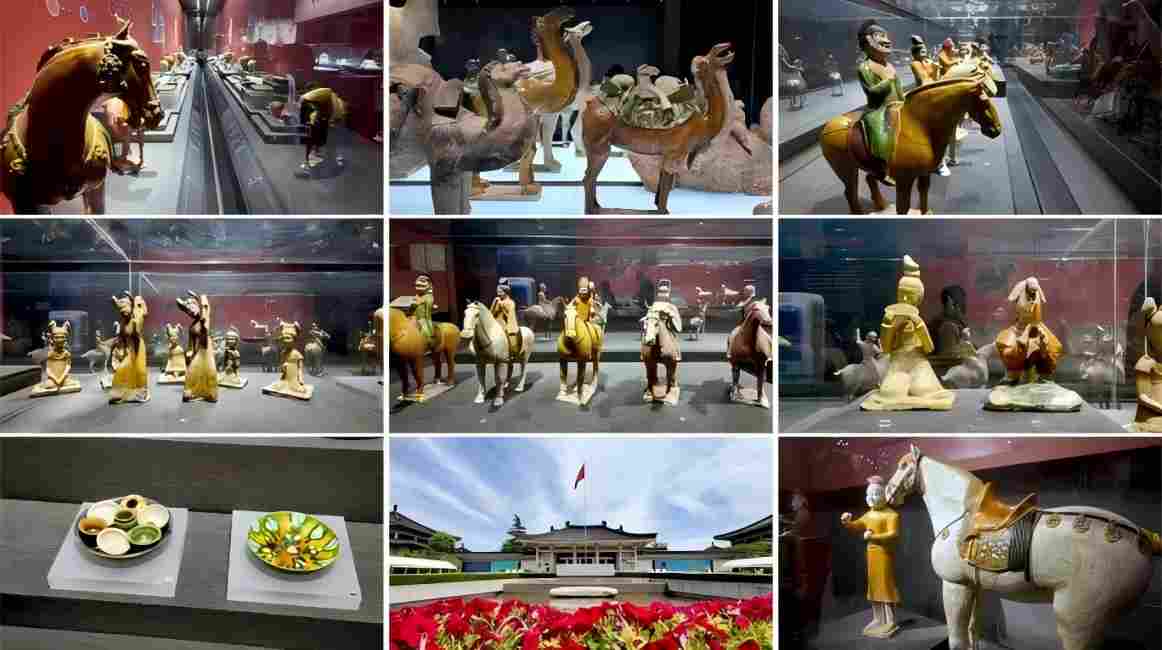
The rise of Tang Sancai is inseparable from the social background of the Tang Dynasty. During the heyday of the Tang, the country enjoyed strong national power and a booming economy, with the Silk Road unimpeded and frequent cultural exchanges between China and foreign countries—all of which provided fertile ground for the development of Tang Sancai. At that time, the custom of elaborate burials prevailed. High-ranking officials, nobles, and even ordinary people hoped to showcase their status and express their sorrow through exquisite burial objects. Tang Sancai, with its exquisite craftsmanship and bright colors, became one of the most popular burial items. Meanwhile, the maturity of the ceramic handicraft industry in the Tang Dynasty provided technical support for the production of Tang Sancai, forming a complete technological system from raw material selection to molding, glazing, and firing.
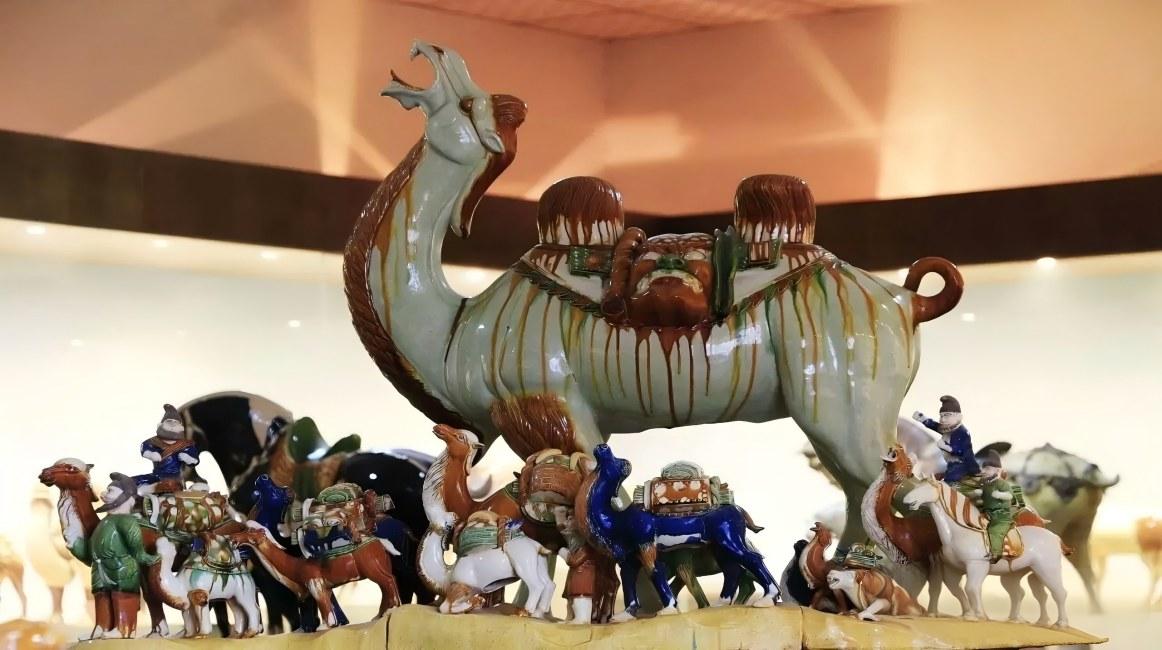
The production process of Tang Sancai is quite complex, combining scientific principles and artistic craftsmanship. Its raw material is fine kaolin clay, which is highly plastic and hardens after firing, ensuring the intricacy of the shapes. The production process roughly consists of four steps: first, the ceramic blanks are made through hand kneading, molding, or wheel-throwing; then, the blanks are put into a kiln for biscuit firing at a temperature of about 800℃ to set and harden; after biscuit firing, glaze is applied to the surface of the blanks. The glaze uses lead as a flux, combined with metal oxides such as copper oxide, iron oxide, and cobalt oxide as colorants. Glazing methods include dipping, splashing, dotting, and other techniques—craftsmen control the flow and blending of the glaze to create a brilliant and colorful effect; finally, glaze firing is carried out at a temperature of around 900℃. The lead glaze melts and flows at high temperatures, and glazes of different colors interpenetrate and blur, forming natural and smooth color transitions.
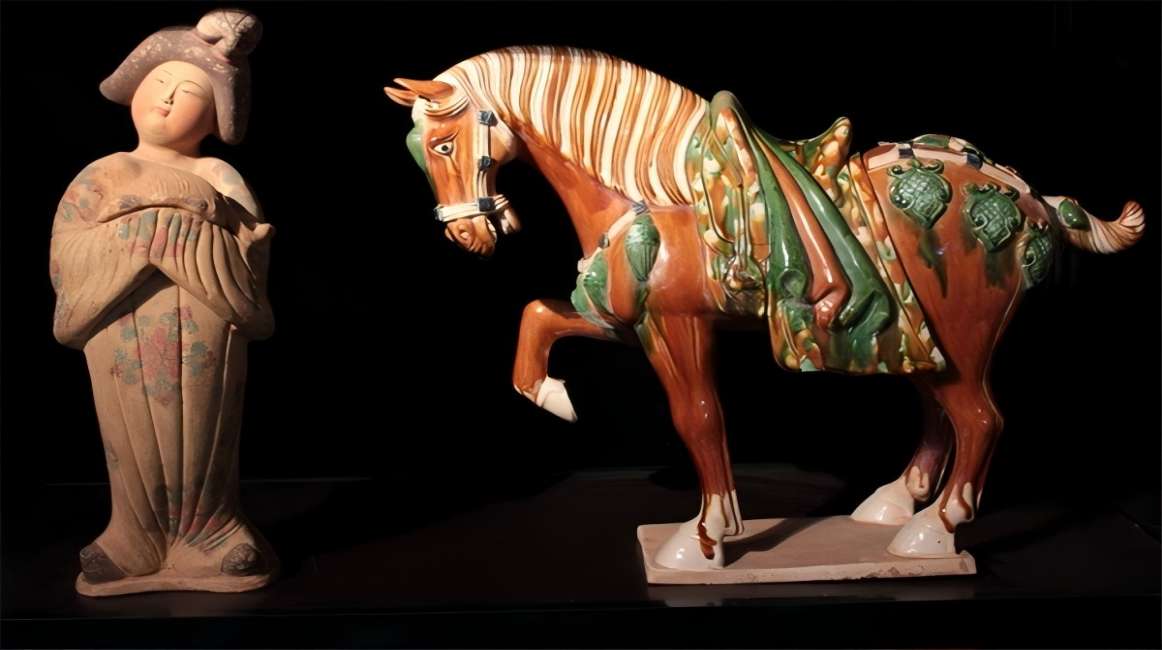
The themes of Tang Sancai are extremely rich, covering all aspects of social life in the Tang Dynasty, and are mainly divided into three categories: figurines, animal sculptures, and daily utensils. Figurines are vivid and expressive, including majestic military officers, dignified and refined civil officials, plump court ladies, and foreign merchants with deep-set eyes and high noses—truly reflecting the images and spirits of people from all walks of life in the Tang Dynasty. Among them, court lady figurines, with their round faces, flowing robes, and elegant postures, are representative of Tang Sancai figurines, embodying the Tang Dynasty's aesthetic preference for plumpness. Among animal sculptures, horses and camels are the most common and exquisitely crafted. The tradition of horse breeding was prevalent in the Tang Dynasty, and horses were not only a means of transportation but also a symbol of status. Tang Sancai horses have vigorous shapes, well-defined muscles, and lifelike details—from their coat color and decorations to their postures, they fully demonstrate the bold spirit of the prosperous Tang Dynasty. Camel sculptures often depict commercial scenes on the Silk Road, with loaded camels strutting forward with firm expressions, witnessing the grand occasion of cultural exchanges between China and foreign countries. Daily utensils include pots, jars, bowls, plates, stoves, and other items, which are practical and aesthetically pleasing in shape with brilliant glazes—meeting daily needs while reflecting the aesthetic pursuits of Tang craftsmen.
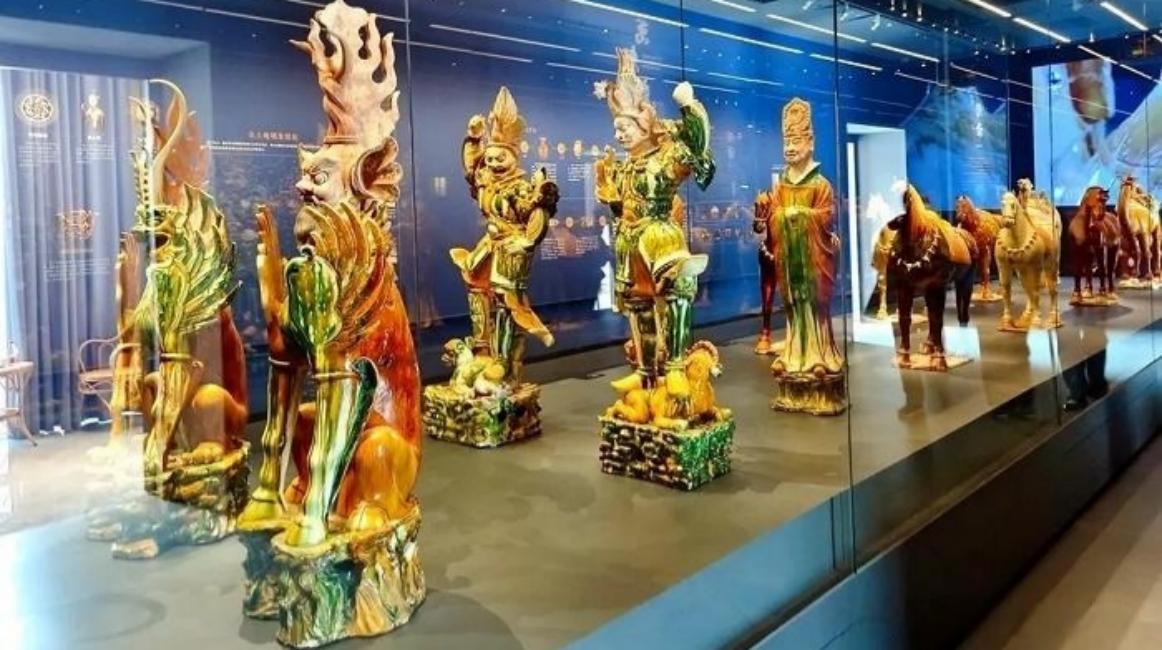
Tang Sancai is not only a practical object but also a work of art with extremely high artistic value. Its artistic characteristics are mainly reflected in three aspects: shape, color, and decoration. In terms of shape, Tang Sancai emphasizes the combination of realism and exaggeration—accurately grasping the morphological characteristics of humans and animals while enhancing the expressiveness and appeal of the works through appropriate exaggeration. In terms of color, colorful glazes based on yellow, green, and white complement each other, bright and vivid yet harmonious, forming the unique color style of Tang Sancai. In terms of decoration, various techniques such as carving, scratching, and relief sculpture are adopted, with smooth lines and rich details further enhancing the artistic standard of the works.
With the decline of the Tang Dynasty's national power and the weakening of the custom of elaborate burials, the production of Tang Sancai gradually declined, but its status in the history of Chinese ceramics is pivotal. Its firing technology laid the foundation for the production of colored porcelain in later generations, and its rich themes and artistic styles have exerted a profound influence on ceramic creation in subsequent dynasties. Today, as an important symbol of Tang Dynasty culture, Tang Sancai is not only a precious collection in museums but also an important carrier of cultural exchanges between China and foreign countries, showcasing to the world the brilliant achievements of ancient Chinese ceramic art and the cultural charm of the prosperous Tang Dynasty.

