


As a treasure of the traditional art of the Chinese nation, Chinese traditional painting carries thousands of years of cultural accumulation and aesthetic pursuit. With its unique brush-and-ink language, philosophical connotations, and artistic forms, it has become a unique existence in the world art palace. It is not only a visual art but also an expression of spirit, embodying the Chinese people's profound insights into nature, life, and the universe.
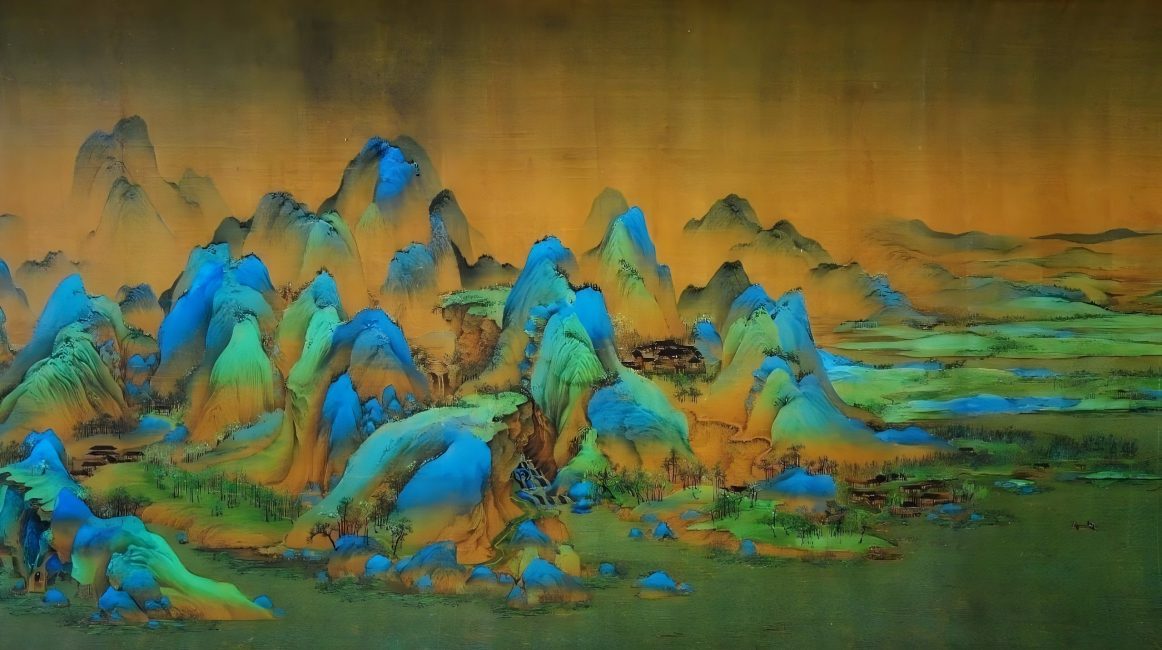
The origin of Chinese painting can be traced back to the painted pottery patterns of the Neolithic Age. Those concise and vivid fish patterns and bird patterns already possessed the embryonic form of freehand brushwork. The bronze vessel decorations of the Shang and Zhou dynasties featured bold and powerful lines, filled with a sense of mystery and solemnity. The "Figure with Dragon and Phoenix" and "Figure Riding a Dragon" from the Warring States Period marked the birth of independent paintings, with fluent lines and simple compositions. During the Qin and Han dynasties, murals and silk paintings flourished. The silk paintings from the Mawangdui Han Tomb demonstrated the superb painting skills of the time with their intricate compositions and gorgeous colors. The Wei, Jin, Southern, and Northern Dynasties were a crucial period for the development of Chinese painting. Gu Kaizhi put forward the artistic proposition of "transmitting spirit through form," emphasizing the expression of inner spirit through external form. His "Nymph of the Luo River" became a classic handed down from generation to generation. In the Sui and Tang dynasties, Chinese painting entered its heyday. Famous figure painters emerged one after another. Yan Liben's "Princess Wencheng Departing for Tibet" and Wu Daoxian's "The Buddha's Nirvana" featured lines that were either bold or elegant, with magnificent colors. Landscape painting also gradually became an independent genre, and Zhan Ziqian's "Spring Outing" is the earliest existing scroll landscape painting. During the Song and Yuan dynasties, literati painting rose. Literati such as Su Shi and Wen Tong integrated calligraphic brushwork into painting, pursuing the artistic realm of the integration of poetry, calligraphy, painting, and seal carving, and emphasizing freehand brushwork and vivid expression. Huang Gongwang's "Dwelling in the Fuchun Mountains" of the Yuan Dynasty pushed the artistic conception of landscape painting to the extreme. Since the Ming and Qing dynasties, various schools have emerged. Xu Wei's splashed-ink freehand brushwork, Bada Shanren's concise and isolated style, and the meticulous craftsmanship of the "Four Wangs" have jointly formed a rich and colorful artistic map of Chinese painting.
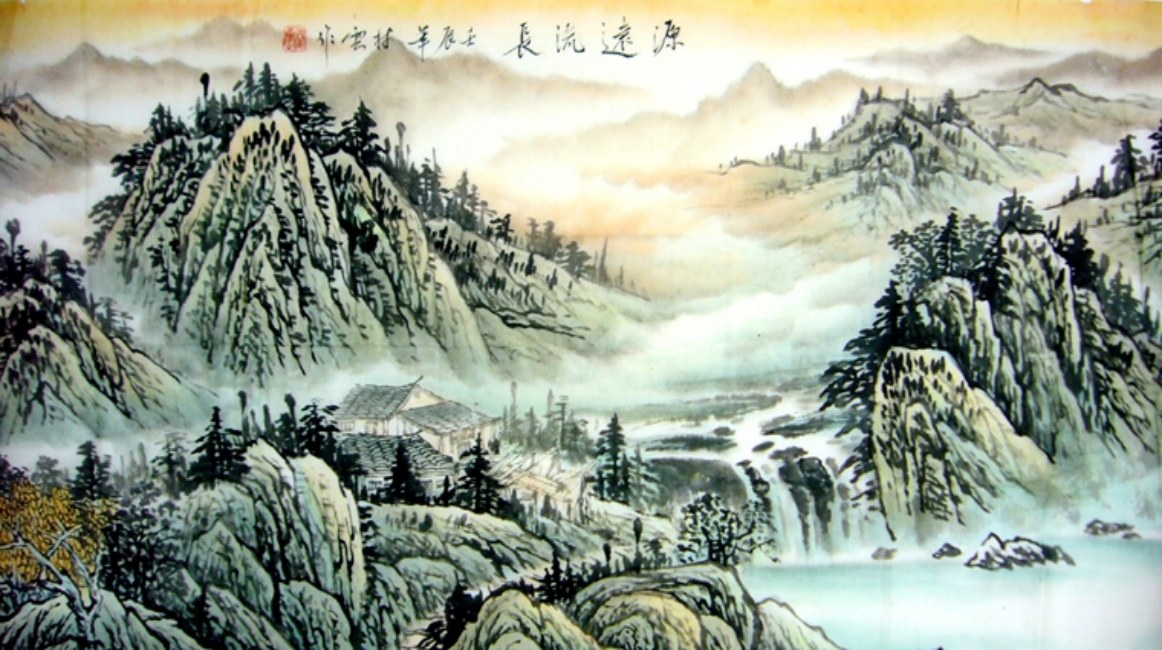
Chinese painting has distinct and unique artistic characteristics, with the core lying in the "brush and ink." The writing brush, as the main tool, has the characteristics of being sharp, neat, round, and elastic, enabling infinite changes in lines. Brush techniques such as central tip, side tip, and reversed tip can express different textures such as hardness and softness, thickness and thinness, dryness and wetness. Through the five ink tones of dry, dense, heavy, light, and clear, ink creates rich layers and artistic conceptions. Chinese painting does not pursue the realistic reproduction of objective things but emphasizes "freehand brushwork" and "vivid expression," focusing on expressing the painter's emotions and aspirations. The so-called "Learn from nature outwardly, and draw from one's inner spirit inwardly" is the integration of natural scenery and inner feelings to create an artistic realm where scenes and emotions blend. In addition, the composition of Chinese painting emphasizes "the interplay of emptiness and solidity" and "appropriate density and spacing," often adopting the technique of leaving blank spaces to leave room for the viewer's imagination, reflecting the philosophical thought of "the coexistence of being and non-being" in traditional Chinese culture. In terms of color application, Chinese painting is mainly based on ink wash, supplemented by light colors, pursuing "applying colors according to the nature of the subject," focusing on the consistency between colors and the inherent temperament of the objects, rather than mere realism.
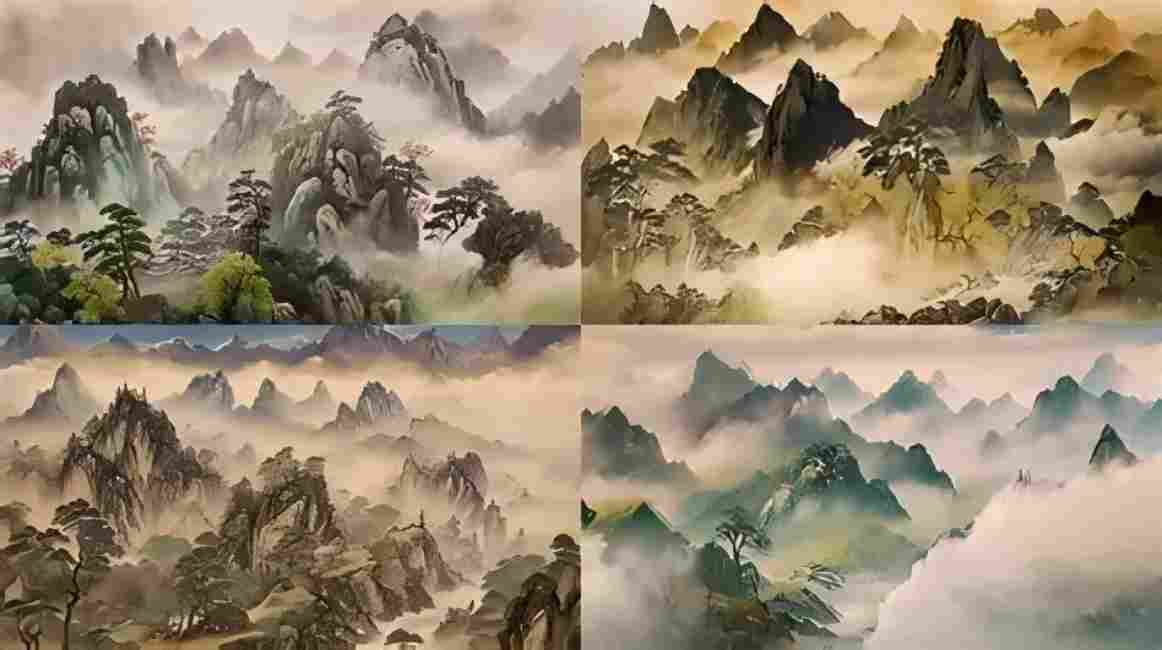
Chinese painting covers a wide range of themes, mainly divided into three categories: figure painting, landscape painting, and flower-and-bird painting. Figure painting focuses on depicting human images and expressing human personalities and social life. From ancient sages and noble ladies to modern ordinary people, all can be depicted in paintings. Technically, it is divided into gongbi (fine brushwork) and xieyi (freehand brushwork). Gongbi is exquisite and neat, while xieyi is concise and vivid. Landscape painting takes natural landscapes as the subject, embodying the Chinese people's love for nature and yearning for a spiritual home. Through the depiction of mountains, rocks, trees, clouds, and water, it shows different artistic conceptions such as grandeur, elegance, and vastness, and is one of the most representative themes in Chinese painting. Flower-and-bird painting takes flowers, birds, insects, fish, beasts, etc., as the subject, focusing on expressing the vitality and charm of the objects. It often conveys good wishes such as auspiciousness and nobility through symbolic and implied techniques. For example, plum blossoms symbolize integrity, bamboo stands for moral integrity, and lotus flowers imply purity and incorruptibility.
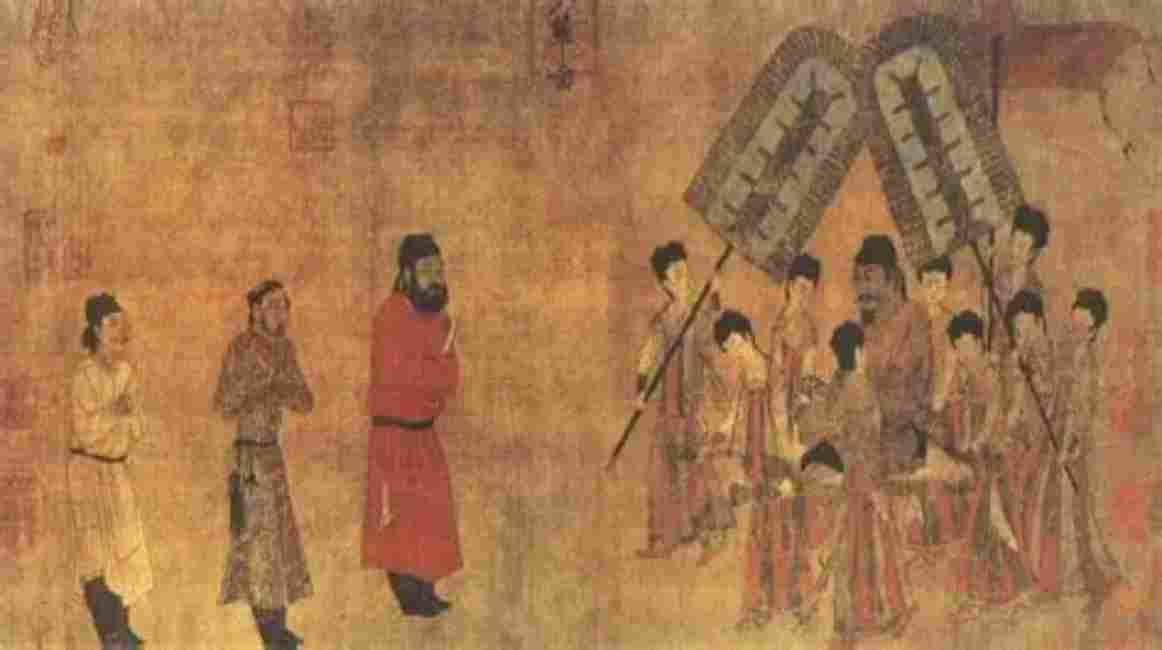
Chinese painting is not only an artistic expression but also a carrier of culture, containing profound philosophical thoughts and humanistic spirits. It emphasizes the harmonious coexistence between humans and nature, reflecting the worldview of "the unity of man and nature"; focuses on the cultivation of personal morality, conveying the values of "cultivate one's moral character, govern one's family, manage the state, and bring peace to the world"; pursues the creation of artistic conception and the expression of emotions, showing the unique aesthetic taste of the Chinese people. In the long historical process, Chinese painting has continuously absorbed and integrated cultural elements from different periods, keeping pace with the times. Today, traditional Chinese painting is combined with modern artistic concepts, emerging many new forms of expression and styles, making it radiate new vitality and vigor.
As a cultural treasure of the Chinese nation, Chinese traditional painting, with its unique artistic charm and profound cultural heritage, transcends time and space and has a far-reaching impact. It is not only the spiritual wealth of the Chinese people but also a precious heritage in the world art treasure house, showing the profoundness and unique charm of traditional Chinese culture to the world.

