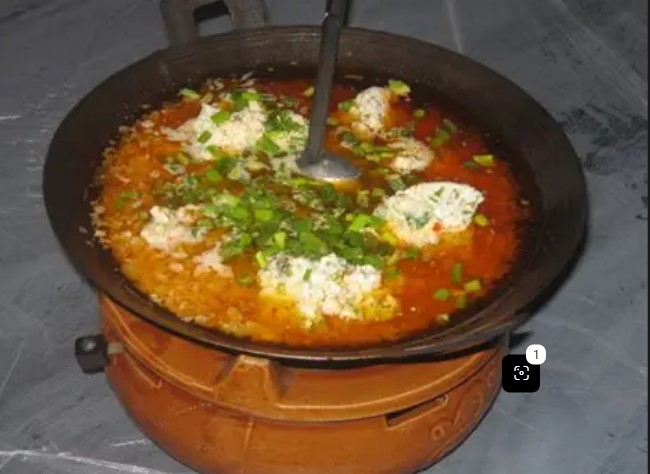


Within the vast repertoire of Chinese food sources, hemp seeds—often overlooked by modern people—have, in fact, played a continuous role throughout the history of Chinese civilization. Archaeological evidence reveals that as early as 4,000 years ago, in what is now Shandong Province, ancient inhabitants were already cultivating hemp on a significant scale. Hemp seeds, alongside millet and broomcorn millet, served as a primary staple for these northern ancestors. This small kernel was remarkably versatile: it could be steamed, boiled, or ground into flour; its fibers could be woven into cloth, and its stalks used as fuel—a true "triple-purpose" resource that functioned as a cornerstone of survival, distinct from the traditional "five grains."
In one version of the "five grains" listed in the *Rites of Zhou: Officials of Heaven* (*Zhou Li: Tian Guan*), "hemp" is explicitly included—the earliest written evidence of hemp seeds appearing in the Chinese diet. By the Qin and Han dynasties, the medicinal properties of hemp seeds were systematically documented in the *Shennong Ben Cao Jing* (Classic of Materia Medica), where they were classified as a "superior" herb, noted for "tonifying the middle and replenishing *qi*; long-term consumption promotes a robust and healthy physique." During the Eastern Han dynasty, Zhang Zhongjing featured hemp seeds as the principal ingredient in his classic formula, "Mazi Ren Wan" (Hemp Seed Pill), which remains a quintessential traditional Chinese medicine (TCM) remedy for relieving constipation. Later, in the Jin dynasty, Ge Hong’s *Handbook of Prescriptions for Emergencies* (*Zhouhou Beiji Fang*) described the use of hemp seeds in porridge—effectively transitioning this ingredient from the apothecary’s jar to the everyday dining table. From staple food to medicinal ingredient, and from the fields to the kitchen hearth, hemp seeds have grown quietly across the Chinese landscape for four millennia.
Today, any discussion of hemp seeds inevitably leads to one place: Bama Yao Autonomous County in Guangxi. Located in the northwest of the region, Bama is characterized by rolling limestone mountains and the winding Panyang River. It has been recognized by the International Natural Medicine Society as a "World Longevity Village," boasting one of the highest concentrations of centenarians per 100,000 people globally. In the local diet, hemp seeds hold a position that is almost sacred. A popular local proverb captures this sentiment: "Eat hemp seeds every day, and you’ll live to be ninety-eight."
Hemp is exceptionally demanding regarding its growing environment. In Bama, *huoma* (hemp seeds) are cultivated exclusively in the rocky, mountainous northern region. The limestone-rich soil of this karst landscape, combined with air abundant in negative oxygen ions and an ideal diurnal temperature range, nurtures hemp seeds of exceptional quality. The local Yao people have grown *huoma* for generations; the Bunu Yao, in particular, traditionally prepare *huoma* soup and *huoma hezha* (a thick, porridge-like dish) as seasonal, health-promoting foods to mark the beginning of autumn (*Liqiu*). While *huoma* is also grown in places like Yunnan and Qinggang in Heilongjiang—known as "China’s Industrial Hemp Valley"—Bama remains the irreplaceable heartland of *huoma* culinary culture.
Preparing *huoma* soup in Bama requires no precision instruments—only a pair of hands, an iron pot, and a stone mill. Though the dish may appear simple, its preparation involves a meticulous process.
First, the mature hemp seeds are sun-dried and then hulled. The seeds are tiny—about the size of a grain of rice—and encased in a hard shell, which is traditionally removed through pounding or winnowing. Once hulled, the kernels appear pale green and, when crushed, release a delicate, nutty aroma.
The second step is the most demanding. Yao women in Bama place the kernels into a stone mortar and pound them repeatedly with a wooden pestle. Achieving the perfect consistency is crucial: if the seeds are left too coarse, the resulting soup will be thin and bland; if pounded too finely, the oil will be released prematurely, giving the dish an unpleasantly greasy texture.
In the third step, the crushed hemp paste is placed into a dry pot and stirred over low heat until the oil begins to seep out, appearing as tiny, glistening droplets, while a rich, nutty fragrance rises. This process, similar to roasting sesame seeds, serves to intensify the natural, oily aroma of the hemp kernels while eliminating any raw, astringent taste.
Finally, once the oil has been released, water or stock is added. After the mixture comes to a boil, any foam is skimmed off, and fresh, seasonal local vegetables—such as wild celery, pumpkin shoots, sweet potato leaves, or baby bok choy—are added to the pot. Continue simmering over low heat for about ten minutes; as the hemp seed emulsion melds with the vegetable juices, the broth gradually turns a milky white—resembling thinned soy milk—with a delicate, golden-green film of oil shimmering on the surface.
Before taking it off the heat, add only a pinch of salt—no MSG, no chili. The resulting soup is milky white and exudes a clean, mellow fragrance. On the palate, it offers a gentle, velvety richness from the plant-based oils, underscored by the subtle sweetness of the vegetables; it is oily yet never greasy, leaving a refreshing, lingering sweetness. A bowl in the winter warms you from the throat all the way to the stomach, while a bowl served at room temperature in the summer helps to dispel the sweltering heat.
The elderly residents of Bama often say that they rarely suffer from constipation throughout their lives—a benefit they largely attribute to this hemp seed soup.
Beyond this signature soup, hemp seeds are prepared in a variety of traditional ways: mixed into *heza* (a thick bean-and-vegetable mash), cooked into porridge, steamed with egg custard, blended into a Cantonese-style hemp seed paste, pressed into cold-pressed oil, infused into liquor, or crafted into crispy snacks.
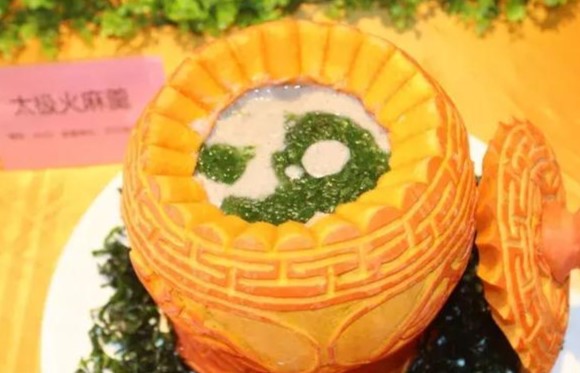
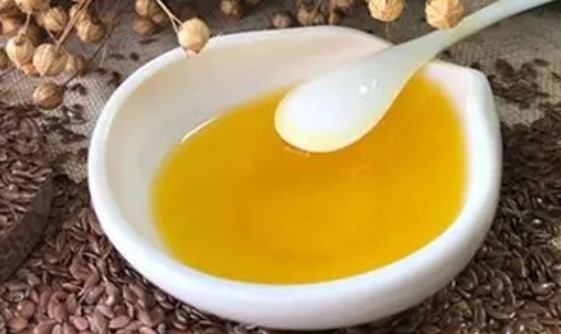
Modern nutritional analysis sheds light on the dietary habits that contribute to the longevity of the people in Bama: over 90% of the fat content in hemp seeds consists of unsaturated fatty acids. This includes approximately 50%–60% linoleic acid (Omega-6) and 20%–30% alpha-linolenic acid (Omega-3). The ratio between the two—roughly 3:1 to 4:1—is recognized by the international nutritional community as the "golden ratio" for human metabolism, supporting cardiovascular health, reducing inflammation, and maintaining cell membrane function. Within the human body, alpha-linolenic acid can be converted into EPA and DHA—often referred to as "plant-based brain gold"—which help nourish both the nervous and cardiovascular systems. Furthermore, hemp seeds are rich in vitamin E, B-complex vitamins, lecithin, high-quality plant protein, and various essential amino acids, with an oil content of approximately 30%–35%. Traditional Chinese Medicine offers a more concise summary: hemp seeds (*huomaren*) are sweet in flavor and neutral in nature, entering the Spleen, Stomach, and Large Intestine meridians. They serve to moisten dryness, facilitate bowel movements, and nourish the body to address deficiencies. It is rare among substances classified as both food and medicine to simultaneously offer both "clearing" (promoting movement) and "nourishing" (replenishing) properties.
The journey of hemp seeds has been rather circuitous. Because they belong to the *Cannabis* genus, they were long misunderstood by the public and conflated with plants used to produce narcotics. In reality, industrial hemp—cultivated for its oil and as a food source—contains negligible levels of tetrahydrocannabinol (THC). In my country, it is a legally cultivated and consumed crop, and hemp seeds are officially recognized on the national list of substances that serve as both food and medicine. Four millennia have passed; the ancient people of Shandong, once seen boiling hemp seeds in earthenware cauldrons, have long since vanished, and the bamboo slips of the *Shennong Ben Cao Jing* (The Classic of Materia Medica) have long turned to dust. Yet, in Bama, Guangxi, hemp seeds are still being pounded, stroke by stroke, in stone mortars. A milky-white broth simmers in an iron pot, the fresh scent of vegetables mingling with the nutty aroma of the seeds, drifting across the hills and fields—this, perhaps, is the most evocative expression of Chinese cuisine.